
5 Clinical Warning Signs You Need a Root Canal (And Why Delaying Causes Complications)
Root canal symptoms explained clearly: discover 5 clinical warning signs you need a root canal and why delaying treatment can lead to serious complications.
Introduction to Root Canal Symptoms
Root canal symptoms often begin quietly but can quickly escalate into serious dental problems if ignored. In clinical terms, these symptoms usually indicate damage or infection in the dental pulp, the soft tissue inside your tooth that contains nerves and blood vessels.
When this tissue becomes inflamed, a condition known as pulpitis, it can progress into infection and require immediate care.
Simply put, root canal symptoms indicate infected dental pulp, and infected pulp requires intervention such as root canal treatment. Ignoring these early warning signs can allow oral bacteria to multiply and spread deeper into the tooth and surrounding bone.
Why Understanding Symptoms Matters
Most people wait until pain becomes unbearable before seeing a dentist. However, persistent tooth pain often signals nerve damage, while discoloration may result from pulp necrosis, which means death of the pulp tissue.
Your tooth does not suddenly “go bad.” It follows a progression driven by infection and inflammation.
Recognizing root canal symptoms early improves treatment success rates and helps preserve your natural tooth structure.
What Is a Root Canal Procedure?
Basic Overview
A root canal is a procedure within the field of endodontics that focuses on treating infections inside the tooth.
During this treatment, an endodontist removes infected pulp, cleans the canals, and seals them using materials like gutta-percha.
In simple terms:
Root canal therapy removes bacteria from tooth canals and preserves the natural tooth.
When Dentists Recommend It
Dentists recommend a root canal when inflammation or infection cannot be reversed. This often occurs when bacteria penetrate through the enamel and dentin layers into the pulp.
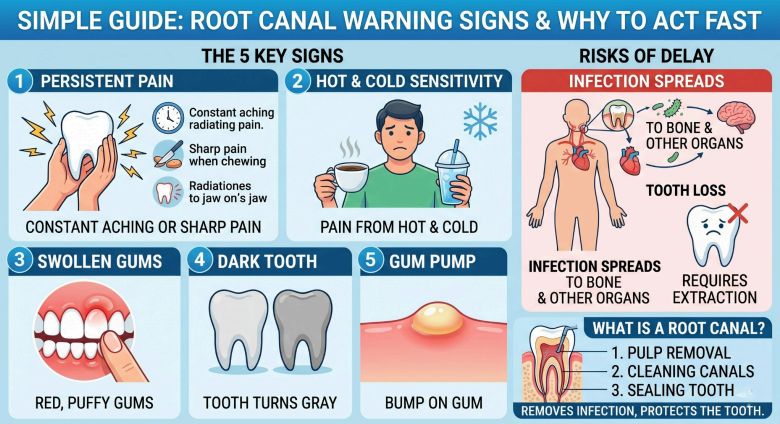
5 Clinical Warning Signs You Need a Root Canal
Understanding these root canal symptoms can help you act before complications arise.
1. Persistent Tooth Pain
Persistent pain is one of the strongest indicators of pulp damage.
- Constant aching
- Sharp pain when chewing
- Pain radiating to the jaw
This happens because infection irritates nerves inside the tooth.
2. Sensitivity to Hot and Cold
Lingering sensitivity suggests nerve involvement.
- Pain that lasts after exposure
- Increasing intensity over time
This is commonly associated with tooth sensitivity caused by internal damage.
3. Swollen or Tender Gums
Swelling occurs when infection spreads beyond the tooth.
- Puffy or inflamed gums
- Tenderness when touched
In many cases, this may lead to a dental abscess, a pocket of pus caused by bacterial infection.
4. Tooth Discoloration
A gray or darkened tooth often indicates pulp death.
This occurs when internal tissue breaks down, affecting the tooth’s appearance.
5. Pimple on the Gums
A small bump or “pimple” is often a drainage point for infection.
- May release pus
- Often painless but serious
This is a clear sign that infection is present and spreading.
Hidden Root Canal Symptoms People Often Ignore
Mild Pain That Comes and Goes
Intermittent pain may indicate early-stage infection. Even if it disappears, the underlying issue remains.
Jaw Discomfort
Infection can extend beyond the tooth, affecting surrounding tissues and causing jaw pain.
What Causes Root Canal Symptoms?
Tooth Decay
Deep cavities allow bacteria to reach the pulp.
Deep tooth decay exposes pulp tissue, leading to infection.
Cracked or Damaged Teeth
Cracks create pathways for bacteria to enter the inner tooth.
Repeated Dental Procedures
Multiple treatments can weaken the tooth structure, making it more vulnerable.
Why Delaying Treatment Is Risky
Infection Spread
Untreated infection allows bacteria to move into surrounding tissues.
Oral bacteria spread to bone and bloodstream, increasing health risks.
Tooth Loss
If damage becomes irreversible, extraction may be necessary. While tooth extraction removes the problem, it also leads to structural and functional challenges.
Systemic Health Risks
Severe infections can contribute to conditions like sepsis and may even impact cardiovascular disease.
Diagnosis: How Dentists Identify Root Canal Symptoms
Clinical Examination
Dentists evaluate:
- Pain response
- Gum condition
- Tooth integrity
X-rays and Imaging
Tools like dental X-rays help detect internal infection and bone damage.
Treatment Process Explained
Step-by-Step Procedure
- Local anesthesia
- Removal of infected pulp
- Cleaning and disinfection
- Filling with gutta-percha
- Sealing and restoration
In complex cases, procedures like apicoectomy may be required.
Recovery Timeline
Recovery typically takes a few days. Mild discomfort is normal and manageable.
Prevention Tips to Avoid Root Canal Symptoms
Daily Oral Care
- Brush twice daily
- Floss regularly
- Use fluoride toothpaste
Regular Dental Visits
Routine checkups help detect issues early before they require major treatment.
FAQs
1. Can root canal symptoms go away on their own?
No. Symptoms may temporarily fade, but infection remains.
2. Is a root canal painful?
Modern techniques make it similar to getting a filling.
3. How long can I delay treatment?
Delaying increases risks of infection spread and complications.
4. Can antibiotics cure the infection?
No. They may reduce symptoms but will not remove infected pulp.
5. What happens if I ignore root canal symptoms?
It can lead to abscesses, bone loss, or systemic infection.
6. Is extraction better than a root canal?
Saving your natural tooth is usually the best option.
Conclusion
Root canal symptoms are early warning signals of deeper dental issues. Whether it is persistent pain, swelling, or discoloration, each symptom points toward a common problem: infected pulp tissue.
By understanding these signs and acting early, you can prevent complications, avoid tooth loss, and maintain your oral health.
Root canal treatment is safe, effective, and designed to preserve what matters most: your natural smile.