
Dry Mouth Remedies: How Water Physically Washes Away Odour
Dry Mouth and Odour in the Oral Environment
When saliva production is insufficient to maintain moisture in the mouth, a condition known as xerostomia occurs.
This causes the oral cavity to become a stagnant environment where odour-causing bacteria, sulfur compounds, and organic debris accumulate.
The primary reason for persistent bad breath in people with dry mouth is this stagnation.
Just as stagnant water develops a foul smell when it cannot flush away contaminants, a dry mouth allows odours to linger.
Effective dry mouth remedies must restore moisture and movement rather than simply masking the smell.
Water is the most effective solution because it physically removes odour instead of covering it up.
Why Dry Mouth Causes Persistent Bad Breath
Saliva Controls Odour Through Continuous Cleaning
Saliva acts as the body’s natural mouthwash. It continuously removes food particles, dilutes acids, and suppresses bacterial growth.
Saliva is a powerful cleanser that eliminates compounds responsible for unpleasant odours.
When saliva flow decreases, this natural cleansing process slows dramatically, allowing odour-causing substances to build up.
Anaerobic Bacteria Thrive in a Dry Mouth
Anaerobic bacteria thrive in low-oxygen environments such as a dry mouth.
These microorganisms break down organic and protein-based matter, producing sulfur compounds.
These sulfur-based gases are the primary cause of chronic bad breath.
Without moisture or movement, their concentration intensifies.
How Water Physically Removes Odour
Water Removes Odours at the Source
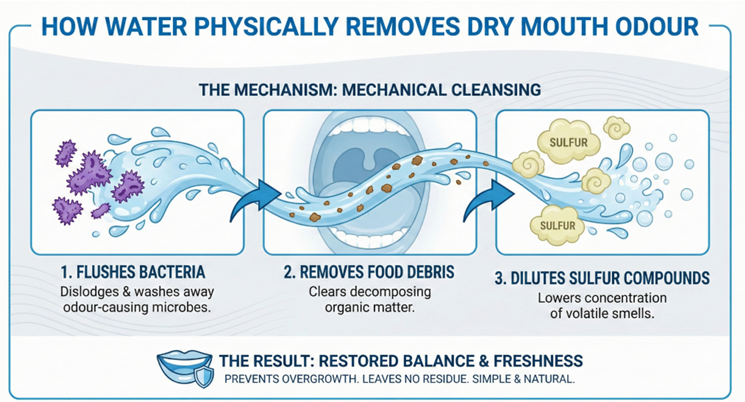
Water acts as a mechanical cleanser inside the oral cavity. With every sip:
- Odour-causing bacteria are flushed away
- Decomposing food particles are removed
- Volatile sulfur compounds are diluted
Unlike sprays or mints, water reduces the source of odour rather than masking it.
Constant Moisture Prevents Bacterial Overgrowth
Consistent hydration is the most effective strategy.
Taking small, frequent sips of water prevents dryness and limits bacterial growth between meals.
This flushing action mirrors how flowing water eliminates odours from stagnant systems.
Organic Decomposition and Odour Formation in Dry Mouth
Food particles left in a dry mouth do not remain inactive.
They begin to decompose, increasing the intensity of bad breath.
Water breaks this cycle by removing debris before bacteria can break it down into odorous compounds.
Why Some Dry Mouth Remedies Fail
Alcohol-Based Mouthwashes Worsen Dryness
Many mouthwashes contain alcohol, which reduces oral moisture and disrupts the natural oral microbiome.
This increased dryness recreates the stagnation that initially caused bad breath.
Sugar-Based Lozenges Feed Odour-Causing Bacteria
Sugary sweets and lozenges may briefly stimulate saliva production, but they also feed bacteria.
Once the initial stimulation fades, bacterial activity increases, producing acids and sulfur compounds.
Water avoids this issue entirely.
Water as a Remedy for Dry Mouth
Unlike artificial products, water leaves no residue.
It does not alter the oral microbiome or promote bacterial growth.
This makes water the most effective and safest long-term remedy for dry mouth.
Supporting Remedies That Enhance Water’s Effect
Diet and Saliva Stimulation
Certain foods naturally stimulate saliva production, reducing oral odour.
Crunchy fruits and vegetables and sugar-free gums containing xylitol are particularly effective.
Lifestyle Habits That Preserve Moisture
Reducing caffeine, alcohol consumption, smoking, and mouth breathing helps maintain oral moisture.
Balanced hydration supports a healthy oral microbial environment.
How to Prevent Dry Mouth Long-Term
A sustainable routine includes:
- Drinking water every 15–20 minutes
- Rinsing the mouth before sleeping
- Maintaining good oral hygiene
- Scheduling regular dental check-ups
Consistent hydration over time maintains oral microbial balance and prevents bad breath before it starts.
Conclusion: Water Is the Best Remedy for Dry Mouth
Dry mouth causes bad breath because bacteria and organic material stagnate in the absence of saliva.
Effective remedies must restore moisture, movement, and balance.
Water does exactly that.
It physically washes away odour-causing bacteria, prevents bacterial overgrowth, and leaves no residue.
Water remains the simplest, most natural, and scientifically sound solution for managing dry mouth.
Frequently Asked Questions (FAQs)
1. Why does bad breath occur when you have a dry mouth?
Dry mouth reduces saliva flow, allowing anaerobic bacteria to thrive and produce sulfur-based odours.
2. How does water wash away odour from a dry mouth?
Water mechanically flushes bacteria, dilutes sulfur compounds, and removes food debris rather than masking odour.
3. How often should I drink water for dry mouth relief?
Small, frequent sips every 15–20 minutes are recommended to keep the mouth moist.
4. Is water a permanent cure for dry mouth?
Water manages symptoms but does not cure underlying causes such as medication side effects or medical conditions.
5. Which mouthwashes are suitable for dry mouth?
Alcohol-free mouthwashes may help temporarily, but they do not replace the cleansing action of water.
6. Why do chewing gum and mints only provide short-term relief?
Many mints contain sugar, which feeds bacteria. Water provides longer-lasting relief without fueling bacterial growth.
7. What foods help reduce dry mouth odour?
Crunchy fruits and vegetables stimulate saliva production. Xylitol-based sugar-free gum may also help.
8. Is dry mouth a risk factor for oral health problems?
Yes. Dry mouth increases the risk of gum disease, tooth decay, infections, and chronic bad breath.
9. What is better for dry mouth: water or saliva substitutes?
Water is the safest first-line treatment. Saliva substitutes may help in severe cases but do not replace water.
10. When should I consult a dentist for dry mouth?
If dry mouth persists alongside bad breath, swallowing difficulties, or frequent infections, consult a dentist.