
Crunchy Veggies: Foods That Clean Teeth Naturally
Keeping your teeth clean and healthy is an important part of overall well-being. While brushing
and flossing are essential daily habits, what you eat also plays a meaningful role in oral health.
Certain foods, especially crunchy vegetables and whole foods, help clean teeth naturally by
stimulating saliva, gently removing plaque, and supporting enamel strength. When included
regularly, these foods add an extra layer of protection to your dental care routine.
In this article, we’ll explore how foods that clean teeth naturally work, which foods are most
effective, and how they support a healthier mouth. When paired with proper oral hygiene, these
foods can help maintain a cleaner smile and stronger teeth over time.
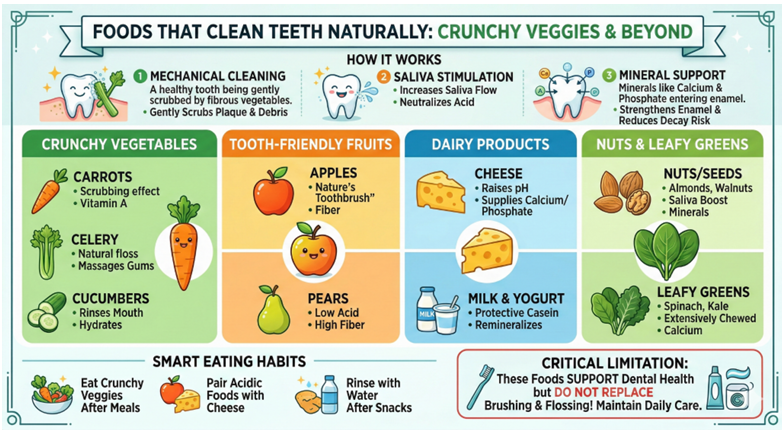
How Foods That Clean Teeth Naturally Work
Some foods help clean your teeth through a combination of physical action, increased saliva
production, and mineral support. These natural processes reduce plaque buildup and help
maintain a balanced oral environment.
Gentle Mechanical Cleaning
Crunchy and fibrous foods create light friction against the teeth while chewing. This gentle
scrubbing action helps loosen soft plaque and food particles from the tooth surface before they
harden into tartar. Unlike aggressive brushing, this natural cleaning process is mild and safe for
enamel when combined with proper oral care.
Saliva Stimulation and Acid Control
Chewing fiber-rich foods increases saliva production, which is one of the body’s most important
natural defenses for oral health. Saliva helps wash away food debris, neutralize acids produced
by oral bacteria, and reduce the risk of enamel erosion. A neutral pH in the mouth creates a
safer environment for teeth and gums.
Fiber and Water Content Benefits
Foods high in fiber require more chewing, which keeps saliva flowing. Foods with high water
content also help dilute sugars and acids, reducing their harmful effects on tooth enamel.
Together, these properties support a cleaner and healthier mouth.
Crunchy Vegetables That Help Clean Teeth Naturally
Crunchy vegetables are among the most effective foods for naturally cleaning teeth because
they combine texture, fiber, and hydration.
Carrots
Raw carrots help clean teeth by gently scrubbing the surface as you chew. They are also rich in
vitamin A, which supports strong enamel and healthy gums. Chewing carrots stimulates saliva
flow and improves blood circulation in the gums.
Celery
Celery’s fibrous texture helps remove food particles trapped between teeth while massaging the
gums. It also encourages saliva production, which helps rinse away bacteria. Because celery is
low in sugar and acid, it is especially friendly to tooth enamel.
Cucumbers
Cucumbers contain a high amount of water, which helps rinse the mouth and reduce bacterial
buildup. Their low sugar content makes them a safe option for people concerned about cavities
or tooth sensitivity.
Fruits That Support Oral Cleanliness
Some fruits can also help clean teeth when eaten whole and in moderation.
Apples
Apples are often referred to as “nature’s toothbrush” because their crisp texture helps remove
surface plaque while stimulating saliva flow. Although apples contain natural sugars, their fiber
and water content help reduce the risk of decay when consumed as part of a balanced diet.
Pears
Pears are less acidic than many fruits, making them gentler on tooth enamel. Their fiber content
promotes chewing and saliva production, which supports oral cleanliness.
Leafy Greens and Raw Salads
Leafy greens such as spinach, kale, and lettuce play an important supporting role in oral health.
These vegetables require extensive chewing, which increases saliva production and helps
cleanse the mouth naturally.
They are also rich in calcium, folate, and antioxidants that support gum health and contribute to
enamel strength. Including leafy greens regularly can help maintain a healthier oral environment.
Dairy Products That Strengthen and Protect Teeth
Dairy foods are especially beneficial for enamel protection and acid balance.
Cheese
Cheese helps raise the pH level in the mouth, reducing acid levels that can weaken enamel. It
also stimulates saliva production and provides calcium and phosphate, which are essential for
maintaining strong teeth.
Milk and Yogurt
Milk and plain yogurt contain casein proteins that form a protective layer over tooth enamel.
These proteins help shield teeth from acid attacks while supplying minerals that support enamel
repair and remineralization.
Nuts, Seeds, and Other Tooth-Friendly Foods
Nuts and Seeds
Nuts such as almonds and walnuts require thorough chewing, which increases saliva flow. They
also provide minerals like calcium, magnesium, and phosphorus that support tooth structure.
Their crunchy texture helps remove debris without sticking to teeth.
Whole Grains and Eggs
Whole grains are less likely to stick to teeth than refined carbohydrates, reducing the risk of
cavities. Eggs provide phosphorus, which works with calcium to strengthen enamel.
Sugar-Free Chewing Gum and Saliva Support
Sugar-free chewing gum, especially varieties containing xylitol, can help reduce cavity-causing
bacteria and increase saliva flow. According to the American Dental Association, sugar-free
gum can be a helpful addition to oral hygiene when brushing is not immediately possible.
How to Use Foods That Clean Teeth Naturally
Smart Eating Habits
- Eat crunchy vegetables after meals to help remove residue
- Pair acidic foods with cheese or leafy greens
- Drink water after snacks to rinse the mouth
Important Limitations
While these foods support oral hygiene, they do not replace brushing and flossing. They help
reduce plaque and support enamel health, but only brushing and flossing can fully remove
plaque from all tooth surfaces and between teeth.
Conclusion
Crunchy vegetables and other whole foods offer a natural way to support oral health. By gently
cleaning teeth, stimulating saliva, neutralizing acids, and supplying essential minerals, these
foods help protect enamel and reduce plaque buildup. When combined with proper brushing,
flossing, and regular dental visits, foods that clean teeth naturally can play a valuable role in
maintaining a healthier, brighter smile every single day.
Frequently Asked Questions
-
Can crunchy vegetables really help clean your teeth?
Yes, crunchy vegetables can help clean your teeth naturally. Their firm texture gently scrubs the
tooth surface while chewing, helping remove food particles and soft plaque. They also stimulate
saliva, which further cleans the mouth. -
Do foods that clean teeth replace brushing and flossing?
No, these foods do not replace brushing or flossing. They support oral hygiene by reducing
plaque and acid buildup, but brushing and flossing are still necessary to remove bacteria from
all tooth surfaces and between teeth. -
Which vegetables are best for cleaning teeth naturally?
Raw carrots, celery, cucumbers, and leafy greens are among the best options. They are low in
sugar, high in fiber, and require more chewing, which helps stimulate saliva and clean the
mouth. -
Are fruits safe for teeth since they contain natural sugar?
Whole fruits like apples and pears are generally safe when eaten in moderation. Their fiber and
water content help reduce the impact of natural sugars by stimulating saliva and limiting how
long sugar stays on the teeth. -
How does saliva help protect teeth?
Saliva helps wash away food debris, neutralize harmful acids, and deliver minerals such as
calcium and phosphate to tooth enamel. Increased saliva flow lowers the risk of cavities and
enamel erosion. -
Are dairy products good for tooth enamel?
Yes, dairy products like cheese, milk, and plain yogurt are excellent for enamel health. They
contain calcium and phosphate that strengthen teeth and help neutralize acids in the mouth. -
Can nuts and seeds damage teeth?
Nuts and seeds are generally safe for healthy teeth when chewed carefully. They stimulate
saliva and provide essential minerals, but people with cracked teeth or dental restorations
should avoid biting down too hard. -
Is sugar-free chewing gum good for oral health?
Sugar-free chewing gum, especially with xylitol, can help reduce cavity-causing bacteria and
increase saliva production. It is a helpful option when brushing is not immediately possible. -
When is the best time to eat foods that clean teeth naturally?
Eating these foods after meals or as snacks between meals is ideal. They help remove leftover
food particles and neutralize acids formed during eating. -
Are these foods suitable for people with sensitive teeth?
Many are suitable, especially softer options like cucumbers, yogurt, and leafy greens. People
with sensitivity should avoid extremely hard foods and consult a dentist if discomfort persists.