
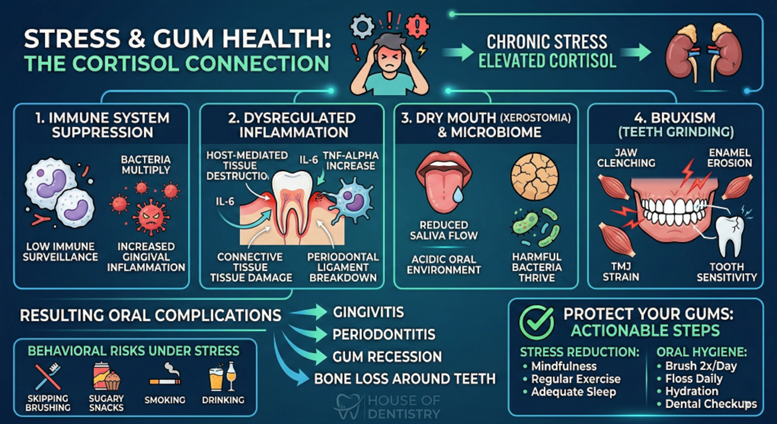
Stress and Gum Health: How Cortisol Affects Your Mouth
Stress is an unavoidable part of life, but its impact on your oral health—especially your gums—is
often overlooked. Beyond affecting your mental well-being, chronic stress can have serious
consequences for your teeth and periodontal tissues. At House of Dentistry, we see
firsthand how elevated stress levels and increased cortisol contribute to inflammation, gum disease
progression, and other oral health complications.
Understanding the biological connection between stress and gum health is the first step toward
protecting your smile. Let’s explore how cortisol affects your mouth, the underlying immune and
inflammatory mechanisms, and what you can do to reduce the risk.
The Connection Between Stress and Gum Health
When you experience stress, your body activates the hypothalamic-pituitary-adrenal (HPA) axis.
This system signals the adrenal glands to release cortisol, the primary stress hormone. In short
bursts, cortisol helps regulate blood pressure, blood sugar, and inflammation. However, when stress
becomes chronic, persistently elevated cortisol disrupts immune balance and promotes systemic
inflammation.
This immune disruption directly affects gum health.
Cortisol and Immune Suppression
Under chronic stress:
- Cortisol suppresses white blood cell function
- Immune surveillance decreases
- Inflammatory cytokines such as interleukin-6 (IL-6) increase
- Tissue repair slows down
Your gums rely on a balanced immune response to fight bacterial plaque. When immune homeostasis
is disrupted, bacteria in dental biofilm multiply more aggressively. The result? Increased gingival
inflammation and a higher risk of periodontal disease.
According to the American Dental Association, stress is considered a contributing
risk factor for gum disease due to its impact on immune regulation and inflammatory response.
How Inflammation Drives Gum Disease
Gum disease is not caused by bacteria alone; it is largely the result of the body’s inflammatory
reaction to those bacteria.
Here’s how the process unfolds:
- Plaque biofilm accumulates along the gumline.
- The immune system responds to bacterial toxins.
- Inflammatory mediators such as tumor necrosis factor (TNF-alpha) are released.
- Chronic inflammation damages connective tissue and periodontal ligaments.
- Over time, alveolar bone resorption may occur.
This process is known as host-mediated tissue destruction. When stress keeps cortisol
elevated, the inflammatory cascade becomes dysregulated. Instead of protecting your gums, your
immune system may overreact and accelerate tissue breakdown.
Chronic gum inflammation can eventually lead to the following:
- Deep periodontal pockets
- Gum recession
- Tooth mobility
- Bone loss around teeth
That’s why stress and gum health are closely connected at a biological level, not just a
behavioral one.
Saliva, Dry Mouth, and the Oral Microbiome
Stress doesn’t only affect inflammation. It also alters saliva production and composition. Saliva
plays several essential roles:
- Buffers oral acids
- Contains antimicrobial proteins
- Washes away food particles
- Maintains oral microbiome balance
Under stress, salivary flow may decrease, a condition known as xerostomia (dry
mouth). Reduced saliva disrupts the natural balance of beneficial and harmful bacteria, leading to
oral microbiome dysbiosis.
When the oral environment becomes dry and acidic:
- Harmful bacteria thrive
- Cavity risk increases
- Gum infections become more likely
This shift creates ideal conditions for both tooth decay and periodontal disease progression.
Teeth Grinding and Jaw Clenching: The Physical Impact of Stress
Many people unknowingly grind their teeth or clench their jaws when stressed. This condition,
known as bruxism, is driven by activation of the sympathetic nervous system.
Chronic stress increases muscle tension. When facial and jaw muscles remain tight for extended
periods, excessive pressure is placed on teeth and periodontal ligaments.
Consequences of stress-induced bruxism include:
- Enamel erosion
- Tooth fractures
- Increased sensitivity
- Compression of periodontal ligaments
- Temporomandibular joint (TMJ) strain
Persistent jaw clenching may even contribute to disc displacement within the TMJ, leading to pain,
headaches, and restricted jaw movement.
If left untreated, severe bruxism can require restorative treatments such as crowns or nightguards
to prevent further damage.
The Role of Stress in Periodontitis Progression
Gingivitis, the earliest form of gum disease, is reversible. However, chronic stress increases the
likelihood that gingivitis progresses into periodontitis.
When stress weakens immune defenses:
- Pathogenic bacteria multiply
- Periodontal pockets deepen
- Oxygen levels drop in gum tissues
- Anaerobic bacteria dominate
This environment accelerates connective tissue degradation and bone resorption. The deeper the
pocket formation, the harder it becomes to control infection with brushing and flossing alone.
Research supported by the Centers for Disease Control and Prevention emphasizes
that inflammation-driven periodontal disease can also influence systemic health, linking gum
disease to broader inflammatory burdens in the body.
Stress, therefore, doesn’t just affect your gums; it may contribute to whole-body health
complications if left unmanaged.
Stress and Behavioral Risk Factors
Poor Oral Hygiene
When overwhelmed, people may skip brushing or flossing. Plaque accumulation increases,
intensifying inflammation.
Dietary Changes
Stress often leads to increased consumption of:
- Sugary snacks
- Refined carbohydrates
- Caffeinated beverages
- Alcohol
Excess sugar fuels acid-producing bacteria, while caffeine and alcohol reduce saliva production.
According to the World Health Organization, high sugar intake is a major
contributor to oral disease worldwide.
Smoking
Some individuals turn to smoking as a coping mechanism. Tobacco use further suppresses immune
response and restricts blood flow to gum tissues, compounding stress-related damage.
Recognizing Signs That Stress Is Affecting Your Gums
Watch for these warning signs:
- Bleeding when brushing or flossing
- Swollen or tender gums
- Persistent bad breath
- Gum recession
- Increased tooth sensitivity
- Jaw soreness or morning headaches
These symptoms may indicate inflammation, bruxism, or early periodontal changes linked to chronic
stress. Early detection allows for conservative treatment before bone loss or tooth mobility
occurs.
Managing Stress to Protect Your Gum Health
Stress Reduction Strategies
- Deep breathing exercises
- Regular physical activity
- Mindfulness meditation
- Adequate sleep
- Professional mental health support
Reducing cortisol levels helps restore immune balance and decrease inflammatory markers.
Protecting Your Teeth and Gums
- Brush twice daily with fluoride toothpaste
- Floss consistently
- Use an antimicrobial mouthwash
- Stay hydrated to support saliva production
- Consider a custom nightguard if grinding is present
Regular dental visits allow early identification of stress-related periodontal changes. At
Precision Dental, patients receive personalized care tailored to both their oral
and overall health needs.
Protect Your Smile From Stress
Stress and gum health are deeply interconnected through immune suppression, inflammatory
pathways, saliva changes, and behavioral habits. Chronic elevation of cortisol can weaken your
body’s defense mechanisms, accelerate periodontal tissue breakdown, and increase the risk of bone
loss.
The good news? With proactive stress management and consistent dental care, these effects can be
minimized.
At House of Dentistry, we are committed to helping patients protect their smiles
from the hidden effects of stress. If you’re experiencing symptoms such as bleeding gums, jaw
tension, or dry mouth, scheduling a consultation can help prevent small issues from becoming
serious complications.
Your oral health reflects your overall well-being. By managing stress effectively, you’re not just
protecting your gums; you’re safeguarding your long-term health and confidence.