
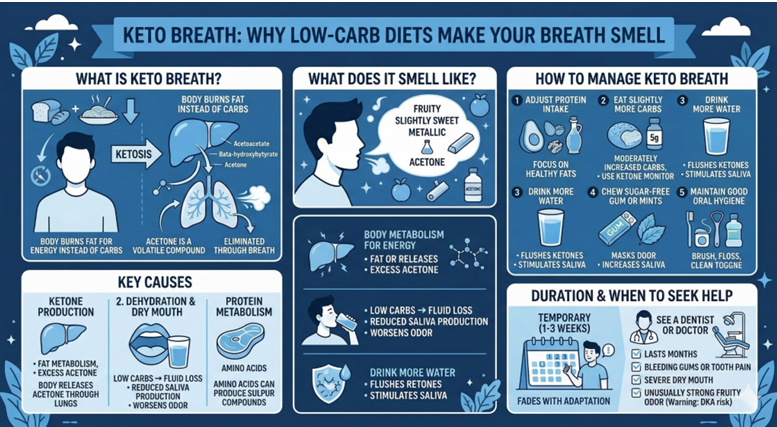
Keto Breath: Why Low-Carb Diets Make Your Breath Smell
Reaching your health goals often requires meaningful lifestyle changes. You may need to
adjust your eating habits, increase physical activity, or replace some favourite foods with
healthier options. For many people, a low-carb or ketogenic diet is an effective way to
support weight management and metabolic health. However, this diet can sometimes bring
an unexpected side effect known as keto breath.
If you’ve recently started a ketogenic diet and noticed a strange change in your breath, you’re
not alone. Many people experience this temporary condition while their body adjusts to
burning fat for energy instead of carbohydrates. Understanding why keto breath happens and
how to manage it can help you stay on track with your diet while maintaining good oral health.
Below, you’ll find everything you need to know about keto breath, why low-carb diets can
cause breath changes, and what you can do to reduce it while staying in ketosis.
What Is Keto Breath?
Keto breath occurs when the body enters a metabolic state called ketosis, which
is the primary goal of a ketogenic diet. In a typical diet, the body relies heavily on
carbohydrates as its main source of energy. When carbs are consumed, they are broken
down into glucose, which cells use for fuel.
However, when carbohydrate intake is drastically reduced, usually to around
20 to 50 grams per day, the body must find an alternative energy source.
Instead of relying on glucose, the body begins breaking down stored fat for fuel through a
process called fat metabolism.
During this metabolic shift:
- Stored fats are broken down into fatty acids
- The liver converts these fatty acids into ketone bodies
- These ketones circulate through the bloodstream and provide energy for the brain, muscles, and other organs
The three main ketone bodies produced during ketosis are:
- Acetoacetate
- Beta-hydroxybutyrate
- Acetone
The first two ketones are used efficiently by the body as fuel. However, acetone is a volatile
compound that the body does not use for energy. Instead, it is eliminated through breathing,
sweat, and urine.
Because acetone exits through the lungs, it can cause a noticeable change in the smell of
your breath. This is what people refer to as keto breath.
What Is Keto Breath Like?
Keto breath is different from the typical bad breath you might notice in the morning or after
skipping a brushing session. Traditional halitosis usually results from oral bacteria that
produce volatile sulfur compounds in the mouth.
Keto breath, on the other hand, originates from metabolic processes happening inside the
body.
Many people describe keto breath as having a smell that is:
- Fruity
- Slightly sweet
- Metallic
- Similar to acetone or nail polish remover
This distinctive odour occurs because acetone molecules travel through the bloodstream to
the lungs, where they are released with each breath.
In some cases, ketones may also mix with saliva in the mouth. Saliva normally plays a
critical role in oral health because it helps wash away food particles, neutralise acids, and
control bacteria within the oral microbiome. However, during the early stages of a ketogenic
diet, saliva production may temporarily decrease, which can make the odour more
noticeable.
Although keto breath can feel embarrassing, it is typically a sign that your body has
successfully entered ketosis and is burning fat for energy.
Why Low-Carb Diets Cause Breath Odour
Ketone Production and Fat Metabolism
The primary reason keto breath develops is increased ketone production.
When carbohydrate intake drops, the body’s glycogen stores become depleted. Glycogen is
the stored form of glucose found in the liver and muscles. As glycogen levels fall, the body
begins relying more heavily on fat oxidation, which increases ketone production.
Because the body is still adapting to this new energy system, it may initially produce more
ketones than it can use. The excess ketones, especially acetone, are released through the
lungs, creating the distinctive smell associated with keto breath.
Over time, as the body becomes more keto-adapted, it becomes more efficient at using
ketones for energy. As a result, fewer excess ketones are expelled through breath.
Dehydration and Dry Mouth
Another common factor that can worsen keto breath is dehydration.
When glycogen stores are depleted, the body releases a significant amount of stored water
and electrolytes. This process can lead to increased urination and temporary dehydration
during the early stages of a ketogenic diet.
Reduced hydration can cause dry mouth, also known as xerostomia. When saliva
production decreases:
- Bacteria in the mouth can grow more easily
- Food particles are not washed away as efficiently
- Breath odours may become stronger
Because saliva helps regulate the oral microbiome, maintaining proper hydration is important
for controlling breath odour.
Protein Metabolism and Sulfur Compounds
While the ketogenic diet emphasises fat intake, many people also increase their protein
consumption. During protein digestion, certain amino acids can produce sulfur-containing
compounds.
These compounds can contribute to breath odour when they interact with oral bacteria. In
combination with acetone from ketosis, they may make keto breath appear stronger during
the first weeks of the diet.
Balancing healthy fats, moderate protein, and very low carbohydrates is essential for
maintaining proper ketosis while minimising side effects.
What To Do About Keto Breath
Keto breath usually appears within the first week or two of starting a ketogenic diet.
Fortunately, it is rarely permanent. As the body adapts to using ketones more efficiently,
breath odour often becomes much milder.
In the meantime, there are several strategies you can use to minimise keto breath while
staying on track with your diet.
Lower Protein Intake
Many people mistakenly believe the ketogenic diet is primarily a high-protein diet, but in
reality it is a high-fat, moderate-protein, low-carbohydrate diet.
Consuming too much protein may increase the production of certain sulfur compounds during
digestion, which can contribute to stronger breath odours.
Instead of relying heavily on protein sources, focus on healthy fat sources such as:
- Avocados
- Olive oil
- Nuts like almonds
- Seeds and fatty fish
Maintaining balanced macronutrients helps support ketosis without producing excessive
by-products that worsen breath odour.
Eat Slightly More Carbs
This may sound counterintuitive for someone following a low-carb diet, but increasing
carbohydrate intake by a small amount, around 5 grams per day, can
sometimes help reduce keto breath.
A ketone breath analyser or blood ketone monitor can help determine whether you remain
within the ketosis range while adjusting carbohydrate intake slightly.
Even small dietary adjustments may reduce excess ketone production without disrupting your
metabolic goals.
Drink More Water
Hydration is one of the simplest and most effective ways to manage keto breath.
Since ketones are eliminated not only through the breath but also through urination, drinking
more water helps flush them out of the body.
Proper hydration also:
- Stimulates saliva production
- Reduces dry mouth
- Supports a healthier oral environment
Many nutrition experts recommend drinking 2 to 3 litres of water daily when
following a ketogenic diet, especially during the early adaptation phase.
Chew Sugar-Free Gum or Mints
Sugar-free gum or mints can help mask keto breath temporarily while also stimulating saliva
production.
Saliva helps rinse away odour-producing bacteria and supports a balanced oral microbiome.
Be sure to choose sugar-free options, as sugary gum can interfere with your low-carb goals
and contribute to tooth decay.
Natural options like mint leaves or parsley may also provide a short-term freshening effect.
Maintain Good Oral Hygiene
Even though keto breath originates from metabolic changes rather than oral bacteria,
maintaining excellent oral hygiene is still essential.
Healthy oral care practices include:
- Brushing teeth at least twice daily
- Flossing once per day
- Cleaning the tongue with a tongue scraper
- Using an alcohol-free mouthwash
The surface of the tongue can harbour bacteria that contribute to odour. Removing this
tongue biofilm can significantly improve overall breath freshness.
Regular dental visits also help ensure there are no underlying oral health issues such as
gum disease contributing to persistent bad breath.
How Long Does Keto Breath Last?
For most people, keto breath is temporary.
It typically appears during the first one to three weeks of starting a ketogenic diet, which is
when the body is rapidly transitioning into ketosis.
As the body becomes more efficient at using ketones for fuel, a process known as
keto adaptation, fewer excess ketones are released through breath. At this
point, the odour usually fades or becomes much less noticeable.
However, individual experiences can vary depending on factors such as:
- Hydration levels
- Macronutrient balance
- Metabolic rate
- Oral hygiene habits
When to See a Dentist or Doctor
Although keto breath is generally harmless, persistent breath odour may sometimes indicate
another issue.
Consider speaking with a dentist or healthcare professional if:
- Breath odour lasts for several months
- You experience gum bleeding or tooth pain
- You have severe dry mouth
- The smell is unusually strong or unpleasant
In rare cases, extremely strong fruity breath combined with symptoms like nausea,
confusion, or excessive thirst could indicate diabetic ketoacidosis, a serious condition that
requires medical attention. This condition mainly affects people with uncontrolled diabetes
and is not the same as nutritional ketosis.
Final Thoughts
Keto breath is a common and temporary side effect of following a low-carb ketogenic diet. As
the body shifts from burning carbohydrates to burning fat, it produces ketones that may be
released through the breath, especially the compound acetone.
While the odour can be surprising at first, it is often a sign that the body has entered ketosis
and is effectively using fat as a source of energy.
Fortunately, simple strategies such as staying hydrated, maintaining good oral hygiene,
balancing macronutrients, and chewing sugar-free gum can help reduce keto breath while
your body adapts.
With time, most people find that keto breath fades as their metabolism becomes more
efficient at utilising ketones, allowing them to continue enjoying the benefits of a low-carb
lifestyle with greater comfort and confidence.
Frequently Asked Questions (FAQs)
1. Why does a low-carb diet cause keto breath?
Keto breath happens when the body enters ketosis, a metabolic state where fat becomes the
primary fuel instead of carbohydrates. During fat metabolism, the liver produces ketone
bodies such as acetoacetate, beta-hydroxybutyrate, and acetone. Acetone is not used for
energy and is released through the lungs when you breathe out, which creates the
distinctive smell associated with keto breath.
2. What does keto breath smell like?
Most people describe keto breath as fruity, metallic, or similar to acetone, like nail polish
remover. This odour comes from acetone molecules being expelled through the breath as
the body burns fat and produces ketones.
3. How long does keto breath last?
Keto breath usually appears during the first one to three weeks of starting a ketogenic diet.
As the body becomes keto-adapted and learns to use ketones more efficiently for energy,
fewer excess ketones are expelled through the breath, and the odour typically fades.
4. Is keto breath a sign that ketosis is working?
Yes, in many cases keto breath indicates that your body has successfully entered nutritional
ketosis and is burning fat for energy. However, not everyone experiences it, and its absence
doesn’t necessarily mean ketosis isn’t happening.
5. Can drinking more water help reduce keto breath?
Yes. Hydration is one of the most effective ways to reduce keto breath. Drinking more water
helps flush excess ketones out of the body through urine and also supports saliva
production, which helps control bacteria and maintain a healthy oral environment.
6. Does brushing teeth get rid of keto breath?
Brushing and flossing are important for oral hygiene, but they may not completely eliminate
keto breath because the odour originates from ketones in the bloodstream, not just bacteria
in the mouth. However, brushing, flossing, and cleaning the tongue can reduce additional
odour from oral bacteria.
7. Can chewing gum help with keto breath?
Yes. Sugar-free gum or mints can temporarily freshen breath and stimulate saliva production,
which helps wash away odour-causing bacteria. Be sure to choose sugar-free options so
you don’t interfere with your low-carb diet.
8. Is keto breath the same as bad breath (halitosis)?
No. Keto breath and traditional halitosis have different causes. Keto breath comes from
metabolic processes related to ketone production, while halitosis usually results from oral
bacteria producing sulfur compounds due to poor oral hygiene or gum disease.
9. Can eating too much protein worsen keto breath?
Yes, consuming excessive protein can sometimes intensify breath odour. Protein metabolism
may produce sulfur-containing compounds, which can combine with acetone from ketosis
and make the smell stronger. A balanced ketogenic diet should focus primarily on healthy
fats with moderate protein intake.