
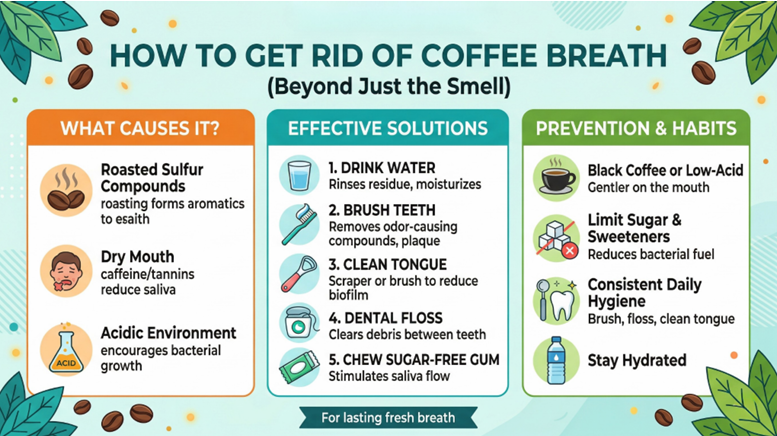
How to Get Rid of Coffee Breath (It’s More Than Just the Smell)
You might enjoy coffee but not the way it leaves your breath smelling.
Coffee breath and a dry, uncomfortable feeling in your mouth can be a price to pay for enjoying
your favorite beverage. The scent of coffee brewing can be rich and inviting, but coffee breath
does not resemble that soothing aroma.
Many people find the smell of coffee breath unpleasant in themselves and others. If you’re one
of them, there are effective ways to eliminate coffee breath, not just temporarily, but by
addressing its root causes.
In this article, we’ll explain why coffee breath occurs and provide science-backed strategies,
lifestyle adjustments, and long-term solutions for reducing it.
What Causes Coffee Breath?
When coffee beans are roasted, sulfur-containing aroma compounds form. Along with the
natural acid content in coffee, these compounds contribute directly to bad breath.
Coffee also causes dry mouth, which significantly worsens coffee breath. This happens because
caffeine has a mild dehydrating effect, reducing saliva production. Saliva plays a crucial role in
maintaining oral health; it washes away food particles, neutralizes acids, and controls
odor-causing bacteria.
Another key factor is tannins, natural compounds found in coffee, tea, and many plants. Tannins
create a dry, puckering sensation in your mouth, often referred to as astringency. This occurs
because tannins bind to proteins in saliva, slowing its production.
When saliva levels drop, the oral microbiome becomes unbalanced. Bacteria begin to
accumulate on the tongue, teeth, and gums. These bacteria break down food debris and
release volatile sulfur compounds (VSCs), which are a primary cause of halitosis (bad breath).
Additionally, the acidic nature of coffee can temporarily disrupt your mouth’s pH balance. A more
acidic environment encourages bacterial overgrowth and the formation of biofilm (plaque),
further intensifying coffee breath.
Why Coffee Breath Is More Than Just a Smell
Coffee breath isn’t only a minor inconvenience; it can signal deeper oral health concerns and
affect your daily interactions.
Impact on Oral Health
When coffee reduces saliva and promotes bacterial buildup, it increases the risk of:
- Plaque formation
- Gum irritation (gingivitis)
- Enamel wear due to acidity
- Chronic bad breath (halitosis)
Over time, poor oral hygiene combined with frequent coffee consumption can lead to long-term
dental issues if not managed properly.
Social and Professional Effects
Bad breath can influence:
- First impressions
- Workplace communication
- Confidence in social settings
Even if your oral health is otherwise good, persistent coffee breath can affect how you feel and
interact with others.
How to Get Rid of Coffee Breath
If giving up coffee isn’t an option, the good news is that several practical strategies can help you
eliminate coffee breath effectively.
1. Drink Water Immediately
Water helps rinse away coffee residue and restores moisture in your mouth. Staying hydrated
supports saliva production, which naturally cleans your oral cavity and reduces bacterial growth.
2. Brush Your Teeth Properly
Brushing your teeth after drinking coffee removes odor-causing compounds and plaque buildup.
Use fluoride toothpaste to protect enamel and strengthen teeth.
Toothpastes containing zinc can help neutralize sulfur compounds, while those with natural
antibacterial ingredients like clove oil may further reduce bacteria.
3. Clean Your Tongue
The tongue is one of the main areas where bacteria accumulate. Using a tongue scraper or
brushing your tongue removes biofilm and significantly reduces bad breath.
4. Use Dental Floss
Flossing removes food particles and debris stuck between teeth areas your toothbrush can’t
reach. This prevents bacteria from breaking down trapped food and producing odor.
5. Chew Sugar-Free Gum
Chewing sugar-free gum stimulates saliva production, helping wash away bacteria and
neutralize acids. It’s a quick and convenient fix for coffee breath on the go.
6. Use Alcohol-Free Mouthwash
Mouthwash can kill odor-causing bacteria and freshen breath instantly. Choose alcohol-free
formulas to avoid further drying out your mouth.
7. Eat Crunchy Fruits and Vegetables
Foods like apples and carrots act as natural cleansers. They stimulate saliva and help remove
plaque from teeth surfaces.
8. Try Natural Breath Fresheners
Natural options like parsley, mint leaves, and cloves contain compounds that help neutralize
odors and support oral freshness.
9. Stay Hydrated Throughout the Day
Dehydration worsens coffee breath by reducing saliva flow. Drinking enough water consistently
helps maintain a healthy oral environment.
How to Avoid Coffee Breath
Prevention is always better than cure. Small changes in how you drink coffee can make a big
difference.
Choose Black Coffee or Low-Acid Options
It may seem surprising, but drinking coffee black can sometimes be better for your breath than
adding sugar or flavored syrups. Bacteria feed on sugar, increasing odor production.
Cold brew and low-acid coffee options are gentler on your mouth and less likely to disrupt pH
balance.
Limit Sugar and Sweet Add-Ins
Adding sugar, syrups, or flavored creamers encourages bacterial growth. If you prefer
sweetness, consider alternatives like cinnamon sticks or vanilla beans for flavor without feeding
bacteria.
Be Mindful with Milk Choices
Milk contains natural sugars that can contribute to bacterial growth. Some people may benefit
from choosing higher-fat dairy options in moderation, as they may contain slightly less sugar
than low-fat varieties.
Maintain a Consistent Oral Hygiene Routine
Daily habits are essential for preventing coffee breath:
- Brush twice a day
- Floss daily
- Clean your tongue
- Stay hydrated
Regular dental checkups also help detect and prevent underlying issues early.
Alternatives to Coffee
If you want to reduce or eliminate coffee breath entirely, consider switching to alternative
beverages:
- Black tea or chai tea (contains caffeine but may be less acidic)
- Chicory root coffee (caffeine-free and gentle on digestion)
- Yerba mate (a caffeinated herbal option with a different chemical profile)
These alternatives can provide energy without causing the same level of dryness or odor.
The Bottom Line
Coffee contains sulfuric and acidic compounds that contribute to bad breath. It also reduces
saliva production, creating a dry environment where bacteria can thrive and produce
odor-causing gases.
The key to eliminating coffee breath isn’t just masking the smell; it’s addressing the root causes.
By improving hydration, maintaining proper oral hygiene, adjusting your diet, and making
smarter coffee choices, you can significantly reduce or even prevent coffee breath.
With the right habits, you can continue enjoying your favorite cup of coffee without worrying
about your breath.
Frequently Asked Questions
1. Why does coffee cause bad breath so quickly?
Coffee contains sulfur compounds and acids that stick to your mouth. It also reduces saliva,
which normally cleans your mouth. When saliva decreases, bacteria grow faster and produce
bad odors.
2. Can coffee breath be a sign of poor oral hygiene?
Not always, but it can get worse if your oral hygiene is not good. Even people with healthy teeth
can experience coffee breath due to dryness and bacterial activity.
3. Is it better to drink coffee with or without sugar for breath?
Drinking coffee without sugar is better. Sugar feeds bacteria in your mouth, which increases
odor and makes coffee breath stronger.
4. Does milk help reduce coffee breath?
Milk can help slightly by neutralizing some odor-causing compounds. However, it also contains
natural sugars, which may feed bacteria if consumed in excess.
5. How long does coffee breath usually last?
Coffee breath can last anywhere from 30 minutes to several hours, depending on your hydration
level, oral hygiene, and whether you eat or drink something afterward.
6. Can drinking water really eliminate coffee breath?
Yes, drinking water helps rinse away coffee particles and keeps your mouth hydrated. This
supports saliva production, which naturally reduces bad breath.
7. Is chewing gum effective for coffee breath?
Yes, sugar-free gum is very effective. It stimulates saliva flow and helps remove bacteria and
food particles from your mouth.
8. Does brushing immediately after coffee help?
Brushing helps remove odor-causing compounds, but it’s best to wait about 20-30 minutes after
drinking coffee to protect your enamel from acid damage.
9. Are there foods that naturally fight coffee breath?
Yes, foods like apples, carrots, yogurt, parsley, and green tea help reduce bacteria and improve
breath freshness.
10. Can I prevent coffee breath completely?
You may not eliminate it completely, but you can reduce it significantly by staying hydrated,
limiting sugar, maintaining oral hygiene, and choosing low-acid coffee options.