Awake Bruxism: How to Stop Clenching Your Jaw During the Day
Awake bruxism is a stress-related habit involving jaw clenching and muscle tension. Learn powerful, science-backed ways to stop it and protect your teeth.
What Is Awake Bruxism?
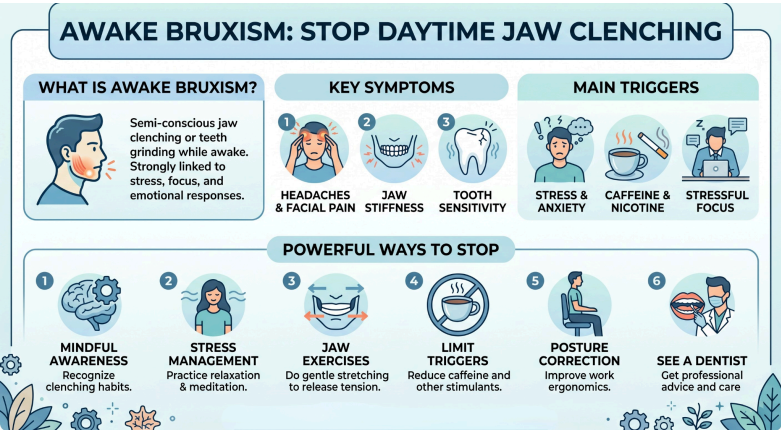
Awake bruxism is a subtype of bruxism that involves clenching or grinding your teeth while you are awake. Unlike sleep bruxism, this condition is often semi-conscious and closely tied to stress, focus, and emotional responses.
From a clinical perspective, awake bruxism involves repetitive jaw muscle activity, particularly in the masseter muscle, and is regulated by the brain. It is also influenced by behavioral patterns and psychological stress responses.
Difference Between Awake and Sleep Bruxism
- Awake bruxism occurs during conscious states and is behavior-driven.
- Sleep bruxism occurs during sleep cycles and is neurologically driven.
- Awake bruxism is linked to stress and habit formation.
- Sleep bruxism is associated with sleep disorders and brain activity.
Neurological and Behavioral Mechanisms
Awake bruxism is strongly connected to the body’s fight-or-flight response, where stress activates muscle tension. Over time, this becomes a learned habit, reinforced through habit loops and unconscious behavior.
Signs and Symptoms
Physical Symptoms
- Jaw tightness and stiffness
- Headaches and facial pain
- Tooth sensitivity due to tooth wear
- Neck and shoulder discomfort
Behavioral Patterns
- Clenching teeth while concentrating
- Pressing tongue against teeth
- Lip or cheek biting
- Persistent facial tension
These symptoms often overlap with conditions like myofascial pain syndrome.
Causes of Awake Bruxism
Psychological Factors
Stress and anxiety are the primary triggers. Individuals with anxiety disorders are more likely to develop jaw clenching habits.
- Stress increases muscle tension
- Anxiety triggers clenching behavior
- Emotional overload activates nervous system response
Lifestyle and Neurological Triggers
- Caffeine stimulates the central nervous system
- Smoking worsens muscle hyperactivity
- Poor sleep disrupts nervous system balance
Dental and Occlusal Issues
Problems with occlusion (bite alignment) can contribute to bruxism. Misaligned teeth increase strain on the temporomandibular joint.
Why Awake Bruxism Is Dangerous
Effects on Teeth and Enamel
- Enamel erosion
- Cracks and fractures
- Increased sensitivity
Impact on Jaw and Muscles
- Muscle fatigue
- Pain during chewing
- Restricted jaw movement
Long-Term Complications
Untreated awake bruxism may lead to temporomandibular joint disorder, chronic headaches, and permanent dental damage.
Diagnosis and Clinical Evaluation
Self-Assessment
- Do you clench during stress?
- Is your jaw frequently tight?
- Do you experience headaches?
Professional Diagnosis
A professional in dentistry will evaluate the following:
- Tooth wear patterns
- Jaw alignment
- Muscle activity
Trusted organizations like the American Dental Association and National Institute of Dental and Craniofacial Research provide clinical guidelines for diagnosis and treatment.
12 Powerful Ways to Stop Awake Bruxism
- Awareness Training – Awareness training helps control unconscious clenching habits.
- Stress Management – Relaxation reduces nervous system activation.
- Jaw Exercises – Exercises reduce muscle tension.
- Posture Correction – Proper ergonomics prevents strain.
- Avoiding Triggers – Reduce caffeine and stimulants.
- Mouth Guards – Use an occlusal splint to protect enamel.
- Relaxation Techniques – Includes breathing and mindfulness meditation.
- Behavioral Therapy – Cognitive Behavioral Therapy reduces bruxism habits.
- Hydration – Supports muscle function.
- Diet Changes – Soft foods reduce jaw stress.
- Biofeedback Therapy – Biofeedback therapy trains muscle relaxation.
- Regular Dental Visits – Preventive care reduces long-term damage.
Jaw Relaxation Exercises
- Open mouth slowly and hold
- Move jaw side to side
- Rest tongue on palate
These exercises improve neuromuscular control and reduce tension.
Lifestyle and Behavioral Changes
Sleep and Routine
Good sleep supports nervous system balance.
Work Habits
- Take breaks
- Practice ergonomic posture
- Reduce screen stress
These changes support nervous system regulation and reduce clenching triggers.
When to Seek Professional Help
Seek help if you notice:
- Severe jaw pain
- Clicking or locking jaw
- Persistent headaches
- Tooth damage
Early intervention prevents complications.
FAQs
1. Can awake bruxism go away on its own?
Yes, but only if stress and habits are addressed.
2. Is awake bruxism neurological or behavioral?
It is linked to both the nervous system and learned behaviors.
3. How do I relax my jaw instantly?
Keep teeth apart, relax shoulders, and breathe deeply.
4. Does caffeine worsen awake bruxism?
Yes, it increases nervous system stimulation.
5. What is the best treatment?
A combination of awareness, stress control, and therapy works best.
6. Is TMJ related to bruxism?
Yes, bruxism can lead to TMJ disorders.
Conclusion
Awake bruxism is more than just a habit; it’s a complex interaction between the brain, muscles, and behavior. It involves the nervous system, psychological stress, and physical strain on the jaw.
The key to stopping it lies in awareness, lifestyle changes, and targeted therapies. By addressing both the mental and physical aspects, you can break the cycle and protect your oral health long-term.