
Electric Toothbrush for Kids: Is an Electric Toothbrush for Kids Safe for Baby Teeth?
Electric toothbrushes for kids: discover whether they’re safe for baby teeth, their benefits, risks, dentist recommendations, and how to choose the best option for your child.
Introduction to Electric Toothbrushes for Kids
An electric toothbrush for kids is quickly becoming a go-to tool for parents who want better oral hygiene for their children. With smart features, colorful designs, and gentle cleaning power, these toothbrushes promise both effectiveness and fun.
But many parents still wonder: Is an electric toothbrush for kids safe for baby teeth?
According to dental authorities like the American Dental Association and the American Academy of Pediatric Dentistry, maintaining proper brushing habits early in life is critical for long-term oral health. And yes, when used correctly, electric toothbrushes can play a key role.
This guide combines expert-backed insights, real-world parenting tips, and science-based facts to help you make the best decision.
Understanding Baby Teeth and Oral Development
Baby teeth, also known as primary teeth, begin erupting around 6 months and continue until age 3. These teeth are essential for chewing, speech development, and guiding permanent teeth into place.
However, baby teeth are more delicate because they have thinner layers of tooth enamel. This makes them more vulnerable to decay, especially conditions like early childhood caries.
Another important factor is the presence of dental plaque, a sticky film of bacteria that builds up on teeth. If not removed, plaque can lead to gum inflammation such as gingivitis.
This is why proper brushing, whether manual or electric, is essential from an early age.
Are Electric Toothbrushes Safe for Baby Teeth?
Dentist Recommendations and Guidelines
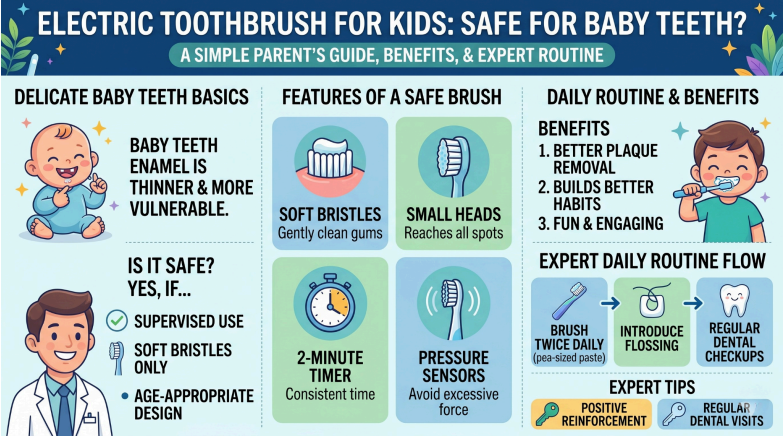
Experts from the American Academy of Pediatric Dentistry confirm that an electric toothbrush for kids is safe when:
- It uses soft bristles
- It is age-appropriate
- Brushing is supervised
Electric toothbrushes often use technologies like Sonic technology and Oscillating-rotating technology, which improve cleaning efficiency without harming enamel.
Safety Features to Look For
To ensure safety, choose an electric toothbrush with:
- Soft, rounded bristles
- Small brush heads to prevent choking hazards
- Built-in timers for 2-minute brushing
- Pressure sensors to avoid enamel wear
- Gentle vibration settings
These features help prevent issues like enamel erosion and gum damage.
Benefits of Electric Toothbrushes for Kids
Improved Plaque Removal
An electric toothbrush for kids can significantly improve plaque removal. Studies referenced by the American Dental Association show that powered brushes are often more effective than manual ones.
Better Brushing Habits
Kids often lack the coordination needed for proper brushing. Electric toothbrushes simplify the process, helping build consistent habits and reinforcing oral hygiene routines.
Fun, Engagement, and Habit Formation
Modern electric toothbrushes turn brushing into a game. Many models, like Oral-B Kids Electric Toothbrush and Philips Sonicare for Kids, include apps, timers, and interactive features.
This supports habit formation, a critical behavioral factor in long-term dental health.
Potential Risks and How to Avoid Them
Overbrushing and Enamel Wear
Excessive force can damage enamel. Since baby teeth are softer, this risk is higher.
Prevention: Use pressure sensors and teach gentle brushing.
Gum Sensitivity
Some kids may feel discomfort when starting.
Prevention: Begin with low settings and gradually increase intensity.
Improper Use and Supervision
Children may chew on the brush or misuse it.
Prevention: Always supervise brushing under age 7.
Additional Safety Concerns
- Use only a pea-sized amount of fluoride toothpaste
- Avoid swallowing toothpaste
- Check batteries and device safety regularly
Manual vs Electric Toothbrushes for Kids
| Feature | Manual Toothbrush | Electric Toothbrush |
|---|---|---|
| Cleaning Efficiency | Moderate | High |
| Ease of Use | Requires skill | Easy |
| Engagement | Low | High |
| Cost | Low | Moderate |
| Best For | Older kids | Younger children |
An electric toothbrush for kids often delivers better results, especially for beginners.
How to Choose the Best Electric Toothbrush for Kids
Age-Appropriate Design
Choose models designed specifically for your child’s age group.
Bristle Type
Always go with soft bristles to protect enamel and gums.
Technology: Sonic vs Oscillating
- Sonic: Gentle vibrations
- Oscillating: Rotating brush head for deeper cleaning
Timer and Pressure Sensors
These features ensure proper brushing time and safe pressure levels.
When Should Kids Start Using Electric Toothbrushes?
Most dentists recommend introducing an electric toothbrush for kids around age 3. However, readiness depends on the child.
For younger children:
- Start with manual brushing
- Gradually introduce electric options
Complete Kids Oral Hygiene Routine
A strong oral care routine includes:
- Brushing twice daily
- Using fluoride toothpaste
- Introducing flossing when teeth touch
- Regular dental checkups
Healthy routines prevent plaque buildup and reduce cavity risk.
Tips for Safe Brushing with Electric Toothbrush
- Brush for 2 minutes twice daily
- Hold the brush gently; don’t scrub
- Replace brush heads every 3 months
- Clean the toothbrush regularly
- Store in a dry place
Consistency is key to success.
Common Mistakes Parents Make
- Allowing unsupervised brushing too early
- Using too much toothpaste
- Ignoring brushing duration
- Skipping dental visits
Avoiding these mistakes can significantly improve oral health outcomes.
Expert Tips from Pediatric Dentists
Pediatric dentists emphasize the following:
- Early habit formation
- Positive reinforcement
- Regular dental visits
- Parental involvement
They also highlight the importance of preventive care in avoiding long-term issues.
FAQs
1. Is an electric toothbrush safe for toddlers?
Yes, when used under supervision and with age-appropriate settings.
2. Can electric toothbrushes damage baby teeth?
No, as long as soft bristles and proper technique are used.
3. What is better: a sonic or oscillating toothbrush?
Both are effective; the choice depends on comfort and preference.
4. How much toothpaste should kids use?
A pea-sized amount of fluoride toothpaste is recommended.
5. How do I prevent my child from swallowing toothpaste?
Supervise brushing and teach them to spit it out.
6. Are electric toothbrushes worth the cost?
Yes, they often improve brushing efficiency and habits.
Conclusion
An electric toothbrush for kids is not only safe for baby teeth but also highly effective in improving oral hygiene. Backed by experts like the American Dental Association, these tools support better brushing habits, reduce plaque, and make oral care more engaging.
The key is proper use: choosing the right brush, supervising your child, and maintaining a consistent routine.
Healthy habits today build strong smiles for tomorrow.