
Traveling with Invisalign: Tips for Managing Trays on a Plane
Traveling with Invisalign can feel challenging at first, especially when you’re flying. From managing meals on a plane to maintaining hygiene in tight spaces, it’s easy to worry about staying consistent. However, with the right habits and preparation, you can travel confidently without slowing your treatment progress.
Invisalign requires discipline. Aligners must be worn for 20-22 hours daily, and skipping wear time even during travel can delay results. Still, with smart planning, traveling with Invisalign becomes a seamless part of your routine.
Why Traveling with Invisalign Requires Planning
Travel disrupts normal routines, and orthodontic care depends heavily on consistency. Long flights, time zone changes, and limited hygiene access can all affect your aligner schedule.
For example, air travel often causes dry mouth due to cabin conditions. Reduced saliva levels increase bacterial activity, which can lead to plaque buildup and oral health issues such as tooth decay or gingivitis.
Saliva plays a key protective role in oral health by washing away bacteria and neutralizing acids. When traveling, staying hydrated becomes essential to maintain this natural defense.
Understanding Invisalign Before You Travel
How Invisalign Works
Invisalign aligners are made from medical-grade thermoplastic designed to gradually move teeth through controlled pressure. This process involves bone remodeling, where the jawbone adapts to new tooth positions over time.
Each aligner set is worn for about 1-2 weeks, and consistency is critical. Orthodontists monitor progress to ensure the teeth shift correctly and safely.
Importance of Wearing Aligners Consistently
Wearing aligners less than the recommended time can lead to:
- Delayed treatment
- Poor alignment results
- Increased discomfort
Maintaining proper oral hygiene and consistent dental care routines is important even while traveling.
Preparing for Your Trip with Invisalign
Packing Essentials Checklist
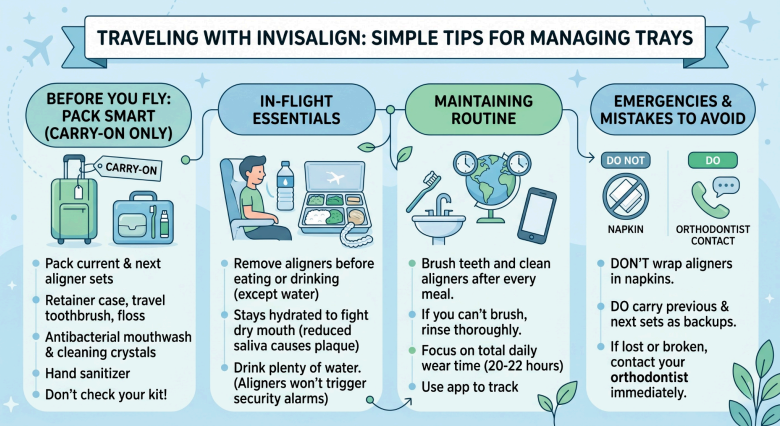
A well-prepared Invisalign travel kit ensures you’re ready for any situation. Include:
- Current and next aligner sets
- Retainer case
- Travel toothbrush
- Dental floss
- Antibacterial mouthwash
- Aligner cleaning crystals
- Hand sanitizer
Carry-On vs Checked Luggage
Always keep your Invisalign kit in your carry-on. Lost luggage can disrupt your treatment and create unnecessary stress.
Managing Invisalign on a Plane
Eating and Drinking During Flights
When traveling with Invisalign, you must remove aligners before eating or drinking anything except water. This helps prevent staining and bacterial buildup.
Aligners can trap food particles and bacteria, which increases the risk of plaque formation, a sticky biofilm that contributes to tooth decay.
Hydration and Oral Health
Staying hydrated is critical during flights. Airplane cabins reduce moisture levels, which can affect saliva production. Since saliva helps control bacteria, dehydration may increase oral health risks.
Drink plenty of water and avoid sugary or acidic beverages to protect your enamel and aligners.
Oral Hygiene While Traveling
Brushing and Flossing in Transit
Maintaining oral hygiene while traveling with Invisalign is essential. After meals:
- Rinse your mouth
- Brush your teeth
- Clean your aligners
- Reinsert them
If brushing isn’t possible, rinse thoroughly and clean your teeth as soon as you can.
Hygiene Science and Bacteria Control
Aligners create a closed environment over teeth, which can trap bacteria. Without proper cleaning, this may lead to plaque buildup and bad breath.
Maintaining hygiene practices during travel helps reduce oral health risks.
Long-Haul Flights and Time Zones
Adjusting Your Schedule
Time zone changes can affect your aligner routine. Focus on total wear time rather than local clock time. Make sure you still wear aligners for at least 20-22 hours daily.
Jet Lag and Oral Health
Jet lag can disrupt habits, including oral care. Fatigue may cause you to skip brushing or forget to reinsert aligners. Staying mindful helps prevent setbacks.
Airport Security and Dental Supplies
Security screening is usually simple when traveling with Invisalign. Aligners typically won’t trigger alarms. Small dental care items can generally be carried in hand luggage if they meet liquid restrictions.
Emergencies and Backup Planning
Lost or Broken Aligners
Unexpected issues can happen during travel. If aligners are lost or damaged:
- Use your previous set temporarily
- Switch to the next set if advised
Professional Support
Keep your orthodontist’s contact information handy. Many providers offer virtual consultations for emergencies.
Eating Out While Traveling
Choosing Invisalign-Friendly Foods
Select foods that are easy to chew, especially after switching to a new aligner set. Avoid sticky or hard foods that may cause discomfort.
Dining Etiquette Tips
Removing aligners in public can feel uncomfortable. Use restrooms or private areas to handle them discreetly.
Maintaining Routine on Vacation
Staying Consistent
Consistency is the key to successful treatment. Even during vacations, maintaining your Invisalign routine ensures steady progress.
Tracking Wear Time
Using tools like the My Invisalign app can help monitor wear time and keep you accountable.
Invisalign vs Braces While Traveling
Traveling with Invisalign offers several advantages over traditional braces.
| Feature | Invisalign | Braces |
|---|---|---|
| Removability | Yes | No |
| Cleaning | Easy | Difficult |
| Comfort | High | Moderate |
| Food Restrictions | Minimal | Many |
This flexibility makes Invisalign a preferred choice for frequent travelers.
Common Mistakes to Avoid
- Wrapping aligners in napkins
- Skipping oral hygiene
- Drinking sugary beverages with aligners in
- Not carrying backup trays
- Ignoring dehydration
Benefits of Traveling with Invisalign
- Discreet appearance
- Comfortable wear
- Easy maintenance
- Flexibility during meals
Frequently Asked Questions
Can I wear Invisalign through airport security?
Yes, aligners are safe and typically will not trigger alarms.
How do I clean aligners on a plane?
Rinse them with water and clean them properly when possible.
What happens if I don’t wear aligners for a day?
Your teeth may shift slightly, which can make reinserting the aligners more uncomfortable.
Can I drink coffee with Invisalign on a flight?
No. Remove your aligners first to avoid staining.
How does dehydration affect Invisalign use?
Dehydration reduces saliva, which can increase bacterial growth and oral health risks.
Should I carry extra aligners while traveling?
Yes. Always carry backup sets to avoid interruptions in treatment.
Conclusion
Traveling with Invisalign doesn’t have to disrupt your treatment. With proper planning, consistent hygiene, and awareness of travel-related challenges, you can maintain progress wherever you go.
Understanding how factors like dehydration, bacteria, and routine disruption affect your aligners allows you to make smarter decisions during your journey. By staying prepared and disciplined, you can keep your smile on track no matter the destination.