
Why You Might Need a Bone Graft Before Receiving a Dental Implant
Introduction to Dental Implant Bone Graft
A dental implant bone graft is often the hidden foundation behind a successful dental implant. While many people focus on the visible tooth replacement, the real success begins deep within the jawbone, specifically in the alveolar bone, the part of the jaw that supports teeth.
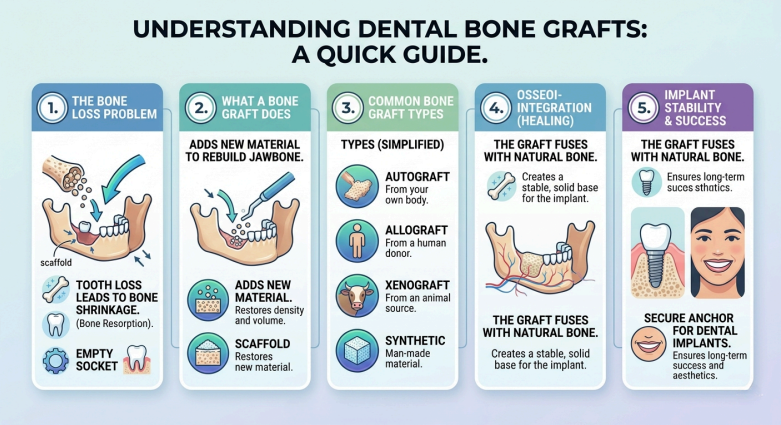
When a tooth is lost, the jawbone does not just sit idle. Instead, it begins a biological process called bone resorption, where the bone gradually shrinks due to lack of stimulation. Over time, this loss of bone density can make it impossible to securely place a dental implant.
That is where a bone graft becomes essential. A dental implant bone graft restores jawbone density, supports future implant placement, and creates the conditions needed for long-term success.
What Is a Dental Implant Bone Graft?
A dental implant bone graft is a procedure that adds bone or bone-like material to areas where the jawbone has weakened or deteriorated. This graft acts as a scaffold, allowing your body to regenerate new bone tissue through natural processes like bone remodeling and osteoblast activity.
Once placed, the graft integrates with your natural bone, forming a strong, stable base. This process is critical because osseointegration, the fusion of the implant with the bone, requires sufficient bone volume and density.
Why Bone Density Matters for Dental Implants
Dental implants depend on stability. Without enough bone, the implant cannot anchor securely. This can lead to implant failure, discomfort, and additional procedures.
- The jawbone supports chewing forces
- Strong bone ensures implant longevity
- Adequate volume allows proper implant positioning
Modern dentistry uses advanced imaging such as a CBCT scan to evaluate bone structure before treatment. This helps dentists create precise, personalized treatment plans.
Common Reasons You Might Need a Bone Graft
Bone Loss After Tooth Extraction
After a tooth extraction, the jawbone begins to shrink. This happens because the bone no longer receives stimulation from the tooth root. Within months, noticeable bone loss can occur.
Periodontal Disease and Bone Damage
Advanced gum disease, known as periodontitis, destroys both soft tissue and bone. Over time, this condition weakens the structural integrity of the jaw.
Trauma or Injury
Accidents or facial trauma can damage the jawbone. In such cases, bone grafting helps restore lost structure and prepares the area for implant placement.
Natural Bone Resorption Over Time
Even without disease or injury, aging leads to gradual bone density loss. This natural process can make implant placement challenging without prior grafting.
Types of Bone Grafts Used in Dentistry
Autografts
Bone taken from your own body. These grafts are highly compatible and promote faster healing.
Allografts
Bone sourced from human donors. These are processed and safe, commonly used in modern dentistry.
Xenografts
Derived from animal sources, usually bovine. They act as a framework for new bone growth.
Synthetic Bone Grafts
Synthetic materials such as hydroxyapatite and beta-tricalcium phosphate mimic natural bone and support regeneration.
Step-by-Step Dental Implant Bone Graft Procedure
Consultation, Imaging, and Diagnosis
The process begins with a detailed evaluation by a dental professional, often a prosthodontist or an oral surgeon. Using advanced tools like 3D dental imaging, the dentist assesses bone density, identifies deficiencies, and plans the graft.
Bone Grafting Surgery
- The dentist makes a small incision in the gum.
- The graft material is placed into the deficient area.
- The site is secured and sutured.
Healing, Bone Regeneration, and Integration
Over several months, the graft becomes part of your jawbone. This process ensures the area is strong enough for implant placement.
Benefits of a Dental Implant Bone Graft
Improved Implant Stability
A strong jawbone provides a secure foundation and significantly increases the success rate of dental implants.
Long-Term Oral Health
Bone grafting prevents further bone loss and supports surrounding teeth. It also reduces the risk of future dental complications.
Enhanced Facial Structure
Bone loss can lead to a sunken facial appearance. A graft restores volume and helps maintain natural facial contours.
Risks and Considerations
Potential Complications
- Infection
- Swelling
- Delayed healing
Who Is Not a Good Candidate?
- Smokers
- People with uncontrolled diabetes
- Patients with poor oral hygiene
Recovery and Aftercare Tips
What to Expect After Surgery
Patients may experience mild discomfort and swelling. These symptoms typically subside within a few days.
Diet, Medication, and Lifestyle
- Eat soft foods
- Stay hydrated
- Avoid smoking and alcohol
- Follow all post-operative instructions
Cost of Dental Implant Bone Graft
Factors Affecting Cost
- Type of graft material used
- Complexity of the case
- Expertise of the dental professional
Is It Worth the Investment?
Yes. A dental implant bone graft improves implant success rates, reduces long-term complications, and supports overall oral health.
Alternatives to Bone Grafting
Zygomatic Implants
These implants anchor into the cheekbone instead of the jawbone, bypassing the need for grafting in some cases.
Short Implants
Shorter implants may be used when bone height is limited, though they are not suitable for all patients.
FAQs
1. Is a dental implant bone graft painful?
No, the procedure is done under anesthesia. Mild discomfort afterward is normal and manageable.
2. How long does healing take?
Healing typically takes 3 to 6 months, depending on the extent of the graft.
3. Can I get an implant immediately after a bone graft?
In some cases, yes. However, most patients need to wait until the graft fully integrates.
4. Is a dental implant bone graft safe?
Yes, it is a routine and highly successful procedure when performed by qualified professionals.
5. What happens if I skip the bone graft?
Skipping it may lead to implant failure due to insufficient support.
6. Does bone grow back naturally after extraction?
Bone regenerates partially, but often not enough to support implants without grafting.
Conclusion
A dental implant bone graft is not just an optional step. It is often the key to a successful dental implant. By restoring lost bone, supporting implant stability, and improving long-term outcomes, this procedure plays a vital role in modern dentistry.
If your dentist recommends a bone graft, it is a proactive step toward a stronger, healthier smile. With advanced materials, precise imaging, and expert care, bone grafting is safer and more effective than ever.