
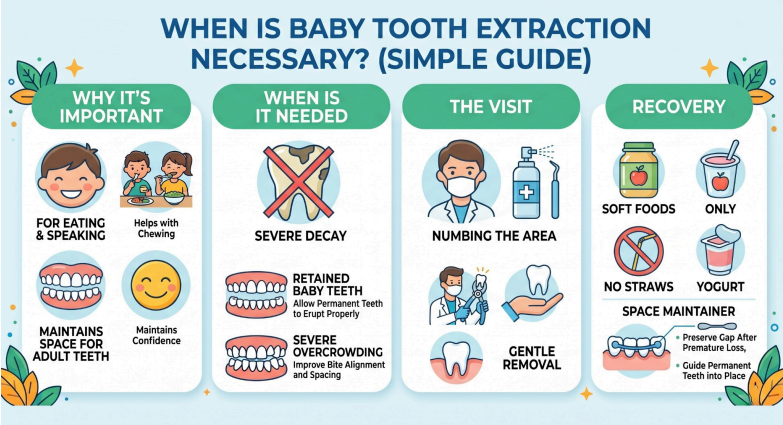
When is Baby Tooth Extraction Clinically Necessary?
Baby tooth extraction may be necessary when severe decay, infection, crowding, or dental trauma affects your child’s oral health.
Introduction
Baby tooth extraction is a common pediatric dental procedure, but dentists usually recommend it only when it’s clinically necessary. While baby teeth eventually fall out naturally, some situations require professional removal to protect a child’s oral health and jaw development.
Primary teeth play an important role in chewing, speech, bite alignment, and guiding permanent teeth into place. When a baby tooth becomes severely infected, damaged, or blocks proper tooth eruption, removing it may prevent larger dental problems later.
A pediatric dentist carefully evaluates the child’s condition before recommending extraction. In many cases, early treatment helps prevent infection spread, orthodontic complications, and discomfort.
Why Baby Teeth Are Important
Many parents assume baby teeth are temporary and therefore less important. In reality, primary teeth help maintain proper spacing for adult teeth and support healthy oral development.
Baby teeth also help children:
- Chew food properly
- Speak clearly
- Develop healthy jaw alignment
- Maintain confidence while smiling
- Guide permanent teeth into position
If baby teeth are lost too early, nearby teeth may shift into empty spaces. This can lead to crowding, malocclusion, and impacted permanent teeth later on.
That’s why pediatric dentists try to save primary teeth whenever possible through treatments such as pulpotomy or pulpectomy before considering extraction.
When is Baby Tooth Extraction Clinically Necessary?
Several dental conditions may make baby tooth extraction necessary. Dentists evaluate the severity of the problem, the child’s age, and the stage of tooth eruption before deciding on treatment.
Common Reasons for Baby Tooth Extraction
| Condition | Why Extraction May Be Needed |
|---|---|
| Severe tooth decay | Prevents infection spread |
| Dental abscess | Removes infected tooth |
| Dental trauma | Protects surrounding teeth |
| Retained baby teeth | Allows permanent teeth to erupt |
| Severe crowding | Improves bite alignment |
| Advanced gum infection | Protects oral tissues |
In many situations, removing the tooth helps protect surrounding teeth, gums, and developing permanent teeth.
Severe Tooth Decay and Dental Abscess
One of the most common reasons for baby tooth extraction is severe tooth decay caused by oral bacteria. Early childhood caries can rapidly damage enamel and spread into the dental pulp.
When infection reaches the inside of the tooth, children may experience:
- Persistent tooth pain
- Swollen gums
- Facial swelling
- Sensitivity to hot or cold foods
- Fever
- Bad breath
A dental abscess may develop if the infection spreads beneath the gums. Left untreated, the infection can affect nearby teeth and even developing permanent teeth.
Pediatric dentists may first attempt treatments like pulpotomy or pulpectomy to save the tooth. However, if the tooth structure is badly damaged, extraction may become the safest option.
Dental Trauma and Injuries
Children are active, and accidents happen. Falls, sports injuries, and playground incidents can crack or loosen baby teeth.
Dental trauma may require baby tooth extraction when:
- The tooth breaks below the gumline
- The tooth becomes severely loose
- Infection develops after injury
- The damaged tooth affects nearby teeth
- The injury interferes with jaw development
Quick dental care is important because trauma can also affect the permanent tooth developing underneath the gums.
Orthodontic Problems and Crowding
Sometimes baby tooth extraction is recommended to prevent orthodontic complications. If the mouth lacks enough space for erupting permanent teeth, overcrowding can occur.
Premature tooth loss may also contribute to the following:
- Crossbite
- Overbite
- Underbite
- Crooked teeth
- Bite alignment issues
Orthodontists sometimes recommend strategic extraction to improve tooth eruption and reduce future crowding.
Retained baby teeth can also block permanent teeth from erupting properly. This may cause impacted permanent teeth or double rows of teeth.
Dental X-rays help pediatric dentists evaluate root resorption, tooth positioning, and hidden eruption problems before treatment.
What Happens During Baby Tooth Extraction
Modern pediatric dentistry makes baby tooth extraction safe and comfortable for children.
Step-by-Step Procedure
- The pediatric dentist examines the tooth and reviews dental X-rays.
- Local anesthesia numbs the area around the tooth.
- Nitrous oxide sedation may be used to reduce dental anxiety.
- The dentist gently loosens the tooth.
- The tooth is carefully removed.
- Gauze is placed to support blood clot formation.
Most procedures take less than 30 minutes.
Children typically feel pressure during extraction but little to no pain because the area is numb.
Recovery and Aftercare
Recovery after baby tooth extraction is usually quick when parents follow proper aftercare instructions.
After extraction, a blood clot forms inside the tooth socket. This clot protects the area and supports healing.
Important Aftercare Tips
- Avoid drinking through straws
- Provide soft foods for the first day
- Encourage rest
- Use a cold compress if swelling occurs
- Maintain gentle oral hygiene
- Prevent vigorous rinsing
Soft foods after extraction may include:
- Yogurt
- Applesauce
- Mashed potatoes
- Oatmeal
- Soup
- Scrambled eggs
Most children recover within a few days.
Parents should contact the dentist if they notice:
- Excessive bleeding
- Fever
- Severe swelling
- Persistent pain
- Signs of infection
Space Maintainers After Extraction
When a baby tooth is removed too early, nearby teeth may drift into the empty space. This can affect tooth spacing and future bite alignment.
A space maintainer is a small dental appliance used to preserve the gap left behind after premature tooth loss.
Pediatric dentists may recommend a space maintainer when:
- A baby molar is lost early
- Permanent teeth are not ready to erupt
- Crowding risks are present
- Orthodontic complications are likely
Space maintainers help guide permanent teeth into proper positions and reduce the risk of malocclusion later.
FAQs
Can infected baby teeth affect adult teeth?
Yes. Untreated infection can spread beneath the gums and affect developing permanent teeth.
What is a space maintainer?
A space maintainer preserves tooth spacing after premature baby tooth extraction and helps guide adult teeth properly.
Do all rotten baby teeth need extraction?
No. Pediatric dentists may save the tooth using pulpotomy or pulpectomy if the damage is not severe.
Is sedation safe for children?
Yes. Nitrous oxide sedation and local anesthesia are commonly used in pediatric dentistry to reduce anxiety and discomfort safely.
Conclusion
Baby tooth extraction becomes clinically necessary when severe decay, infection, trauma, or orthodontic concerns threaten a child’s oral health. While dentists always try to preserve primary teeth when possible, extraction may help prevent infection spread, crowding, and long-term dental complications.
Early evaluation by a pediatric dentist is important whenever a child experiences persistent tooth pain, swelling, dental trauma, or delayed tooth eruption. With proper treatment and aftercare, most children recover quickly and continue developing healthy smiles.