
Identifying the Underlying Causes of a Severe Toothache Before Your Appointment
A severe toothache can affect nearly every part of your day. Eating becomes difficult, sleeping feels impossible, and even speaking may trigger discomfort. While many people hope the pain will disappear on its own, severe toothache causes often point to deeper oral health problems involving infection, inflammation, nerve irritation, or structural tooth damage.
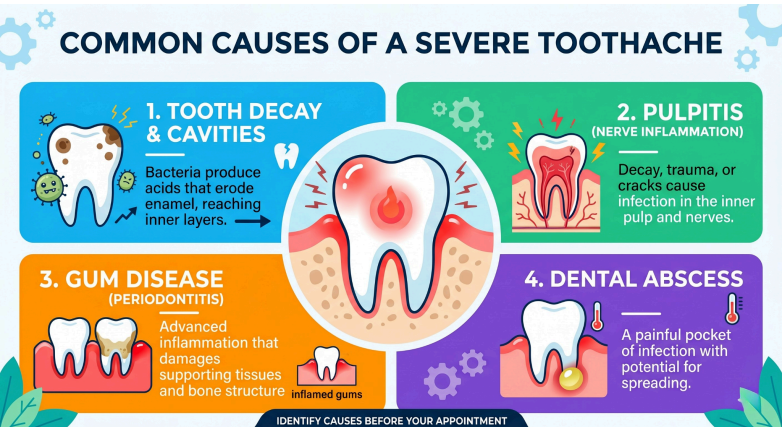
In many cases, tooth pain develops when oral bacteria invade weakened enamel and reach the inner tooth structures. Bacteria produce acid that gradually destroys tooth enamel, leading to cavities and deeper dental complications. If untreated, tooth decay causes nerve inflammation inside the dental pulp, eventually triggering severe throbbing pain.
Some toothaches develop suddenly after dental trauma or a cracked tooth, while others worsen slowly due to gum disease, plaque biofilm accumulation, enamel erosion, or untreated infection. In advanced situations, a dental abscess may lead to facial swelling, pus drainage, fever, and even infection spread into surrounding tissues.
What Defines a Severe Toothache?
A severe toothache is intense or persistent dental pain affecting the teeth, gums, jaw, or surrounding oral tissues. The pain may feel sharp, throbbing, pulsating, or stabbing. Some people experience constant discomfort, while others notice pain only when chewing, biting, or consuming hot and cold foods.
Pain severity often depends on which tooth structures are affected.
For example:
| Affected Structure | Possible Result |
|---|---|
| Tooth enamel | Sensitivity |
| Dentin exposure | Sharp pain |
| Dental pulp | Throbbing nerve pain |
| Gum tissue | Inflammation |
| Jawbone | Deep aching pain |
When enamel erosion exposes dentin, sensitive nerve pathways become vulnerable to temperature changes. Likewise, pulpitis occurs when bacteria invade the dental pulp, causing inflammation and pressure within the tooth.
Common symptoms include:
- Severe throbbing tooth pain
- Sensitivity to hot or cold beverages
- Pain when biting
- Swollen gums
- Persistent bad breath
- Jaw tenderness
- Ear pain
- Facial swelling
- Headaches
Many patients also notice that tooth pain worsens at night because increased blood flow to the head can intensify nerve pressure inside the tooth.
Why Tooth Pain Should Never Be Ignored
Tooth pain rarely disappears permanently without treatment. In fact, many severe toothache causes worsen over time as infection, inflammation, or structural damage progresses deeper into oral tissues.
An untreated cavity may eventually expose the tooth nerve, while untreated gingivitis may progress into periodontitis, damaging supporting bone tissue around the teeth.
Here’s how dental conditions can escalate:
| Dental Condition | Potential Consequence |
|---|---|
| Untreated cavity | Root canal therapy |
| Dental abscess | Infection spread |
| Periodontitis | Tooth loss |
| Tooth fracture | Pulp exposure |
| Bruxism | Jaw pain and enamel wear |
| Receding gums | Tooth sensitivity |
Inflammation is one of the body’s natural immune responses, but chronic inflammation inside the mouth can damage healthy tissues over time. Severe toothache causes linked to oral infection may also increase the risk of systemic complications if bacteria enter the bloodstream.
The Most Common Severe Toothache Causes
Tooth Decay and Cavities
Tooth decay remains one of the most common severe toothache causes worldwide. Plaque biofilm forms when oral bacteria combine with food particles and saliva on the tooth surface. These bacteria produce acid that weakens enamel and creates cavities.
At first, cavities may cause mild sensitivity. However, once decay reaches deeper layers like dentin or pulp tissue, the pain often becomes severe.
Signs of advanced tooth decay include:
- Brown or black spots on teeth
- Sensitivity to sweets
- Pain when chewing
- Persistent toothache
- Sharp pain from cold beverages
If decay reaches the dental pulp, bacteria can infect the tooth nerve and cause pulpitis. In severe cases, necrotic pulp tissue may develop when the nerve loses blood supply and dies.
Pulpitis and Tooth Nerve Inflammation
Pulpitis is inflammation of the dental pulp, the soft inner tissue containing nerves and blood vessels. This condition commonly develops when untreated cavities, tooth fractures, or dental trauma expose the pulp to bacteria.
There are two forms of pulpitis:
| Type | Description |
|---|---|
| Reversible pulpitis | Mild inflammation that may heal |
| Irreversible pulpitis | Permanent nerve damage |
Irreversible pulpitis often causes intense throbbing dental pain that lingers after exposure to hot or cold temperatures.
A root canal treatment removes infected pulp tissue and disinfects the inside of the tooth. Without treatment, pulpitis may progress into a periapical abscess.
Gum Disease and Periodontitis
Gum disease begins with gingivitis, a mild form of gum inflammation caused by plaque accumulation near the gumline. When left untreated, gingivitis may advance into periodontitis, which damages supporting bone tissue and connective structures around the teeth.
Symptoms include:
- Bleeding gums
- Gum recession
- Persistent bad breath
- Swollen gums
- Loose teeth
- Painful chewing
Receding gums expose tooth roots and dentin, increasing tooth sensitivity and discomfort. Smoking, diabetes, dry mouth, xerostomia, and poor oral hygiene all increase the risk of gum disease progression.
Dental Abscess and Oral Infection
A dental abscess is a pocket of pus caused by bacterial infection. This condition is considered one of the most dangerous severe toothache causes because infection can spread into the jawbone, facial tissues, or bloodstream.
Common symptoms include:
- Severe throbbing pain
- Fever
- Facial swelling
- Swollen lymph nodes
- Pus drainage
- Bad taste in the mouth
An abscessed tooth often requires infection control measures such as antibiotics, drainage, root canal treatment, or tooth extraction.
Ignoring an abscess may lead to jawbone infection or serious medical complications.
Cracked Tooth Syndrome
Cracked tooth syndrome occurs when small fractures develop within a tooth structure. These fractures may expose dentin or pulp tissue, causing pain during chewing.
Common causes include:
- Biting hard foods
- Dental trauma
- Teeth grinding
- Sudden temperature changes
A crown fracture may worsen over time if left untreated. Dentists often recommend a dental crown to protect weakened teeth and restore proper occlusion.
Tooth Sensitivity and Enamel Erosion
Enamel erosion occurs when acids gradually wear away protective enamel layers. Once dentin becomes exposed, sensitive nerve endings react strongly to hot, cold, sweet, or acidic foods.
Contributors to enamel erosion include:
- Acid reflux
- Sugary drinks
- Soda consumption
- Aggressive brushing
- Dry mouth
- Teeth grinding
Saliva production normally helps neutralize acids and protect enamel. Reduced saliva flow increases cavity risk and sensitivity.
Impacted Wisdom Teeth
Wisdom teeth sometimes become trapped beneath the gums or emerge at improper angles. Impacted wisdom teeth can create pressure against nearby teeth and surrounding tissues.
Symptoms may include:
- Jaw pain
- Gum swelling
- Difficulty chewing
- Ear pain
- Facial discomfort
Infection around impacted wisdom teeth may also contribute to swelling and severe dental pain.
Less Common Causes of Severe Tooth Pain
Sinus Pressure and Maxillary Sinus Infections
The roots of upper molars sit close to the maxillary sinus cavities. When sinus inflammation develops, pressure may radiate into nearby teeth.
Common symptoms include:
- Nasal congestion
- Facial pressure
- Headache
- Pain in multiple upper teeth
Unlike cavity pain, sinus-related discomfort often affects several teeth simultaneously.
Bruxism and Teeth Grinding
Bruxism refers to chronic teeth grinding or jaw clenching, especially during sleep. Sleep bruxism places excessive pressure on enamel, muscles, and jaw joints.
Over time, bruxism causes the following:
- Tooth fractures
- Jaw pain
- Headaches
- Enamel wear
- Tooth sensitivity
Dentists frequently recommend custom night guards to reduce damage from grinding.
TMJ Disorders and Jaw Dysfunction
Temporomandibular joint disorders affect jaw movement and surrounding muscles. Because these joints sit close to oral nerves, TMJ dysfunction may mimic tooth pain.
Symptoms include:
- Clicking jaw
- Earaches
- Facial pain
- Difficulty chewing
- Jaw locking
Poor occlusion and chronic clenching can worsen TMJ symptoms.
Signs Your Toothache May Be Nerve-Related
Some symptoms strongly suggest tooth nerve involvement.
Warning Signs of Nerve Damage
| Symptom | Possible Meaning |
|---|---|
| Lingering hot sensitivity | Pulpitis |
| Sharp pain when biting | Cracked tooth |
| Throbbing pain at night | Inflamed pulp |
| Darkened tooth color | Necrotic pulp |
| Severe spontaneous pain | Nerve infection |
When bacteria invade the pulp chamber, pressure builds inside the tooth and irritates surrounding nerves.
How Dentists Diagnose Severe Toothaches
Dentists use multiple methods to identify severe toothache causes accurately.
Clinical Examination
Dentists may:
- Examine gums and teeth
- Tap on teeth
- Check bite alignment
- Evaluate swelling
- Review symptoms
Dental X-Rays and Imaging
Dental X-rays detect:
- Hidden decay
- Bone loss
- Abscesses
- Impacted teeth
- Crown fractures
An endodontist may perform advanced imaging if root canal therapy is necessary.
Root Canal vs Tooth Extraction
Patients often wonder whether saving or removing the tooth is the better option.
| Procedure | Purpose |
|---|---|
| Root canal | Removes infected pulp |
| Tooth extraction | Removes severely damaged tooth |
Root canal treatment preserves the natural tooth structure whenever possible. However, severely fractured teeth or advanced infections may require extraction followed by dental restoration options like implants or bridges.
Temporary Toothache Relief Before Your Appointment
Home remedies may temporarily reduce discomfort, but they don’t eliminate the underlying cause.
Helpful Temporary Remedies
- Warm saltwater rinses
- Cold compresses
- Over-the-counter pain relievers
- Clove oil
- Avoiding sugary foods
- Sleeping with head elevated
Many people search for how to stop tooth pain fast, but lasting relief usually requires professional dental care.
Severe Toothache Causes in Children
Children can also experience severe tooth pain from cavities, enamel defects, gum inflammation, or dental trauma.
Common causes include:
- Poor brushing habits
- Excess sugar intake
- Sports injuries
- Tooth eruption problems
Early dental visits help prevent long-term oral complications.
Severe Toothache During Pregnancy
Hormonal changes during pregnancy may increase gum sensitivity and inflammation. Pregnancy gingivitis can lead to swollen, bleeding gums and increased tooth discomfort.
Morning sickness and acid exposure may also contribute to enamel erosion.
Pregnant women experiencing severe dental pain should contact both their dentist and healthcare provider.
When Tooth Pain Becomes a Dental Emergency
Certain symptoms require urgent treatment.
Seek immediate care if you experience:
- Difficulty breathing
- Severe facial swelling
- Fever with tooth pain
- Pus drainage
- Uncontrolled bleeding
- Trauma causing tooth displacement
A spreading tooth infection can become dangerous if bacteria enter deeper tissues or the bloodstream.
Preventing Severe Toothaches
Prevention remains one of the best ways to avoid severe toothache causes.
Essential Prevention Tips
- Brush twice daily with fluoride toothpaste
- Floss every day
- Limit sugary snacks
- Stay hydrated
- Avoid smoking
- Visit your dentist regularly
- Wear a mouthguard during sports
Fluoride toothpaste strengthens enamel and helps reduce cavity formation.
Foods and Habits That Support Oral Health
Diet plays a major role in oral health maintenance.
Tooth-Friendly Foods
| Food | Benefit |
|---|---|
| Cheese | Supports enamel minerals |
| Yogurt | Contains probiotics |
| Leafy greens | Rich in calcium |
| Apples | Increase saliva production |
| Almonds | Low sugar content |
Habits That Protect Teeth
- Drinking water regularly
- Reducing soda intake
- Managing acid reflux
- Avoiding tobacco use
- Treating dry mouth early
Frequently Asked Questions
Why does my tooth hurt more at night?
Tooth pain often worsens at night because increased blood flow to the head intensifies pressure around inflamed nerves.
Can stress cause severe toothaches?
Yes. Stress commonly contributes to bruxism, jaw clenching, and muscle tension that may trigger dental pain.
Is throbbing tooth pain always an infection?
Not always, but throbbing pain frequently suggests pulp inflammation, infection, or pressure inside the tooth.
Can a cavity cause headaches?
Yes. Deep cavities and tooth nerve inflammation can radiate pain into the jaw, ear, and head.
What does an abscessed tooth feel like?
An abscessed tooth often causes throbbing pain, swelling, fever, pus drainage, and sensitivity to pressure.
Can tooth pain spread to the jaw and ear?
Yes. Oral nerves connect closely with facial structures, allowing pain to radiate into nearby areas.
How long can a tooth infection go untreated?
A tooth infection should never remain untreated because infection spread can become dangerous over time.
Conclusion
Understanding severe toothache causes before your dental appointment can help you recognize serious symptoms early and seek faster treatment. Tooth decay, pulpitis, gum disease, enamel erosion, dental abscesses, cracked teeth, and bruxism all contribute to severe oral pain in different ways.
Many dental conditions begin with minor symptoms but gradually worsen as bacteria, inflammation, and infection spread deeper into oral tissues. Untreated cavities may eventually expose the dental pulp, while advanced gum disease can damage supporting bone structures around the teeth.
Although temporary remedies may provide short-term relief, professional dental care remains essential for treating the underlying cause. Early diagnosis improves treatment outcomes and helps preserve natural teeth whenever possible.
By maintaining strong oral hygiene habits, reducing sugar intake, managing risk factors like dry mouth and acid reflux, and scheduling regular dental visits, you can greatly lower the risk of future toothaches and oral health complications.