
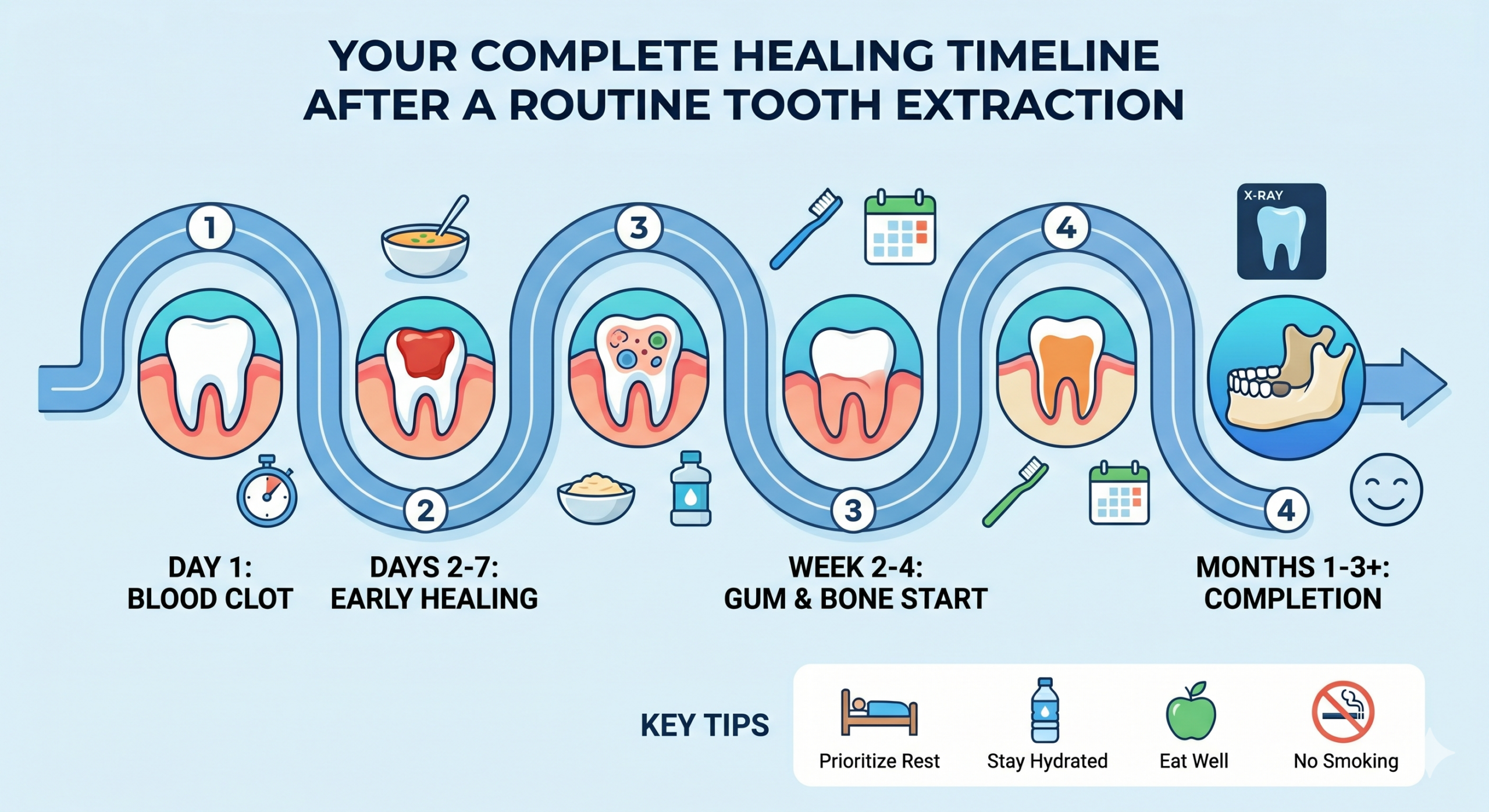
Having a tooth removed can feel intimidating, especially if you’re unsure how long recovery will take. Understanding tooth extraction healing time can help you prepare for each stage of recovery and know what to expect after your procedure.
Whether you’ve had a simple extraction due to severe decay, overcrowding, gum disease, or trauma, the healing process follows a predictable pattern. Recovery involves the extraction socket, surrounding gingival tissue, periodontal ligament, and alveolar bone working together through a natural wound healing process. Most people experience noticeable improvement within one to two weeks, while complete bone healing may take several months.
The good news is that with proper aftercare, most routine tooth extractions heal without complications. By following your dentist’s instructions and maintaining good oral hygiene, you can support faster recovery and reduce the risk of issues such as dry socket or infection.
This comprehensive guide explains every stage of tooth extraction healing time, from the first few hours after surgery to complete healing months later.
Understanding Tooth Extraction Healing Time
The term tooth extraction healing time refers to the period required for the extraction site to recover after a tooth has been removed. Healing occurs in multiple stages involving blood clot formation, gum tissue repair, and bone regeneration.
Tooth extraction recovery occurs in several biological stages, including the inflammatory phase, proliferative phase, and remodeling phase. During these stages, a protective blood clot forms inside the extraction wound, granulation tissue develops, and new connective tissue gradually replaces damaged structures. Over time, bone regeneration occurs as the jawbone adapts to the missing tooth.
| Healing Stage | Approximate Time |
| Blood clot formation | First 24 hours |
| Initial gum healing | 1-2 weeks |
| Soft tissue closure | 2-3 weeks |
| Bone healing begins | 3-4 weeks |
| Significant bone remodeling | 1-3 months |
| Complete bone healing | Up to 6 months |
Individual recovery times vary based on age, health status, and the complexity of the extraction.
Why Proper Healing Matters
Healing after a tooth extraction is about more than simply closing the socket. Proper recovery helps:
- Prevent infection
- Protect underlying bone
- Reduce pain and swelling
- Minimize complications
- Prepare the site for future dental treatment
- Support overall oral health
The blood clot that forms immediately after extraction plays a critical role. It acts as a natural protective barrier while new tissue develops underneath.
Factors That Affect Healing After Tooth Extraction
Several factors influence tooth extraction healing time and determine how quickly your mouth recovers.
Age and General Health
Younger individuals typically heal faster because their tissues regenerate more efficiently. Medical conditions such as diabetes, autoimmune disorders, and poor circulation may slow healing.
Smoking and Tobacco Use
Smoking significantly increases the risk of complications. Tobacco reduces blood flow, delays tissue repair, and can dislodge the protective blood clot.
Oral Hygiene Habits
Keeping the mouth clean reduces bacterial growth and promotes healthy recovery. However, aggressive rinsing or brushing near the extraction site should be avoided during the first few days.
Type of Extraction
Simple extractions generally heal faster than surgical procedures involving impacted teeth or extensive bone removal.
Medical Conditions and Healing Capacity
Certain medical conditions can affect tooth extraction healing time. Diabetes, poor circulation, autoimmune disorders, and a weakened immune response may slow tissue regeneration and collagen production. These factors can also increase the risk of bacterial contamination, delayed healing, and post-operative infection.
The First 24 Hours After Extraction
The first day is the most important stage of tooth extraction healing time because the foundation for recovery is established during this period.
Blood Clot Formation
Immediately after the tooth is removed, a blood clot forms inside the empty socket. This clot:
- Stops bleeding
- Protects bone and nerves
- Supports new tissue growth
- Prevents dry socket
The blood clot acts as a natural protective barrier that covers exposed bone and nerve endings inside the tooth socket. Clot stabilization is critical because the clot protects the underlying alveolar ridge and supports the early stages of tissue repair.
Protecting the clot is essential during the first 24 hours.
Managing Bleeding and Swelling
Some bleeding and mild swelling are normal. To control symptoms:
- Bite gently on gauze as directed
- Apply ice packs or a cold compress for 15–20 minutes at a time
- Rest with your head elevated
- Avoid strenuous activity
Do not spit forcefully, use straws, or smoke during this period.
Days 2-3: Early Recovery Stage
During the second and third days, your body begins repairing the extraction site.
What Is Normal During This Period?
Most patients experience:
- Mild discomfort
- Slight swelling
- Jaw stiffness
- Tenderness around the socket
Pain should gradually improve rather than worsen.
As inflammation begins to decrease, specialized healing cells start producing connective tissue within the extraction socket. New blood vessels develop inside the healing area, improving circulation and supporting soft tissue regeneration.
Foods to Eat
Choose soft foods that won’t disturb healing tissues.
Recommended options include:
- Yogurt
- Mashed potatoes
- Smooth soups
- Applesauce
- Scrambled eggs
- Oatmeal
- Smoothies eaten with a spoon
Staying hydrated supports tissue repair and recovery, while adequate protein intake helps tissue regeneration.
Days 4-7: Initial Tissue Repair
By the end of the first week, visible healing becomes more noticeable.
Changes Inside the Extraction Socket
Granulation tissue begins filling the socket. This specialized healing tissue contains:
- New blood vessels
- Collagen fibers
- Immune cells
- Early connective tissue
During this stage, fibroblasts produce collagen fibers that strengthen the extraction site. These fibers create a framework for future bone regeneration while helping stabilize newly formed tissue.
Many patients notice reduced swelling and significantly less discomfort during this phase.
You may also observe a white or yellowish appearance over the socket. In many cases, this represents normal healing tissue rather than infection.
Gentle oral hygiene practices, including a saltwater rinse or dentist-recommended antibacterial mouthwash, may help reduce bacterial growth and support healing.
Week 2: Significant Improvement
The second week marks a major milestone in tooth extraction healing time.
Gum Tissue Healing
During this period:
- Gum edges start closing
- Sensitivity decreases
- Swelling largely resolves
- Daily activities become easier
By the second week, much of the oral mucosa and gum tissue covering the extraction site has healed.
Most routine extraction sites appear substantially healed by the end of week two. Recovery may take longer following a surgical extraction, impacted tooth removal, or wisdom tooth extraction compared with a routine simple extraction.
Patients can often return to their normal diet gradually, although hard and crunchy foods should still be approached with caution.
Weeks 3-4: Bone Healing Begins
While the gums may appear healed externally, important changes continue beneath the surface.
Recovery Progress and Expectations
During weeks three and four:
- Bone-producing cells become active
- The extraction socket becomes smaller
- Tissue strength improves
- Discomfort is usually minimal
Beneath the surface, osteoblasts begin producing new bone while osteoclasts remove damaged tissue. This process strengthens the alveolar bone and helps preserve the shape of the extraction socket.
Many patients mistakenly believe healing is complete at this point. However, internal bone regeneration is still underway.
Understanding this stage helps set realistic expectations regarding tooth extraction healing time.
Socket Preservation and Future Dental Treatment
In some cases, a dentist or oral surgeon may recommend socket preservation or a bone graft immediately after tooth removal. These procedures help maintain jawbone volume and can improve outcomes for future treatments such as a dental implant, implant-supported crown, dental bridge, or partial denture.
One to Three Months After Extraction
Long-term recovery focuses primarily on bone regeneration.
Bone Remodeling Process
After a tooth is removed, the jawbone begins reshaping itself.
This process includes:
- Removal of damaged tissue
- Formation of new bone cells
- Increased bone density
- Stabilization of surrounding structures
During this period, the maxillary bone or mandibular bone continues adapting to the missing tooth. While most symptoms have resolved, microscopic healing and bone remodeling remain active beneath the surface.
For patients planning dental implants, dentists often monitor bone healing carefully during this period.
Although most symptoms have disappeared, internal healing remains active for several months.
Common Complications That Delay Healing
Most extractions heal normally, but complications can extend tooth extraction healing time.
Dry Socket
Dry socket, also known as alveolar osteitis, occurs when the protective blood clot becomes dislodged or dissolves prematurely.
Symptoms include:
- Severe throbbing pain
- Bad breath
- Unpleasant taste
- Visible bone inside the socket
Without the protective clot, exposed bone and nerves can cause significant discomfort and delay healing.
Infection
Although uncommon, infection may occur if bacteria enter the extraction site.
Possible signs include:
- Fever
- Increased swelling
- Persistent pain
- Pus drainage
- Swollen lymph nodes
Less common complications include excessive bleeding, trismus (restricted jaw movement), nerve irritation, and sinus communication following upper tooth extractions.
Prompt treatment is important to prevent further complications.
Tips for Faster Healing
Following evidence-based recovery practices can support optimal healing.
Prioritize Rest
Your body repairs tissue more efficiently when you get adequate sleep and avoid excessive physical activity.
Follow Post-Operative Instructions
Always follow the instructions provided by your dentist or oral surgeon.
Maintain Good Oral Hygiene
Keep your mouth clean while avoiding direct irritation of the extraction site.
Stay Hydrated
Water supports circulation and tissue regeneration.
Eat Nutrient-Rich Foods
Focus on foods rich in:
- Protein
- Vitamin C
- Zinc
- Iron
- Calcium
These nutrients support collagen production, tissue regeneration, wound healing, and bone formation.
Avoid smoking.
Smoking remains one of the biggest risk factors for delayed healing and dry socket.
Attend Follow-Up Appointments
Regular follow-up visits allow your dentist to monitor healing progress and identify potential complications early.
Foods to Avoid During Recovery
Certain foods can interfere with tooth extraction healing time.
Avoid:
- Hard candies
- Nuts
- Chips
- Popcorn
- Sticky candy
- Spicy foods
- Extremely hot foods
- Carbonated beverages during the initial recovery period
These items may irritate tissues or dislodge the healing blood clot.
Frequently Asked Questions
1. How long does tooth extraction healing time usually take?
Most patients experience substantial healing within one to two weeks. Complete bone healing may take three to six months.
2. When can I eat normally after a tooth extraction?
Soft foods are recommended initially. Many people gradually return to a normal diet after one to two weeks, depending on comfort levels.
3. What is the most painful day after a tooth extraction?
Discomfort is often greatest during the first 24 to 48 hours before gradually improving.
4. How can I tell if my extraction site is healing properly?
Normal healing includes decreasing pain, reduced swelling, gradual gum closure, and the formation of healthy tissue within the socket.
5. Does tooth extraction healing time differ for wisdom teeth?
Yes. Wisdom tooth extractions, especially impacted teeth, typically require a longer recovery period than routine extractions.
6. Can I brush my teeth after an extraction?
Yes, but avoid brushing directly over the extraction site during the first few days. Follow your dentist’s recommendations.
7. Can I Get a Dental Implant After a Tooth Extraction?
Yes. Many patients receive a dental implant after the extraction site has healed sufficiently. In some cases, socket preservation or bone grafting may be recommended to support future implant placement.
Conclusion
Understanding tooth extraction healing time helps reduce anxiety and allows you to recover with confidence. While visible healing often occurs within one to two weeks, complete recovery involves a longer process of tissue repair, connective tissue formation, bone regeneration, and bone remodeling that can continue for several months.
With proper care and patience, the extraction site can heal successfully, restoring comfort, preserving jawbone health, and supporting your long-term oral health goals.