
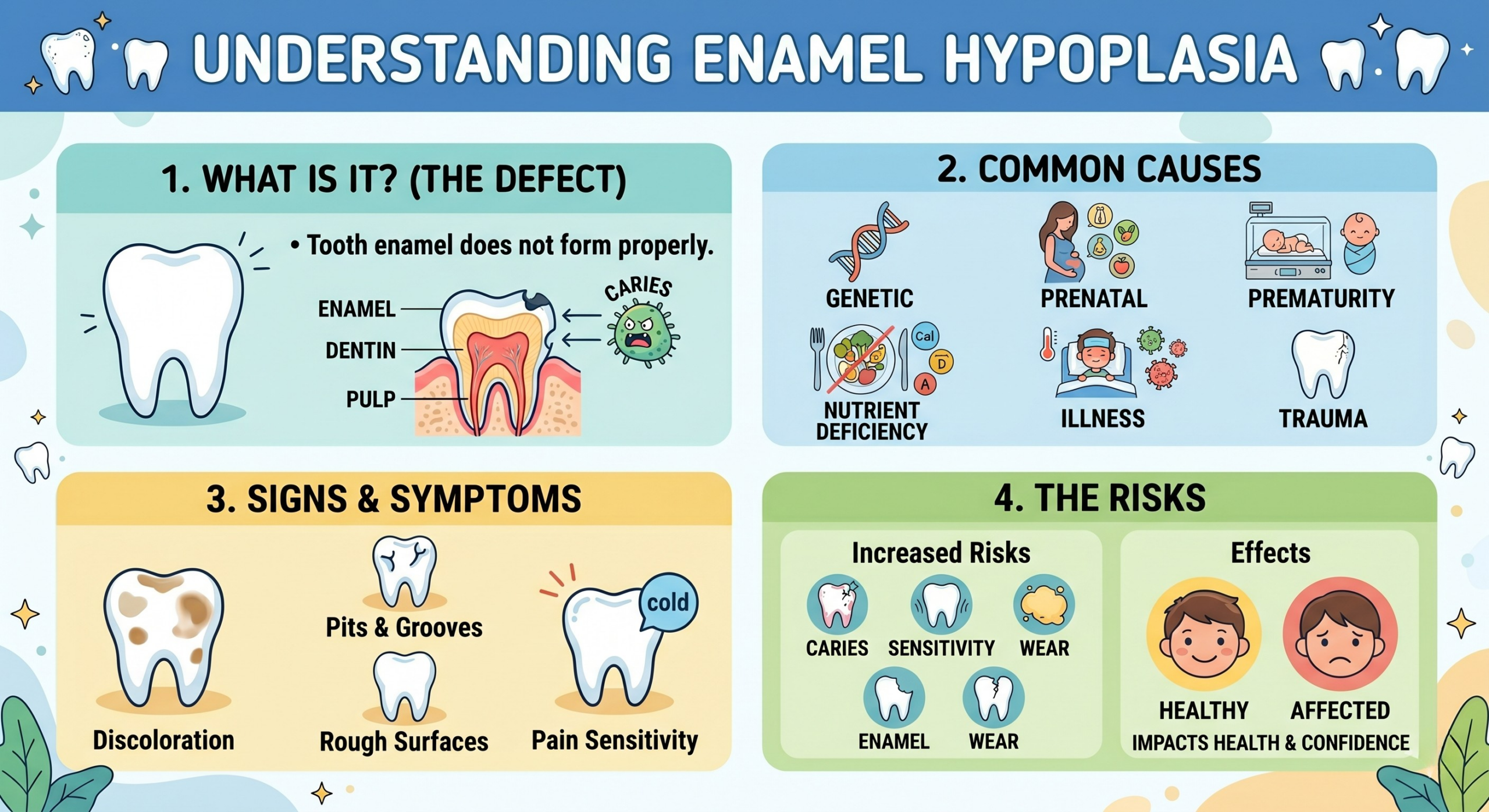
Dental hypoplasia, also known as enamel hypoplasia, is a developmental enamel defect that affects children. Learn about its causes, symptoms, diagnosis, treatment options, prevention strategies, and long-term oral health outcomes.
What Is Enamel Hypoplasia?
Enamel hypoplasia is a developmental enamel defect that occurs when tooth enamel does not form completely during tooth development. Because enamel is the hardest substance in the human body, any disruption in its formation can leave teeth vulnerable to sensitivity, discoloration, wear, and decay.
During odontogenesis, or tooth development, specialized cells called ameloblasts produce the enamel matrix that later mineralizes into protective tooth enamel. When ameloblast activity is interrupted, defective enamel formation may occur, resulting in enamel abnormalities such as pits, grooves, thin enamel, or missing enamel.
This condition may affect primary teeth (deciduous teeth), permanent teeth, or both. In some children, only one tooth is affected, while others experience widespread enamel defects throughout the oral cavity.
Unlike enamel hypomineralization, which affects enamel quality, enamel hypoplasia affects enamel quantity. The enamel maturation stage may be disrupted, leaving insufficient enamel thickness to properly protect the underlying dentin and pulp chamber.
Understanding Tooth Enamel Development
Healthy enamel formation depends on a complex biological process known as biomineralization. During this process, ameloblasts produce enamel proteins, including amelogenin, which guide the formation of hydroxyapatite crystals. These crystals organize into enamel rods that create the strong outer layer of the dental crown.
Several key developmental stages influence enamel health:
- Tooth germ formation
- Tooth morphogenesis
- Enamel matrix secretion
- Mineralization
- Enamel maturation
- Tooth eruption
When any stage is disrupted, developmental defects of enamel (DDE) may occur.
Proper enamel development requires:
- Calcium
- Vitamin D
- Phosphorus
- Magnesium
- Vitamin A
- Adequate protein intake
Mineralization strengthens enamel, while calcium supports tooth formation, and Vitamin D promotes mineralization. Deficiencies in these nutrients can contribute directly to dental developmental anomalies.
Why Enamel Hypoplasia Matters in Children
Although enamel hypoplasia may initially appear as a cosmetic concern, it can significantly affect pediatric oral health.
Thin or missing enamel exposes dentin, increasing tooth sensitivity and making children more susceptible to the following:
- Dental caries
- Plaque accumulation
- Bacterial colonization
- Tooth surface loss
- Enamel wear
- Tooth fracture
- Oral health complications
Healthy enamel supports chewing function, speech development, and overall oral function. Without adequate enamel protection, everyday activities such as eating and brushing can become uncomfortable.
In addition to physical symptoms, visible enamel defects can impact a child’s self-esteem and quality of life. Children with discoloration, enamel pits, or rough tooth surfaces may feel self-conscious about their smiles.
Common Causes of Enamel Hypoplasia
Genetic Factors
Certain inherited disorders can interfere with enamel formation. The most well-known example is amelogenesis imperfecta, a genetic condition that affects enamel development throughout the dentition.
Genetic disorders contribute to enamel defects by altering the biological processes responsible for enamel matrix production and maturation.
Prenatal Influences
Prenatal health plays a critical role in permanent tooth development.
Risk factors include:
- Maternal illness
- Maternal smoking
- Alcohol exposure during pregnancy
- Gestational diabetes
- Prenatal nutritional deficiencies
- Environmental toxins
Prenatal nutrition supports enamel development, and poor maternal health may disrupt the activity of enamel-forming cells before birth.
Prematurity and Neonatal Complications
Research has shown that premature birth and low birth weight increase the risk of dental hypoplasia.
Additional neonatal risk factors include:
- Respiratory distress syndrome
- Extended hospitalization
- Hypocalcemia
- Systemic illness
Premature birth increases the risk of enamel hypoplasia because tooth mineralization may be interrupted during critical developmental periods.
Nutritional Deficiencies
Childhood malnutrition remains an important contributor to enamel defects.
Deficiencies associated with enamel hypoplasia include:
- Calcium deficiency
- Vitamin D deficiency
- Vitamin A deficiency
- Phosphorus deficiency
- Micronutrient deficiency
- Protein deficiency
Malabsorption syndrome, celiac disease, and chronic gastrointestinal disorders may also interfere with nutrient absorption, affecting tooth development.
Childhood Illnesses and Infections
High fever disrupts enamel formation by interfering with ameloblast activity during critical growth stages.
Conditions associated with enamel defects include:
- Measles
- Chickenpox
- Chronic kidney disease
- Respiratory infections
- Gastroesophageal reflux disease (GERD)
- Severe childhood infections
Repeated fever episodes during enamel formation can leave permanent developmental defects visible after tooth eruption.
Trauma to Developing Teeth
Dental trauma affecting baby teeth may damage developing permanent teeth located beneath them.
Examples include:
- Falls
- Sports injuries
- Facial trauma
- Accidents involving primary teeth
Trauma to primary teeth can damage developing permanent teeth by disrupting enamel-producing cells, leading to localized enamel defects after eruption.
Signs and Symptoms of Enamel Hypoplasia
The appearance of enamel hypoplasia varies considerably depending on severity.
Common signs include:
- White spots
- Yellow discoloration
- Brown discoloration
- Enamel pits
- Enamel grooves
- Rough tooth surfaces
- Thin enamel
- Irregular tooth shape
Dental hypoplasia causes enamel pits and grooves because insufficient enamel is deposited during tooth formation.
As enamel thickness decreases, exposed dentin causes pain sensitivity, particularly when children consume hot, cold, sweet, or acidic foods.
Dental hypoplasia also increases the risk of dental caries because weakened enamel provides less protection against bacterial attack.
Treatment Options for Enamel Hypoplasia in Children
Treatment for enamel hypoplasia depends on the severity of the enamel defect and the child’s age. While lost enamel cannot regenerate naturally, several dental treatments can protect affected teeth, reduce sensitivity, and improve appearance.
Common treatment options include:
- Fluoride varnish treatments to strengthen remaining enamel and reduce the risk of tooth decay.
- Dental bonding using tooth-colored resin to cover enamel defects and improve aesthetics.
- Composite fillings to restore areas affected by enamel loss or damage.
- Stainless steel crowns for severely affected primary teeth to provide long-term protection.
- Zirconia crowns for a more natural-looking and durable restoration.
- Regular dental check-ups to monitor tooth development and prevent further complications.
Early diagnosis and treatment can help preserve tooth structure, improve oral function, and support long-term dental health.
Frequently Asked Questions
1. What is enamel hypoplasia in children?
Enamel hypoplasia is a developmental enamel defect in which the tooth enamel does not form completely during tooth development. The condition may cause thin enamel, pits, grooves, discoloration, and increased tooth sensitivity. Because enamel is the protective outer layer of the tooth, affected children often have a higher risk of dental caries and enamel wear.
2. What causes enamel hypoplasia in children?
Several factors can contribute to enamel hypoplasia, including genetic conditions such as amelogenesis imperfecta, nutritional deficiencies, premature birth, low birth weight, childhood illnesses with high fever, trauma to developing teeth, and maternal health complications during pregnancy. These factors can disrupt ameloblast activity and interfere with normal enamel formation.
3. Is enamel hypoplasia the same as enamel hypomineralization?
No. Enamel hypoplasia affects the quantity of enamel that forms, resulting in thin or missing enamel. Enamel hypomineralization affects the quality of enamel, causing it to be softer and less mineralized. Although both conditions are developmental defects of enamel, they have different causes and clinical characteristics.
4. Can enamel hypoplasia be reversed?
No, lost enamel cannot naturally regenerate because enamel-producing cells called ameloblasts are no longer present after tooth eruption. However, treatments such as fluoride varnish, dental bonding, composite resin restorations, stainless steel crowns, and zirconia crowns can protect affected teeth and improve their appearance.
5. How is enamel hypoplasia diagnosed?
A pediatric dentist typically diagnoses enamel hypoplasia through a comprehensive clinical examination, medical history review, and dental imaging such as bitewing radiographs or panoramic X-rays. These assessments help evaluate enamel thickness, tooth development, and the severity of enamel defects.
6. Does enamel hypoplasia increase the risk of cavities?
Yes. Dental hypoplasia increases the risk of dental caries because thin or missing enamel allows bacteria to reach vulnerable tooth structures more easily. Rough enamel surfaces can also promote plaque accumulation and bacterial colonization.
7. Can baby teeth with enamel hypoplasia affect permanent teeth?
In many cases, enamel hypoplasia in baby teeth does not directly damage permanent teeth. However, the underlying factors that caused the enamel defect, such as nutritional deficiencies, systemic illnesses, or genetic disorders, may also affect developing permanent teeth.
Conclusion
Enamel hypoplasia is a significant developmental dental condition that affects the formation, strength, and appearance of a child’s tooth enamel. Because healthy enamel supports chewing function, speech development, and long-term oral health, defects in enamel formation should never be ignored. Factors such as genetic disorders, nutritional deficiencies, premature birth, systemic illnesses, and dental trauma can all contribute to this condition by disrupting the complex process of enamel development and mineralization.