
Bleeding gums causes range from gingivitis to brushing too hard. Learn the 7 warning signs that separate gum disease from simple trauma and when to see a dentist.
What Does It Mean When Your Gums Bleed?
Noticing a little pink in the sink after brushing can be alarming, and it’s a more common experience than most people realize. Bleeding gums causes vary widely, from something as simple as a new toothbrush with firm bristles to early-stage gum disease that needs professional attention. The gum tissue, medically known as the gingiva, is delicate and well supplied with blood vessels. When it’s irritated, inflamed, or injured, it bleeds easily, much like any other soft tissue in the body.
The good news is that occasional bleeding is often reversible once you identify what’s triggering it. The tricky part is figuring out whether you’re dealing with a straightforward case of trauma or the early stages of gingivitis, which can progress into more serious gum disease if it’s left untreated. This article walks through the most common causes, the warning signs worth watching for, and practical steps you can take to protect your smile.
The Most Common Bleeding Gums Causes
Understanding what’s behind the bleeding is the first step toward fixing it. Here’s a rundown of the usual culprits.
Gingivitis and Plaque Buildup
Gingivitis is, by far, one of the leading causes of bleeding gums causes dentists see in daily practice. It develops when plaque, a sticky film of bacteria, builds up along the gumline and isn’t removed through regular brushing and flossing. The bacteria irritate the gum tissue, triggering an inflammatory response that makes the gums swell, redden, and bleed with minimal provocation. It’s estimated that a large share of adults experience some degree of gingivitis at some point, which makes it one of the most widespread oral health issues around.
Brushing Too Hard or Using the Wrong Toothbrush
Ironically, being too enthusiastic about oral hygiene can backfire. A toothbrush with stiff bristles, combined with aggressive scrubbing motions, can scrape and bruise the gum tissue. Over time, this habit wears away the protective gum margin and leaves it prone to bleeding, even though the intention behind it is a healthy one.
Flossing After a Break
If you’ve fallen out of the habit of flossing and then pick it back up, don’t be surprised if your gums bleed for the first several days. This isn’t necessarily a red flag. It usually reflects gum tissue that has become slightly inflamed from accumulated plaque between the teeth, and the bleeding tends to subside within a week or two of consistent flossing.
Physical Trauma to the Gum Tissue
Sometimes the explanation is refreshingly simple: something physically injured the gums. Sharp food edges like chips or popcorn hulls, biting down awkwardly, or even a poorly fitted denture or retainer can nick or bruise the tissue. This type of bleeding tends to be isolated to one spot and clears up on its own within a day or two.
Hormonal Changes
Hormonal shifts during puberty, pregnancy, and menopause can increase blood flow to the gums and make them more sensitive to plaque. Pregnancy gingivitis, in particular, is common enough that many obstetric providers recommend a dental checkup during the second trimester.
Certain Medications
Blood thinners, aspirin, and some blood pressure medications can make gums bleed more readily by affecting how well blood clots. Additionally, medications that cause dry mouth can indirectly encourage plaque buildup, since saliva plays a natural role in rinsing away bacteria.
Nutritional Deficiencies
A diet low in vitamin C or vitamin K can weaken the gum tissue and impair its ability to heal and clot properly. While rare in developed countries, severe vitamin C deficiency, historically known as scurvy, causes notably swollen and bleeding gums.
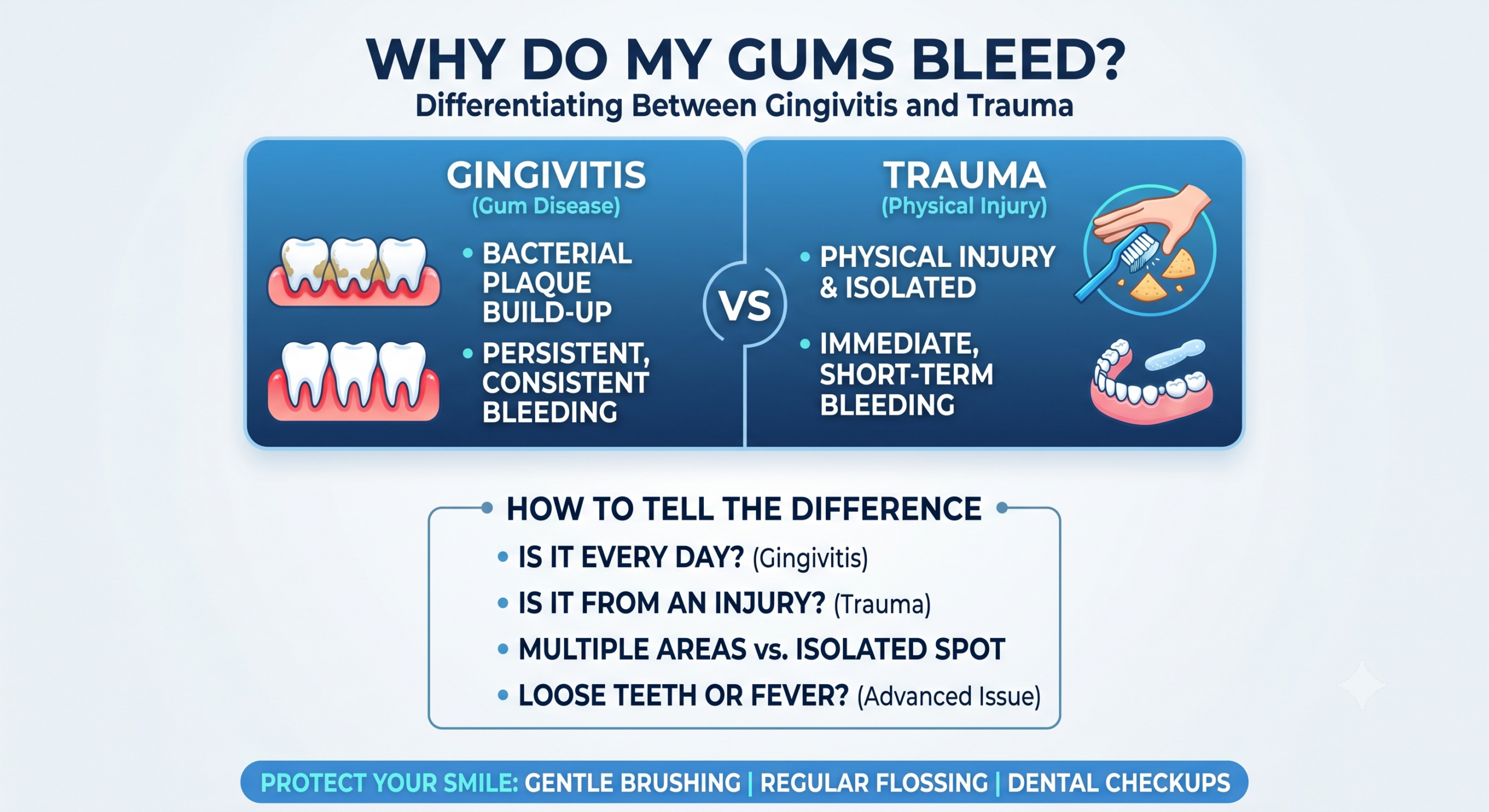
Gingivitis vs. Trauma: How to Tell the Difference
Since the treatment approach is so different, it’s worth learning how to distinguish gingivitis from a one-off injury.
Signs That Point to Gingivitis
Gingivitis-related bleeding tends to happen consistently, not just once. You’ll often notice it every time you brush or floss, along with gums that look puffy, dusky red, or slightly swollen compared to their normal pink, firm appearance. Bad breath that doesn’t go away with brushing is another frequent companion symptom.
Signs That Point to Trauma
Trauma-related bleeding, on the other hand, usually has a clear trigger you can point to, like biting into a crusty piece of bread or catching your gum with a fingernail.
Timing of the Bleeding
Trauma bleeding shows up immediately after the injury and typically stops within minutes to a couple of hours. Gingivitis bleeding recurs regularly, often daily, whenever the area is disturbed.
Pattern and Location
Trauma tends to affect a single, specific spot. Gingivitis usually involves multiple areas, often concentrated along the gumline where plaque naturally accumulates.
Accompanying Symptoms
Gingivitis often comes bundled with swelling, tenderness, and persistent bad breath. Isolated trauma generally heals without those extra symptoms once the irritant is removed.
Warning Signs You Shouldn’t Ignore
While a little bleeding here and there is usually manageable, certain signs suggest it’s time to get evaluated sooner rather than later:
- Gums that bleed every single time you brush or floss, not just occasionally
- Swelling or puffiness that doesn’t improve after a few days
- Gums that have started to pull away from the teeth, making them look longer
- Persistent bad breath or a bad taste that lingers
- Loose or shifting teeth
- Pus or discharge near the gumline
- Bleeding accompanied by fever or fatigue, which could point to a broader health issue
If you’re checking off more than one or two of these, it’s a strong hint that the problem has moved beyond simple irritation.
When Bleeding Gums Signal Something More Serious
Periodontitis
Left unchecked, gingivitis can advance into periodontitis, a more severe form of gum disease that damages the bone and connective tissue supporting your teeth. The CDC reports that nearly half of adults aged 30 and older have some degree of periodontitis, with severe cases affecting roughly 8% of adults, which underscores just how important it is to address bleeding gums early rather than waiting for symptoms to worsen.
Underlying Health Conditions
Bleeding gums can occasionally be an early clue to conditions like diabetes, blood clotting disorders, or leukemia, since these all affect how the body manages inflammation and healing. This is exactly why persistent or unexplained bleeding deserves a proper evaluation rather than being brushed off.
How Dentists Diagnose the Cause of Bleeding Gums
A dental visit for bleeding gums typically starts with a visual exam and a periodontal probing, where the dentist or hygienist measures the depth of the pockets between your teeth and gums. Deeper pockets often indicate more advanced gum disease. X-rays may be taken to check for bone loss, and your dentist will likely ask about your medical history, current medications, and any recent dietary changes. This combination of clinical findings and patient history helps pinpoint whether the cause is plaque-related, medication-related, or something else entirely.
Treating Bleeding Gums at Home
Improving Your Oral Hygiene Routine
The foundation of treating mild, plaque-related bleeding is a consistent, gentle oral hygiene routine. Switch to a soft-bristled toothbrush, brush twice daily using gentle circular motions, and floss once a day. Give it about two weeks of consistency before expecting significant improvement, since gum tissue takes time to heal.
Rinsing and Soothing Irritated Tissue
A warm saltwater rinse can help reduce inflammation and soothe sore tissue. An antimicrobial mouthwash recommended by your dentist can also help control the bacteria contributing to gingivitis. Staying well hydrated supports healthy saliva flow, which naturally helps keep bacterial levels in check.
Professional Treatment Options
For gingivitis that doesn’t resolve with home care, or for more advanced gum disease, a dentist may recommend a professional cleaning to remove hardened plaque, known as tartar, that a toothbrush simply can’t tackle. In cases of periodontitis, deeper procedures like scaling and root planing may be necessary to clean below the gumline. Your dentist might also review your medications with your physician if a drug side effect appears to be contributing to the bleeding.
How to Prevent Bleeding Gums in the Future
Prevention largely comes down to consistency. Brushing twice a day with a soft-bristled brush, flossing daily, and scheduling regular dental checkups every six months go a long way toward keeping plaque under control. Eating a balanced diet rich in vitamin C and vitamin K supports healthy gum tissue, while cutting back on sugary snacks reduces the fuel that feeds harmful bacteria. If you smoke, quitting is one of the most impactful changes you can make, since tobacco use significantly increases the risk of gum disease.
When to See a Dentist
Occasional, mild bleeding that clears up within a day or two usually isn’t cause for alarm. That said, you shouldn’t wait to book an appointment if the bleeding is frequent, worsening, or paired with any of the warning signs covered earlier. Catching gum disease in its early stages makes treatment simpler, faster, and far more comfortable than addressing it once it has progressed.
Frequently Asked Questions
1. Why do my gums bleed when I brush my teeth?
This usually happens because of plaque buildup along the gumline that irritates the tissue or because you’re brushing too hard with a stiff-bristled toothbrush.
2. Is it normal for gums to bleed a little when flossing?
A small amount of bleeding when you resume flossing after a break is common and typically improves within one to two weeks of consistent flossing.
3. Can stress cause bleeding gums?
Stress itself doesn’t directly cause bleeding, but it can weaken your immune response and lead to habits like teeth grinding or skipped oral hygiene, both of which can indirectly contribute to gum irritation.
4. How long does it take for bleeding gums to heal?
Mild cases caused by trauma or a temporary lapse in oral hygiene often improve within a few days to two weeks. Gum disease may take longer and could require professional treatment.
5. Can bleeding gums be a sign of something serious like cancer?
While uncommon, persistent bleeding gums combined with other symptoms such as unexplained bruising or fatigue can occasionally point to a blood disorder, so it’s worth getting checked if the bleeding doesn’t resolve.
6. Does mouthwash help stop bleeding gums?
An antimicrobial or antiseptic mouthwash can help reduce the bacteria that contribute to gum inflammation, though it works best alongside proper brushing and flossing rather than as a standalone fix.
7. Should I stop flossing if my gums bleed?
No, it’s better to keep flossing gently and consistently. Stopping usually allows plaque to build back up, which prolongs the bleeding rather than resolving it.
Conclusion
Bleeding gums causes span a wide range, from a slightly too vigorous brushing session to early gingivitis that needs a bit of extra care. Paying attention to patterns, like whether the bleeding is a one-time event or a daily occurrence, can help you figure out whether you’re dealing with simple trauma or something that calls for a dental visit. When in doubt, a quick checkup offers peace of mind and, if needed, a clear path back to healthy, resilient gums.