
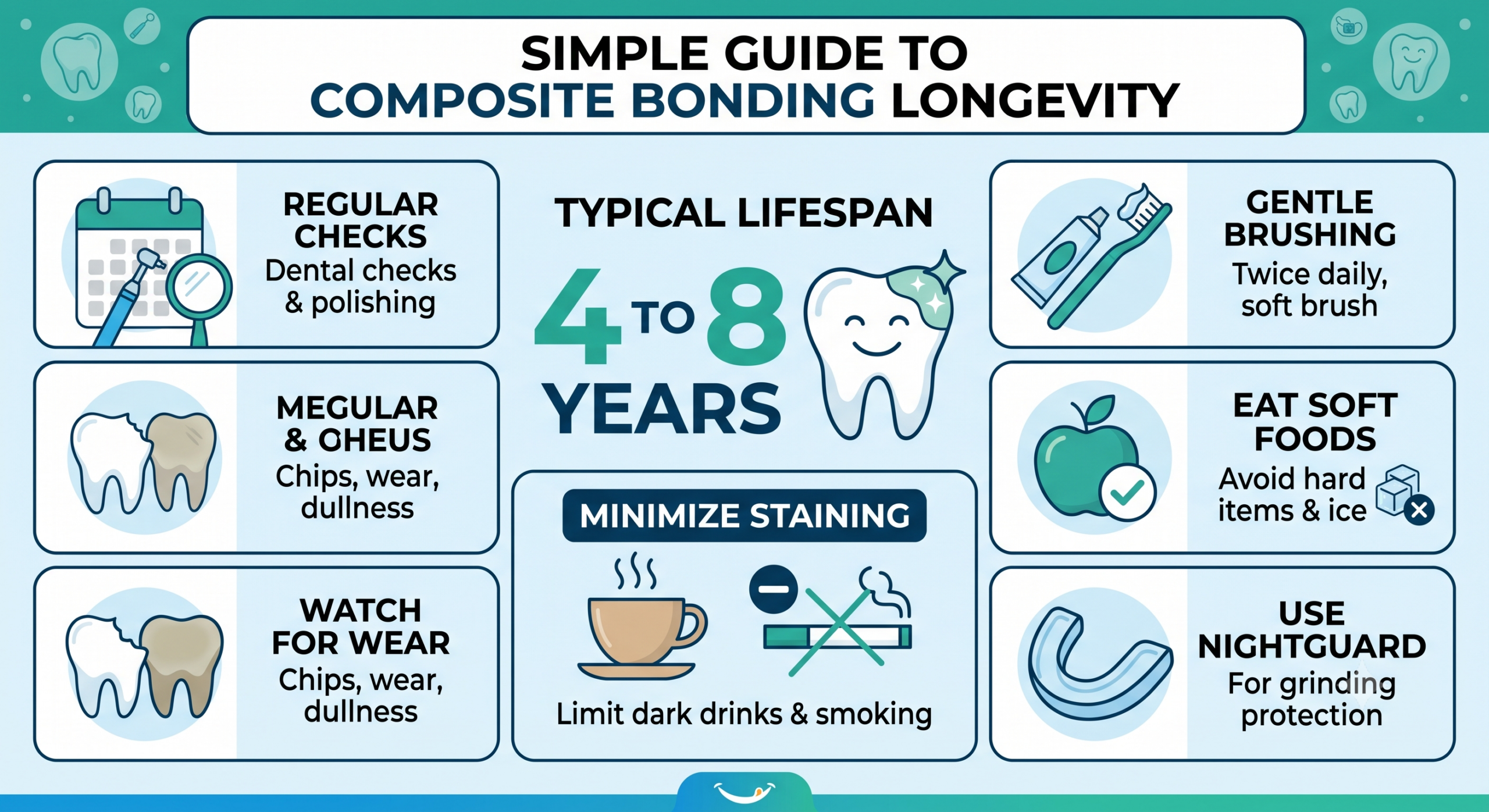
Composite bonding lifespan typically ranges from 4 to 8 years. Discover what affects durability, how to spot wear, and simple habits that help your smile last longer.
Composite bonding lifespan is one of the first things people ask about before booking this popular cosmetic treatment, and it’s a fair question. You’re investing time and money into your smile, so it only makes sense that you’d want to know how long the results will actually hold up. The good news is that composite bonding is one of the more forgiving and budget-friendly ways to fix chips, gaps, and discoloration, and with a bit of care, it can serve you well for years.
In this guide, we’ll walk through exactly what shapes composite bonding lifespan, the warning signs that it’s time for a touch-up, and practical steps you can take to protect your smile makeover for the long haul.
What Is Composite Bonding?
Composite bonding is a cosmetic dental procedure where a tooth-colored resin is applied directly to a tooth, shaped, and then hardened with a curing light. Dentists use it to repair chips, close small gaps, reshape uneven teeth, and cover up discoloration that doesn’t respond well to whitening. It’s a go-to option for people who want a quick, non-invasive smile makeover without the cost or commitment of more extensive work.
Most bonding is done chairside, meaning the resin is sculpted directly on your tooth in a single visit. This is often called direct bonding. It’s different from indirect approaches, like veneers, where a lab-made shell is fabricated separately and then bonded on afterward. Because direct bonding skips the lab step, it’s faster, less expensive, and requires little to no removal of natural tooth structure.
The resin itself blends plastic with fine glass particles, engineered to mimic natural enamel. A skilled dentist can match the shade closely and sculpt in subtle texture, so the result blends in rather than standing out. Composite bonding can also protect a tooth that’s been weakened by a small crack, though it’s not a substitute for a filling or crown when it comes to structural repair.
Average Lifespan of Composite Bonding
Typical Timeframe Explained
On average, composite bonding lasts between 4 and 8 years before it needs replacing or significant touch-up work. Some patients get closer to 10 years with excellent care, while others notice wear closer to the 3 year mark if they’re hard on their teeth or skip regular dental visits. Composite bonding lifespan isn’t a fixed number; it’s a range shaped by how the material is used, maintained, and originally applied.
Front teeth bonding, which handles less chewing force, often lasts longer than bonding placed on molars or teeth that absorb heavy biting pressure. It also matters where on the tooth the bonding sits: bonding placed on a biting edge wears faster than bonding on a surface that never contacts an opposing tooth during chewing.
How Bonding Compares to Veneers, Crowns, Bridges, and Implants
When you stack composite bonding lifespan against other cosmetic and restorative options, it sits on the shorter end of the durability scale, but it also comes with the lowest cost and least invasive approach.
| Treatment | Average Lifespan | Invasiveness | Relative Cost |
| Composite Bonding | 4 to 8 years | Minimal, little to no enamel removal | Lower |
| Porcelain Veneers | 10 to 15 years | Moderate, some enamel removal required | Higher |
| Dental Crowns | 15+ years | More involved, significant tooth reshaping | Higher |
| Dental Bridges | 10 to 15 years | Requires reshaping adjacent healthy teeth | High, with added long-term costs |
| Dental Implants | 20+ years, often lifelong | Surgical | Highest upfront |
Composite bonding won’t outlast a crown or an implant, but many patients see it as a smart starting point. It’s significantly less expensive, it preserves natural tooth structure, and repairs are usually simple and quick, which makes it easy to update your smile makeover down the road if your goals change.
Factors That Affect How Long Composite Bonding Lasts
Location of the Bonded Tooth
Where the bonding sits in your mouth plays a huge role in composite bonding lifespan. Front teeth, used mainly for biting rather than heavy grinding, tend to hold onto their bonding longer. Molars and premolars absorb far more pressure during chewing, which speeds up wear and increases the chance of chipping.
Bite Force and Grinding Habits
Grinding your teeth at night, a condition dentists call bruxism, is one of the biggest threats to composite bonding lifespan. The repetitive friction and pressure wear down resin much faster than normal biting and chewing. If you already know you grind or clench, mention this to your dentist before your bonding procedure so they can plan protective measures from the start.
Diet, Staining, and Acidic Foods
Composite resin has a more porous surface than natural enamel, which is exactly why it picks up stains from coffee, tea, red wine, and dark sauces more readily than your surrounding teeth. Smoking is another major factor. Nicotine and tar cling to that porous resin surface and can noticeably accelerate discoloration compared to natural enamel, which resists staining more effectively.
Staining isn’t the only diet-related risk. Acidic foods and drinks, like citrus, soda, and vinegar-based dressings, can gradually weaken the bond between the resin and the tooth itself, not just dull its color. Rinsing with water after acidic or staining foods, and keeping up with regular cleanings, helps protect both the appearance and the integrity of the material.
Oral Hygiene Routine
Good oral hygiene is one of the simplest, most effective ways to protect composite bonding lifespan. Brushing twice daily, flossing, and using a non-abrasive toothpaste all help keep the bonded surface smooth and free from plaque buildup that can dull its appearance or weaken the edges over time.
Material Quality and Dentist Skill
The grade of composite resin used has a direct impact on how long your bonding lasts. Higher-quality resins resist staining and chipping better than lower-grade materials, so it’s worth asking your dentist what type of composite they use.
The dentist’s experience matters just as much as the material. A well-placed, properly cured, and carefully polished bonding job will naturally last longer than one that was rushed. Look for a dentist with strong reviews specifically mentioning cosmetic bonding work, and consider whether they hold credentials from an organization like the American Academy of Cosmetic Dentistry (AACD), which signals dedicated training in cosmetic techniques beyond general dentistry.
Signs Your Composite Bonding Needs Attention
Chipping, Cracking, or Debonding
Small chips are the most common sign that composite bonding needs attention, often noticed as a rough edge before you ever see it in the mirror. In more advanced cases, the bonding can begin to separate from the tooth entirely, a process dentists refer to as debonding. Loose or partially detached bonding can create small gaps where bacteria and decay take hold underneath the material, so it’s worth having any chip or looseness checked promptly rather than waiting.
Discoloration
If your bonded tooth starts to look noticeably different in color from your natural teeth, that’s a sign the material has absorbed stains or is simply aging. Unlike natural enamel, composite resin can’t be whitened with typical whitening treatments, so a color mismatch usually means it’s time to consider polishing or replacing the bonding.
Rough Edges, Sensitivity, and Bite Changes
Over time, the smooth polish on your bonding can wear away, leaving the surface feeling rough or gritty. Increased sensitivity to hot or cold, or a change in how your bite feels when you close your teeth together, are also functional warning signs, not just cosmetic ones, and both are worth mentioning at your next dental visit.
How to Extend the Life of Your Composite Bonding
Daily Care Tips
Treat your bonded teeth much like you would your natural ones, with a few extra precautions. Brush gently with a soft-bristled toothbrush, and skip overly abrasive whitening toothpastes, which can wear down the polish on composite resin faster than normal. Flossing daily helps prevent plaque from building up around the edges, where discoloration and gum irritation often start. Routine check-ups every six months let your dentist catch small issues early and professionally polish your bonding to keep that fresh, glossy look.
Foods and Habits to Avoid
Avoid biting directly into very hard foods like ice, hard candy, or unpopped popcorn kernels, and resist using your teeth as tools to open packages. If you smoke or drink a lot of coffee, tea, or red wine, rinsing with water afterward can meaningfully slow down staining, even if it won’t eliminate it entirely.
Protective Measures for Teeth Grinding
If you have bruxism, a custom-fitted nightguard is one of the best investments you can make to protect your bonding. Nightguards cushion the pressure between your upper and lower teeth, absorbing the friction that would otherwise wear down bonded surfaces. Many dentists can create one during the same visit as your bonding consultation.
Maintenance and Touch-Up Appointments
What Happens During a Check-Up
During a routine check-up, your dentist examines the bonded areas for chips, discoloration, sensitivity, or looseness. If everything looks good, they’ll often give the bonding a quick polish to refresh its shine, a simple step that makes a noticeable difference.
Polish, Repair, or Replace
Bonding maintenance generally falls into three tiers. A polish-only visit refreshes shine and smooths minor roughness. A touch-up or repair adds a small amount of fresh resin to fix a chip or early signs of debonding without redoing the whole tooth. Full replacement is reserved for bonding that’s significantly discolored, cracked, or has failed structurally. Most patients only ever need the first two, which keeps ongoing maintenance quick and affordable.
Cost Considerations for Bonding Longevity
Composite bonding is generally one of the more affordable cosmetic dental options. A single tooth typically costs less than a comparable veneer, crown, or bridge, and because dental insurance usually classifies bonding as cosmetic rather than functional, it’s often not covered unless it’s repairing damage from decay or injury. It’s worth checking with your provider before treatment, since coverage can vary depending on the reason for the bonding.
Routine polishing during regular check-ups is usually included in a standard visit rather than billed separately, which makes ongoing maintenance genuinely cost-effective. Catching a small chip or early debonding early is almost always cheaper than waiting until the whole tooth needs replacing.
Frequently Asked Questions
1. How long does composite bonding really last?
Most composite bonding lasts between 4 and 8 years, though this varies depending on where it’s placed, how well you care for it, and habits like grinding or smoking.
2. Can composite bonding be repaired instead of replaced?
Yes, in most cases. Small chips, early debonding, or discoloration can often be fixed with a quick in-office repair rather than replacing the entire tooth.
3. Does composite bonding stain easily?
Composite resin is more porous than natural enamel, so it picks up stains from coffee, tea, red wine, and smoking more easily. Rinsing with water afterward and keeping up with cleanings helps minimize staining.
4. What is debonding, and how do I know if it’s happening?
Debonding is when the resin begins separating from the tooth. Signs include looseness, a visible gap at the edge of the bonding, or a piece that feels like it’s lifting. It’s worth having checked right away to prevent decay underneath.
5. Do I need a nightguard after getting composite bonding?
If you grind your teeth, a nightguard is highly recommended. It protects your bonding from the excess pressure caused by bruxism, which can significantly shorten composite bonding’s lifespan if left unaddressed.
6. Is composite bonding covered by dental insurance?
Usually not, since it’s typically classified as cosmetic. If the bonding is repairing damage from decay or an injury, some insurance plans may cover part of the cost, so it’s worth checking with your provider.
7. How do I choose the right dentist for composite bonding?
Look for a dentist with strong reviews specifically for cosmetic bonding, and consider credentials like AACD accreditation, which reflects additional training in cosmetic techniques beyond general dentistry.
Conclusion
Composite bonding lifespan typically falls somewhere between 4 and 8 years, and with the right care, you can push that number even higher. Factors like where the bonding is placed, your bite habits, diet, material quality, and how consistently you keep up with oral hygiene all play a part in how long your results will last. Even when bonding starts to show wear, repairs are usually quick and affordable, which is what makes it such a flexible way to protect your smile makeover for years to come.