
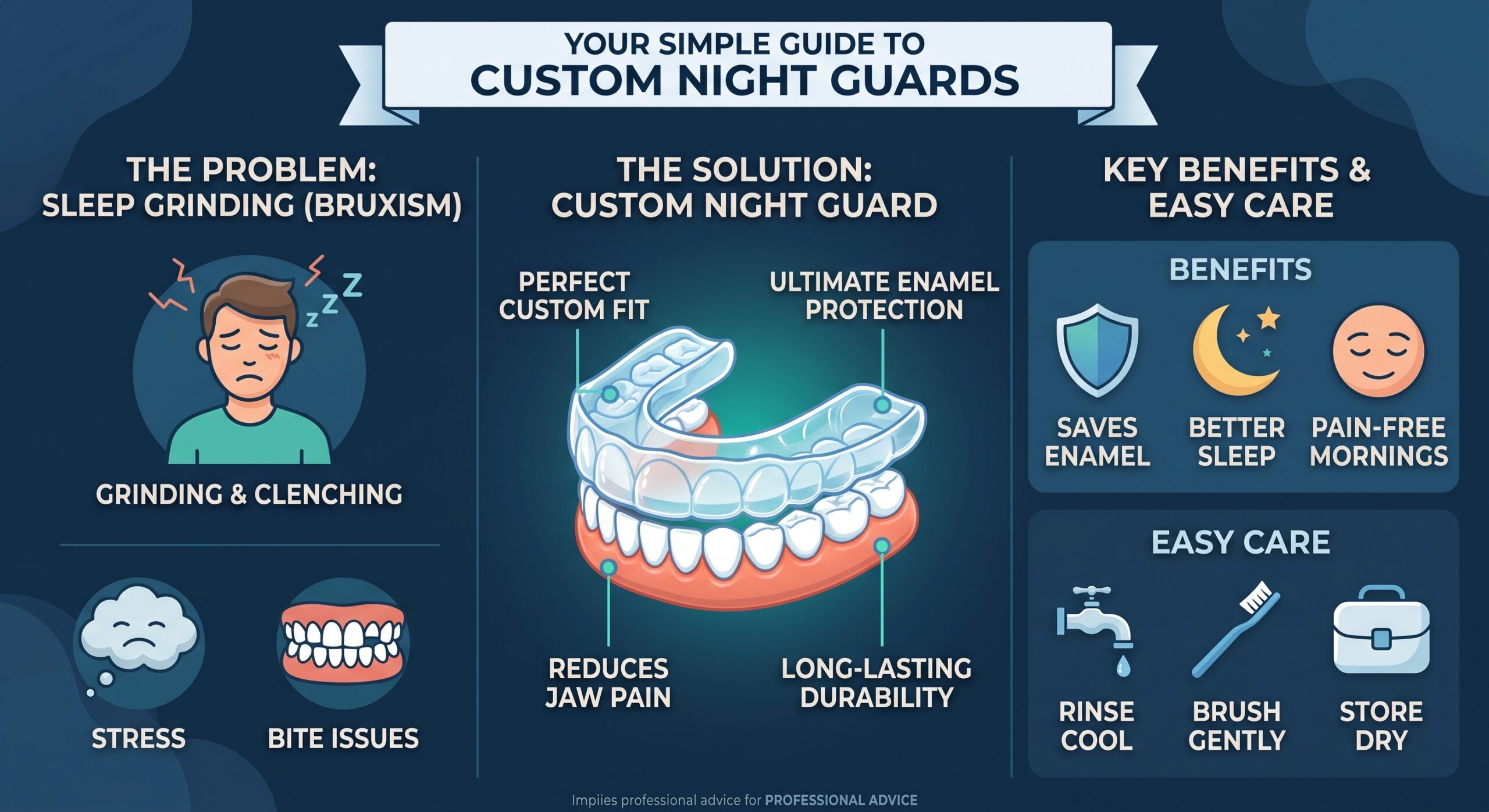
Night guard for bruxism options explained: how custom night guards protect your teeth from sleep grinding, plus costs, types, and care tips.
What Is Bruxism?
Bruxism is the medical term for grinding, gnashing, or clenching your teeth. It’s a surprisingly common condition, and many people don’t even realize they’re doing it until a dentist points out the wear on their teeth. While the occasional clench during a stressful meeting isn’t cause for alarm, chronic bruxism can wear down enamel, damage restorations, and lead to jaw pain that lingers for months.
There are two broad categories worth understanding before we get into the solution: a night guard for bruxism.
Awake Bruxism vs. Sleep Bruxism
Awake bruxism happens during the day, often without you noticing. You might catch yourself clenching while driving, working, or scrolling through your phone. Sleep bruxism, on the other hand, occurs during sleep and is classified as a sleep-related movement disorder. It’s harder to control because you’re unconscious when it happens, which is exactly why a physical barrier like a night guard becomes so valuable.
Sleep bruxism tends to be more forceful than the daytime version. The muscles that control your jaw can generate an enormous amount of pressure, sometimes several times greater than the force used while chewing food. Multiply that by hours of sleep, night after night, and it’s easy to see how teeth, gums, and jaw joints take a beating.
Why Sleep Bruxism Happens
Researchers haven’t pinned down a single cause of bruxism, but a few contributing factors show up again and again in clinical studies and patient histories.
Stress and Anxiety
Emotional tension is one of the most commonly cited triggers. When your mind is busy processing worry, deadlines, or unresolved conflict, that tension doesn’t just disappear when you fall asleep. It can manifest physically, and the jaw muscles are a frequent outlet.
Bite Misalignment
An uneven bite, missing teeth, or crooked alignment can cause your jaw to shift in ways that trigger grinding. Your brain essentially tries to find a comfortable resting position, and in the process, it can create friction between the upper and lower arches.
Sleep Disorders
Conditions like obstructive sleep apnea have a well-documented link to bruxism. When breathing is interrupted during sleep, the body sometimes responds with a grinding or clenching reflex as it works to reopen the airway. If you snore heavily or wake up gasping, it’s worth mentioning to your dentist or doctor, since treating the underlying sleep disorder can sometimes reduce grinding too.
Warning Signs You Might Be Grinding Your Teeth
Since most sleep bruxism happens while you’re unconscious, the signs tend to show up indirectly. Here’s what to watch for:
- Waking up with a dull headache, especially near the temples
- Jaw soreness or stiffness first thing in the morning
- A partner mentioning they hear grinding noises at night
- Flattened, chipped, or cracked teeth
- Increased tooth sensitivity to hot or cold
- Indentations on the tongue or cheek tissue
- Unexplained wear on dental fillings or crowns
If any of this sounds familiar, it’s a good idea to book a dental check-up. Catching bruxism early gives you more options and helps prevent the kind of long-term damage that’s expensive and time-consuming to fix.
What Is a Night Guard for Bruxism?
A night guard is a removable dental appliance worn over the teeth while you sleep. Its main job is straightforward: create a cushioned barrier between your upper and lower teeth so grinding forces are absorbed by the guard instead of your enamel.
Think of it as a shock absorber for your mouth. Rather than tooth grinding against tooth, the pressure gets distributed across a material designed to flex and wear in place of your natural teeth.
How a Custom Night Guard Works
A custom night guard is molded specifically to the contours of your teeth and bite. Your dentist takes an impression (or a digital scan, depending on the practice) of your mouth, and a dental lab fabricates the guard to match your exact anatomy. Because it’s tailored to you, it stays securely in place overnight, distributes bite force evenly, and feels far less bulky than a generic version.
Types of Night Guards
Not every night guard is built the same way. Your dentist will typically recommend a type based on how severe your grinding is.
Soft Night Guards
Soft guards are made from a flexible, cushiony material. They’re often recommended for mild bruxism or for patients who are new to wearing a night guard and need time to adjust. The downside is that soft guards can wear through faster if grinding is more intense, since there’s less resistance to withstand heavy forces.
Hard Acrylic Night Guards
Hard guards are made from rigid acrylic and are typically prescribed for moderate to severe grinders. They hold up well against strong jaw forces and tend to last longer than soft guards, though some patients find them less comfortable at first.
Dual-Laminate Night Guards
Dual-laminate guards combine both worlds: a soft inner layer for comfort against the teeth and a harder outer layer for durability. This hybrid design is a popular middle-ground option, offering the resilience of a hard guard with the comfort of a soft one.
| Night Guard Type | Best For | Durability | Comfort Level |
| Soft | Mild bruxism, first-time users | Lower | High |
| Hard Acrylic | Moderate to severe bruxism | High | Moderate |
| Dual-Laminate | Moderate bruxism, comfort-conscious users | High | High |
Custom-Fitted vs. Over-the-Counter Night Guards
Drugstore night guards are cheap and available without a dental visit, which makes them tempting. But there’s a reason dentists generally steer patients toward the custom option.
Over-the-counter guards use a “boil and bite” process where you soften the material in hot water and bite down to create a rough impression. The fit is approximate at best, which means the guard can feel bulky, fall out during the night, or fail to cover all your teeth evenly. An uneven fit can actually make bruxism worse in some cases, since it doesn’t distribute bite force properly.
A custom night guard for bruxism, by contrast, is built from a precise mold of your mouth. It sits comfortably, stays in place, and lasts significantly longer, which often makes it more cost-effective over time despite the higher upfront price.
The Custom Night Guard Fitting Process
Getting a custom night guard is a simple, low-stress process that typically unfolds over two appointments.
- Consultation and exam. Your dentist examines your teeth, jaw, and bite pattern to confirm bruxism and rule out other issues.
- Impressions or digital scan. A mold or scan of your upper and lower teeth is taken to serve as the blueprint for your guard.
- Lab fabrication. The impressions are sent to a dental lab, where technicians custom-build your guard, usually within one to two weeks.
- Fitting appointment. You return to have the guard checked and adjusted for a precise, comfortable fit.
- Follow-up as needed. Some dentists schedule a quick follow-up to confirm the guard is working well and make minor tweaks.
Benefits of a Custom Night Guard
A well-fitted night guard for bruxism offers more than just tooth protection. Here’s what patients typically notice:
- Enamel preservation. Enamel doesn’t regenerate, so protecting it from grinding is one of the most important things you can do for long-term dental health.
- Reduced jaw pain. By cushioning the bite, night guards ease strain on the temporomandibular joint (TMJ) and surrounding muscles.
- Fewer headaches. Many patients report a noticeable drop in morning headaches once they start wearing a guard consistently.
- Protection for dental work. Crowns, veneers, and fillings are expensive. A night guard helps shield them from the wear and tear of grinding.
- Better sleep quality. Less jaw tension and discomfort can translate into more restful, uninterrupted sleep.
- Prevention of tooth fractures. Chronic grinding can crack teeth over time; a guard significantly lowers that risk.
- Cost savings down the road. Preventing damage now is almost always cheaper than restorative treatment later.
How Much Does a Night Guard Cost?
Costs vary depending on where you live, the type of guard, and whether your dental insurance covers it. Over-the-counter versions are the cheapest option, but as noted above, they come with fit and durability trade-offs. Custom night guards cost more upfront because they involve a dental exam, impressions, and lab fabrication, but many dental insurance plans partially cover them when bruxism is documented as a medical need. It’s worth asking your dental practice for a written estimate and checking with your insurer about coverage before your appointment.
Caring for Your Night Guard
A little routine maintenance goes a long way toward extending the life of your guard and keeping your mouth healthy.
- Rinse the guard with cool water immediately after use
- Brush it gently with a soft toothbrush (avoid toothpaste, which can be abrasive)
- Store it in its ventilated case when not in use, away from heat
- Clean it periodically with a denture-cleaning tablet or a mild soap solution
- Avoid hot water or direct sunlight, which can warp the material
- Bring it to dental check-ups so your dentist can inspect for wear
When to Replace Your Night Guard
Most custom night guards last anywhere from one to five years, depending on the material and how heavily you grind. Signs it’s time for a replacement include visible cracks or holes, a looser fit than when it was new, or persistent jaw pain despite regular use. If you notice any of these changes, schedule a check-up so your dentist can assess whether a new guard is needed.
Living with Bruxism: Lifestyle Tips That Help
While a night guard protects your teeth, addressing the root causes of bruxism can reduce how often you grind in the first place.
- Practice stress-reduction techniques like deep breathing or light stretching before bed
- Limit caffeine and alcohol in the evening, since both can increase muscle tension
- Maintain a consistent sleep schedule
- Try gentle jaw exercises recommended by your dentist
- Consider a warm compress on the jaw before bed to relax the muscles
Frequently Asked Questions
1. Can bruxism go away on its own?
For some people, especially children, mild bruxism can resolve without treatment. In adults, it’s less likely to disappear entirely, but a night guard combined with stress management can significantly reduce its impact.
2. Is it normal for a new night guard to feel uncomfortable at first?
Yes, a short adjustment period is common. Most patients get used to the sensation within a week or two. If discomfort persists beyond that, a follow-up adjustment usually solves it.
3. Can children wear night guards for bruxism?
Children can wear night guards, though dentists often monitor pediatric bruxism closely since it sometimes resolves as permanent teeth come in. A pediatric dentist can advise on whether a guard is necessary.
4. Will a night guard stop me from grinding altogether?
A night guard doesn’t stop the grinding motion itself, but it protects your teeth from the damage that grinding causes. Addressing stress, sleep quality, or bite alignment can help reduce the grinding behavior over time.
5. Can I wear a night guard if I have braces?
Yes, but you’ll need a guard specifically designed to accommodate orthodontic brackets. Talk to your orthodontist or dentist about options tailored to your treatment.
6. How do I know if I need a soft or hard night guard?
Your dentist will assess the severity of your bruxism during an exam and recommend the material best suited to your bite force and comfort preferences.
7. Does insurance cover custom night guards?
Many dental insurance plans offer partial coverage when bruxism is diagnosed as a medical concern. Check with your provider for specifics, since coverage varies widely.
Conclusion
Sleep bruxism might seem like a minor annoyance at first, but left unmanaged, it can lead to worn enamel, jaw pain, and costly dental repairs. A custom night guard for bruxism offers a straightforward, comfortable way to protect your smile while you sleep, and pairing it with stress management and good sleep habits can make an even bigger difference. If you suspect you’re grinding your teeth at night, don’t wait for the damage to pile up. Book a dental visit, get evaluated, and take the first step toward a healthier, pain-free bite.