
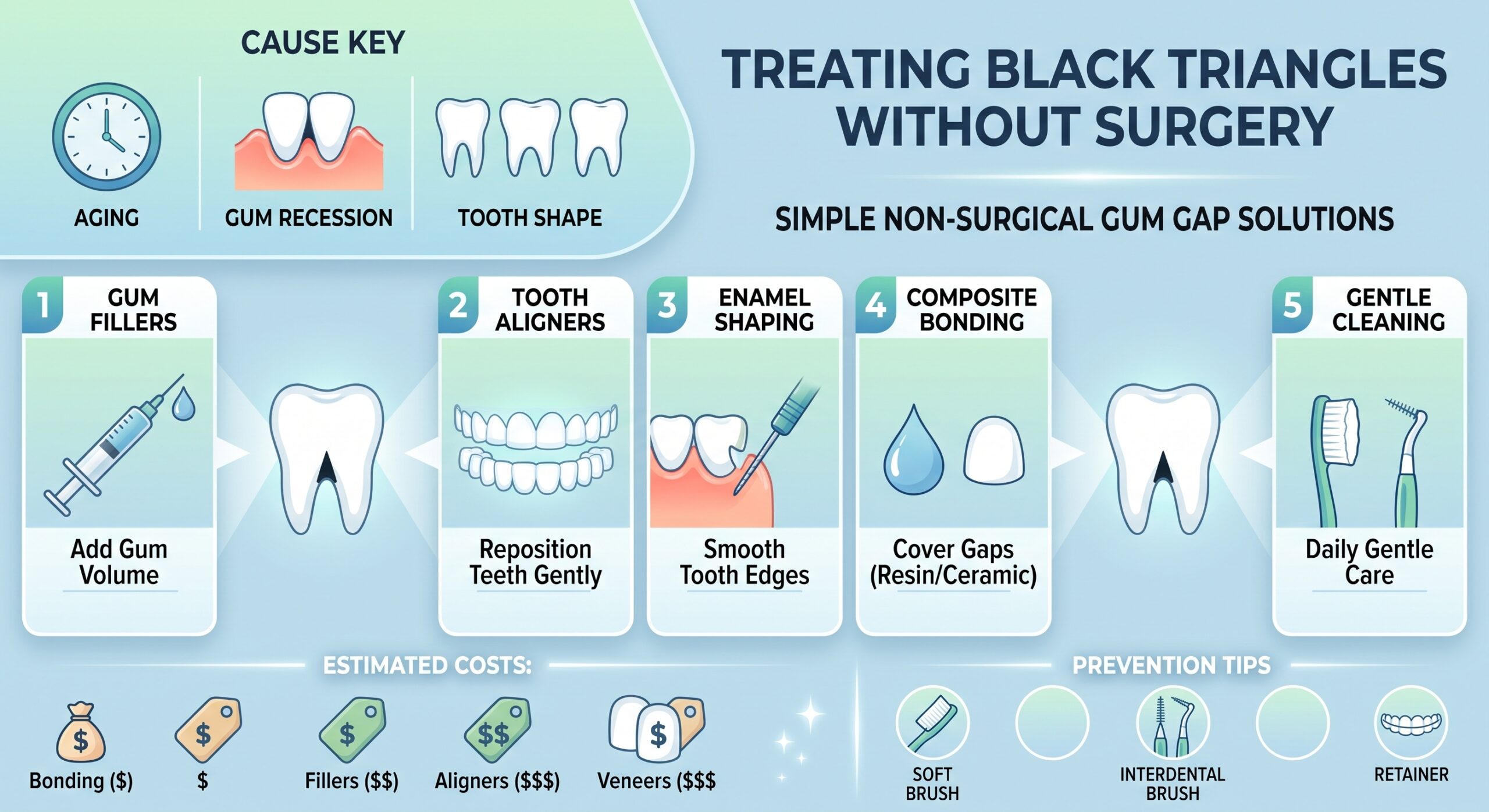
Black triangles between teeth can be treated without surgery. Discover 7 proven, non-invasive options to close gingival embrasure spaces and restore your smile.
Black triangles between teeth are one of those small changes that can feel surprisingly big when you notice them in the mirror. That little dark gap near your gum line, technically called an open gingival embrasure, tends to show up gradually, and it’s easy to assume the only fix is invasive surgery. The good news is that isn’t the case at all. Most people can treat black triangles between teeth without going anywhere near a scalpel, and this guide walks through exactly how.
Whether you’re dealing with a single stubborn gap or noticing several forming after orthodontic treatment, there’s a good chance a non-surgical option will work for you. Let’s break down what causes these spaces, how dentists assess them, and which treatments actually close the gap for good.
What Are Black Triangles Between Teeth?
Black triangles between teeth form when the small triangular space below your contact point, right where two teeth meet, isn’t fully filled by gum tissue anymore. Dentists call this tissue the interdental papilla. When it shrinks or fails to fill the space completely, light passes through the gap and creates that dark, triangular shadow.
It’s worth noting that this isn’t a cavity, and it isn’t decay. It’s a structural and cosmetic issue involving the relationship between your teeth, your bone, and your gum tissue. That distinction matters because it shapes which treatments will actually work.
Why Do Black Triangles Between Teeth Form?
Understanding the root cause helps you and your dentist pick the right non-surgical treatment. Several factors, sometimes working together, tend to be behind gingival embrasure spaces.
Gum Recession and Aging
As gum tissue naturally recedes with age, the papilla that once filled the space between teeth can shrink along with it. This is one of the most common reasons adults over 40 start noticing black triangles, even if their oral hygiene has always been excellent.
Periodontal Disease
Gum disease breaks down both soft tissue and the underlying bone that supports your papilla. Even after the infection is treated and gums are healthy again, the lost tissue volume often doesn’t grow back on its own, leaving a visible gap.
Orthodontic Treatment and Tooth Movement
Braces and clear aligners are fantastic for straightening teeth, but they can occasionally create new triangular spaces. When crowded teeth are moved into proper alignment, the contact points shift, and the papilla sometimes doesn’t have time to fill in the newly created space, especially in adult orthodontic patients.
Naturally Triangular Tooth Shape
Some people are simply born with teeth that are more triangular than square near the root. Triangular-shaped teeth have smaller contact areas, which leaves more room for a gap to appear even with completely healthy gums.
Thin or Aggressive Brushing Habits
Overly vigorous brushing, especially with a hard-bristled brush, can wear away delicate papilla tissue over time. Ironically, being “too thorough” in this one area can contribute to the very problem you’re trying to prevent.
Are Black Triangles a Sign of a Serious Problem?
In most cases, no. Black triangles are primarily a cosmetic concern rather than a health emergency. That said, they can sometimes be an early signal of gum recession or mild periodontal issues, so it’s worth having a dentist take a look rather than assuming it’s purely aesthetic. Catching gum health problems early tends to make treatment simpler and less costly down the road.
7 Non-Surgical Ways to Treat Black Triangles Between Teeth
Here’s where things get genuinely encouraging. Dentistry has come a long way, and there are now several reliable, non-surgical routes to closing these gaps. Your dentist will typically recommend one based on the size of the triangle, the health of your gums, and your overall treatment goals.
1. Composite Bonding to Rebuild the Gum Line Illusion
Composite bonding is often the fastest and most affordable fix. A tooth-colored resin is carefully shaped along the base of the teeth to visually close the triangle, essentially rebuilding the tooth’s natural contour so the gap disappears from view. It’s a single-visit treatment for many patients and doesn’t require anesthesia in most cases.
2. Hyaluronic Acid Gum Fillers
This one tends to surprise people. Dentists can now use hyaluronic acid, the same substance used in cosmetic dermal fillers, to add volume back into the papilla. A few small injections encourage the tissue to plump up and fill the space naturally. Results usually build over a few weeks and can last six months to a year, sometimes longer with maintenance appointments.
3. Orthodontic Black Triangle Closure
If your black triangles appeared because of tooth shape or minor spacing issues, targeted orthodontic movement, sometimes using clear aligners, can subtly reposition teeth so their contact points sit lower and the papilla naturally fills the space again. This approach works especially well for patients who already have generally straight teeth but one or two problem areas.
4. Interproximal Reshaping (Tooth Reshaping)
Also called enamel reshaping or stripping, this technique gently reshapes the sides of the teeth to shift the contact point downward, reducing the visible triangle. It’s minimally invasive, only affects the outer enamel, and pairs well with bonding or minor orthodontic tweaks for a more complete result.
5. Veneers and Crowns for Larger Gaps
For more prominent black triangles, especially ones tied to a naturally triangular tooth shape, porcelain veneers or crowns can rebuild the entire visible surface of the tooth. This gives the dentist more control over the final contour and contact point, closing even fairly wide gaps convincingly.
6. Improved Oral Hygiene Techniques
Sometimes the fix starts with prevention rather than restoration. Switching from a hard-bristled brush to a soft one, using proper interdental brushes instead of aggressive flossing, and having your dentist demonstrate gentler technique can stop existing papilla loss from getting worse, which supports whatever cosmetic treatment you choose.
7. Papilla Stimulation Devices
Small interdental stimulators, sometimes recommended alongside hyaluronic acid treatment, gently massage the papilla to encourage blood flow and tissue health. They’re inexpensive, easy to use at home, and often used as a supportive step rather than a standalone treatment.
When Is Surgery Actually Necessary?
Surgical options like papilla regeneration grafts do exist, but they’re generally reserved for severe cases where a large amount of bone and tissue has been lost, often due to advanced periodontal disease. Even then, many periodontists will try non-surgical routes first, since surgical papilla reconstruction has a less predictable success rate than most patients expect. If your dentist does recommend surgery, it’s worth asking whether a combination of the non-surgical methods above has been ruled out first.
How Much Does Non-Surgical Black Triangle Treatment Cost?
Costs vary widely depending on your location, the severity of the gap, and which treatment you choose. As a general guide:
- Composite bonding: typically the most budget-friendly option per tooth
- Hyaluronic acid fillers: mid-range cost, often billed per session
- Interproximal reshaping: usually low-cost and quick
- Veneers or crowns: the highest investment, but often the most durable, long-term result
Many dental practices offer a consultation to give you an accurate, personalized quote, and some payment plans can make higher-cost options like veneers more manageable.
How to Prevent Black Triangles From Getting Worse
Prevention really does make a difference here. A few habits go a long way:
- Use a soft-bristled toothbrush and avoid scrubbing motions
- Choose interdental brushes over aggressive floss snapping
- Keep up with regular dental cleanings to catch gum recession early
- Address teeth grinding, which can accelerate gum tissue loss
- Stay consistent with orthodontic retainers if you’ve had treatment, since shifting teeth can widen embrasure spaces over time
What to Expect at Your Dental Consultation
A good consultation usually starts with a visual exam and possibly some digital imaging to measure the size of the gap and check the health of the underlying bone. Your dentist will talk through your goals, whether that’s a fully invisible fix or simply reducing how noticeable the gap is, and recommend a treatment plan that fits your timeline and budget. Don’t hesitate to ask about before-and-after photos of similar cases; most practices are happy to share them.
Frequently Asked Questions
1. Can black triangles between teeth go away on their own?
Generally, no. Once the papilla has receded, it typically won’t regrow without some form of treatment, though very mild cases occasionally improve with better hygiene habits alone.
2. Is hyaluronic acid gum filler permanent?
It isn’t permanent, but it is long-lasting. Most patients see results for six months to a year before a touch-up session is needed.
3. Will braces or clear aligners fix black triangles?
They can, particularly when the triangle is caused by tooth spacing or angulation rather than actual tissue loss. Your orthodontist can tell you whether this applies to your case.
4. Does insurance cover black triangle treatment?
Coverage depends on your provider and whether the treatment is classified as cosmetic or medically necessary. Bonding tied to gum health may be partially covered, while purely cosmetic veneers usually aren’t.
5. How long does composite bonding for black triangles last?
With good oral hygiene, bonding typically lasts several years before it may need polishing or replacement, making it a solid, low-commitment starting point.
6. Can poor brushing habits really cause black triangles?
Yes. Aggressive brushing with a hard-bristled brush can wear down the papilla over time, which is why dentists so often recommend switching to a soft brush and gentler technique.
7. Is it worth seeing a periodontist instead of a general dentist?
For larger or gum-disease-related gaps, a periodontist’s specialized experience with gum tissue can be valuable. For smaller cosmetic gaps, a general or cosmetic dentist is often perfectly equipped to help.
Final Thoughts on Treating Black Triangles Without Surgery
Black triangles between teeth can feel discouraging, but they’re one of the more treatable cosmetic dental concerns out there. From same-day composite bonding to gentle hyaluronic acid fillers, there’s likely a non-surgical path that fits your specific situation. The best next step is simply booking a consultation so a dentist can assess your gums and walk you through what will work best for your smile.