
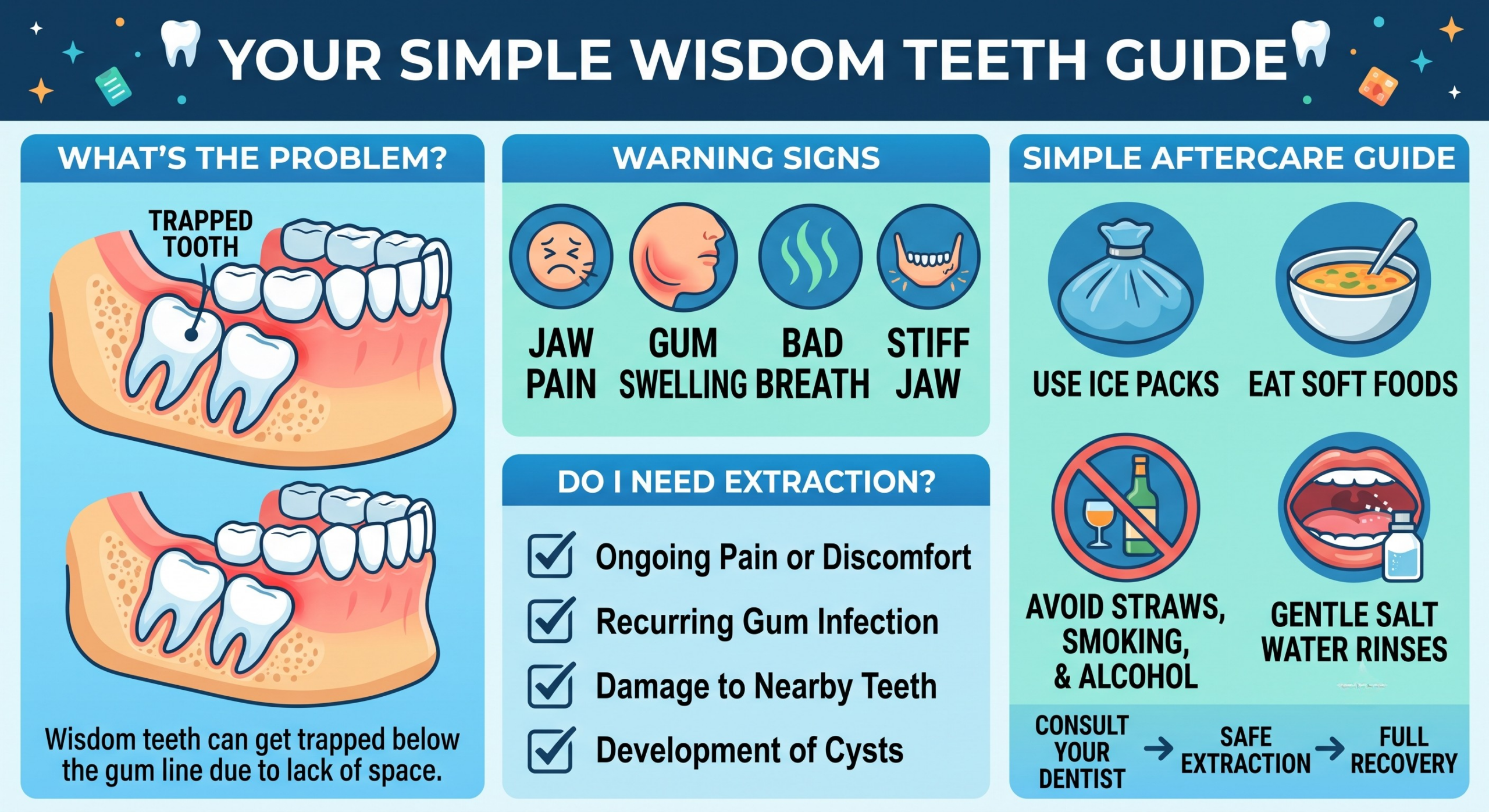
Impacted wisdom teeth can cause pain, swelling, and infection if left untreated. Discover 7 warning symptoms and learn exactly when surgical extraction becomes necessary.
Most of us don’t think twice about our wisdom teeth until they start causing trouble. For a lot of people, that trouble shows up in the form of impacted wisdom teeth, a common dental issue that affects millions of adults worldwide. If you’ve been dealing with jaw pain, swelling, or a nagging ache at the back of your mouth, there’s a good chance your wisdom teeth are the culprit.
In this article, we’ll walk you through what impacted wisdom teeth actually are, the seven warning symptoms you shouldn’t ignore, and the exact point at which surgical extraction becomes the right call. We’ll also cover what to expect during the procedure and how to recover as smoothly as possible. Let’s get into it.
What Are Impacted Wisdom Teeth?
Wisdom teeth, also known as third molars, are the last set of teeth to come in. They usually show up between the ages of 17 and 25, long after your other adult teeth have already settled into place. The trouble is, by the time wisdom teeth try to erupt, there’s often simply no room left in the jaw for them.
When a tooth doesn’t have enough space to grow in properly, it becomes impacted. That means it’s either partially stuck beneath the gum line or completely trapped below the bone, unable to break through at all. Some impacted teeth cause no symptoms whatsoever and are only spotted on a routine dental X-ray. Others cause real discomfort and, if left alone, can lead to infection, decay, or damage to nearby teeth.
Why Wisdom Teeth Get Stuck in the First Place
Our jaws have gotten smaller over generations, largely thanks to changes in diet and the way our ancestors chewed tougher, more fibrous foods. Modern jaws just don’t have the same amount of real estate that earlier human jaws did, yet we still develop the same number of teeth. That mismatch is the main reason so many people end up with impacted wisdom teeth.
Genetics also plays a role. If your parents needed their wisdom teeth removed, there’s a decent chance you’ll face the same situation. The angle at which a tooth develops, the size of your jaw, and even the position of neighboring teeth all factor into whether a wisdom tooth erupts cleanly or gets stuck along the way.
Types of Impaction
Not all impactions look the same. Dentists classify them based on the angle and direction the tooth is growing.
Mesial Impaction
This is the most common type. The tooth is angled forward, toward the front of the mouth, pressing into the back of the second molar.
Distal Impaction
Here, the tooth angles backward, away from the second molar and toward the back of the jaw. This type is less common but can still cause pressure and discomfort.
Vertical Impaction
In a vertical impaction, the tooth is growing in the correct upright position, but it’s simply blocked by bone or gum tissue and can’t fully break through.
Horizontal Impaction
This is the most severe type. The tooth is lying completely sideways, growing directly into the roots of the neighboring molar. Horizontal impactions almost always require surgical removal.
7 Warning Symptoms of Impacted Wisdom Teeth
So how do you know if your wisdom teeth are impacted? Here are the seven symptoms that tend to show up most often.
1. Persistent Jaw Pain or Aching
A dull, ongoing ache toward the back of your jaw is often the first sign something’s off. This pain can come and go, or it can settle in and stick around, especially when you’re chewing.
2. Swelling in the Gums or Jaw
Impacted teeth can irritate the surrounding gum tissue, leading to visible swelling. In some cases, the swelling extends into the cheek or jawline, making your face look slightly puffy on one side.
3. Bad Breath or a Foul Taste
Partially erupted wisdom teeth create small pockets where food particles and bacteria can hide. Since these spots are tough to clean, they often lead to persistent bad breath or an unpleasant taste that won’t go away no matter how much you brush.
4. Difficulty Opening Your Mouth
If your jaw feels stiff or you’re struggling to open your mouth all the way, an impacted wisdom tooth could be putting pressure on the muscles and tissue nearby. Dentists call this trismus, and it’s a fairly common symptom.
5. Crowding or Shifting Teeth
An impacted tooth pushing against its neighbor can gradually shift your other teeth out of alignment. If you’ve noticed your front teeth crowding together even after years of straight teeth, your wisdom teeth might be to blame.
6. Headaches or Ear Pain
It might sound surprising, but wisdom tooth trouble can radiate pain toward your temples or ears. The jaw joint sits close to both areas, so pressure or inflammation near the back molars can easily translate into headaches or a dull ache near the ear.
7. Cysts or Visible Swelling on X-Rays
Sometimes there are no obvious symptoms at all, and the first sign of trouble is a cyst or fluid-filled sac discovered during a routine X-ray. Left untreated, these cysts can damage the jawbone and surrounding teeth over time.
How Dentists Diagnose an Impacted Wisdom Tooth
A dentist typically starts with a visual exam, checking for swelling, redness, or partially visible teeth. From there, imaging is what really confirms the diagnosis.
The Role of Dental X-Rays
Panoramic X-rays give dentists a full view of the jaw, showing exactly where each wisdom tooth sits and which direction it’s angled. In more complex cases, a 3D cone-beam CT scan might be used to get a clearer picture of the tooth’s position relative to nerves and surrounding structures. This level of detail helps your dentist figure out whether extraction is necessary and how straightforward the procedure will be.
When Is Surgical Extraction Actually Required?
Not every impacted wisdom tooth needs to come out. Some sit quietly for years without causing any issues. That said, there are clear situations where extraction moves from optional to necessary.
Signs You Shouldn’t Ignore
- Recurring infections or gum inflammation around the tooth
- Visible decay that’s hard to reach and treat
- A cyst or tumor forming near the impacted tooth
- Damage to the roots of the neighboring molar
- Ongoing pain that doesn’t improve with home care
- Difficulty chewing or persistent bad breath despite good oral hygiene
If any of these apply to you, it’s worth scheduling an appointment sooner rather than later. Waiting too long can turn a straightforward extraction into a more complicated one.
When Watchful Waiting Is Reasonable
If your wisdom tooth is fully erupted, properly aligned, and easy to clean, your dentist might recommend simply monitoring it with regular checkups instead of removing it. This approach, often called watchful waiting, works well for people whose wisdom teeth aren’t causing any harm.
What Happens During Wisdom Tooth Extraction Surgery
Knowing what to expect can take a lot of the anxiety out of the process.
Before the Procedure
Your oral surgeon will review your X-rays, discuss anesthesia options, and answer any questions you have. Most extractions are done under local anesthesia, sedation, or general anesthesia, depending on the complexity of the case and your personal comfort level.
During the Procedure
For a straightforward extraction, the surgeon simply removes the tooth through the gum. For more complex impactions, a small incision may be needed to access the tooth, and it might be divided into sections for easier removal. The whole procedure usually takes somewhere between 30 and 60 minutes.
Recovery Timeline
Most people feel noticeably better within three to four days, though full healing of the gum tissue can take a couple of weeks. Swelling and mild discomfort are normal in the first 48 to 72 hours and typically improve steadily after that.
Possible Complications of Leaving Impacted Teeth Untreated
Ignoring an impacted wisdom tooth doesn’t make it go away. Over time, untreated impaction can lead to:
| Complication | What It Means |
| Infection (Pericoronitis) | Inflammation and infection of the gum tissue around a partially erupted tooth |
| Cysts | Fluid-filled sacs that can damage the jawbone and surrounding teeth |
| Tooth Decay | Hard-to-clean areas around the impacted tooth become prone to cavities |
| Crowding | Pressure from the impacted tooth can shift nearby teeth out of alignment |
| Root Resorption | The impacted tooth can wear away the roots of the neighboring molar |
| Jaw Damage | Long-term pressure can weaken or damage the surrounding bone structure |
Aftercare Tips for a Smooth Recovery
Recovery goes a lot more smoothly when you stick to a few simple habits:
- Stick to soft foods like soup, yogurt, and mashed potatoes for the first few days
- Avoid using straws, since the suction can dislodge the healing blood clot
- Rinse gently with warm salt water starting 24 hours after surgery
- Apply an ice pack to your cheek in short intervals to reduce swelling
- Take any prescribed medication exactly as directed
- Skip smoking and alcohol until your dentist gives the all clear
- Rest as much as possible for the first couple of days
Following these steps helps prevent complications like dry socket and gets you back to your normal routine faster.
Frequently Asked Questions
1. How do I know if my wisdom tooth is impacted?
The clearest way to find out is through a dental exam and X-ray. Common signs include jaw pain, swelling, difficulty opening your mouth, and bad breath that won’t go away.
2. Is wisdom tooth extraction painful?
The procedure itself is done under anesthesia, so you shouldn’t feel pain during surgery. Afterward, some soreness and swelling are normal, but they’re usually manageable with prescribed or over-the-counter pain relief.
3. How long does recovery take after wisdom tooth removal?
Most people feel back to normal within three to four days, though complete healing of the gum tissue can take up to two weeks.
4. Can an impacted wisdom tooth heal on its own?
No, an impacted tooth won’t fix itself. If it’s not causing problems, your dentist may simply monitor it, but true impaction doesn’t resolve without treatment.
5. What happens if I don’t remove an impacted wisdom tooth?
Left untreated, impacted teeth can lead to infection, cysts, decay, and shifting of nearby teeth. In some cases, they can also damage the jawbone over time.
6. Do all wisdom teeth need to be removed?
Not necessarily. If a wisdom tooth is fully erupted, properly aligned, and easy to keep clean, your dentist may recommend leaving it in place and monitoring it at regular checkups.
7. At what age should wisdom teeth be checked?
Most dentists recommend evaluating wisdom teeth in the late teens to early twenties, since this is when they typically start to emerge and impaction becomes easier to spot on X-rays.
Conclusion
Impacted wisdom teeth are incredibly common, but that doesn’t mean they should be ignored. Persistent jaw pain, swelling, bad breath, and difficulty opening your mouth are all signs worth paying attention to. While some impacted teeth can simply be monitored, others need surgical extraction to prevent infection, decay, and long-term damage to your jaw and surrounding teeth.
If you’ve been noticing any of the symptoms we covered here, don’t wait for things to get worse. A quick visit to your dentist, along with an X-ray, will tell you exactly where you stand and whether extraction is the right next step. Catching the issue early almost always makes for a simpler procedure and a smoother recovery.