
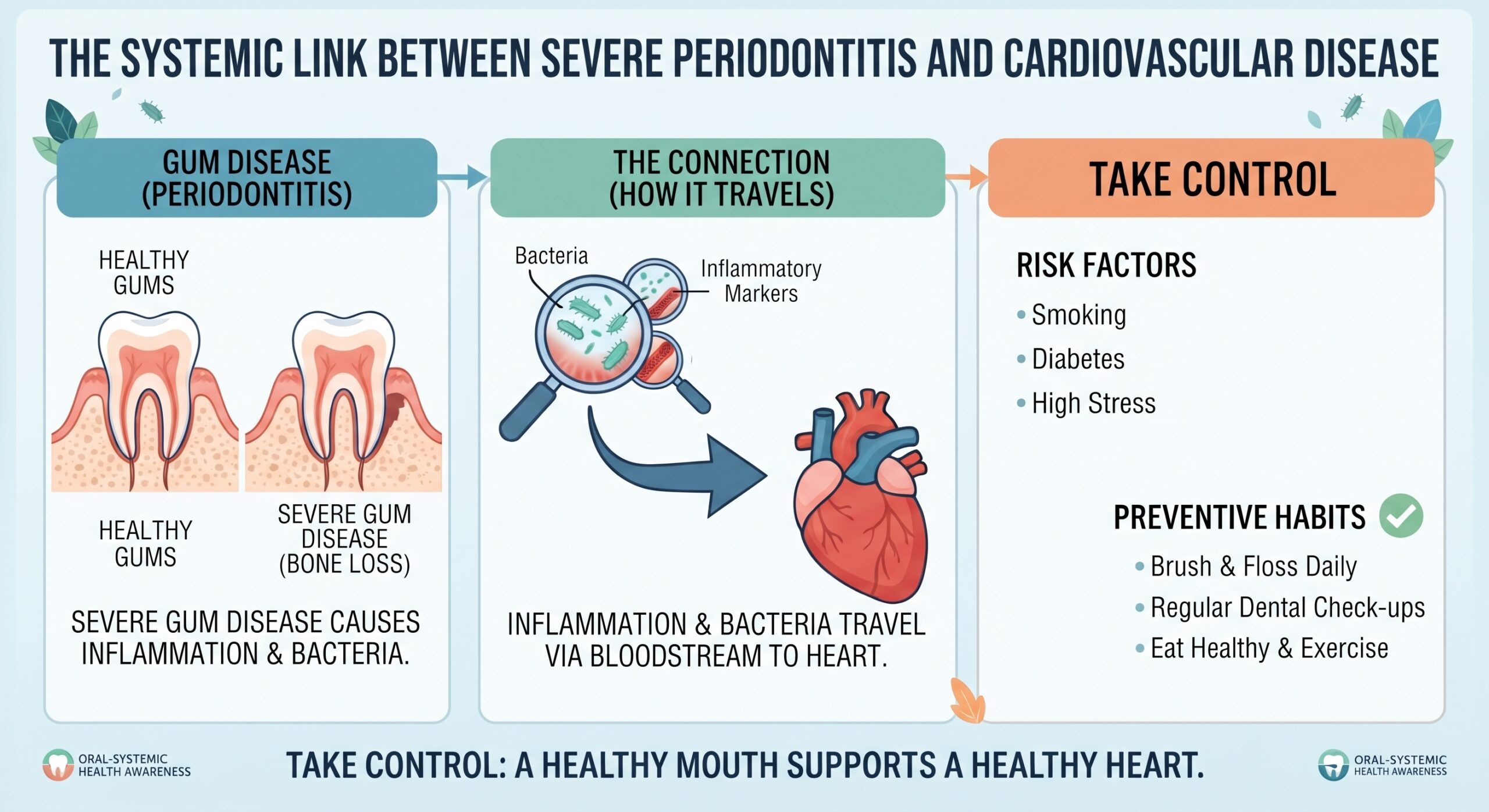
Gum disease and heart health are more closely linked than most people realize. Discover how severe periodontitis affects cardiovascular disease risk and what you can do about it.
Gum disease and heart health might seem like unrelated topics, but a growing body of research says otherwise. What starts as inflamed, bleeding gums doesn’t always stay confined to your mouth. Left untreated, gum disease can set off a chain reaction that reaches all the way to your heart and blood vessels.
It’s a connection that surprises a lot of people. After all, why would something happening in your gums matter to your cardiovascular system? The answer lies in inflammation, bacteria, and a handful of shared risk factors that tie oral health and heart health together more tightly than we once thought.
In this article, we’ll walk through what severe periodontitis actually is, how it’s linked to cardiovascular disease, and what you can do to protect both your smile and your heart.
What Is Periodontitis? Understanding Severe Gum Disease
Periodontitis is the advanced stage of gum disease. It develops when plaque, a sticky film of bacteria, isn’t removed through regular brushing and flossing. Over time, that plaque hardens into tartar, which irritates the gums and triggers inflammation. If it’s not treated, the inflammation spreads below the gumline and starts breaking down the tissue and bone that hold your teeth in place.
Unlike gingivitis, which is mild and often reversible, periodontitis causes lasting damage. Gums pull away from the teeth, forming pockets that fill with bacteria. Without treatment, this can eventually lead to tooth loss.
Stages of Gum Disease Progression
Gum disease doesn’t appear overnight. It typically moves through a few recognizable stages:
- Gingivitis: The earliest stage, marked by red, swollen gums that bleed easily. This stage is usually reversible with better oral hygiene.
- Early periodontitis: Bone loss begins, and small pockets form between the teeth and gums.
- Moderate periodontitis: Pockets deepen, more bone is lost, and teeth may start to feel loose.
- Severe periodontitis: Significant bone and tissue loss occurs, teeth may shift or fall out, and the risk of systemic complications rises sharply.
It’s this final stage, severe periodontitis, that researchers have linked most strongly to cardiovascular disease.
Common Symptoms of Severe Periodontitis
Many people don’t realize how far their gum disease has progressed until a dentist points it out. Watch for these warning signs:
- Gums that bleed during brushing or flossing
- Persistent bad breath that doesn’t go away with brushing
- Receding gums that make teeth look longer
- Loose or shifting teeth
- Pus between the teeth and gums
- Pain when chewing
If any of these sound familiar, it’s worth booking a dental checkup sooner rather than later.
How Gum Disease and Heart Health Are Connected
So, how exactly does something happening in your mouth end up affecting your heart? Researchers point to two main mechanisms: chronic inflammation and bacterial spread.
The Chronic Inflammation Pathway
Periodontitis is, at its core, an inflammatory disease. When your gums are chronically inflamed, your body produces higher levels of inflammatory markers, including C-reactive protein. These markers don’t just stay in your mouth; they circulate throughout your bloodstream.
Chronic, low-grade inflammation is also a known driver of atherosclerosis, the process where fatty deposits build up inside artery walls. Because gum disease and heart disease share this same inflammatory backbone, ongoing gum inflammation may contribute to the kind of vascular damage that raises cardiovascular risk over time.
Bacterial Spread Through the Bloodstream
The second mechanism involves bacteria itself. When gum tissue is infected and inflamed, everyday activities like brushing, flossing, or even chewing can allow oral bacteria to enter the bloodstream. Once there, these bacteria can travel to the heart and blood vessels.
Some studies have found periodontal bacteria embedded directly in arterial plaque samples, suggesting these microbes may play a direct role in plaque formation and instability, not just an indirect one through inflammation.
The Science Behind the Periodontitis and Cardiovascular Disease Link
This isn’t a fringe theory. Major health organizations have taken a close look at the evidence, and the consensus has been shifting toward taking the connection seriously.
Key Research Findings
In late 2025, the American Heart Association released an updated scientific statement examining the relationship between periodontal disease and atherosclerotic cardiovascular disease (ASCVD). The statement reported growing evidence that gum disease is tied to a higher risk of cardiovascular events, including heart attack, stroke, atrial fibrillation, and heart failure, and suggested that treating gum disease could help lower that burden.
The statement also referenced earlier findings showing that people who brushed their teeth more frequently tended to have a notably lower ten-year ASCVD risk than infrequent brushers, along with lower markers of inflammation. That doesn’t prove brushing alone prevents heart disease, but it does reinforce just how intertwined these two systems appear to be.
It’s worth noting that researchers are still cautious about calling this a direct cause-and-effect relationship. Establishing causation is difficult, largely because periodontitis and cardiovascular disease share several of the same underlying risk factors. Still, the association itself is well documented and taken seriously by cardiologists and dentists alike.
Shared Risk Factors
Part of why gum disease and heart disease show up together so often comes down to overlapping risk factors, including:
- Smoking and tobacco use
- Diabetes and poor blood sugar control
- Obesity
- High blood pressure
- Poor diet and nutrition
- Chronic stress
- Lower socioeconomic status and limited access to dental care
Because these factors drive both conditions independently, some of the observed link is likely explained by shared causes rather than one condition directly causing the other. Even so, most researchers agree the relationship goes beyond coincidence.
Cardiovascular Conditions Linked to Gum Disease
Gum disease has been studied in connection with several specific cardiovascular conditions. Here’s a closer look at three of the most significant.
Atherosclerosis and Arterial Plaque Buildup
Atherosclerosis happens when fatty deposits, cholesterol, and other substances build up along artery walls, narrowing them and restricting blood flow. This is the underlying process behind most heart attacks and many strokes. As mentioned earlier, inflammatory markers and, in some cases, oral bacteria themselves have been found within these arterial plaques, suggesting periodontal disease may contribute to plaque formation and progression.
Endocarditis Risk
Endocarditis is a rare but serious infection of the inner lining of the heart chambers and valves. It typically develops when bacteria enter the bloodstream and attach to damaged areas of the heart. Oral bacteria are one recognized source of this kind of bloodstream infection, which is part of why people with certain heart conditions are advised to maintain excellent oral hygiene and, in some cases, take antibiotics before dental procedures.
Stroke Risk
Because stroke and heart attack share the same underlying process (blood vessel narrowing and blockage), the inflammatory and bacterial pathways linked to gum disease may also raise stroke risk. Some studies have found that people with more severe periodontal disease face a higher likelihood of ischemic stroke compared to those with healthy gums, even after accounting for other risk factors.
Who Is Most at Risk?
Not everyone with gum disease will develop heart problems, and not everyone with heart disease has poor oral health. Still, certain groups face a higher combined risk.
Risk Factors Shared by Both Conditions
People are more likely to face elevated risk for both gum disease and cardiovascular disease if they:
- Smoke or use tobacco products
- Have type 2 diabetes
- Are overweight or obese
- Have a family history of heart disease
- Eat a diet high in sugar and processed foods
- Experience chronic, unmanaged stress
- Don’t visit the dentist regularly
Age and Lifestyle Considerations
Risk for both conditions tends to climb with age, particularly after 40. That said, lifestyle matters just as much as the number on your birthday. Someone in their 30s with poor oral hygiene, a smoking habit, and an unmanaged blood sugar issue can carry meaningfully more risk than someone in their 60s who’s taken consistent care of their health for decades. It’s never too early, or too late, to start paying closer attention to both your gums and your heart.
Protecting Your Heart by Protecting Your Gums
Here’s the encouraging part: many of the habits that protect your gums also happen to protect your heart. You don’t need two separate routines to look after both.
Daily Oral Hygiene Practices
A solid oral hygiene routine doesn’t have to be complicated. Aim for these basics every day:
- Brush twice daily for two full minutes with fluoride toothpaste
- Floss once a day to remove plaque between teeth
- Use an antimicrobial mouthwash if your dentist recommends one
- Replace your toothbrush every three to four months
- Avoid tobacco products entirely
Professional Dental Care Recommendations
At-home care matters, but it can’t replace professional cleanings. Dentists recommend:
- Scheduling checkups and cleanings every six months, or more often if you have existing gum disease
- Asking about periodontal screenings if you notice bleeding, swelling, or receding gums
- Following through on scaling and root planing (a deep cleaning) if your dentist recommends it
- Keeping your dentist informed about any heart conditions or medications you’re taking
Lifestyle Changes That Help Both Conditions
A few broader lifestyle shifts can support both your oral and cardiovascular health at the same time:
- Eating a diet rich in vegetables, fruits, whole grains, and lean protein
- Managing blood sugar levels if you have diabetes or prediabetes
- Staying physically active most days of the week
- Finding healthy ways to manage stress
- Getting enough sleep
These aren’t quick fixes, but they’re changes that pay off in more ways than one.
When to See a Dentist or Doctor
If you’re noticing symptoms like bleeding gums, persistent bad breath, or loose teeth, don’t wait for your next scheduled checkup. Severe periodontitis is much easier to manage when it’s caught early. Similarly, if you have a family history of heart disease or existing risk factors like high blood pressure or diabetes, it’s worth mentioning your oral health to your physician, and vice versa. Dentists and doctors don’t always compare notes automatically, so being your own advocate can make a real difference.
Frequently Asked Questions
1. Can gum disease actually cause heart disease?
Researchers haven’t proven a direct cause-and-effect relationship, but there’s a well-documented association between the two. Chronic inflammation and bacteria from gum disease are thought to contribute to cardiovascular risk, even though shared risk factors also play a role.
2. What is the strongest evidence linking gum disease and heart health?
Large population studies and a 2025 scientific statement from the American Heart Association both point to a meaningful association between periodontal disease and atherosclerotic cardiovascular disease, including increased risk of heart attack, stroke, and heart failure.
3. If I treat my gum disease, will my heart disease risk go down?
Some research suggests treating periodontal disease can improve inflammatory markers and other risk indicators tied to cardiovascular disease. However, more long-term studies are needed to confirm whether treatment directly reduces heart attacks or strokes.
4. Is gingivitis as risky for the heart as periodontitis?
Gingivitis is a much milder, usually reversible condition. The strongest links to cardiovascular disease have been observed with more advanced, chronic periodontitis rather than early-stage gingivitis.
5. Are there heart conditions that make oral health even more important?
Yes. People with certain heart valve conditions or a history of endocarditis are often advised to pay extra attention to oral hygiene, since oral bacteria entering the bloodstream can pose a more serious risk for them.
Conclusion
Gum disease and heart health are connected in ways that go well beyond a passing coincidence. Chronic inflammation, bacterial spread, and a set of shared risk factors tie severe periodontitis to a higher risk of cardiovascular disease, including atherosclerosis, endocarditis, and stroke. While researchers are still working out exactly how much of that risk is causal versus correlated, one thing is clear: taking care of your gums is one more way to take care of your heart.
The good news is that protecting both doesn’t require two separate efforts. Brushing, flossing, regular dental visits, and a handful of heart-healthy lifestyle habits go a long way toward supporting your whole body, not just your smile.