
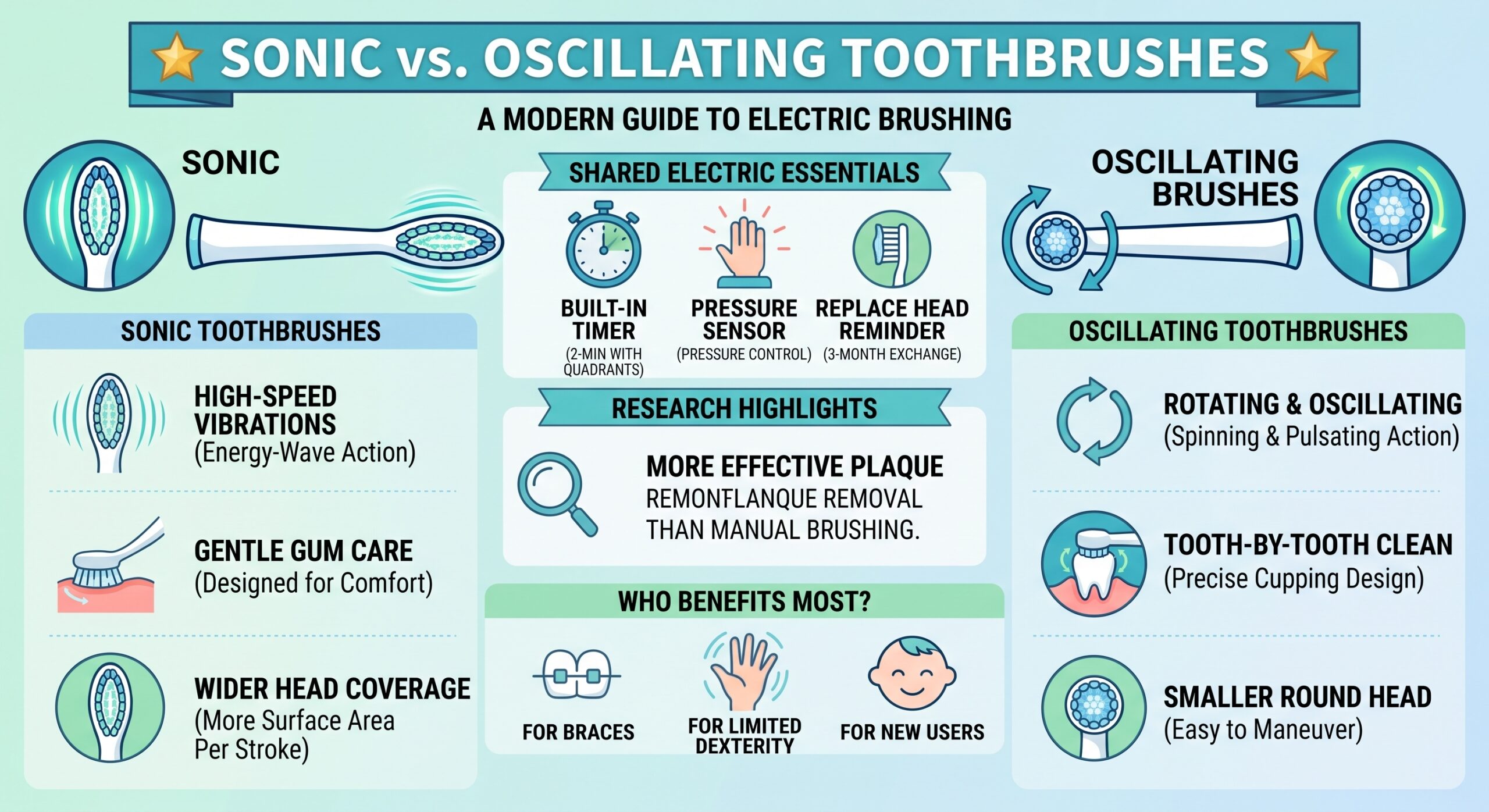
Electric vs. manual toothbrush: 7 clinical differences between sonic and oscillating brushes, backed by research, to help you pick the right one for your smile.
Choosing between an electric vs. manual toothbrush is one of those decisions that seems small until you’re standing in the oral care aisle, staring at a wall of options. Some brushes buzz, some spin, and some just sit quietly in your hand the way toothbrushes have for a century. So which one actually gets your teeth cleaner?
The honest answer is that it depends on the brush, the brusher, and the habits behind it. This article breaks down the clinical differences between manual brushing, sonic electric toothbrushes, and oscillating electric toothbrushes, so you can make a choice based on evidence rather than marketing.
Why the Toothbrush You Choose Actually Matters
Your toothbrush is the primary tool you use to disrupt plaque, the sticky biofilm of bacteria that forms on your teeth every single day. Left undisturbed, plaque hardens into tartar, irritates the gums, and sets the stage for cavities and periodontal disease. Twice-daily brushing isn’t just a habit your dentist nags you about; it’s genuinely one of the most protective things you can do for your long-term oral health.
That said, not all brushing is created equal. Technique, brush head design, and the mechanical action of the bristles all influence how thoroughly plaque gets removed. That’s exactly why the electric vs manual toothbrush debate keeps coming up in dental offices and research journals alike.
How Manual Toothbrushes Work
The Mechanics of Manual Brushing
A manual toothbrush relies entirely on you. You control the angle, the pressure, the speed, and the pattern of movement across each tooth surface. There’s no motor, no battery, and no algorithm guiding the bristles. It’s a straightforward tool that’s been refined over decades into something genuinely effective when it’s used correctly.
The catch is that “used correctly” is doing a lot of work in that sentence. Studies consistently show that most people brush with the wrong technique, spend less time than they think they do, and miss the same problem spots over and over, typically along the gumline and the back molars.
Strengths of the Manual Toothbrush
Manual brushes aren’t inferior by default. They’re:
- Inexpensive and widely available
- Easy to travel with, since they need no charging
- Gentle by nature, which suits people who tend to brush too hard
- A solid choice for anyone with good technique and consistent habits
For a disciplined brusher, a manual toothbrush paired with proper technique and regular dental checkups can deliver excellent results. The tool isn’t the limiting factor; the technique is.
How Electric Toothbrushes Work
Electric toothbrushes take some of the guesswork out of brushing by adding motorized movement to the bristles. There are two dominant types on the market, and they clean your teeth in genuinely different ways.
Sonic Toothbrushes Explained
Sonic toothbrushes vibrate at extremely high frequencies, often in the range of 30,000 to 40,000 strokes per minute. The brush head itself doesn’t rotate; instead, it moves back and forth rapidly, creating a sweeping motion across the teeth.
Bristle Speed and Fluid Dynamics
What makes sonic brushes interesting from a clinical standpoint is that the bristles don’t need to physically touch every millimeter of a tooth surface to be effective. The rapid vibration agitates saliva and toothpaste into a fast-moving fluid that can disrupt plaque even in areas the bristles don’t directly reach, including a bit below the gumline and between teeth. This fluid dynamic effect is part of why sonic brushes are often marketed as especially effective for gum health.
Oscillating Toothbrushes Explained
Oscillating, or rotating-oscillating, toothbrushes use a small round brush head that spins first in one direction and then the other, sometimes paired with a slight pulsing motion.
Rotation and Micro Movements
Rather than sweeping across the tooth, an oscillating brush head cups each tooth individually and rotates against its surface. This design encourages a “one tooth at a time” approach, which can help with thoroughness since it’s harder to rush past a section without the brush registering contact.
Electric vs. Manual Toothbrush: What the Research Shows
Plaque Removal Outcomes
A well-known Cochrane systematic review pooled data from dozens of clinical trials comparing manual and powered toothbrushes. It found that powered toothbrushes using a rotation-oscillation action reduced plaque and gingivitis more than manual toothbrushing, both in the short term and over longer follow-up periods. Other powered brush types showed less consistent advantages, which is a useful reminder that “electric” isn’t a single category with one universal result.
Gum Health and Gingivitis
Beyond plaque scores, gum health is where powered brushes tend to show a real edge, particularly for people who struggle with consistent technique. Reduced bleeding on probing and lower gingivitis indices have been reported in multiple trials, especially over several months of continued use. It isn’t that manual brushing can’t achieve the same outcome; it’s that powered brushing seems to narrow the gap between a good brusher and a great one.
Sonic vs. Oscillating: Head-to-Head
Cleaning Technique Differences
Sonic brushes reward a sweeping, gliding motion, letting the vibration and fluid movement do a lot of the work. Oscillating brushes reward a slower, tooth-by-tooth approach, holding the brush briefly against each surface before moving on. Neither technique is difficult to learn, but they do feel different in the hand, and some people simply prefer one motion over the other.
Comfort and Sensitivity
People with sensitive teeth or gums often gravitate toward sonic brushes because the vibration feels gentler against soft tissue compared to the more mechanical rotation of an oscillating head. That said, individual comfort varies quite a bit, and most electric brushes now include pressure sensors and multiple intensity settings to accommodate sensitive mouths either way.
Noise, Size, and Everyday Practicality
Sonic brushes tend to hum quietly, while oscillating brushes are often a touch louder and buzzier. Oscillating brush heads are also noticeably smaller and rounder, which some users find easier to maneuver around back molars, while others find the larger, elongated sonic head covers more surface area per stroke. Neither difference is a dealbreaker, but they’re worth noticing during a trial period.
Who Benefits Most From an Electric Toothbrush
Braces and Orthodontic Appliances
Brackets, wires, and elastics create dozens of extra nooks where plaque loves to hide. The consistent, guided motion of an electric brush, especially a sonic model, can make it considerably easier to keep orthodontic hardware clean between adjustment visits.
Limited Dexterity or Mobility
For anyone with arthritis, a hand injury, or a condition that limits fine motor control, an electric toothbrush does a lot of the physical work that a manual brush would otherwise demand. The brush handle stays still while the bristles move, which is a genuinely practical advantage.
Children and New Brushers
Kids are still developing brushing technique, and a timer-equipped electric brush can turn a chore into something closer to a game. Many pediatric models include two-minute timers with quadrant alerts, nudging young brushers to cover the whole mouth evenly.
Who Can Stick With a Manual Toothbrush
If your dentist consistently compliments your technique, if you’re diligent about the full two minutes, and if cost or simplicity matters to you, there’s no clinical reason to abandon a manual toothbrush. The research gap between manual and electric brushing narrows considerably when technique is solid on both sides. A manual brush used well will always outperform an electric brush used poorly.
Cost Considerations Over Time
| Factor | Manual Toothbrush | Electric Toothbrush |
| Upfront cost | Low | Moderate to high |
| Ongoing cost | Replacement brush every 3 months | Replacement head every 3 months, plus occasional charging or battery costs |
| Long-term value | Consistent, predictable | Higher upfront, often better outcomes for inconsistent brushers |
Over a year, the price gap is smaller than most people expect, since both brush types need regular head replacement to stay effective.
Environmental Impact
Manual toothbrushes generate plastic waste too, but electric brush heads and the electronics inside the handle add another layer of environmental consideration. If sustainability is a priority, look for brands offering recyclable brush heads or handles made from recycled materials, available from both manual and electric toothbrush manufacturers.
Making the Switch: A Practical Checklist
If you’re leaning toward an electric brush, keep this shortlist in mind:
- Choose a brush with a pressure sensor if you tend to press too hard
- Look for a built-in two-minute timer with quadrant reminders
- Pick a head size that comfortably fits your mouth
- Replace the brush head every three months, regardless of brush type
- Give yourself two to three weeks to adjust to the new sensation
Frequently Asked Questions
1. Is an electric toothbrush really better than a manual one?
For most people, yes, particularly oscillating brushes, which research links to modest but measurable reductions in plaque and gingivitis compared to manual brushing. That said, a manual toothbrush used with excellent technique can still deliver strong results.
2. What’s the main difference between sonic and oscillating toothbrushes?
Sonic brushes vibrate at high frequency to sweep across teeth and agitate fluid, while oscillating brushes use a small round head that spins back and forth against one tooth at a time.
3. How long should I brush with an electric toothbrush?
Two minutes, the same recommendation as with a manual brush. Most electric models include a built-in timer to help you hit that mark consistently.
4. Are sonic toothbrushes safe for sensitive teeth?
Generally yes. The vibration tends to feel gentler than rotation for many people, and most sonic brushes offer a sensitive or gentle mode to further reduce intensity.
5. Do electric toothbrushes work well with braces?
Yes, and many orthodontists actively recommend them. The consistent motion helps clean around brackets and wires more thoroughly than brushing by hand alone.
6. How often should I replace my toothbrush or brush head?
Every three months, or sooner if the bristles look frayed. This applies equally to manual toothbrushes and electric brush heads.
7. Can children use electric toothbrushes?
Yes, once they’re old enough to handle a brush independently, usually around age three. Pediatric electric models with timers can help build consistent habits early.
Final Thoughts
The electric vs. manual toothbrush question doesn’t have a single universal winner. Oscillating brushes have the strongest research backing for plaque and gum health improvements, sonic brushes offer a gentler feel with genuine cleaning benefits, and manual brushes remain a perfectly valid choice for anyone with solid technique. What matters most, regardless of which brush sits in your bathroom cup, is brushing twice a day for two full minutes and keeping up with regular dental checkups.