
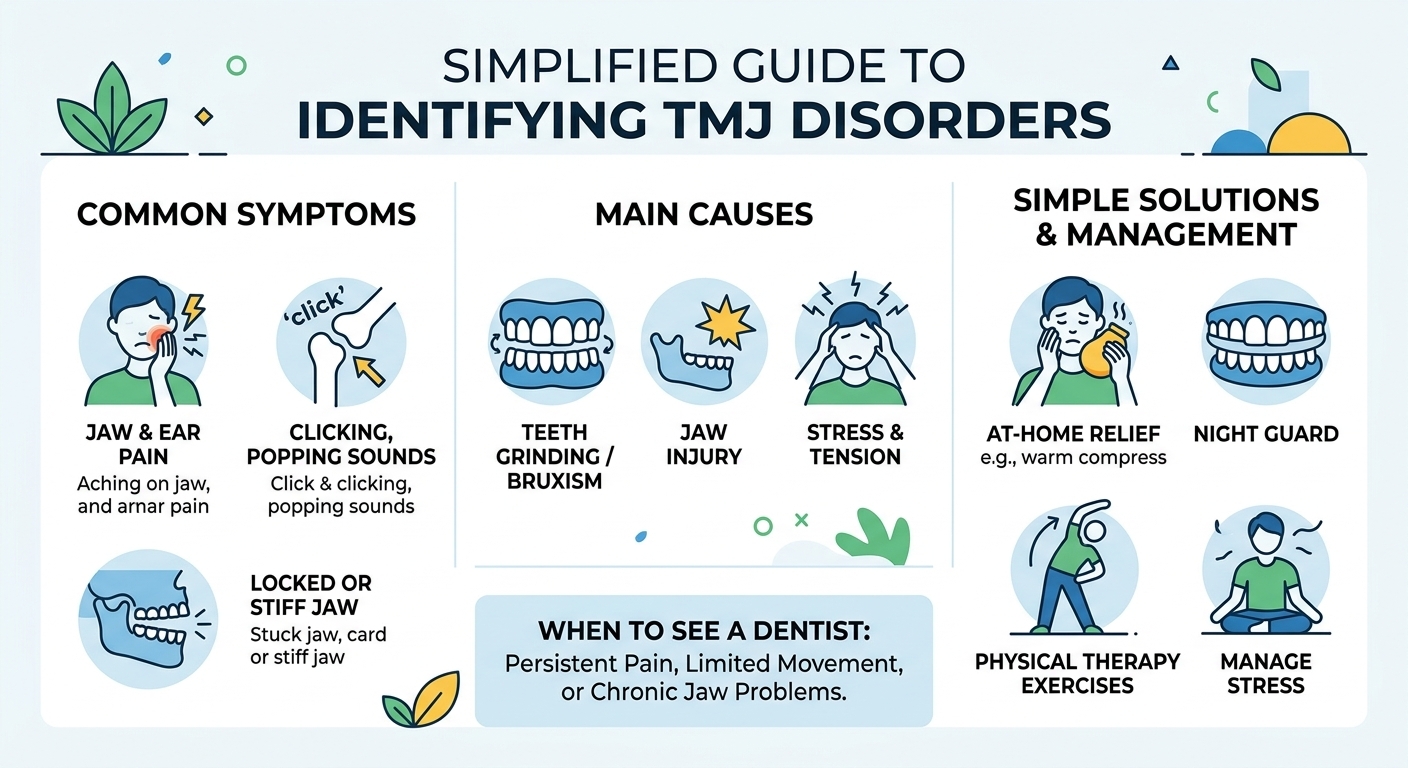
TMJ disorder symptoms can range from a clicking jaw to chronic headaches. Discover 7 warning signs of temporomandibular joint pain and when to see a dentist.
Do you ever hear a click when you open your mouth wide or feel a dull ache near your ear after a long day? These small, easy-to-dismiss moments are often the earliest TMJ disorder symptoms, and catching them early can save you from months of unnecessary discomfort. Your temporomandibular joint (TMJ) works harder than almost any other joint in your body, hinging and sliding every time you talk, chew, yawn, or smile. When something goes wrong with it, the effects can ripple out to your jaw, head, neck, and even your ears.
The good news? TMJ disorders are common, well understood, and very manageable once you know what to look for. In this guide, we’ll walk through the seven most telling warning signs, explain what causes them, and outline the treatment paths that can get you back to pain-free chewing and speaking.
What Is the Temporomandibular Joint?
The temporomandibular joint connects your lower jawbone (the mandible) to the temporal bone of your skull, sitting just in front of each ear. You actually have two of these joints, one on each side of your face, and they’re designed to work in sync. A small disc of cartilage cushions the joint, allowing smooth, controlled movement as you open and close your mouth.
Because the TMJ is a sliding hinge joint rather than a simple hinge like your elbow, it’s more complex and, unfortunately, more prone to problems. Temporomandibular disorders, often shortened to TMD, refer to a group of conditions affecting this joint and the surrounding muscles. Millions of people experience some form of TMD in their lifetime, and women are diagnosed more often than men, particularly during their reproductive years.
Understanding TMJ Disorder Symptoms
TMJ disorder symptoms don’t always show up the same way for everyone. Some people notice a single, isolated sign, while others deal with a cluster of issues that build gradually over months. Recognizing the pattern early makes treatment simpler and helps prevent the condition from becoming chronic.
Sign 1: Jaw Pain or Tenderness
The most common complaint among people with TMD is a persistent ache in the jaw joint itself. This pain often intensifies with chewing, talking, or even resting your chin on your hand. It can feel like a dull soreness or, in more severe cases, a sharp, stabbing sensation. Tenderness when you press gently on the joint, just in front of your ear canal, is a strong indicator that something’s off.
Sign 2: Clicking, Popping, or Grinding Sounds
A clicking or popping noise when you open or close your mouth is one of the more noticeable TMJ disorder symptoms. This happens when the cushioning disc inside the joint shifts out of its normal position. While an occasional, painless click isn’t always cause for alarm, frequent grinding sensations (called crepitus) paired with discomfort usually point to joint degeneration or disc displacement.
Sign 3: Difficulty Chewing or Discomfort While Eating
If biting into an apple or chewing tougher foods has started to feel like a chore, your TMJ may be struggling to move efficiently. Some people unconsciously start favoring one side of their mouth to avoid pain, which can lead to uneven muscle strain over time.
Sign 4: Locking of the Jaw Joint
Jaw locking is one of the more alarming TMJ disorder symptoms, and it happens when the joint gets momentarily stuck in an open or closed position. This can be brief and resolve on its own, or it can require a gentle manual release. Either way, it’s a clear signal that the disc or joint mechanics have shifted out of alignment.
Sign 5: Frequent Headaches or Earaches
Because the TMJ sits so close to your ear and shares nerve pathways with the surrounding muscles, disorders here often masquerade as tension headaches or ear infections. Many people visit an ENT specialist for ear pain, only to discover the root cause is actually their jaw joint. If your headaches cluster around your temples or the base of your skull, TMD is worth ruling out.
Sign 6: Facial Swelling or Muscle Fatigue
Chronic clenching and inflammation around the joint can cause visible swelling on one or both sides of the face. You might also notice your jaw muscles feel tired or fatigued by the end of the day, similar to how your legs might feel after a long run, except it’s happening every time you talk or eat.
Sign 7: Changes in Your Bite Alignment
In more advanced cases, TMJ disorders can subtly shift how your upper and lower teeth meet. You might notice your bite feels “off,” or that your teeth don’t line up the way they used to. This is a sign the joint has been under strain long enough to affect its structural position, and it typically warrants a prompt evaluation.
What Causes TMJ Disorders?
Understanding the underlying cause of your TMJ disorder symptoms helps your dentist tailor a treatment plan that actually addresses the problem instead of just masking it.
Bruxism and Teeth Grinding
Grinding or clenching your teeth, often during sleep, places enormous pressure on the jaw joint. Over months and years, this repetitive strain wears down the joint’s cartilage and can trigger chronic inflammation.
Jaw Injury or Trauma
A direct blow to the face, whiplash from a car accident, or even a hard fall can displace the joint or damage its supporting ligaments, leading to TMD symptoms that appear immediately or develop gradually afterward.
Arthritis and Joint Degeneration
Like any other joint in the body, the TMJ is susceptible to osteoarthritis and rheumatoid arthritis. As cartilage breaks down, the smooth gliding motion of the joint becomes rougher, producing pain and that telltale grinding sound.
Chronic Stress and Muscle Tension
Stress doesn’t just affect your mind; it shows up in your body too. Many people clench their jaw unconsciously during stressful periods, which strains the muscles surrounding the TMJ and can trigger or worsen symptoms.
Who Is Most at Risk for TMJ Disorders?
While TMD can affect anyone, certain groups face higher risk:
- Women between the ages of 20 and 40, likely due to hormonal influences on joint tissue
- People with a history of jaw trauma or dental misalignment
- Individuals who grind or clench their teeth, especially at night
- Those with autoimmune or inflammatory joint conditions
- People under chronic, unmanaged stress
- Individuals with poor posture, particularly forward head posture, which strains neck and jaw muscles
How Dentists Diagnose TMJ Disorders
If you’re experiencing TMJ disorder symptoms, your dentist has a few reliable tools to confirm the diagnosis and rule out other conditions.
Physical Examination
Your dentist will typically start by observing your jaw’s range of motion, listening for clicking or grinding sounds, and gently palpating the joint and surrounding muscles to pinpoint areas of tenderness.
Imaging Tests
For a closer look at the joint’s internal structure, your dentist may order an X-ray, CT scan, or MRI. These images reveal whether the disc has shifted, whether there’s cartilage damage, and how severe any degeneration might be.
Treatment Options for TMJ Disorder Symptoms
The encouraging part of TMD is that most cases respond well to conservative, non-surgical treatment. Surgery is typically reserved as a last resort.
At-Home Remedies
Simple changes can go a long way. Applying a warm compress to the jaw, eating softer foods for a few days, and consciously avoiding excessive gum chewing all help reduce strain on the joint while it heals.
Night Guards and Splints
For people whose symptoms stem from bruxism, a custom-fitted night guard is often the single most effective intervention. By creating a physical barrier between the upper and lower teeth, it prevents the repetitive grinding motion that aggravates the joint.
Physical Therapy
Targeted jaw exercises and stretches, guided by a physical therapist, can improve joint mobility and strengthen the muscles that support proper alignment.
Medications
Over-the-counter anti-inflammatory medications can ease pain and swelling in mild to moderate cases. For persistent muscle tension, your dentist or doctor might prescribe a short course of muscle relaxants.
Surgical Options for Severe Cases
When conservative treatments don’t bring relief, options range from minimally invasive arthrocentesis (flushing the joint with fluid) to more involved joint replacement surgery. These are typically reserved for structural damage that hasn’t responded to other therapies.
Lifestyle Tips to Manage TMJ Symptoms
A few consistent habits can make a noticeable difference in how your jaw feels day to day:
| Habit | Why It Helps |
| Practice good posture. | Reduces strain on neck and jaw muscles |
| Manage stress with relaxation techniques. | Lowers unconscious jaw clenching |
| Avoid chewing gum and hard foods. | Limits repetitive joint strain |
| Sleep on your back when possible. | Prevents added pressure on one side of the jaw |
| Stay consistent with your night guard. | Protects the joint from nighttime grinding |
When Should You See a Dentist or Doctor?
If your jaw pain lasts longer than a week, if you can’t fully open or close your mouth, or if you’re experiencing frequent locking, it’s time to schedule an appointment. The National Institute of Dental and Craniofacial Research notes that most TMJ disorder cases respond well to simple, reversible treatments before more invasive options are ever considered. Catching TMJ disorder symptoms early gives you access to the widest range of gentle, effective treatments, so don’t wait until the discomfort becomes constant.
Frequently Asked Questions
1. Can TMJ disorder symptoms go away on their own?
Yes, mild cases sometimes resolve without formal treatment, especially when triggered by temporary stress or a minor strain. However, persistent or worsening symptoms should be evaluated by a dentist.
2. Is TMJ disorder a permanent condition?
Not necessarily. Many people find lasting relief through night guards, physical therapy, and lifestyle changes. Surgery is only needed in a small percentage of severe, unresponsive cases.
3. Can stress really cause jaw pain?
Absolutely. Stress often leads to unconscious jaw clenching and teeth grinding, both of which place significant strain on the temporomandibular joint.
4. What’s the difference between TMJ and TMD?
TMJ refers to the joint itself, while TMD (temporomandibular disorder) refers to the condition affecting that joint. People often use “TMJ” informally to describe the disorder as well.
5. Should I avoid certain foods if I have TMJ disorder symptoms?
Yes, it’s wise to steer clear of hard, chewy, or crunchy foods like nuts, tough meats, and chewing gum while your symptoms are active, since these increase strain on the joint.
6. Can children develop TMJ disorders?
It’s less common, but children and teens can experience TMD, particularly if they have a habit of clenching their teeth or have experienced jaw trauma.
7. Will a night guard cure my TMJ disorder?
A night guard won’t cure the underlying condition, but it significantly reduces the grinding and clenching that aggravates symptoms, often leading to noticeable improvement within weeks.
Conclusion
Recognizing TMJ disorder symptoms early, whether it’s a subtle click, a lingering headache, or genuine jaw pain, puts you in a much stronger position to manage the condition before it becomes chronic. From simple lifestyle adjustments to custom night guards and, in rare cases, surgical intervention, there’s a treatment path suited to nearly every level of severity. If your jaw has been sending you signals, it’s worth listening. A quick conversation with your dentist could be the first step toward chewing, talking, and smiling without a second thought.