
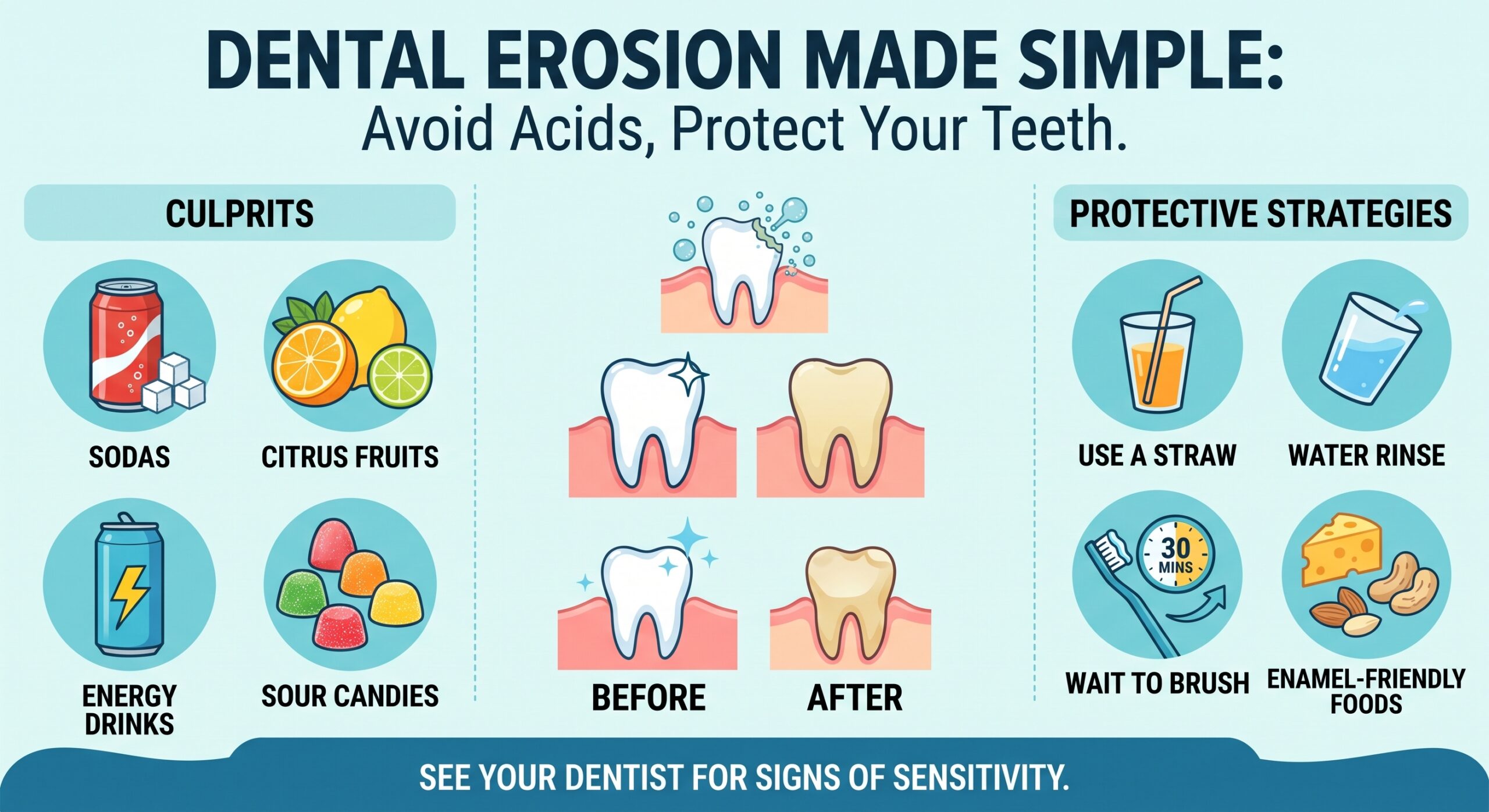
Diet and tooth decay are closely linked, and acidic foods are often the hidden trigger. Discover the top culprits behind dental erosion and how to protect your smile.
Understanding the Link Between Diet and Tooth Decay
Your plate has more influence over your smile than you might realize. Diet and tooth decay go hand in hand, and the foods and drinks you reach for every day can either shield your enamel or slowly wear it away. While most of us know that sugar feeds the bacteria that cause cavities, fewer people realize that acidity plays an equally powerful role in a related but distinct problem: dental erosion.
This article takes a close look at the dietary culprits most likely to erode your enamel, explains why they’re so damaging, and offers practical, dentist-backed strategies to keep your teeth strong for years to come. We’ll walk through the science in plain language, so you’ll finish this read with a clear picture of what’s happening in your mouth every time you eat or drink.
What Is Dental Erosion, Exactly?
Dental erosion is the gradual loss of tooth enamel caused by acid exposure rather than by bacteria. It’s a chemical process: acids soften the mineral structure of enamel, and repeated exposure wears that protective layer thinner over time. Once enamel is gone, it doesn’t grow back, which is why prevention matters so much.
How Erosion Differs From Cavities
Cavities form when bacteria in plaque feed on sugars and starches, producing acid as a byproduct that attacks specific spots on the tooth. Erosion, on the other hand, results directly from acids you consume, whether from food, drink, or even stomach acid in cases of reflux. Both processes involve acid, but the source and the pattern of damage are different. Erosion tends to affect the whole tooth surface evenly, while decay often shows up as localized dark spots or holes. Understanding this distinction helps explain why brushing harder isn’t the answer to either problem and why diet plays such a central role in both.
Why Acidic Foods Matter for Diet and Tooth Decay
The Role of Enamel pH
Enamel begins to soften when the pH in your mouth drops below about 5.5. Many everyday foods and drinks sit well below this threshold, some as low as 2.0 to 3.0, which is close to the acidity of battery acid on the pH scale. Every time you consume something acidic, your enamel experiences a mini “acid attack” that can last twenty minutes or longer, even after you’ve swallowed the last sip.
Saliva’s Protective Function
Thankfully, your mouth isn’t defenseless. Saliva acts as a natural buffer, neutralizing acids and helping redeposit minerals like calcium and phosphate back into weakened enamel through a process called remineralization. However, saliva needs time to do its job. Sipping an acidic drink continuously throughout the day, or snacking on acidic foods frequently, doesn’t give saliva a fair chance to restore balance, which is one reason frequency of exposure matters just as much as the acid itself.
The 7 Worst Dietary Culprits for Dental Erosion
Let’s get specific. Here’s a rundown of the foods and beverages most likely to contribute to enamel erosion, along with what makes each one particularly risky.
1. Citrus Fruits and Juices
Oranges, lemons, limes, and grapefruits are nutritional powerhouses, packed with vitamin C and antioxidants. Unfortunately, they’re also highly acidic. Lemon juice, for instance, has a pH close to 2, making it one of the most erosive substances people regularly put in their mouths. Freshly squeezed juice and citrus-based smoothies carry this same risk, especially when sipped slowly over time.
2. Carbonated Soft Drinks
Cola and other fizzy soft drinks combine both sugar and acid, a double threat for diet and tooth decay. Phosphoric and citric acids give these drinks their sharp, refreshing taste, but they also strip minerals from enamel with every sip. Diet versions aren’t off the hook either. Removing sugar doesn’t remove the acidity, so “sugar-free” sodas can still erode enamel just as aggressively.
3. Sports and Energy Drinks
Marketed as performance boosters, sports and energy drinks are often more acidic than soda. Research has repeatedly shown that some popular sports drinks can cause measurable enamel softening after just a few days of regular use. Athletes and gym-goers who sip these throughout a workout are especially at risk, since prolonged contact time gives acid extra opportunity to act.
4. Wine, Especially White Wine
Wine lovers, take note. White wine tends to have a lower pH than red wine, making it more erosive, though both varieties pose some risk. The tannins in red wine can also stain enamel that’s already been softened by acid exposure, compounding the cosmetic and structural effects over time.
5. Vinegar-Based Dressings and Pickled Foods
Balsamic vinaigrette, pickles, and fermented condiments like kimchi are staples of a healthy diet, but their acidity shouldn’t be overlooked. Regularly consuming vinegar-heavy foods, particularly as a daily habit like a morning “vinegar tonic,” can gradually thin enamel, especially when these foods linger in the mouth.
6. Sour Candies
Sour candies are formulated with citric or malic acid to create that intense tang, and they often cling to tooth surfaces for extended periods. This combination of high acidity and prolonged contact makes sour candy one of the more surprising, yet significant, contributors to erosion, particularly among children and teens.
7. Sparkling Water and Flavored Waters
Plain sparkling water is far less erosive than soda, but it’s not entirely neutral. Carbonation itself introduces mild acidity, and flavored versions with added citrus or fruit essence push the pH even lower. For most people, occasional sparkling water poses minimal risk, but daily, all-day sipping habits can add up.
Signs Your Teeth May Already Be Eroding
Dental erosion often develops quietly, but there are telltale signs worth watching for:
- Increased sensitivity to hot, cold, or sweet foods
- A yellowish tint as the dentin beneath enamel becomes visible
- Rounded, translucent, or chipped edges on front teeth
- Cupping or indentations on chewing surfaces
- A smoother, glossier appearance to the enamel surface
If any of these sound familiar, it’s worth bringing them up at your next dental visit rather than waiting for discomfort to worsen.
How Diet and Tooth Decay Risk Compound Over Time
Frequency Matters More Than Quantity
It’s not just what you eat; it’s how often. A single glass of orange juice with breakfast is far less damaging than sipping the same juice slowly over an hour. Each acidic exposure resets the clock on your mouth’s natural pH recovery, so frequent grazing on acidic snacks or drinks throughout the day keeps enamel in a near-constant state of vulnerability. This is a key reason dentists often ask about snacking patterns, not just food choices, when assessing erosion risk.
Practical Strategies to Protect Your Enamel
The good news is that dental erosion is largely preventable with a few thoughtful adjustments.
Timing Your Snacks Wisely
Try pairing acidic foods with meals rather than eating them alone. Saliva production increases during meals, which helps buffer acid more effectively than when it’s consumed in isolation.
Rethinking How You Sip
Using a straw for acidic drinks can help liquid bypass your front teeth, reducing direct contact. It’s a small habit that makes a genuine difference over months and years.
Rinsing and Waiting Before Brushing
After consuming something acidic, rinse your mouth with plain water to help neutralize residual acid. Wait at least thirty minutes before brushing, since enamel is temporarily softened right after an acid attack, and brushing too soon can actually accelerate wear rather than prevent it.
Foods and Habits That Support Stronger Teeth
| Category | Examples | Benefit |
| Dairy | Cheese, plain yogurt, milk | Supplies calcium and phosphate for remineralization |
| Crunchy vegetables | Carrots, celery, cucumber | Stimulates saliva flow |
| Water | Plain tap or still water | Rinses away acid and food debris |
| Sugar-free gum | Xylitol-based varieties | Boosts saliva production after meals |
| Nuts and seeds | Almonds, sesame seeds | Low-acid, mineral-rich snack option |
Balancing acidic favorites with these enamel-friendly choices doesn’t mean giving up citrus or your morning coffee altogether. It simply means being thoughtful about pairing and timing.
When to See a Dentist About Erosion
If you’re noticing sensitivity, visible changes to tooth shape, or persistent discomfort, it’s time to schedule a checkup. A dentist can assess the extent of enamel loss, rule out underlying causes like acid reflux, and recommend treatments ranging from fluoride applications to bonding or veneers for more advanced cases.
Frequently Asked Questions
1. Can dental erosion be reversed once it starts?
Enamel itself cannot regenerate once it’s lost, but early-stage softening can sometimes be remineralized with fluoride treatments and dietary changes before permanent damage sets in.
2. Is it better to drink acidic beverages through a straw?
Yes. A straw directs liquid toward the back of the mouth, reducing the amount of time acid spends in contact with your front teeth.
3. Does brushing right after eating acidic food help or hurt?
It can actually hurt. Enamel is temporarily softened after acid exposure, so brushing immediately can wear it away faster. Wait about thirty minutes first.
4. Are sugar-free sodas safer for my teeth than regular soda?
Not necessarily. While they lack sugar, most diet sodas remain highly acidic, so they still pose a meaningful erosion risk.
5. How can I tell if my sensitivity is from erosion or a cavity?
Erosion tends to cause more generalized sensitivity across multiple teeth, while cavities usually cause localized pain in one specific spot. A dental exam can confirm which is occurring.
6. Does chewing gum actually help protect my teeth?
Yes, particularly sugar-free gum with xylitol. Chewing stimulates saliva flow, which helps neutralize acid and supports natural remineralization.
Conclusion
The relationship between diet and tooth decay is more nuanced than simply avoiding sugar. Acidic foods and drinks, from citrus fruits to sports drinks to sour candy, play a substantial role in wearing down the enamel that protects your teeth. By understanding which foods pose the greatest risk, adjusting how and when you consume them, and pairing acidic choices with enamel-supporting habits, you can significantly reduce your risk of erosion.