
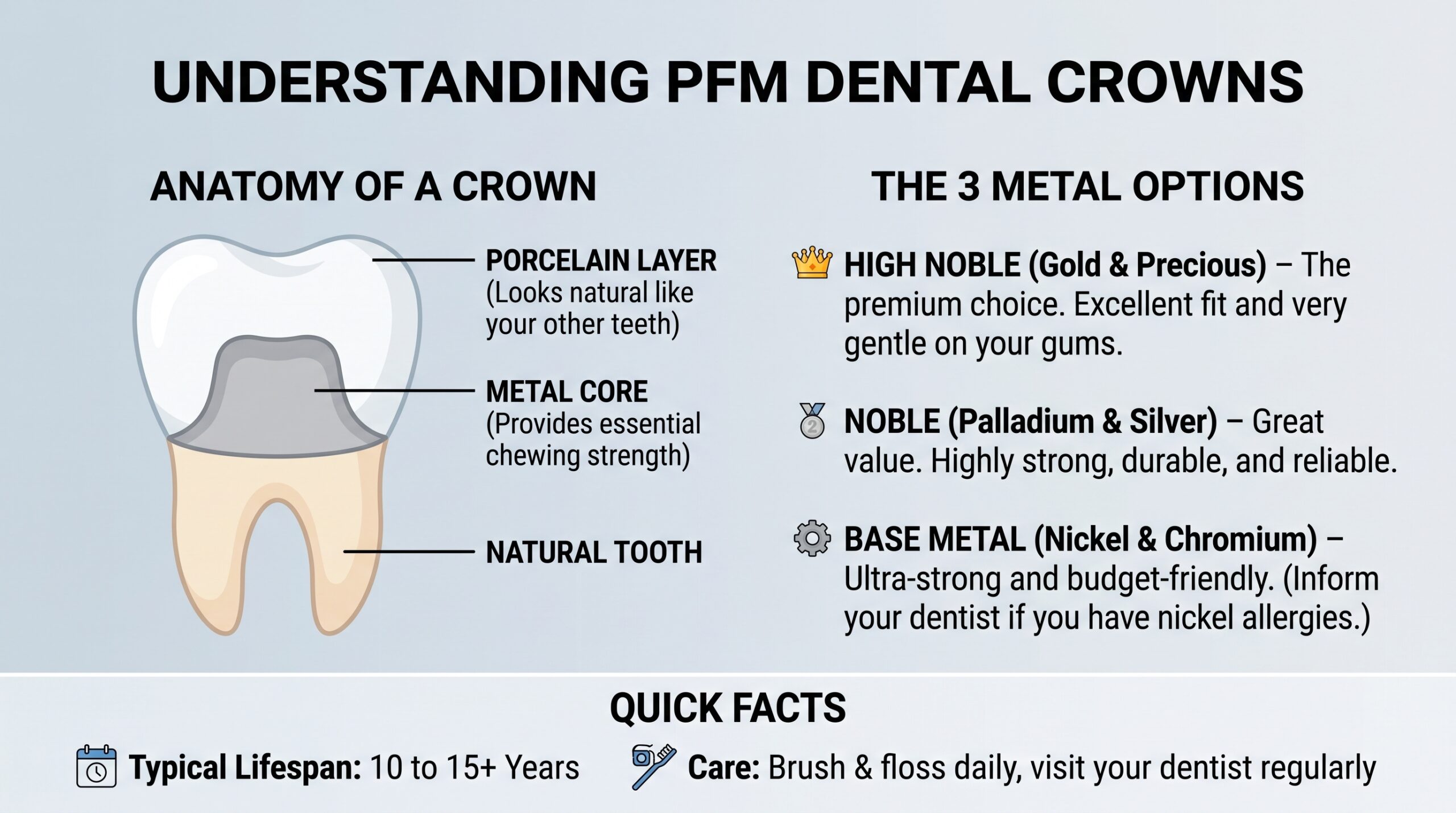
Dental alloys form the strong core of PFM crowns. Learn the metals used, their pros and cons, costs, allergy facts, and how to choose wisely.
Introduction: Why Dental Alloys Matter
If your dentist has recommended a PFM crown, you’ve probably wondered what’s actually under that tooth-colored surface. The answer is a carefully chosen metal. Dental alloys are the hidden backbone of this popular restoration, and they play a huge role in how long your crown lasts, how it looks, and how safe it feels in your mouth.
Here’s the good news. Modern dental alloys are tested, reliable, and used by dentists worldwide. Millions of people chew comfortably on PFM crowns every single day. Still, not all dental alloys are the same. Some contain gold. Others rely on nickel or cobalt. Each type has its own strengths, trade-offs, and price tag.
In this guide, we’ll walk through the metals used in PFM crowns in plain language. You’ll learn what dental alloys are made of, how they bond to porcelain, and what to ask your dentist. By the end, you’ll feel confident about your choices. Let’s dive in.
What Are PFM Crowns?
A crown, sometimes called a cap, covers a damaged tooth completely. It restores the tooth’s shape, size, and strength. Dentists use crowns after root canals, large fillings, cracks, or severe decay.
PFM stands for porcelain-fused-to-metal. As the name suggests, this crown combines two materials: a thin metal shell and a layer of porcelain baked onto it. PFM crowns have been around for decades, and dentists trust them because they have a long track record.
How a PFM Crown Is Built
Making a PFM crown takes a few clear steps. First, your dentist reshapes the damaged tooth and takes an impression or a digital scan. Next, a dental lab creates a metal framework, called a coping, that fits snugly over the prepared tooth. The lab casts or mills this coping from one of several dental alloys.
After that, a technician applies a special opaque layer to hide the metal color. Then, they add layers of porcelain and fire the crown in a furnace at high heat. Finally, they shape and polish the crown so it blends with your smile. Your dentist then cements it onto your tooth.
Why Metal Still Matters Today
You might ask, “Aren’t all-ceramic crowns better?” Not always. All-ceramic and zirconia crowns look wonderful, but metal-based crowns still shine in certain situations. For example, the metal layer gives extra strength to back teeth, which handle heavy chewing forces. It also helps bridges span gaps between teeth.
In other words, dental alloys still earn their spot in modern dentistry. They offer a mix of strength, precision, and proven performance that’s hard to beat.
How Dental Alloys Work in a PFM Crown
Dental alloys aren’t random mixes of metal. Chemists and dental material scientists design them to meet strict needs. An alloy is simply a blend of two or more metals. By combining metals, makers can improve strength, resist corrosion, and control how the material behaves in the mouth.
Strength and Fit
First and foremost, the metal coping must resist biting forces. Think about how much pressure your molars handle when you chew a steak or crunch a carrot. The metal framework spreads that pressure evenly and keeps the porcelain from cracking.
Fit matters just as much. Quality dental alloys can be cast or milled with tiny margins. A tight fit keeps bacteria out and protects the tooth underneath. Because of this, the alloy has to be stable, easy to shape, and kind to the tissue around it.
Bonding Porcelain to Metal
Here’s where things get interesting. Porcelain doesn’t stick to metal like glue. Instead, a chemical bond forms during firing. When the metal is heated, a very thin oxide layer forms on its surface. The porcelain then bonds to that oxide layer.
Some dental alloys form oxide layers easily. Base metal alloys, for instance, make strong oxides. High noble alloys, on the other hand, contain small amounts of trace metals such as indium or tin so they can form just enough oxide for a good bond. Without this step, the porcelain could chip or peel away over time.
Thermal Expansion Match
All materials expand a little when heated and shrink when cooled. Porcelain and metal must do this at similar rates. Experts call this the coefficient of thermal expansion. If the numbers don’t match, stress builds up between the layers. Eventually, the porcelain can crack.
That’s why labs pair specific porcelains with specific dental alloys. They also choose alloys with melting ranges well above the porcelain firing temperature. Otherwise, the metal framework could sag or warp in the furnace. It’s careful science, and it’s a big reason PFM crowns last so long.
Types of Dental Alloys Used in PFM Crowns
The American Dental Association (ADA) groups casting alloys by how much noble metal they contain. Noble metals, such as gold, platinum, and palladium, resist corrosion and tarnish very well. Based on that content, dental alloys fall into three main groups.
High Noble Alloys
High noble alloys contain at least 60 percent noble metals, and at least 40 percent of the total is gold. These are the “premium” dental alloys. Common blends include gold-platinum-palladium and gold-palladium.
Key benefits:
- Excellent biocompatibility, meaning they rarely irritate the gums
- Outstanding corrosion resistance
- Smooth, tight margins and a precise fit
- A warm, natural look that helps porcelain appear lifelike
Key drawbacks:
- Higher cost because of gold content
- Prices can shift with the gold market
- Slightly softer than base metals, so frameworks may need more thickness in some cases
Many dentists consider high noble dental alloys the gold standard (pun intended) for patients who want the best long-term performance.
Noble Alloys
Noble alloys contain at least 25 percent noble metals, but they don’t have to include gold. Popular choices include palladium-silver, palladium-copper, and gold-silver-palladium blends.
Key benefits:
- Lower price than high-noble options
- Good strength and reliable porcelain bonding
- Solid corrosion resistance
Key drawbacks:
- Silver in some blends can discolor porcelain, causing a faint greenish tint
- Palladium-copper alloys can form dark oxides that are harder to mask
- Some patients are sensitive to palladium
Noble dental alloys sit in the middle. They’re a smart pick for people who want quality without paying premium prices.
Base Metal Alloys
Base metal alloys contain less than 25 percent noble metals. They’re usually built from nickel-chromium, cobalt-chromium, or titanium.
Key benefits:
- Very strong and rigid
- Thin frameworks are possible, which means less tooth removal
- Most affordable of all dental alloys
- Great for long bridges that need extra stiffness
Key drawbacks:
- Nickel can trigger allergic reactions in sensitive people
- Dark oxides can make masking the metal tougher
- Harder to cast and adjust, so lab skill matters
- Can wear opposing teeth if not polished well
Cobalt-chromium and titanium are popular choices for people who need a nickel-free option. Titanium is lightweight and very biocompatible, though it takes special lab equipment to process.
Dental Alloys Compared: Pros and Cons
Sometimes a side-by-side look makes things clearer. The table below summarizes the main differences among the three groups of dental alloys.
| Feature | High Noble | Noble | Base Metal |
| Main metals | Gold, platinum, palladium | Palladium, silver, copper | Nickel, chromium, cobalt, titanium |
| Cost | Highest | Moderate | Lowest |
| Strength | Good | Good to very good | Excellent |
| Corrosion resistance | Excellent | Very good | Good |
| Allergy risk | Very low | Low to moderate | Moderate (nickel) |
| Porcelain bonding | Reliable | Reliable | Strong, but oxides are dark |
| Best for | Long-term, premium results | Balanced budget and quality | Bridges, budget-friendly cases |
As you can see, no single option wins every category. Your dentist will weigh your bite, your budget, your health history, and the tooth’s location before suggesting one of these dental alloys.
Allergies and Safety Concerns
Safety is a top question for anyone getting a crown. The good news is that serious reactions to dental alloys are uncommon. Even so, it’s smart to know the facts.
Nickel Sensitivity
Nickel is one of the most common metal allergens. If jewelry with nickel makes your skin itch or turn red, tell your dentist right away. Nickel-chromium alloys could cause similar reactions in your mouth, such as swollen gums, a metallic taste, or a burning feeling.
The fix is simple. Dentists can choose nickel-free dental alloys, such as high-noble, cobalt-chromium, or titanium options. If you’re unsure about a possible allergy, ask about patch testing before treatment.
Beryllium and Palladium Questions
Some older nickel-chromium alloys contain small amounts of beryllium. Beryllium improves how the metal casts, but it can be hazardous to lab workers who breathe dust during grinding. Because of this, many labs now avoid beryllium or use strict safety controls. If this worries you, ask your dentist which alloy the lab will use.
Palladium is another metal that comes up often. A small number of people react to it. Interestingly, people with nickel allergies sometimes show reactions to palladium as well. Again, open communication with your dentist is the best protection.
Cost, Lifespan, and Care
Let’s talk money and maintenance. After all, a crown is an investment in your smile.
What Affects the Price
Several factors shape the final bill for a PFM crown:
- Type of alloy: High noble dental alloys cost the most, while base metal alloys cost the least.
- Location of the tooth: Back teeth may need stronger frameworks.
- Dental lab fees: Skilled technicians charge more for complex work.
- Your dentist’s region and experience: Fees vary widely.
- Extra procedures: Root canals, build-ups, or gum treatment add to the total.
In the United States, a single PFM crown commonly runs from several hundred to well over a thousand dollars per tooth. Insurance often covers part of the cost, so check your plan first.
How Long PFM Crowns Last
With good care, most PFM crowns last between 10 and 15 years. Many last even longer. The quality of the dental alloys, the skill of the lab, and your daily habits all play a part.
Over time, porcelain can chip, or the gum line can recede. When that happens, you may see a thin dark line at the crown’s edge, which is the metal showing through. It isn’t dangerous, but some people don’t like how it looks. Your dentist can talk with you about replacement if it bothers you.
Daily Care Tips
Taking care of a PFM crown is easy. Follow these simple habits:
- Brush twice a day with a soft toothbrush and fluoride toothpaste.
- Floss daily, and slide the floss out sideways rather than pulling it up.
- Avoid chewing ice, hard candy, or pen caps.
- Wear a night guard if you grind your teeth.
- See your dentist every six months for checkups and cleanings.
These small steps protect both the porcelain and the metal beneath it.
How to Choose the Right Dental Alloys for Your Crown
Choosing among dental alloys doesn’t have to feel overwhelming. Start by thinking about what matters most to you. Is it budget? Longevity? Allergy safety? Appearance?
Then, bring a few smart questions to your appointment:
- Which type of alloy do you recommend for my tooth, and why?
- Does the alloy contain nickel, beryllium, or palladium?
- Which dental lab will make my crown?
- How long do you expect this crown to last in my case?
- Would an all-ceramic or zirconia crown suit me better?
A trustworthy dentist will answer these questions clearly and without pressure. If you have a history of metal allergies, say so up front. Also, mention any other metals you already have in your mouth, since mixing different metals can sometimes cause a mild galvanic reaction.
Keep in mind that front teeth often get all-ceramic crowns because they look more natural. Back teeth, which take on heavier chewing, often do very well with PFM crowns made from reliable dental alloys. Ultimately, the best choice is the one that fits your health, your smile, and your budget.
Frequently Asked Questions
1. What metals are used in PFM crowns?
PFM crowns use gold, platinum, palladium, silver, nickel, chromium, cobalt, or titanium. Dentists group these dental alloys as high noble, noble, or base metal depending on how much noble metal they contain.
2. Which dental alloy is best for a PFM crown?
It depends on your needs. High noble dental alloys offer excellent biocompatibility and a precise fit. Base metal options give great strength at a lower price. Your dentist will recommend the best match for your tooth and health history.
3. Are PFM crowns safe if I have a nickel allergy?
Yes, as long as your dentist avoids nickel-containing alloys. Nickel-free choices include high noble alloys, cobalt-chromium, and titanium. Always share your allergy history before treatment.
4. Why do some PFM crowns show a dark line near the gums?
That line is the metal edge showing as the gums recede or as porcelain wears thin. It’s common and usually harmless. If it bothers you, ask about replacing the crown with an all-ceramic option.
5. How long do PFM crowns last?
Most last 10 to 15 years, and some last much longer. Good oral hygiene, regular checkups, and avoiding hard foods all help extend their life.
6. Are gold dental alloys really worth the extra cost?
For many patients, yes. Gold-based dental alloys resist corrosion, rarely cause allergic reactions, and fit very precisely. However, if the budget is tight, noble or base metal alloys can still perform well.
7. Can a PFM crown crack or chip?
Yes. The porcelain layer can chip if you bite something very hard or grind your teeth. The metal framework underneath usually stays intact, and dentists can often repair small chips.
Conclusion
Understanding dental alloys takes the mystery out of PFM crowns. These hidden metals give each crown its strength, accuracy, and staying power. High noble alloys deliver premium comfort and safety. Noble alloys balance quality and cost. Base metal alloys provide impressive strength at a friendly price.