
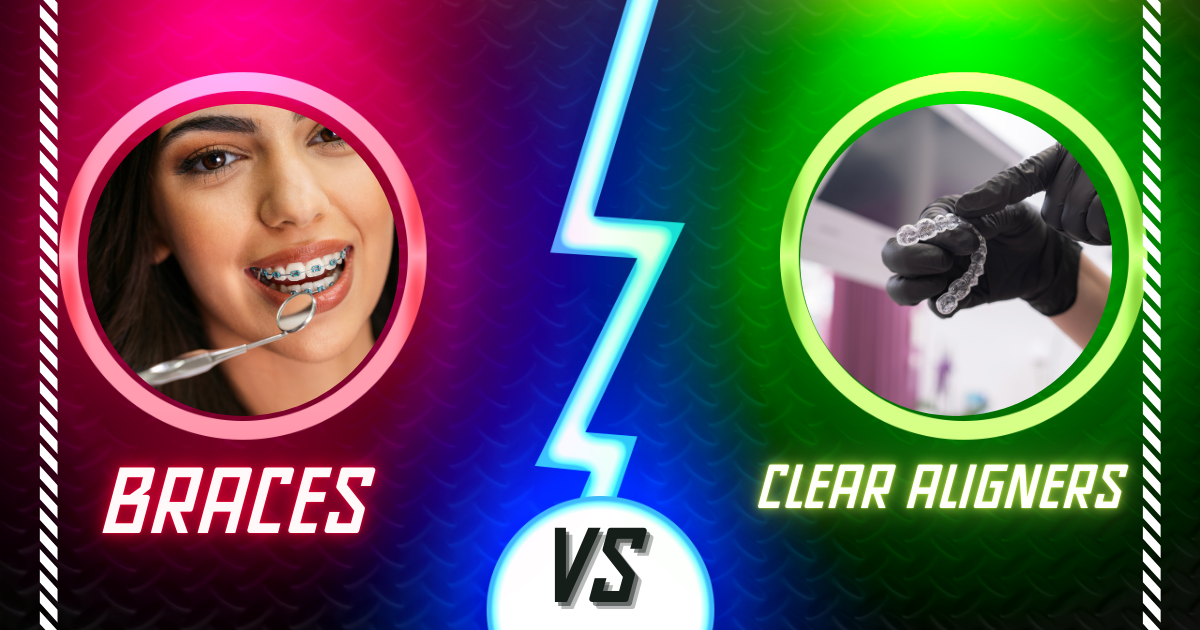
Many patients (or their parents) have asked us which option would be best for them. Since it’s a very personal choice, we view we’d give you some facts if you need more time to weigh your option.
The majority of orthodontic treatment options matter can be resolved using braces vs clear aligners; however, not all of them can. Therefore, it’s crucial to debate which option might assist you in getting the greatest outcome with your orthodontist through your initial visit at the House of Dentistry. However, in many situations, both bets are available, allowing you to choose the one that best fits your lifestyle and preferences.
Aligners
Aligners are plastic, way -built to suit your teeth. Each aligner gradually moves the teeth toward the desired position. Tiny lumps of composite resin—a tooth-colored filling material—are affixed to various teeth to help the aligner grasp the tooth and move it correctly.
Look:
Because aligners are transparent and specially designed to suit your teeth, they are less evident than braces. This may be a factor for many patients, but not all.
Diet:
When you take off your aligners to eat, your diet is unaffected. Your favorite foods will still be available to you. Certain foods are hard or challenging to eat while wearing braces, and they might break, delaying therapy and necessitating added visits for repairs.
Hygiene:
Your aligners are detachable, so you can broom and floss normally. This is important since many people find it difficult to clean their teeth while tiring braces.
Appointments:
Since your orthodontist has already scheduled the tooth movement, the actual trips to the office are typically considerably easier and, in certain situations, may be less frequent overall. For everyone who leads a hectic life, this can be a huge benefit!
Comfort:
Aligners are generally more comfortable than braces. Because the plastic aligner is smoother than metal or porcelain braces, the lips and cheeks usually feel less uncomfortable even if the teeth may still be a little sensitive as they start to move. Those who participate in contact or semi-contact sports may find this to be especially pertinent.
Drawbacks
Compliance:
In order for aligners to be successful, they must be shabby for 22 hours per day. This implies that they are only taken out to clean and eat. Results follow compliance!
Aligners must be taken out for cleaning and eating. If a patient is bashful or ashamed about doing something, they could find it difficult to do it in public.
Effectiveness of clear aligners:
Aligners are effective in treating the majority of instances, but not all of them. Your orthodontist might suggest braces instead of aligners in complicated cases. The outcome might not be as accurate if you insist on aligners nevertheless.
Cost:
In certain situations, aligners may be more expensive than braces. Nonetheless, they are frequently the same or same. Before you make a decision, your orthodontist can go over the cost of braces vs aligners of your options.
Braces
Braces are affixed to your teeth and might be composed of porcelain or metal. The teeth are then moved into the proper position by applying a push using rubber bands and metal wires.
Benefits
Relevant to any situation
Traditional braces benefits can address all cases, whereas aligners can treat the majority of them. Therefore, braces are always an option.
Variety of braces
Several kinds of metal braces can be colored or not. In addition, braces made of porcelain are far less noticeable than those made of metal.
Compliance
You cannot lose or forget to wear the braces because they are affixed to your teeth. Some patients may find this helpful if they lack the internal motivation to wear their aligners as prescribed.
Drawbacks
Hygiene:
Compared to aligners, cleaning your teeth while wearing braces is far more difficult. The teeth may sustain actual damage if cleaning is not done properly. Because of this, you might decide to take out your braces before you’ve had the best possible outcome.
Diet:
You will need to adjust your diet while wearing braces on your teeth. Breakages from hard foods or grinding at night may impede or halt the course of your treatment. Additionally, you should stay away from sugary, sticky meals when wearing braces because you are more likely to decay. Inadequate hygiene combined with a bad diet is a recipe for trouble!
Comfort:
Because braces can rub on the cheeks and lips, they are often more likely to cause discomfort. This affects certain patients more than others, and it’s frequently a factor for athletes and other activity participants.
Look:
Clear aligners advantages are less apparent than braces, even those made of porcelain. Depending on their personality, interests, and line of work, this is significant for certain patients.
Appointments:
Braces typically require lengthier, more complicated appointments, including active chair adjustments. Additionally, more regular visits might be required.
When evaluating your orthodontic therapy options, there are some factors to take into account. It is hoped that the details beyond will help you make the best decision for yourself. Although there are no right or wrong answers, it is key to understand your decision and how it will affect your daily life. To make your selection easier, decide which sake or drawbacks are most important to you. Above all, make a query. To make an informed choice, be sure you have all the details you require.