
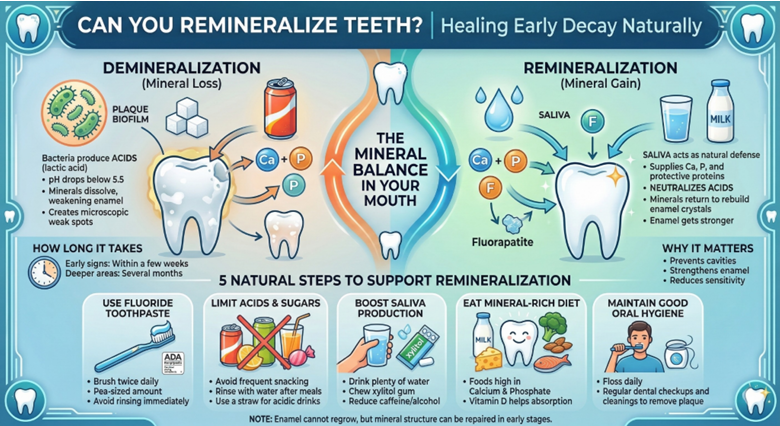
Can You Remineralize Teeth? Healing Early Decay Naturally
How Long Does It Take to Remineralize Teeth?
How long it takes to remineralize your teeth depends on how much of the tooth surface has
been demineralized and what you do every day to support enamel recovery. Early mineral
loss can sometimes be reversed within a few days when you maintain a healthy oral hygiene
routine. Fluoride toothpaste, mineral-rich foods, and good oral care habits can help restore
important minerals such as calcium and phosphate.
The process can take months for areas with greater mineral loss. Fluoride varnishes and
custom remineralizing treatments can accelerate results by delivering concentrated minerals
directly onto the tooth surface.
For long-term protection and enamel repair, it is essential to maintain a neutral pH in the
mouth, reduce exposure to foods that produce acid, and support saliva production. If the
oral environment stays balanced, teeth can gradually gain mineral density and become more
resistant to decay.
What Is Tooth Remineralization, and Why Does It Matter?
The enamel on your teeth is the outermost layer that protects them. Even though it is
stronger than bone and the hardest substance in the body, enamel faces daily challenges
that can weaken it.
When you consume acidic foods, drink sweetened beverages, or plaque bacteria produce
acids, your teeth start to lose minerals. This process is known as
demineralization. Enamel is made up of hydroxyapatite, a form of
calcium-phosphate mineral that gives teeth their strength and durability.
Every day, demineralization and remineralization take place. Saliva acts as a natural repair
system for the enamel surface when acids begin to erode it. Saliva contains calcium,
phosphate, and protective proteins, which help restore minerals to weakened enamel.
Remineralization occurs when these minerals deposit back into the enamel crystal structure.
This mineral exchange helps prevent tooth decay and maintain strong, healthy teeth. When
acid exposure exceeds the body’s ability to repair enamel, mineral loss continues. This can
lead to dental caries and enamel erosion.
What Causes Tooth Decay and Demineralization?
Understanding demineralization helps explain why remineralization is so important.
When the pH in the mouth falls below the critical pH of about 5.5 for enamel,
the hydroxyapatite crystalline structure begins to dissolve. This process slowly removes
calcium and phosphate from enamel’s mineral structure, creating microscopic weak points
in the tooth surface.
These weakened areas often appear as white spots or lesions, which are the first visible
signs of demineralization.
If mineral loss is not repaired, these areas can become more pronounced and eventually
develop into dental cavities. Since enamel cells cannot regenerate after they have been
destroyed, the best way to protect the outer layer is to prevent mineral loss and encourage
remineralization as early as possible.
The mouth has a powerful natural defence system. Saliva acts as a buffering liquid that
neutralises acid, restores pH balance, and provides calcium and phosphate for enamel
repair. This protective process is supported by a healthy oral microbiome and good oral
hygiene.
The most effective ways to remineralize teeth include brushing regularly, eating a diet rich in
calcium and phosphate, and using fluoride toothpaste. These practices help restore mineral
density and strengthen enamel crystals to prevent long-term damage.
How to Remineralize Teeth at Home: 5 Steps
These evidence-based strategies can help strengthen enamel and support natural
remineralization, whether you are focusing on at-home care or professional support.
1. Fluoride Toothpaste Is Highly Recommended
Fluoride is one of the most effective minerals for strengthening enamel. When fluoride
interacts with hydroxyapatite in tooth enamel, it forms fluorapatite, a stronger mineral that is
more resistant to acid attack.
Fluoride also attracts calcium and other ions, which help rebuild the tooth surface.
Tips for effective remineralization:
- Brush your teeth twice daily using fluoride toothpaste
- Use about a pea-sized amount of toothpaste
- Do not rinse immediately, so fluoride stays on the teeth longer
The American Dental Association recommends fluoride as a preventive measure to reduce
the risk of cavities and strengthen enamel.
2. Limit Foods and Drinks That Form Acids
Acidic beverages and foods such as sports drinks, sodas, citrus juices, and vinegar-based
foods can cause enamel erosion and weaken the tooth surface.
Acids dissolve the enamel mineral structure and lower the pH of the mouth, increasing the
likelihood of demineralization.
Protect your teeth by:
- Rinsing with water after eating acidic foods
- Waiting 30 minutes before brushing after acidic meals or drinks
- Drinking acidic beverages through a straw
These habits help maintain a healthier pH balance and allow saliva to replenish minerals.
3. Encourage Healthy Saliva Production
Saliva is a key part of the remineralization process. It naturally buffers acids and supplies the
minerals needed to repair enamel.
Healthy salivary flow helps to:
- Neutralize acids produced by bacteria
- Deliver calcium and phosphate to enamel
- Remove food particles and plaque bacteria
To support saliva production:
- Drink plenty of water
- Chew sugar-free gum with xylitol
- Avoid excessive alcohol or caffeine, which may worsen dry mouth
Dry mouth, also known as xerostomia, reduces saliva production and increases the risk of
tooth decay.
4. Eat a Diet Rich in Tooth-Supporting Minerals
Nutrition plays an important role in maintaining enamel strength. Diets rich in calcium,
phosphorus, magnesium, and vitamin D support healthy teeth.
Foods that promote remineralization include:
- Dairy products such as milk, cheese, and yoghurt
- Leafy green vegetables
- Almonds and sesame seeds
- Fatty fish rich in vitamin D
Vitamin D improves calcium absorption, while calcium and phosphate are both essential for
strengthening enamel crystals. Together, these nutrients help maintain the mineral structure
and durability of teeth.
5. Keep Consistent Oral Hygiene
Daily oral hygiene helps control plaque and reduce the acid that causes demineralization.
Healthy habits include:
- Brushing twice a day with a soft-bristled toothbrush
- Flossing daily to remove plaque between teeth
- Using a fluoride mouthwash if recommended by your dentist
Regular dental examinations can also detect enamel damage early, before it becomes a
cavity. Dentists can monitor enamel changes, identify white spot lesions, and recommend
preventive treatments when necessary.
When to See a Dentist About Weak Teeth
Even with excellent home care, professional help may sometimes be needed. Visit your
dentist if you notice signs such as:
- White spots or dull patches on teeth
- Rough or chalky enamel surfaces
- Sensitivity to hot, cold, or sweet foods
- Frequent cavities despite good hygiene
These symptoms may indicate ongoing enamel demineralization or early dental caries.
Early intervention can help restore mineral balance and prevent further damage.
Professional Dental Treatments to Strengthen Your Teeth
Professional treatments can help support and strengthen weakened enamel.
Fluoride Varnishes
These highly concentrated fluoride coatings strengthen enamel, reduce sensitivity, and help
rebuild mineral density.
Custom Trays with Remineralizing Gel
These trays deliver calcium- and phosphate-rich gels directly to the tooth surface to help
repair demineralized areas.
Nano-Hydroxyapatite Products
This biomimetic mineral closely resembles the natural hydroxyapatite crystals found in
enamel and can help fill microscopic defects in the enamel surface.
Some dental treatments also use compounds such as calcium phosphate complexes or
casein phosphopeptide-amorphous calcium phosphate (CPP-ACP) to help deliver minerals
into weakened enamel structures.
If you are experiencing symptoms of enamel weakness, visiting a licensed dental clinic that
offers remineralization treatments can help protect your teeth from further damage.
Remineralization vs. Whitening: What’s the Difference?
Many people confuse remineralizing teeth with cosmetic whitening treatments.
Remineralization focuses on restoring minerals and strengthening enamel, while whitening
treatments are designed to remove stains and brighten the appearance of teeth.
Key differences include:
- Remineralization restores calcium and phosphate to enamel and helps prevent tooth decay
- Whitening removes surface stains for cosmetic improvement
If enamel is weakened, dentists often recommend strengthening the enamel first before
performing whitening treatments. This reduces the risk of sensitivity and helps protect the
underlying tooth structure.
Unlike whitening procedures, remineralization supports the long-term health of your enamel
and helps maintain a strong, protective outer layer.
Common Myths About Remineralizing Teeth
Myth: Oil pulling can completely reverse cavities
While oil pulling may help reduce bacteria and improve oral hygiene, it does not supply the
minerals needed to rebuild enamel.
Myth: Enamel can fully regrow once it’s lost
Enamel does not regenerate like other tissues. However, early mineral loss can often be
repaired through remineralization.
Myth: Fluoride is the only mineral that matters
Fluoride plays an important role, but calcium and phosphate are also essential for rebuilding
enamel crystals.
Concerned About Tooth Enamel? Start with a Professional Cleaning
Professional dental cleaning helps remove surface plaque and tartar buildup, which reduces
acid-producing bacteria and supports a healthier oral environment.
This can be an important first step before considering more targeted enamel-strengthening
treatments or cosmetic procedures.
Conclusion
Tooth remineralization is a natural biological process that helps protect your teeth from
decay. Enamel is constantly gaining and losing minerals through the balance between
demineralization and remineralization.
By brushing with fluoride toothpaste, eating mineral-rich foods, maintaining healthy saliva
flow, and practising consistent oral hygiene, you can support your body’s ability to repair
early enamel damage.
When combined with professional dental care and regular checkups, these habits help
strengthen enamel, reduce the risk of tooth decay, and keep your smile healthy for years
to come.
Frequently Asked Questions
How can I remineralize my teeth naturally?
You can support natural remineralization by brushing with fluoride toothpaste twice daily,
eating calcium-rich foods, staying hydrated, and chewing sugar-free gum to stimulate saliva.
Avoiding frequent sugary or acidic snacks also helps protect enamel.
Can you fully remineralize teeth?
Early enamel damage can often be repaired through remineralization. However, once a
cavity forms, the enamel cannot regenerate completely, and dental treatment is required.
What foods help remineralize teeth?
Foods rich in calcium and phosphorus, such as dairy products, leafy greens, almonds, and
fatty fish, help strengthen enamel and support natural remineralization.
Does saltwater remineralize teeth?
Saltwater rinses may reduce bacteria and soothe gums, but they do not supply the minerals
needed to rebuild enamel.
How do teeth remineralize naturally?
Saliva plays the primary role. It neutralizes acids and delivers calcium and phosphate ions to
weakened enamel, helping restore mineral density.
Can toothpaste remineralize teeth?
Yes. Fluoride toothpaste is one of the most effective ways to remineralize early enamel
damage. Some formulas also include hydroxyapatite or calcium phosphates to further
strengthen enamel.
How does xylitol help remineralize teeth?
Xylitol is a natural sweetener that reduces cavity-causing bacteria and stimulates saliva
production. Increased saliva flow helps deliver the minerals needed to strengthen enamel and
protect teeth from decay.