
Chewing Ice: Why Thermal Shock Cracks Enamel
Chewing ice might seem harmless; after all, it’s just frozen water. Yet from a dental science
perspective, this habit exposes your teeth to a dangerous combination of extreme cold and
concentrated force. Over time, that combination can trigger thermal shock,
leading to enamel microcracks, tooth sensitivity, fractures, and costly dental treatments.
Understanding how and why this happens is the first step toward protecting your smile.
What Is Chewing Ice, and Why Is It So Common?
“Chewing ice” refers to biting or crunching ice cubes, crushed ice, or shaved ice. People do
it for many reasons:
- To cool down in hot weather
- As a stress or boredom habit
- For sensory satisfaction
- In some cases, due to iron deficiency (often linked to pagophagia)
While the habit feels refreshing, chewing ice places stresses on teeth that they were never
designed to handle.
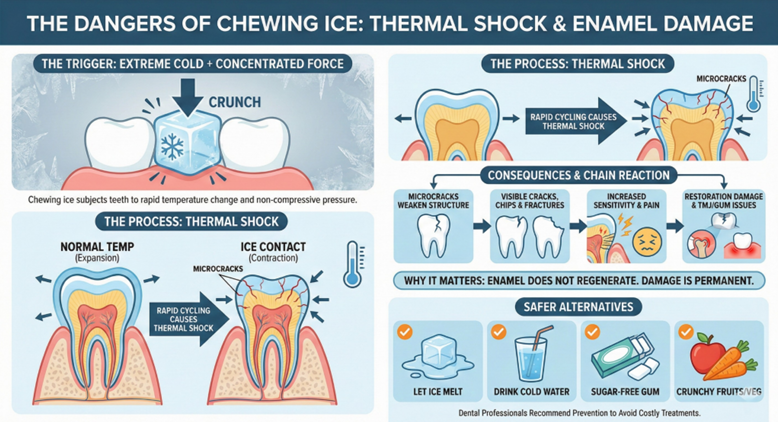
The Science Behind Thermal Shock in Teeth
Thermal shock occurs when a material experiences rapid temperature changes, causing it
to expand and contract too quickly. Teeth, especially enamel, are vulnerable to this process.
How Enamel Reacts to Extreme Cold
Enamel is the hardest substance in the human body, but it is also brittle. When you bite ice:
- Extreme cold contracts enamel
- Normal mouth temperature expands enamel
- Repeated contraction and expansion causes thermal shock
Over time, thermal shock creates enamel microcracks. These microcracks are
often invisible and painless at first, which is why the damage can go unnoticed for months
or even years.
Why Chewing Ice Is Especially Harmful
Unlike drinking cold water, chewing ice adds mechanical force to the problem.
- Ice does not compress like food
- Biting concentrates pressure on small points
- Cold temperatures intensify enamel contraction
As a result, chewing ice concentrates occlusal force on enamel, significantly increasing the
risk of cracking or chipping.
Cracked or Chipped Teeth: A Common Outcome
With repeated ice chewing:
- Microcracks weaken enamel structure
- Weakened enamel progresses to visible cracks or chips
- Cracks spread under normal chewing forces
Why it matters: Enamel does not regenerate. Once cracks deepen, damaged
enamel requires restorative treatment such as fillings, crowns, or, in severe cases,
root canal therapy.
Increased Tooth Sensitivity Explained
Tooth sensitivity is one of the earliest warning signs of ice-related damage.
The chain reaction usually follows this pattern:
- Thermal shock forms enamel microfractures
- Microfractures expose dentin tubules
- Dentin exposure increases nerve stimulation
This is why hot coffee, cold drinks, or sweet foods suddenly cause discomfort.
While desensitizing toothpaste can help manage symptoms, it cannot repair
cracked enamel.
Risks to Dental Work and Restorations
If you have fillings, crowns, veneers, or bonding, chewing ice is even more dangerous.
Dental materials and natural enamel expand and contract at different rates.
During ice chewing:
- Temperature stress weakens restoration margins
- Ice pressure cracks or loosens dental work
This often leads to unexpected repairs and added expense.
Jaw Stress and TMJ Problems
Chewing ice doesn’t only affect teeth. The habit also places excessive load on the jaw joint.
- Repetitive force strains the temporomandibular joint (TMJ)
- TMJ strain causes jaw pain, clicking, or stiffness
- Chronic stress may contribute to temporomandibular joint disorder (TMD)
If your jaw feels sore after crunching ice, it’s a sign that the habit is doing real harm.
Gum Injuries and Soft-Tissue Damage
Ice cubes often have sharp edges. When chewed:
- Sharp ice irritates gums
- Gum irritation increases infection risk
- Repeated trauma contributes to gum recession
Receding gums can expose tooth roots, making teeth more sensitive and more prone
to decay.
Who Is Most at Risk from Chewing Ice?
Some people are especially vulnerable to damage:
- Individuals with thin or worn enamel
- Patients with crowns, veneers, or large fillings
- People who grind or clench their teeth (bruxism)
- Those with existing tooth cracks or sensitivity
For these groups, even occasional ice chewing can accelerate damage.
What Dental Experts Say About Chewing Ice
Dental professionals consistently advise avoiding ice chewing. Guidance aligned with
organizations such as the American Dental Association emphasizes prevention,
noting that enamel damage is irreversible and far easier to prevent than to treat.
From a clinical standpoint, many cracked teeth seen in dental offices are linked to habits
patients never suspected, with ice chewing being a major contributor.
Safer Alternatives to Chewing Ice
If you crave ice, you don’t have to go without relief. Try these tooth-friendly options:
- Let ice melt in your mouth instead of chewing
- Drink cold water through a straw
- Chew sugar-free gum
- Snack on crunchy fruits and vegetables
- Stay well hydrated to reduce cravings
These alternatives satisfy the urge without exposing your teeth to thermal shock.
Frequently Asked Questions
Is chewing ice worse than chewing hard candy?
Yes. Ice combines extreme cold with hardness, increasing the likelihood of thermal shock
and enamel damage.
Can chewing ice crack healthy teeth?
Yes. Even strong, healthy enamel can develop microcracks over time with repeated ice chewing.
Does chewing ice always cause pain?
No. Damage often begins silently and may only become noticeable after cracks deepen.
Can children safely chew ice?
No. Children’s enamel is still developing and is more vulnerable to cracking.
Can enamel heal after ice damage?
No. Enamel cannot regenerate, which is why prevention is critical.
How can I stop chewing ice?
Gradually replace the habit with safer alternatives such as chewing gum or drinking cold water.
Conclusion: Protect Your Smile by Breaking the Habit
Chewing ice may feel refreshing, but the habit triggers thermal shock that can crack enamel.
Over time, this behavior can lead to tooth sensitivity, fractures, jaw pain, and expensive dental
treatments.
By understanding the science behind the damage and choosing safer alternatives, you can
protect your teeth and keep your smile strong for life. Small habit changes today can prevent
major dental problems tomorrow.