
Dental Crowns vs. Veneers: Choosing the Right Restoration for Damaged Teeth
Modern cosmetic and restorative dentistry offers several ways to rebuild damaged teeth and improve smile aesthetics. Among the most popular options, dental crowns vs. veneers remains one of the most searched comparisons because both treatments can dramatically transform a patient’s smile while restoring oral function.
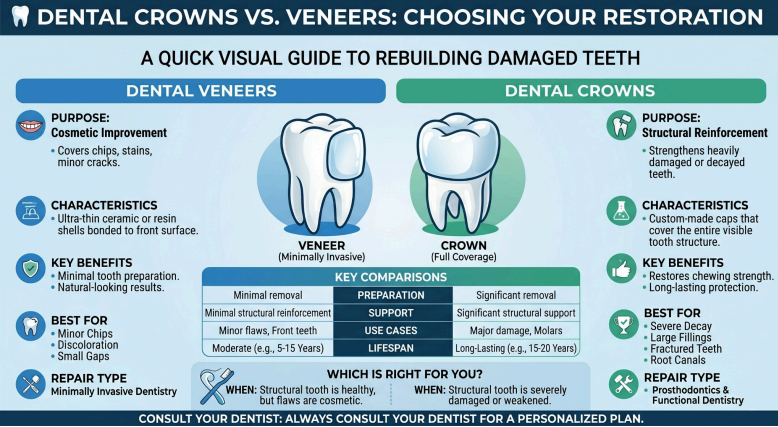
However, crowns and veneers are not interchangeable. Dental crowns restore structural reinforcement for weakened teeth, while veneers primarily improve the visible appearance of healthy teeth. Choosing the right treatment depends on enamel condition, bite alignment, tooth preservation goals, and long-term oral health needs.
Today’s advanced dental technologies, including CAD/CAM same-day crowns, digital smile design, adhesive dentistry, and biomimetic dentistry, allow dentists to create restorations that closely mimic natural teeth in color, translucency, and chewing efficiency. Whether you’re dealing with cracked tooth syndrome, enamel erosion, tooth discoloration, worn enamel, or fractured teeth, understanding the difference between crowns and veneers can help you make a more confident decision.
Understanding Cosmetic and Restorative Dentistry
Cosmetic dentistry focuses on smile enhancement, facial aesthetics, and gingival aesthetics, while restorative dentistry repairs damaged tooth structure and restores masticatory function. Interestingly, both crowns and veneers combine cosmetic and functional benefits.
A veneer covers only the front surface of the tooth and is considered part of minimally invasive dentistry because it preserves much of the natural tooth enamel. A dental crown, by contrast, completely covers the visible tooth structure to improve durability and cuspal protection.
Dentists evaluate several clinical factors before recommending either restoration:
- Tooth enamel thickness
- Existing tooth decay
- Bite pressure and dental occlusion
- Bruxism or teeth-grinding habits
- Gingival recession
- Oral microbiome health
- Tooth sensitivity
- Tooth abrasion or attrition
- Structural damage severity
This customized treatment planning process ensures the restoration supports both oral function and long-term aesthetics.
What Are Dental Crowns?
Dental crowns are custom-made restorations that fully encase damaged teeth to restore shape, strength, and function. Crowns are commonly used in prosthodontics because they provide structural reinforcement for weakened teeth.
Dental crowns restore damaged teeth caused by:
- Severe tooth decay
- Large dental fillings
- Root canal treatment
- Fractured teeth
- Cracked tooth syndrome
- Tooth attrition
- Enamel erosion
- Dental trauma
Unlike veneers, crowns cover the entire tooth surface, which helps protect compromised tooth structure from additional damage.
Types of Dental Crowns
Modern dentistry offers several crown materials depending on cosmetic goals, durability needs, and bite force.
| Crown Material | Benefits | Best Use |
|---|---|---|
| Porcelain Crowns | Natural translucency | Front teeth |
| Zirconia Crowns | Exceptional durability | Molars and grinders |
| E-max Crowns | High aesthetics and strength | Cosmetic restorations |
| Gold Crowns | Long-lasting performance | Back teeth |
| Porcelain-Fused-to-Metal Crowns | Balanced strength and appearance | General restorations |
| Monolithic Zirconia | Fracture resistance | Bruxism patients |
Lithium disilicate and E-max crowns are especially popular because they mimic natural enamel translucency while remaining durable.
Benefits of Dental Crowns
Dental crowns offer both restorative and cosmetic advantages.
Major Benefits Include:
- Restore chewing efficiency
- Strengthen fractured teeth
- Improve smile aesthetics
- Protect weakened teeth
- Cover severe discoloration
- Reinforce root canal-treated teeth
- Improve dental occlusion
- Restore facial symmetry
Crowns are also commonly used in full mouth rehabilitation and complex dental restoration cases.
What Are Veneers?
Veneers are ultra-thin ceramic or resin shells bonded to the front surface of teeth using adhesive dentistry techniques. They’re primarily designed for smile enhancement and cosmetic dental procedures.
Veneers are commonly used to correct the following:
- Tooth discoloration
- Minor tooth misalignment
- Uneven teeth
- Small gaps
- Worn enamel
- Chipped teeth
- Mild tooth abrasion
Because veneers preserve more natural tooth structure, they’re considered part of biomimetic dentistry and minimally invasive dentistry.
Types of Veneers
Porcelain Veneers
Porcelain veneers are highly stain-resistant and closely mimic natural tooth enamel. Feldspathic porcelain veneers provide exceptional translucency for highly aesthetic smile makeovers.
Composite Veneers
Composite resin veneers cost less and can often be completed in one appointment. However, they may require more maintenance over time.
Benefits of Veneers
Veneers remain one of the most effective smile makeover treatments.
Advantages Include:
- Preserve healthy enamel
- Improve smile symmetry
- Resist staining
- Enhance facial aesthetics
- Correct cosmetic imperfections
- Deliver natural-looking results
- Require minimal tooth reshaping
Patients seeking cosmetic dentistry options often choose veneers because they produce dramatic before-and-after smile transformations.
Dental Crowns vs Veneers: Key Differences
Understanding the differences between dental crowns and veneers helps patients choose the most suitable restoration.
Tooth Preparation
Crowns require significant tooth preparation because the entire tooth must be reshaped to accommodate the restoration. Veneers require only minimal enamel reduction on the front tooth surface.
This makes veneers more conservative regarding tooth preservation.
Structural Reinforcement
Dental crowns provide greater structural support because they completely surround weakened teeth. Veneers mainly improve aesthetics and are best suited for healthy teeth with cosmetic concerns.
Patients with severe enamel erosion, tooth fractures, or large fillings often benefit more from crowns.
Appearance and Translucency
Both restorations can look highly natural, especially when crafted from advanced dental ceramics.
Veneers are often preferred for front teeth because they preserve natural translucency and shade matching. Crown materials such as E-max and lithium disilicate also provide highly aesthetic outcomes.
Cost Comparison
| Treatment | Average Cost |
|---|---|
| Composite Veneers | $250-$1,500 per tooth |
| Porcelain Veneers | $800-$2,500 per tooth |
| Zirconia Crowns | $1,000-$3,500 per tooth |
| E-max Crowns | $1,200-$3,500 per tooth |
Insurance coverage is more likely for crowns because they’re often medically necessary restorations.
Who Is a Good Candidate for Dental Crowns?
Crowns are ideal for patients with moderate to severe structural tooth damage.
You may benefit from crowns if you have:
- Broken teeth
- Root canal-treated teeth
- Cracked tooth syndrome
- Large fillings
- Severe tooth wear
- Tooth sensitivity from enamel loss
- Bruxism-related damage
- Advanced tooth decay
Patients with TMJ disorder or heavy bite forces may require zirconia or monolithic zirconia crowns for additional durability.
Who Is a Good Candidate for Veneers?
Veneers are best for patients with relatively healthy teeth seeking cosmetic improvements.
Good candidates often have:
- Tooth discoloration
- Minor chips
- Mild spacing issues
- Cosmetic asymmetry
- Worn enamel
- Slightly crooked teeth
- Healthy gums and enamel
Patients with severe malocclusion or untreated gum disease may require orthodontic or periodontal treatment before veneers.
The Dental Crown Procedure
The crown process usually involves two appointments unless same-day CAD/CAM crowns are used.
Consultation and Oral Health Assessment
The dentist evaluates tooth condition using dental X-rays, bite analysis, and clinical examination. This helps determine whether the tooth can support a restoration.
The evaluation may include:
- Occlusion analysis
- Gingival health assessment
- Tooth pulp evaluation
- Digital imaging
- Shade matching
Tooth Preparation and Digital Impressions
The tooth is reshaped to create room for the crown. Dentists then take digital scans using intraoral scanners or traditional impressions.
Advanced chairside CAD/CAM dentistry can fabricate same-day crowns in some dental offices.
Temporary crowns protect the prepared tooth until the final restoration is ready.
Crown Placement
The permanent crown is adjusted for:
- Bite alignment
- Dental occlusion
- Shape and contour
- Shade matching
- Chewing function
Once finalized, the crown is cemented using durable dental cement.
The Veneer Procedure
Veneer placement requires careful cosmetic planning and artistic precision.
Digital Smile Design and Treatment Planning
Many cosmetic dentists now use digital smile design technology to preview final results before treatment begins.
The dentist evaluates:
- Smile symmetry
- Facial proportions
- Tooth translucency
- Gingival aesthetics
- Tooth contouring needs
Veneer Bonding Process
A small amount of enamel is removed before impressions are taken.
The veneers are then bonded using advanced adhesive dentistry materials designed for long-term durability and stain resistance.
The final result enhances smile aesthetics while preserving much of the natural tooth structure.
Dental Crowns vs Veneers for Front Teeth
Front teeth restorations require a careful balance between beauty and function.
Veneers Are Often Best When:
- Teeth are structurally healthy
- Cosmetic concerns are mild
- Patients want minimally invasive treatment
- Smile aesthetics are the primary goal
Crowns Are Better When:
- Teeth are fractured
- Large fillings weaken the tooth
- Root canal treatment was performed
- Severe tooth wear exists
- Structural reinforcement is necessary
In complex smile makeover cases, dentists may combine crowns and veneers for optimal results.
Common Problems Treated by Crowns and Veneers
| Dental Problem | Crowns | Veneers |
|---|---|---|
| Severe Decay | Excellent | Not Recommended |
| Cracked Teeth | Excellent | Limited |
| Tooth Discoloration | Excellent | Excellent |
| Minor Chips | Good | Excellent |
| Tooth Wear | Excellent | Good |
| Smile Symmetry Issues | Good | Excellent |
| Enamel Erosion | Excellent | Moderate |
| Cosmetic Smile Makeover | Good | Excellent |
How Long Do Crowns and Veneers Last?
Longevity depends on oral hygiene, restoration material, and lifestyle habits.
Average Lifespan
- Composite veneers: 5-7 years
- Porcelain veneers: 10-15 years
- E-max crowns: 15+ years
- Zirconia crowns: 15-20 years
Patients with bruxism may shorten restoration lifespan if nightguards are not used.
Factors That Affect Longevity
- Teeth grinding
- Bite pressure
- Oral hygiene
- Gum disease
- Diet
- Smoking
- Dental occlusion
- Regular dental visits
Preventive care significantly extends restoration lifespan.
Caring for Crowns and Veneers
Both restorations require proper oral hygiene and long-term maintenance.
Daily Care Tips
- Brush twice daily
- Floss around restorations
- Use non-abrasive toothpaste
- Avoid chewing ice
- Wear a nightguard if necessary
- Limit staining beverages
Even though restorations cannot decay themselves, bacteria can still damage the underlying tooth structure.
Professional Maintenance
Regular dental checkups allow dentists to monitor the following:
- Crown margins
- Veneer bonding
- Gum health
- Occlusal pressure
- Tooth sensitivity
- Gingival recession
Professional cleanings also help maintain oral microbiome balance and long-term restorative health.
Risks and Limitations
While crowns and veneers are highly successful treatments, patients should understand potential limitations.
Potential Crown Risks
- Tooth sensitivity
- Porcelain chipping
- Crown loosening
- Gum irritation
- Bite discomfort
Potential Veneer Risks
- Irreversible enamel removal
- Veneer fracture
- Bonding failure
- Increased tooth sensitivity
- Replacement needs over time
An experienced cosmetic dentist or prosthodontist can minimize these risks through proper treatment planning.
Frequently Asked Questions
Are veneers better than crowns?
Veneers are better for cosmetic improvements on healthy teeth, while crowns provide greater structural reinforcement for damaged teeth.
Can crowns look natural?
Yes. Modern ceramic restorations such as E-max crowns and feldspathic porcelain crowns closely mimic natural teeth.
Can veneers fix crooked teeth?
Veneers can improve mildly crooked teeth, but severe malocclusion may require orthodontic treatment.
Are veneers permanent?
Yes. Because enamel removal is irreversible, veneers are considered a permanent cosmetic treatment.
Can crowns get cavities underneath?
Yes. Tooth decay can still develop around crown margins if oral hygiene is poor.
Which lasts longer: crowns or veneers?
Crowns generally last longer because they provide complete tooth coverage and additional structural support.
What happens if a veneer falls off?
A dentist can often rebond the veneer if it remains intact.
Are zirconia crowns better than porcelain crowns?
Zirconia crowns are stronger and better for high-pressure chewing areas, while porcelain crowns may offer slightly better translucency for front teeth.
Conclusion
Choosing between dental crowns vs veneers depends on your oral health condition, cosmetic goals, bite function, and long-term treatment priorities. Veneers are ideal for minimally invasive smile enhancement, while crowns provide comprehensive structural reinforcement for damaged or weakened teeth.
Thanks to advancements in cosmetic and restorative dentistry, patients now have access to highly durable, natural-looking restorations that improve both aesthetics and chewing efficiency. Technologies such as digital smile design, CAD/CAM dentistry, adhesive dentistry, and advanced dental ceramics allow dentists to create personalized restorations tailored to each patient’s needs.
The best treatment starts with a comprehensive consultation and oral health assessment. A qualified cosmetic dentist or prosthodontist can evaluate your teeth, discuss your goals, and recommend the most effective restoration for a healthy, confident smile.