Do Dental Probiotics Work for Curing Halitosis?
You brush. You floss. You rinse. You chew gum. But the bad breath continues to come around.
You are not alone, and that is why you have bad breath, and you have a chronic condition called,
in medical terminology, halitosis. Millions of individuals are faced with chronic mouth odor
even though they have regular oral care. Recently dental probiotics have received a lot of
attention, not as a short-lived cover-up but as a promising long-term answer.
Probiotics do not simply cover up the smell, but they are supposed to restore the balance of
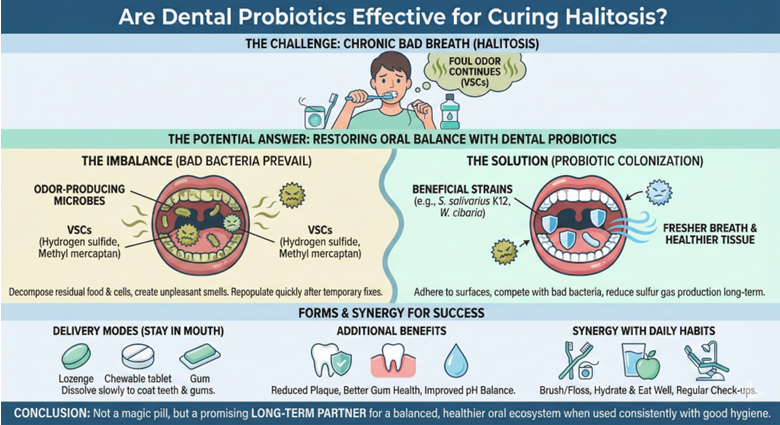
bacteria in your mouth. Recent dental studies indicate that bad breath results from the
introduction of beneficial bacteria, which can be used to decrease unhealthy, foul-smelling
compounds to promote healthier gums, teeth, and soft tissues. On their own, they do not seem
like magic pills, but they can have a great effect on your oral outlook when used in association
with proper hygiene habits.
What Exactly Are Probiotics?
The beneficial bacteria and yeasts that facilitate health promotion are known as probiotics, and
they are living and cause crowding out of harmful or bad microorganisms. The majority of the
population links probiotics to digestive health since the majority of such products are usually
available in fermented foods, i.e., yogurt, kefir, sauerkraut, kimchi, and probiotic beverages.
These foods ensure a healthy gut microbiome is preserved.
Nevertheless, a complicated ecosystem of bacteria, called the oral microbiome, is present in
your mouth. Similarly to the gut, such an environment may become out of balance. When the
negative bacteria prevail, they generate unpleasant smells, sore gums, and the threat of cavities.
Dental probiotics are meant specifically to bring back the balance in the mouth by promoting the
growth of the protective bacteria types.
What Are the Bacteria That Cause Bad Breath?
The major sources of halitosis are bacteria residing on the tongue surface, interstitially in teeth,
and subgingivally. Such microorganisms decompose residual food materials and dying cells and
emit volatile sulfur compounds (VSCs). Strong odor is caused by the presence of two major
gases, which are:
- Hydrogen sulfide reeks of bad eggs.
- Methyl mercaptan reeks of rotting cabbage.
These bacteria are quick to repopulate even after brushing and rinsing them out. The
mouthwashes and the chewing gums tend to offer a temporary freshness effect, as they suppress
the smell temporarily without restoring the right balance.
The Role of Dental Probiotics in Preventing Bad Breath
Dental probiotics act by the mechanism of oral colonization. They do not prefer to kill all the
bacteria but rather bring about beneficial strains that adhere to the mouth surfaces and compete
with those that represent odor-producing microbes. In the long run, this lowers the rate of
producing sulfur gases and enhances healthy tissue.
The clinical reviews have shown that probiotic therapy can be useful in halitosis, dental caries,
and periodontal health in a number of clinical reviews and publications by the well-known dental
associations. Some of the strains have particularly promising outcomes:
- Streptococcus salivarius K12 common in naturally fresh breath; lozenges, gums.
-
Weissella cibaria is linked to a decrease in volatile sulfur compound production as a
gargle or supplement.
These strains do not only attack odor. They are also associated with oral health benefits by being
studied to improve gingivitis, throat infection (pharyngitis), oral candidiasis, and early tooth
decay.
Short vs. Long-Term Management
In case you want a fresher breath in the meantime, old-fashioned ways are still the most
favorable:
- Brushing for two full minutes.
- Brushing teeth to clear interstitial cleaning.
- Cleaning the tongue gently.
- Taking alcohol-free mouthwash.
- Chewing sugar-free dental chewing gum.
These are steps that counter the odor within a short time but are not always long-term. Dental
probiotics are aimed at long-term treatment, as they gradually bring a positive change in the
balance of bacteria to reduce bad breath occurrences, making them less frequent and less
severe.
Forms of Dental Probiotics
Dental probiotics are made to remain in the mouth until they can be effective. The delivery
modes common are:
- Slowly dissolving lozenges.
- Chewable tablets.
- Probiotic chewing gum.
- Powders to be used with water to gargle.
- Dental toothpaste specializations.
Oral probiotics are not needed to pass through the digestive system like regular capsules, but
rather they should stay in touch with teeth, gums, and the tongue.
Other Oral Health Benefits
In addition to promoting fresh air, a balanced oral microbiome may have a number of supportive
effects:
- Reduced plaque buildup.
- Better gum tissue and reduced bleeding.
- Dry mouth in people improved.
- Improved pH balance, which helps to protect enamel.
- Lower risk of early cavities.
These advances become slow. Consistency, which must be applied on a daily basis for several
weeks, is required to see change.
Are Dental Probiotics Safe?
Dental probiotics are said to be safe and well tolerated in most healthy individuals. Mild and
transient adverse effects may include a slight change of taste or irritation of the throat.
Individuals that have compromised immunity or have chronic conditions or are on long-term
medications should seek the advice of a dental professional or physician before starting any
supplement.
When to See a Dental Professional
Oral bacteria do not always cause bad breath. Recurrent halitosis may occasionally be an
indication of problems of:
- Periodontal (gum) disease.
- Chronic sinus infections.
- Tonsil stones.
- Gastrointestinal disorders.
- Dry mouth due to drugs.
In case of persistence of odor after hygiene and probiotics, a dental examination is helpful in
eliminating a medical diagnosis and implementing the appropriate treatment program.
Nature’s Ways of Promoting Probiotic Effects
Dental probiotics are effective in combination with daily routines that are naturally
anti-pathogenic:
- Take enough water during the day.
- Consume hard fruits and vegetables such as apples and carrots.
- Restrict sweets and acidic beverages.
- Change your toothbrush after every three months.
- Avoid tobacco products.
- See your dentist two times a year.
These health behaviors provide an environment in which useful bacteria will grow.
Final Thoughts
Therefore, are dental probiotics effective in treating halitosis? They may not provide a quick
fix, but there is increasing scientific data that they may be a potent long-term partner. Dental
probiotics treat the root biological imbalance by assisting the good bacteria to colonize the
mouth and also by suppressing the production of sulfur by microbes, as opposed to masking the
odor.
Probiotics, used in combination with brushing, flossing, tongue cleaning, hydration, and routine
visits to the dentist, can greatly enhance the freshness of breath and the overall health of the
mouth. You are not just combating bacteria but creating a better ecosystem of health, and that
difference can become permanent in terms of confidence, comfort, and the interactions of
everyday life.
Frequently Asked Questions (FAQs)
Are dental probiotics a permanent cure for halitosis?
Dental kinds of probiotics do not normally give any permanent solution, but they can go a long
way in eliminating bad breath through the balance of the oral bacteria. The outcomes of the long
term will be based on adherence to regular use and oral care.
What is the duration of effect of dental probiotics?
In the majority of individuals, there is improvement observed in 2-4 weeks with daily use.
Outcomes differ depending on the diet, hygiene behavior, and the extent of bacterial
derangement.
Are dental probiotics safe as such?
Yes, dental probiotics are mostly safe to use on a daily basis in healthy people. Nevertheless,
individuals that have a weakened immunity or chronic diseases are advised to see a dentist or a
doctor.
Are dental probiotics substitutes for brushing and flossing?
No. Dental probiotics are not substitutes; they are supplements. Flossing, tongue cleaning, and
brushing take an important role in the management of plaque and food debris.
Which are the ideal probiotics to use for bad breath?
The most common effective strains that have been identified by research include
Streptococcus salivarius K12 and Weissella cibaria, which are effective in
lowering volatile sulfur compounds and promoting oral freshness.
When should dental probiotics be taken?
Ideally, it is preferred at night following brush cleaning when the mouth is clean and growth of
bacteria is slow during sleep, hence giving the good strains a better chance of settling.
Are dental probiotics safe for children?
There are even dental probiotic products that are made specifically to suit children, but it is
prudent to seek the advice of a pediatric dentist prior to the initiation of any kind of supplement.