
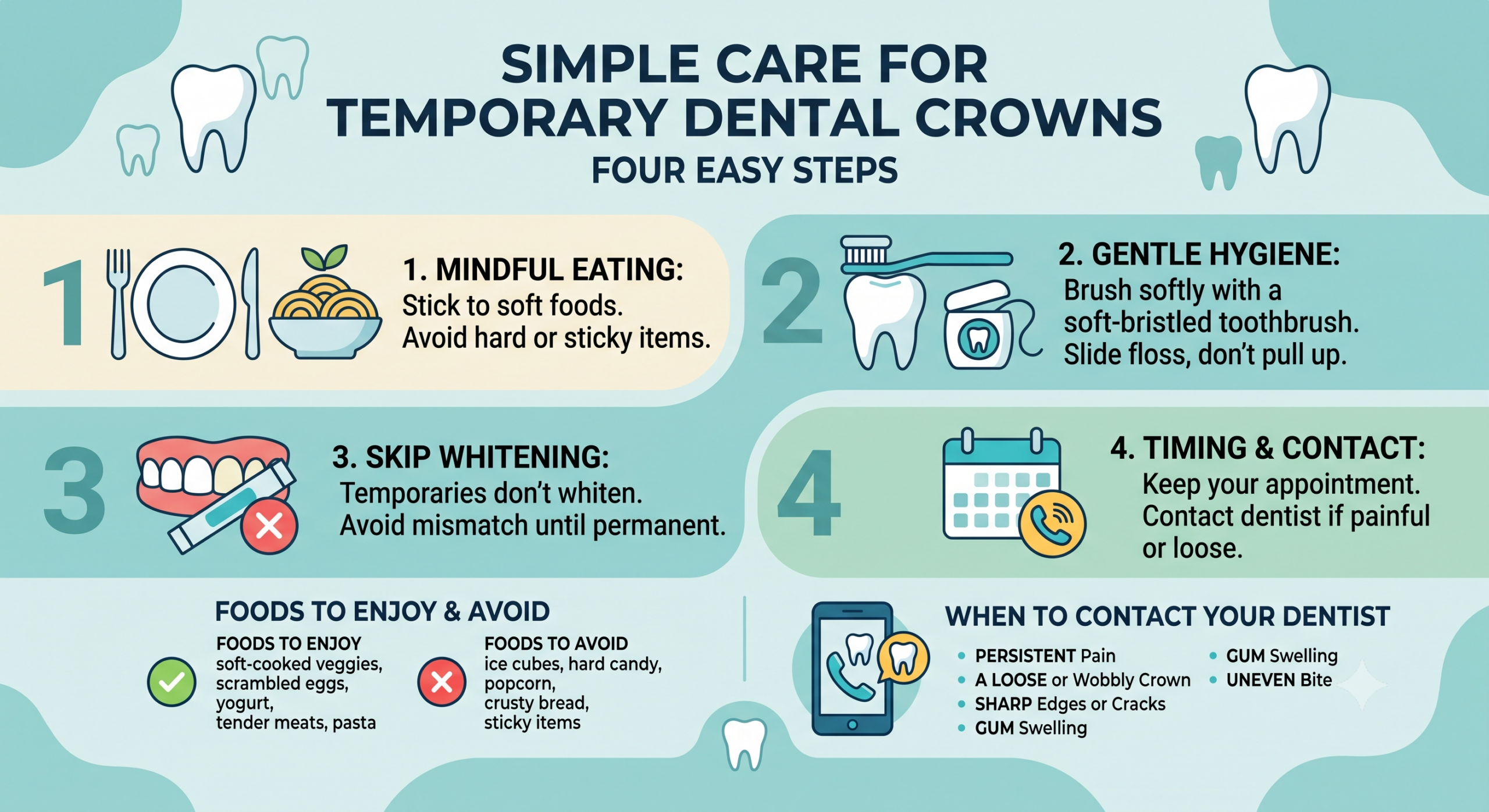
Temporary crown care matters more than most patients realize. Discover 7 essential care instructions for temporary dental crowns that protect your smile between visits.
Getting a temporary crown fitted often feels like a small, forgettable step on the way to your permanent restoration. In reality, it’s a phase that deserves just as much attention as the final crown itself. A temporary crown, while not designed to last forever, still needs to survive weeks of chewing, brushing, and everyday wear without cracking, loosening, or falling off entirely. That’s where temporary crown care becomes essential, not optional.
If you’ve recently had a tooth prepared for a crown, you’re probably wearing a temporary restoration right now. This guide walks through exactly what you need to know to protect it, avoid unnecessary dental visits, and set yourself up for a smooth, successful placement of your permanent crown.
What Is a Temporary Dental Crown?
A temporary crown is a short-term cap placed over a tooth that’s been prepared for a permanent crown. It’s typically made from acrylic resin or a composite material, which is far softer and less durable than the porcelain, ceramic, or metal used in permanent crowns. Dentists design temporary crowns to be functional, not indestructible, and that distinction matters a great deal for how you treat one.
Why Dentists Use Temporary Crowns
When a tooth is prepared for a permanent crown, the dentist removes a layer of enamel to make room for the new restoration. This leaves the tooth vulnerable, sensitive, and exposed. A temporary crown covers and protects that tooth while your permanent crown is custom-made, usually in a dental lab, over the course of one to three weeks. Without it, the exposed tooth could suffer from decay, sensitivity, or even fracture before your next appointment.
How Long Does a Temporary Crown Last?
Most temporary crowns are designed to last anywhere from two to three weeks, though some patients wear them for a bit longer depending on lab turnaround times or complex treatment plans. They aren’t built for years of use, and trying to stretch that timeline unnecessarily raises the risk of damage or infection underneath.
Why Temporary Crown Care Matters
It’s easy to assume a temporary crown doesn’t need much thought since it’s coming off soon anyway. That assumption, though, can lead to avoidable complications.
Protecting the Underlying Tooth
Underneath that temporary crown sits a tooth that’s had a significant amount of its structure removed. If the temporary crown cracks, loosens, or comes off completely, the exposed tooth is left vulnerable to bacteria, temperature sensitivity, and even further damage. Good temporary crown care keeps that seal intact and the tooth protected until the permanent crown is ready.
Avoiding Delays to Your Final Restoration
If your temporary crown breaks or falls off, you’ll likely need an emergency visit to have it repaired or replaced before your final crown placement can move forward. That means extra appointments, extra cost, and a longer wait for the smile you’re working toward. Taking care of your temporary crown now genuinely saves you time and hassle later.
7 Essential Care Instructions for Temporary Dental Crowns
Here’s where things get practical. These seven instructions cover the most important habits for keeping a temporary crown intact and your tooth protected.
1. Watch What You Chew
Temporary crowns simply aren’t built to withstand the same forces as permanent ones. Hard foods like nuts, ice, hard candies, and raw vegetables can crack or dislodge a temporary crown surprisingly easily. It’s worth being deliberate about what you bite into for the next couple of weeks, even if it feels like a minor inconvenience.
2. Brush Gently, But Don’t Skip It
Skipping brushing around a temporary crown out of fear of dislodging it is a common mistake. Instead, brush as you normally would, but use a soft-bristled toothbrush and gentle, controlled strokes around the crown itself. Good oral hygiene actually protects the temporary restoration by keeping bacteria and plaque from building up at the edges.
3. Floss With Care, Not Force
Flossing around a temporary crown requires a slightly different technique. Rather than snapping the floss down between teeth as usual, slide it out sideways instead of pulling it upward through the contact point. This small adjustment prevents you from accidentally pulling the crown loose.
4. Steer Clear of Sticky and Hard Foods
Chewy candy, caramel, gum, and taffy are notorious for pulling temporary crowns right off. Sticky foods create suction and tension that a temporary cement bond simply isn’t strong enough to resist. It’s best to set these treats aside until your permanent crown is in place.
5. Chew on the Opposite Side When Possible
If your temporary crown is on one side of your mouth, try shifting more of your chewing to the opposite side. This takes pressure off the temporary restoration and significantly reduces the chances of it cracking or coming loose during meals.
6. Skip the Whitening Products for Now
Whitening toothpaste, strips, and gels don’t interact well with temporary crown material, and they won’t actually whiten the crown itself since it’s not natural enamel. Using these products now can also create a noticeable color mismatch once your natural teeth whiten but the temporary crown doesn’t. It’s better to hold off on whitening until after your permanent crown is placed.
7. Keep Your Follow-Up Appointment
This one sounds obvious, but it’s genuinely one of the most important instructions on this list. Temporary crowns are meant to be temporary. The longer you wear one past its intended timeline, the higher the risk of wear, leakage, or bacterial infiltration underneath. Keeping your scheduled appointment ensures your permanent crown goes on exactly when it should.
Foods to Enjoy and Foods to Avoid
Knowing what’s safe to eat can take a lot of the guesswork out of daily meals while you’re wearing a temporary crown.
| Foods to Enjoy | Foods to Avoid |
| Soft-cooked vegetables | Ice cubes |
| Scrambled eggs | Hard candy or nuts |
| Soups and broths | Caramel, taffy, or gum |
| Pasta and rice | Raw carrots or apples |
| Yogurt and smoothies | Crusty bread or bagels |
| Fish and tender meats | Popcorn |
Sticking to softer foods for a couple of weeks isn’t glamorous, but it’s a small trade-off for avoiding a broken crown and an unplanned dental visit.
Signs Something Might Be Wrong
Even with careful habits, it’s worth knowing what warning signs to watch for.
Sensitivity That Doesn’t Fade
Some sensitivity to hot and cold is normal right after your crown prep, but it should gradually improve. If sensitivity is sharp, persistent, or getting worse rather than better, it’s worth mentioning to your dentist.
A Loose or Wobbly Crown
If your temporary crown feels like it’s shifting when you bite down or run your tongue over it, that’s a sign the cement seal may be failing. Don’t ignore this; it usually gets worse, not better, on its own.
Sharp Edges or Cracks
Run your tongue gently over the crown occasionally. If you notice a rough edge, chip, or crack, it’s a signal that the material has been compromised and should be checked.
What to Do If Your Temporary Crown Falls Off
If your temporary crown does come off, try to stay calm. Rinse it gently with water, avoid touching the exposed tooth too much, and call your dental office as soon as possible. Many dentists will recommend using a small amount of temporary dental cement, available at most pharmacies, to hold the crown back in place until you can come in. Never use super glue or household adhesives, as these aren’t safe for use in the mouth.
Everyday Habits Worth Avoiding
A few habits that seem harmless can quietly put your temporary crown at risk:
- Chewing on pens, pencils, or fingernails
- Opening packages with your teeth
- Grinding or clenching your teeth, especially at night
- Using toothpicks aggressively near the crown
- Drinking through a straw positioned directly at the crown
Being mindful of these small habits goes a long way toward keeping your temporary crown intact.
When to Contact Your Dentist
Reach out to your dental office if you notice persistent pain, a crown that feels loose or has fallen off, visible cracks, gum swelling around the tooth, or a bite that suddenly feels uneven. Most dental offices treat these as priority issues and will get you in quickly, since a compromised temporary crown can affect the fit of your final restoration if left unaddressed.
Frequently Asked Questions
1. Can I eat normally with a temporary crown?
You can eat most foods, but it’s best to avoid anything hard, sticky, or especially chewy. Soft, balanced meals are the safest choice while you’re waiting for your permanent crown.
2. Is it normal for a temporary crown to feel a little different from my other teeth?
Yes. Temporary crowns are shaped to be functional rather than perfectly refined, so a slightly different feel or bite sensation is common and usually resolves once the permanent crown is placed.
3. How do I clean around a temporary crown properly?
Brush gently with a soft-bristled toothbrush and floss by sliding the floss out sideways rather than pulling it upward, which helps avoid dislodging the crown.
4. What happens if I leave a temporary crown on too long?
Wearing a temporary crown well beyond its intended timeframe increases the risk of wear, cement breakdown, and bacteria reaching the tooth underneath, which can lead to decay or infection.
5. Can a temporary crown come off on its own?
Yes, this can happen, especially with sticky foods, hard chewing, or a cement seal that’s simply weakened over time. It’s not necessarily a sign of a problem with your treatment, but it does need prompt attention.
6. Will my temporary crown match the color of my final crown?
Not exactly. Temporary crowns are typically shaded close to your natural teeth but aren’t as precisely matched as the final restoration, which is custom-crafted to blend seamlessly with your smile.
7. Is some discomfort normal after getting a temporary crown?
Mild sensitivity or tenderness for a few days is common as the tooth and gum tissue adjust.
Conclusion
Temporary crown care might feel like a minor detail in your overall treatment plan, but it plays a real role in how smoothly your journey to a permanent crown goes. By watching what you eat, keeping up gentle oral hygiene, avoiding risky habits, and staying alert to warning signs, you’ll protect both your temporary crown and the tooth underneath it. A little extra care now means fewer surprises and a better outcome once your permanent crown is finally in place.