
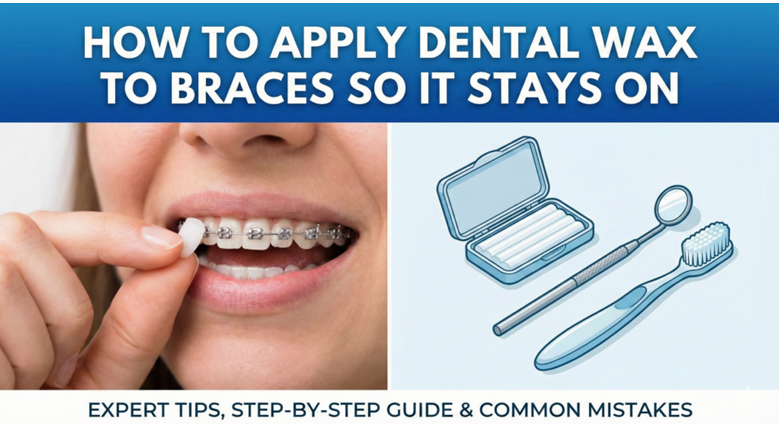
How to Apply Dental Wax to Braces So It Actually Stays On
Dental wax is a small but powerful helper for anyone wearing braces. If you’ve ever felt the sharp jab of a rogue bracket or wire, you already know why dental wax matters. It creates a smooth barrier between your braces and the soft tissues of your mouth, helping to prevent sores, irritation, and discomfort.
In this guide, you’ll learn exactly how to apply dental wax to braces so it actually stays on. We’ll also cover expert tips, common mistakes to avoid, and answers to frequently asked questions, so you can use dental wax confidently and comfortably.
What Is Dental Wax and Why It Matters
Dental wax is a soft, pliable substance designed specifically for orthodontic use. It is typically made from a blend of natural waxes and medical-grade synthetic waxes that are safe for use in the mouth.
Common Problems Braces Cause
Braces can rub against the cheeks, lips, and gums, especially during the early stages of treatment or after adjustments. This friction may lead to:
- Mouth ulcers
- Redness and swelling
- Painful sore spots
- Cuts inside the mouth
- Gum inflammation
How Dental Wax Helps
Dental wax forms a protective layer over sharp or irritating parts of your braces. It reduces friction and allows irritated tissues time to heal. Once applied, it sticks to brackets or wires and creates a smooth buffer between the braces and your gums.
Dental wax remains smooth in the mouth and harmlessly flakes away or peels off as it breaks down.
Types of Dental Wax Available
Not all dental wax is the same. Knowing the available options can help you choose what works best for you.
Orthodontic Wax
This is the most common type of dental wax. It is easy to shape and adheres well to brackets and wires.
Silicone Wax
Silicone wax is more durable and often stays in place longer, even while talking or drinking.
Beeswax and Paraffin Wax
- Beeswax: A natural, slightly firmer wax that tends to last longer.
- Carnauba wax: A plant-based wax that improves durability.
- Microcrystalline wax: Enhances texture and flexibility.
- Paraffin wax: A petroleum-derived wax that softens easily.
Some dental wax products also include flavouring agents, such as mint, for added comfort and freshness.
Orthodontic wax is non-toxic and safe to ingest in small amounts. According to the Canadian Association of Orthodontists, accidentally swallowing a small amount of wax while speaking or chewing is completely normal.
When Should You Use Dental Wax?
Dental wax isn’t only for emergencies. It can be used whenever discomfort occurs.
After Orthodontic Adjustments
Braces often feel tighter and more abrasive after an adjustment. Dental wax is especially helpful during this period.
During Meals
Food can push wires into sensitive areas. Applying dental wax before eating can help reduce sudden pain. If food becomes stuck in the wax, remove it and apply a fresh piece.
At Night
Using dental wax overnight can reduce irritation while you sleep and help speed up the healing of sore areas.
Step-by-Step Guide to Applying Dental Wax
Follow these steps carefully to ensure your dental wax stays in place.
Step 1: Clean and Dry the Area
Wash your hands thoroughly. Brush your teeth or rinse your mouth with water. Dry the area around the bracket or wire using a clean tissue or cotton pad. Dental wax adheres best to a dry surface.
Step 2: Break Off a Small Piece
Take a small piece of wax, roughly the size of a pea. Using too much wax makes it bulky and less effective.
Step 3: Soften the Wax
Roll the wax between your fingers for a few seconds. The warmth of your hands softens it, making it easier to mould.
Step 4: Shape the Wax
Roll the wax into a ball and then flatten it slightly into a soft pad.
Step 5: Apply Firmly
Press the softened wax directly onto the bracket or wire causing irritation. Gently mould it so it completely covers the sharp area and forms a secure seal.
Step 6: Adjust for Comfort
Close your mouth slowly and move your lips and cheeks. You can use your tongue to make small adjustments. Reposition the wax if it feels uncomfortable.
How to Make Dental Wax Stay On Longer
Dry the Area Thoroughly
Moisture prevents wax from sticking. Always dry the bracket or wire before application.
Use the Correct Amount
A small, well-shaped piece of wax sticks better than a large amount.
Avoid Food Contact
Remove dental wax before eating and reapply it afterwards for the best results.
Removal and Replacement
How to Remove Dental Wax Safely
Dental wax can be removed using:
- Dental floss
- An interdental stick
- A clean finger or tissue
Remove it gently to avoid pulling wires or irritating your gums.
How Long Should Dental Wax Stay On?
- Dental wax can be worn overnight.
- Dental wax should be replaced every two days.
- Dental wax should be removed if it becomes dirty.
- Dental wax should be removed if food becomes trapped.
Although dental wax is safe to ingest in small amounts, removing it before meals helps maintain hygiene and effectiveness.
Common Mistakes to Avoid
- Applying wax to a wet surface
- Using too much wax
- Chewing gum while wearing wax
- Forgetting to replace old or dirty wax
Safety and Professional Guidance
Dental wax is clinically approved for orthodontic use and is safe for both adults and children.
- Non-toxic
- Safe to ingest in small amounts
- Recommended by orthodontists
- Approved by professional dental bodies, including the Canadian Association of Orthodontists
If a wire continues to cause pain or protrudes significantly, contact your orthodontist for an adjustment rather than relying on wax long-term.
Aftercare and Oral Hygiene
Dental wax works best when combined with proper orthodontic care:
- Brush teeth twice daily
- Floss every day
- Use interdental cleaning devices
- Rinse with a fluoride mouthrinse
- Replace dental wax regularly
This routine supports enamel health, reduces gum inflammation, and helps oral tissues heal faster.
Alternatives to Dental Wax
If dental wax is not available, short-term alternatives include:
- Silicone orthodontic covers
- Sugar-free chewing gum (temporary solution)
- Cotton rolls (short-term use only)
For more orthodontic care advice, visit the British Orthodontic Society.
FAQs
How often should I replace dental wax?
Replace dental wax every two days or whenever it becomes dirty or loses its shape.
Can I sleep with dental wax on my braces?
Yes, it is safe and often recommended for overnight comfort.
Is dental wax safe if swallowed?
Yes, orthodontic wax is non-toxic and safe to ingest in small amounts.
Why won’t my dental wax stick?
The area may be wet or oily. Dry the surface thoroughly before reapplying.
Can children use dental wax?
Yes, dental wax is safe for children when used under adult supervision.
Does dental wax expire?
Yes, always check the packaging for an expiry date and replace it when necessary.
Conclusion
Dental wax may seem like a small thing, but it makes a big difference when wearing braces. By applying it correctly and keeping it clean, you can protect your mouth, reduce pain, and stay comfortable throughout your orthodontic treatment.
Follow the steps, avoid common mistakes, and maintain good oral hygiene. With these habits, your orthodontic journey can be much smoother and more comfortable.