
Clear aligners have become one of the most popular orthodontic treatments for patients seeking a discreet way to straighten their teeth. Unlike traditional braces, clear aligners are removable, nearly invisible, and more comfortable for many people. However, successful treatment depends heavily on one important factor: clear aligner tracking.
When aligners track properly, they fit snugly over the teeth and apply controlled orthodontic force that gradually shifts teeth into their planned positions. If tracking problems develop, tooth movement may slow down, treatment refinements may become necessary, and your overall treatment timeline could increase significantly.
Understanding how to ensure your clear aligners are tracking properly can help you avoid delays, reduce discomfort, and achieve predictable smile results.
What Is Clear Aligner Tracking?
Clear aligner tracking refers to how accurately the aligners fit your teeth throughout treatment. Every aligner tray is digitally designed to move teeth in small increments. When teeth follow the planned movement correctly, the aligners continue fitting tightly and comfortably.
Good tracking means:
- The trays seat fully onto the teeth
- There are minimal air gaps
- Tooth movement follows the digital treatment simulation
- Orthodontic biomechanics remain effective
- Sequential aligners continue fitting correctly
Poor tracking happens when teeth fail to move according to the treatment plan. As a result, aligners may appear loose, lift off certain teeth, or stop fitting entirely.
Modern clear aligner therapy depends on precision. Even small tracking errors can affect bite correction, dental arch alignment, and overall treatment success.
Why Proper Tracking Matters for Tooth Movement
Proper clear aligner tracking is essential because every tray builds upon the progress of the previous tray. If one aligner does not move the teeth correctly, the next tray may not fit properly either.
Clear aligners apply gentle pressure that stimulates the periodontal ligament and surrounding bone. This process triggers bone remodeling, allowing teeth to shift gradually into new positions.
When tracking stays accurate, patients benefit from:
- Faster tooth movement
- Better bite alignment
- Reduced orthodontic relapse risk
- Improved occlusion
- Fewer treatment refinements
- Better smile aesthetics
- More predictable outcomes
However, poor tracking may lead to:
- Posterior open bite
- Delayed treatment
- Rotational tooth movement problems
- Attachment failure
- Additional digital scans
- Refinement trays
- Extended aligner wear
This is why orthodontic compliance plays such a critical role in clear aligner therapy.
The Science Behind Clear Aligner Therapy
Clear aligners rely on advanced digital orthodontics and controlled force systems to move teeth safely.
Controlled Orthodontic Force
Each aligner tray delivers carefully calibrated pressure to specific teeth. This orthodontic force guides controlled tooth movement over time.
The aligners work by:
- Moving crowded teeth into alignment
- Correcting spacing issues
- Improving overbite correction
- Fixing overjet correction
- Supporting crossbite treatment
- Improving midline correction
Because aligners move teeth gradually, patient compliance is extremely important.
Bone Remodeling and Tooth Movement
Orthodontic tooth movement occurs through bone remodeling. Pressure from aligners stimulates the bone surrounding the tooth roots.
This process allows:
- Root movement
- Tooth intrusion
- Tooth extrusion
- Rotational movement
- Arch expansion
Healthy periodontal health and gingival health are important because inflamed gums can interfere with aligner fit and tooth-tracking checkpoints.
Common Reasons Aligners Stop Tracking
Several issues can interrupt clear aligner tracking and compromise treatment efficiency.
Poor Wear-Time Compliance
One of the biggest causes of tracking issues is inconsistent wear. Aligners should typically be worn 20-22 hours daily.
When patients frequently remove trays, teeth may shift backward, preventing sequential aligners from fitting correctly.
Damaged or Warped Trays
Heat exposure can warp aligners and alter their shape.
Common causes include:
- Drinking hot coffee while wearing aligners
- Leaving trays inside hot vehicles
- Cleaning aligners with hot water
Warped aligners cannot apply proper orthodontic force.
Missing Attachments
Orthodontic attachments are small composite bumps bonded to teeth. These tooth attachment buttons improve difficult movements like rotation control and tooth extrusion.
If attachments fall off, aligners may lose grip and stop tracking correctly.
Poor Oral Hygiene
Plaque retention, oral bacteria, and saliva buildup can interfere with aligner seating.
Poor oral hygiene may also increase the risk of:
- Gingivitis prevention concerns
- Gum irritation
- Enamel decalcification
- Tooth sensitivity
Healthy gums support better aligner adaptation and overall treatment success.
Early Signs Your Aligners Are Not Tracking Properly
Recognizing warning signs early can prevent severe tracking problems.
Common symptoms include:
- Visible aligner gaps
- Loose-fitting trays
- Aligners popping off
- Difficulty inserting trays
- Uneven pressure
- Sudden speech changes
- Increased discomfort
- Cracking sounds during biting
If the aligners no longer fit tightly around the molars or front teeth, your teeth may not be following the predictive tooth movement plan.
Small gaps near the biting edges are often the earliest indication of poor clear aligner tracking.
How to Improve Clear Aligner Tracking
Fortunately, there are several proven ways to improve tracking and maintain efficient tooth movement.
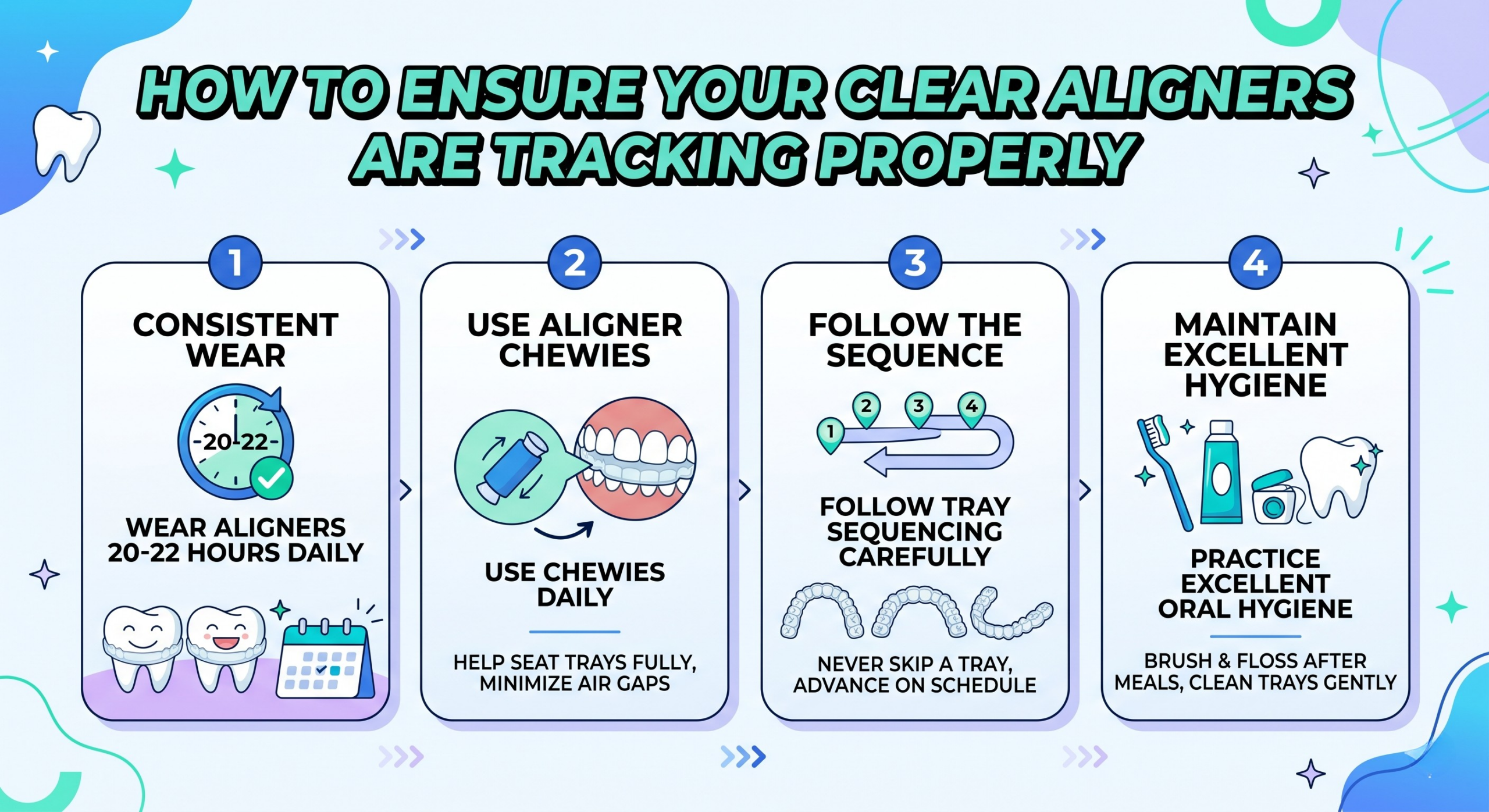
Wear Aligners Consistently
Consistent wear remains the single most important factor in successful treatment.
Aligners should only be removed for:
- Eating
- Drinking beverages other than water
- Brushing
- Flossing
Even a few missed hours daily can disrupt orthodontic biomechanics and delay movement.
Use Chewies Daily
Chewies are soft aligner seating tools that help push trays fully onto the teeth.
Regular use can:
- Improve aligner fit
- Reduce air gaps
- Increase tray retention
- Enhance tooth-tracking checkpoints
Many orthodontists recommend using chewies whenever switching to new trays.
Follow Tray Sequencing Carefully
Tray sequencing matters because each aligner performs a specific stage of movement.
Never:
- Skip trays
- Advance too early
- Wear old trays inconsistently
Sequential aligners depend on precise timing and controlled progression.
Maintain Excellent Oral Hygiene
A healthy oral hygiene routine supports better aligner seating and periodontal health.
Best practices include:
- Brushing after meals
- Flossing daily
- Cleaning aligners gently
- Avoiding sugary drinks with trays
- Using approved aligner cleaners
Good oral hygiene also reduces plaque buildup and gum inflammation that may affect tracking.
The Role of Attachments and IPR
Some tooth movements require additional orthodontic support.
Attachments improve difficult movements, such as:
- Rotational tooth movement
- Root control
- Tooth extrusion
- Bite correction
Another important technique is interproximal reduction (IPR). During IPR, tiny amounts of enamel are reshaped between teeth to create space for alignment.
IPR can help:
- Improve crowding correction
- Enhance aligner fit
- Reduce black triangles
- Improve tracking accuracy
These procedures are common in advanced clear aligner therapy cases.
Digital Scans and Orthodontic Monitoring
Modern orthodontics relies heavily on digital treatment planning and monitoring technology.
Many orthodontists now use:
- Intraoral scanners
- Digital impressions
- CBCT imaging
- Remote orthodontic care apps
Digital scans allow providers to compare actual tooth movement with the planned treatment simulation.
Orthodontic monitoring helps identify:
- Tray fit issues
- Attachment problems
- Delayed movement
- Compliance concerns
This technology improves treatment precision and allows earlier intervention when clear aligner tracking problems develop.
Foods and Habits That Affect Aligner Fit
Certain habits can negatively impact aligner fit and tracking.
Avoid:
- Chewing gum with aligners
- Smoking while wearing trays
- Drinking hot beverages
- Eating with aligners inserted
- Biting hard objects
Smoking may stain aligners and worsen periodontal health, while hot liquids can distort tray material.
Many systems, including Invisalign, use advanced SmartTrack material designed for flexibility and controlled tooth movement. However, even durable aligners can become damaged through improper care.
What Happens if Tracking Problems Continue?
Persistent tracking problems should never be ignored.
If clear aligners stop fitting properly, orthodontists may recommend:
- Extended tray wear
- Passive aligners
- Refinement trays
- New digital scans
- Additional attachments
- Treatment refinements
Refinement trays are commonly used to correct small alignment issues that develop during treatment.
Patients should never move to the next tray without professional guidance if tracking problems are present.
Retainers and the Retention Phase
After active aligner treatment ends, patients enter the retention phase.
This phase is critical because teeth naturally try to shift back into their previous positions, a process known as orthodontic relapse.
Retainers help:
- Maintain dental arch alignment
- Preserve bite correction
- Stabilize bone remodeling
- Protect final results
Orthodontic retention is just as important as active treatment itself.
Patients who neglect retainer wear may experience spacing correction relapse or crowding returning over time.
Clear Aligners vs Traditional Braces
Both clear aligners and braces effectively treat malocclusion, but they work differently.
| Feature | Clear Aligners | Traditional Braces |
| Appearance | Nearly invisible | Visible metal brackets |
| Removability | Removable | Fixed |
| Oral hygiene | Easier maintenance | More difficult cleaning |
| Compliance dependency | High | Lower |
| Food restrictions | Minimal | More restrictive |
| Digital monitoring | Common | Less common |
Clear aligners require stronger patient responsibility because treatment success depends heavily on wear-time consistency and aligner tracking.
FAQs
How do I know if my aligners are tracking properly?
Your aligners should fit tightly against your teeth with minimal visible gaps. Loose trays or lifting edges may indicate tracking problems.
Can chewies improve aligner fit?
Yes. Chewies help seat aligners fully and improve aligner adaptation during treatment.
Why do aligners stop fitting correctly?
Common reasons include inconsistent wear, warped trays, poor oral hygiene, and missing attachments.
What is a refinement tray?
Refinement trays are additional aligners used to correct small tooth movement issues that occur during treatment.
Does poor tracking delay treatment?
Yes. Poor clear aligner tracking often leads to additional scans, refinements, and longer treatment timelines.
What is IPR in orthodontics?
Interproximal reduction (IPR) involves removing tiny amounts of enamel between teeth to create alignment space.
Can gum inflammation affect aligner tracking?
Yes. Swollen gums may interfere with aligner fit and affect controlled tooth movement.
Conclusion
Clear aligner tracking is one of the most important factors in successful orthodontic treatment. Accurate tracking allows sequential aligners to apply controlled orthodontic force that safely moves teeth into proper alignment.
By wearing aligners consistently, maintaining strong oral hygiene, using chewies, and attending regular orthodontic monitoring appointments, patients can dramatically improve treatment success.
Modern digital orthodontics, advanced aligner materials, and treatment refinements have made clear aligner therapy more predictable than ever before. Still, patient compliance remains the key to achieving optimal results.
If you notice gaps, loose trays, or discomfort, contact your orthodontist early. Quick action can prevent minor tracking issues from becoming major treatment delays.
With proper care and consistent habits, your clear aligner journey can lead to a healthier bite, improved confidence, and a long-lasting smile.