
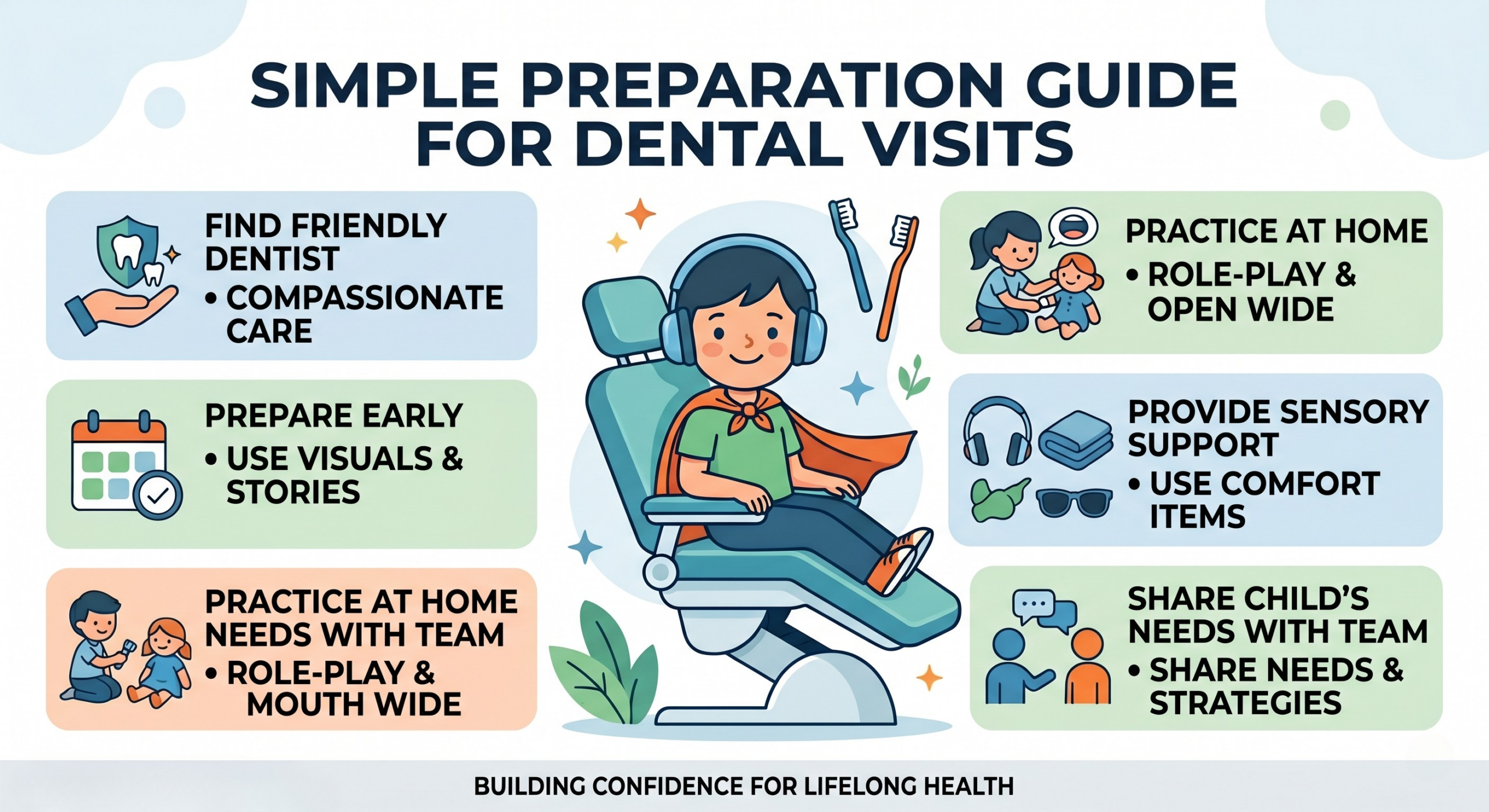
Dental appointments can be challenging for many children, but they can be especially overwhelming for children with Autism Spectrum Disorder (ASD). Sensory sensitivities, communication differences, anxiety about unfamiliar environments, and changes in routine can make a routine dental examination feel stressful. However, with thoughtful preparation, the right support system, and an experienced autism-friendly dentist, parents can help their child feel more comfortable and confident during dental visits.
Understanding Why Dental Visits Can Be Difficult for Children with Autism
Children with Autism Spectrum Disorder often process sensory information differently. Many experience sensory processing challenges that can make the sights, sounds, smells, and textures of a dental office overwhelming.
Bright examination lights, the sound of dental instruments, unfamiliar tastes, and physical touch can trigger sensory overload. Some children may experience anxiety, while others may engage in self-regulation behaviors such as stimming to cope with stress.
Communication challenges can also affect the dental experience. Children who use nonverbal communication, speech-generating devices, or Augmentative and Alternative Communication (AAC) systems may require additional support to express discomfort, ask questions, or understand instructions.
In addition, executive functioning difficulties can make transitions and unexpected changes more difficult. Because predictable routines often reduce anxiety, preparing in advance is one of the most effective ways to support a successful dental appointment.
Why Choosing an Autism-Friendly Dentist Matters
Selecting an autism-friendly dentist is one of the most important decisions parents can make. These dental professionals understand how developmental differences affect oral healthcare experiences and often use specialized approaches rooted in special needs dentistry.
An autism-friendly dentist typically provides the following:
- Sensory-friendly environments
- Flexible scheduling options
- Quiet waiting areas
- Individualized care plans
- Visual supports
- Communication accommodations
- Extended appointment times when needed
- Positive behavior support strategies
Many pediatric dentists with experience treating neurodivergent children use behavior guidance techniques such as the Tell-Show-Do method. This approach helps children understand what will happen before a procedure begins, reducing uncertainty and increasing cooperation.
The goal is not simply to complete treatment but to build trust and create positive associations with dental care.
Common Oral Health Challenges in Children with Autism
Children with autism may face unique oral health challenges that make regular dental care especially important.
These challenges can include:
Food Selectivity and Restricted Diets
Many children with autism prefer specific textures, flavors, or food types. Some highly preferred foods may contain significant amounts of sugar or carbohydrates, increasing the risk of tooth decay and dental caries.
Difficulty With Daily Oral Hygiene
Sensory aversions may make toothbrushing and flossing difficult. Certain toothpaste flavors, toothbrush textures, or sensations inside the mouth can feel uncomfortable.
Tooth Grinding (Bruxism)
Some children engage in tooth grinding, also known as bruxism, which may contribute to enamel wear and tooth sensitivity.
Oral Sensory-Seeking Behaviors
Children may chew on clothing, toys, pencils, or other objects as a form of sensory regulation.
Medication Side Effects
Certain medications may contribute to dry mouth, which can increase the risk of plaque accumulation, gingivitis, and cavities.
Because preventive dentistry helps reduce future oral health problems, regular dental examinations and dental cleanings are essential.
Finding the Right Dental Practice
Not every dental office is equipped to meet the needs of children with autism. Before scheduling an appointment, consider arranging a pre-appointment consultation or office familiarization visit.
During this visit, your child can:
- Meet the dental team
- Explore the waiting room
- See the dental chair
- Become familiar with equipment
- Practice sitting in the treatment area
This gradual exposure approach helps reduce anxiety by replacing unfamiliar experiences with familiar ones.
Parents should ask whether the practice offers:
- Sensory accommodations
- Quiet appointment times
- Caregiver participation during treatment
- Visual schedules
- Sensory breaks
- Alternative communication supports
- Chair acclimation visits
An experienced pediatric dentist will welcome these conversations and work collaboratively with families to develop an individualized care plan.
Start Preparing Several Weeks Before the Appointment
Preparation is most effective when it begins well before the appointment date.
Children often respond positively when they know what to expect. Creating predictable routines and introducing the concept of the appointment gradually can reduce stress and increase confidence.
Parents can use:
- Countdown calendars
- Visual schedules
- First-Then boards
- Social narratives
- Picture-based routines
For example:
First: Drive to the dentist.
Then: Get a sticker and go home.
Breaking the experience into simple, manageable steps makes it easier for children to understand and anticipate what will happen.
Use Social Stories and Visual Supports
Social stories are highly effective tools for preparing children with autism for new experiences.
A social story may explain:
- Where the dental office is
- Who the dentist is
- What the dental hygienist does
- How the dental chair works
- Why the dentist counts teeth
- What happens during a fluoride treatment
Visual supports can further improve understanding.
Examples include:
- Photographs of the office
- Visual cue cards
- Picture Exchange Communication System (PECS) materials
- Visual timers
- Step-by-step appointment schedules
Visual communication often helps children process information more effectively than verbal explanations alone.
Practice Dental Visits at Home
Role-playing dental appointments can make the experience feel more familiar.
Parents can pretend to be the following:
- The dentist
- The dental hygienist
- The patient
Practice activities may include:
- Opening the mouth wide
- Counting teeth
- Using a flashlight to simulate examination lights
- Sitting in a reclined chair
- Listening to recorded dental sounds
Repeated exposure increases familiarity and helps reduce procedural anxiety.
This type of desensitization technique can be especially beneficial for children who struggle with new experiences.
Prepare for Sensory Needs
Sensory preparation can dramatically improve a child’s comfort level during the appointment.
Parents should identify sensory triggers and coping strategies before the visit.
Helpful sensory supports may include:
- Noise-canceling headphones
- Weighted blankets
- Fidget toys
- Favorite comfort items
- Sunglasses for bright lights
- Sensory toolkits
Many autism-friendly dental offices also provide:
- Dimmed lighting
- Quiet treatment rooms
- Reduced waiting times
- Sensory breaks during procedures
Reducing sensory overload helps children remain calm and engaged throughout treatment.
Share Important Information With the Dental Team
Parents are experts on their child.
Providing detailed information before the appointment helps the dental team create a personalized approach.
Important information may include:
- Communication preferences
- Sensory sensitivities
- Behavioral triggers
- Preferred reinforcers
- Effective calming strategies
- Previous dental experiences
- Medical history
- Current medications
Many offices provide caregiver questionnaires before the appointment. Completing these forms thoroughly allows the dental team to better understand your child’s needs.
Family-centered care depends on strong collaboration between caregivers and healthcare providers.
What to Expect During the Appointment
An autism-friendly dental appointment often looks different from a traditional visit.
The dental team may:
- Introduce instruments gradually
- Explain procedures step by step
- Allow extra processing time
- Use simple language instructions
- Offer sensory breaks
- Reinforce positive behaviors
- Follow the child’s pace when possible
The Tell-Show-Do method is commonly used.
For example:
- Tell the child what will happen.
- Show the instrument.
- Perform the procedure.
This predictable process helps reduce fear and build trust.
Positive Reinforcement Builds Confidence
Positive reinforcement is one of the most effective behavior support tools available.
Children should be praised for effort rather than perfection.
Examples include:
- Sitting in the chair
- Opening their mouth
- Following directions
- Communicating discomfort appropriately
Rewards may include:
- Stickers
- Small toys
- Certificates
- Favorite activities
- Extra playtime
Positive experiences help children develop long-term confidence in dental settings.
When Additional Accommodations May Be Necessary
Some children require additional support for successful treatment.
Depending on individual needs, accommodations may include the following:
- Multiple short appointments
- Extended appointment times
- Additional sensory supports
- Protective stabilization when clinically necessary
- Nitrous oxide sedation
- Conscious sedation
- General anesthesia for extensive procedures
These options should always be discussed carefully with qualified dental professionals and considered based on the child’s specific needs and treatment requirements.
Building Lifelong Oral Health Habits
The ultimate goal is to create positive dental experiences that encourage lifelong oral health.
Regular dental visits support:
- Early cavity detection
- Plaque removal
- Gingivitis prevention
- Fluoride treatments
- Dental sealants
- Oral health assessments
- Preventive dentistry
When children develop trust in dental professionals early in life, they are more likely to maintain healthy oral hygiene habits as they grow.
Organizations such as the American Academy of Pediatric Dentistry (AAPD), the American Dental Association (ADA), the Centers for Disease Control and Prevention (CDC), and the National Institute of Dental and Craniofacial Research (NIDCR) emphasize the importance of preventive dental care for all children, including those with developmental differences.
By combining preparation, communication, sensory accommodations, and positive reinforcement, parents can help transform dental visits from stressful experiences into successful milestones. With the support of an experienced autism-friendly dentist, children with autism can receive the compassionate, individualized oral healthcare they deserve while building confidence that lasts a lifetime.
Frequently Asked Questions
What is an autism-friendly dentist?
An autism-friendly dentist is a dental professional who adapts communication methods, sensory environments, and treatment approaches to accommodate the needs of children and adults with Autism Spectrum Disorder.
Why do children with autism often experience dental anxiety?
Sensory sensitivities, communication challenges, unfamiliar environments, and disruptions to routine can contribute to increased dental anxiety.
How can social stories help prepare a child for a dental appointment?
Social stories explain what will happen during the visit in a predictable and reassuring way, helping reduce uncertainty and stress.
What sensory accommodations are commonly offered by autism-friendly dental offices?
Many offices offer quiet rooms, dimmed lighting, noise-canceling headphones, visual supports, sensory breaks, and flexible scheduling.
Are children with autism at greater risk for oral health problems?
Some children may face increased risks due to food selectivity, toothbrushing difficulties, oral sensory behaviors, medication-related dry mouth, and delayed dental care.
Conclusion
Preparing a child with autism for a dental appointment requires patience, planning, and a personalized approach that respects their unique sensory, communication, and emotional needs. While dental visits can feel overwhelming for some children with Autism Spectrum Disorder (ASD), the right preparation strategies can significantly reduce anxiety and create a more positive experience.