
Understanding Dry Socket After a Molar Extraction
Dry socket, medically known as alveolar osteitis, is one of the most common post-extraction complications following a molar or wisdom tooth extraction. It occurs when the protective blood clot that forms within the tooth extraction socket becomes dislodged, dissolves prematurely through a process called fibrinolysis, or fails to develop properly.
Under normal circumstances, the blood clot fills the dental alveolus, protects the underlying alveolar bone, nerve endings, and blood vessels, and serves as the foundation for the healing process. When the clot is lost, the extraction wound may expose bone and connective tissue, leading to severe postoperative pain, delayed healing, bad breath, and increased sensitivity.
Because molars often require larger extraction sites and may involve surgical procedures, they carry a higher risk of dry socket than many other teeth.
Why Dry Socket Prevention Is So Important
Effective dry socket prevention supports proper wound healing, reduces discomfort, and helps the extraction site heal without complications. The blood clot not only prevents exposed bone but also initiates the body’s natural healing response.
The healing process typically follows several stages:
- Blood clot formation immediately after extraction
- Inflammatory phase
- Development of granulation tissue
- Soft tissue healing
- Bone regeneration and remodeling
As healing progresses, granulation tissue gradually replaces the clot, while angiogenesis (new blood vessel formation) and collagen production help strengthen the healing tissues. Protecting the clot during the first several days is critical because the blood clot supports tissue regeneration and prevents dry socket.
Understanding the Risk Factors
Several factors can increase the likelihood of developing dry socket after a molar extraction.
Tobacco Use and Smoking
Smoking remains one of the leading causes of dry socket. The suction created during inhalation can dislodge the blood clot, while nicotine reduces blood flow to the extraction site and interferes with tissue repair.
This risk isn’t limited to traditional cigarettes. Vaping, cigars, and smokeless tobacco products may also negatively affect healing and clot stabilization.
Surgical and Traumatic Extractions
A surgical extraction, especially involving an impacted molar or impacted wisdom tooth, may increase the risk of alveolar osteitis because the procedure can create greater tissue trauma.
Hormonal Factors
Research suggests that elevated estrogen levels and the use of oral contraceptives may contribute to an increased risk of dry socket in some individuals.
Medical Conditions
Certain health conditions may slow recovery, including:
- Diabetes
- Immune suppression
- Poor nutritional status
- Existing dental infection
- Periodontal disease
- Gingivitis
Patients with a previous history of dry socket may also be at greater risk following future extractions.
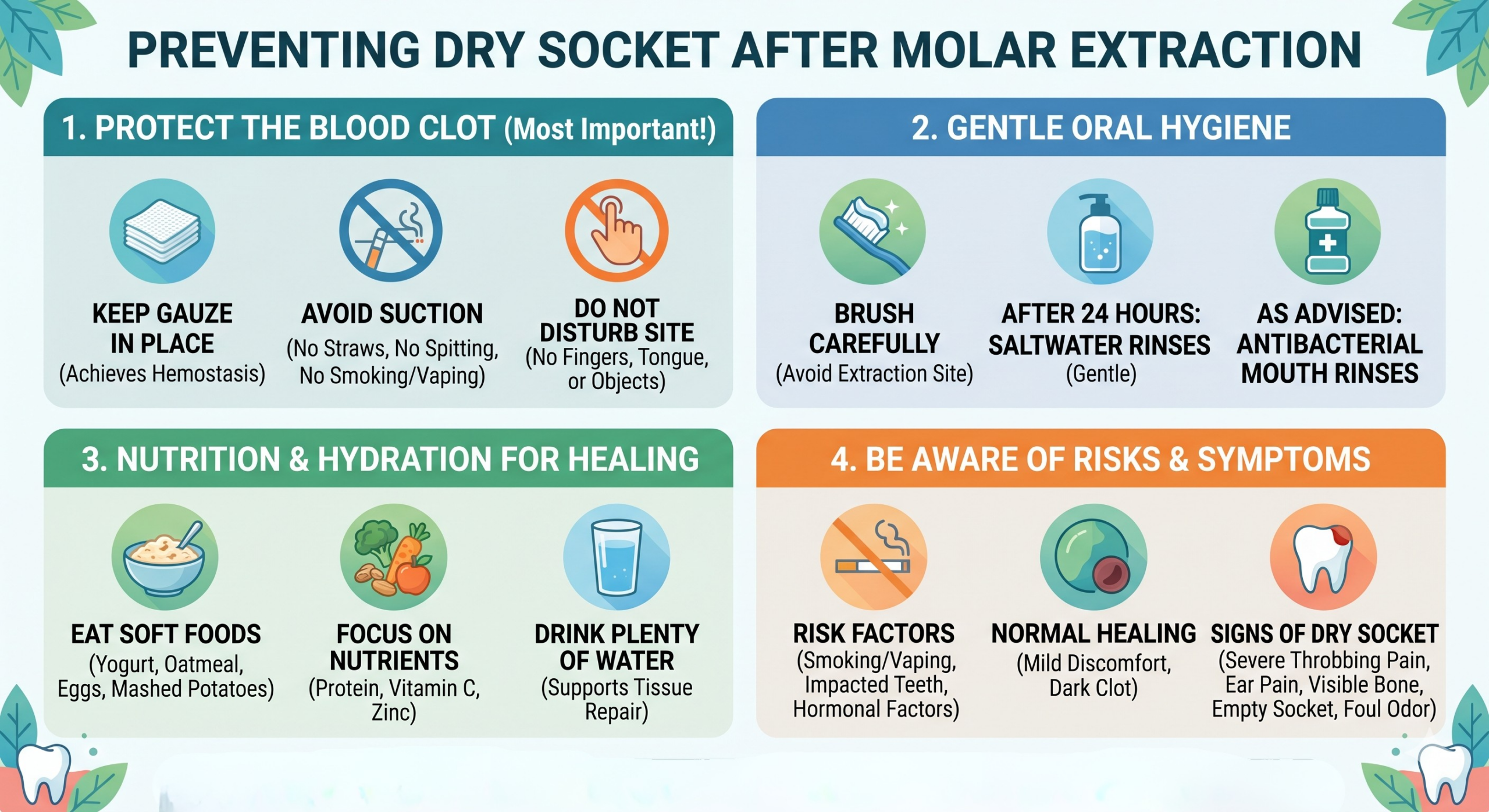
How to Protect the Blood Clot After Extraction
The most important step in dry socket prevention is protecting the blood clot during the early stages of healing.
Leave the Gauze in Place
Immediately after the procedure, your dentist or oral surgeon will place a gauze pad over the extraction site to help achieve hemostasis, the process that stops bleeding and encourages clot formation.
Avoid Suction Motions
For at least several days after extraction, avoid:
- Drinking through straws
- Forceful spitting
- Smoking
- Vaping
These activities can create pressure changes that may dislodge the clot from the socket.
Do Not Disturb the Extraction Site
Avoid touching the socket with:
- Fingers
- Tongue
- Toothpicks
- Dental instruments
Disturbing the extraction wound can damage healing tissue and interfere with clot stabilization.
Oral Hygiene Practices That Help Prevent Dry Socket
Maintaining oral hygiene is essential, but it must be done carefully.
Gentle Brushing
Continue brushing your teeth while avoiding direct contact with the extraction site. Keeping surrounding teeth clean helps reduce bacterial contamination and plaque accumulation.
Saltwater Rinses
After the first 24 hours, gentle saltwater rinses can help reduce oral bacteria and support healing.
A mild rinse can:
- Help remove food debris
- Reduce bacterial buildup
- Support healthy tissue recovery
Antibacterial Mouth Rinses
In some cases, dentists may recommend a chlorhexidine rinse. Studies suggest that chlorhexidine can help lower the risk of dry socket by reducing bacterial contamination around the extraction site.
Always follow professional instructions when using medicated rinses.
Nutrition and Hydration for Faster Healing
Nutrition plays a significant role in tissue repair and recovery after a molar extraction.
Focus on Nutrient-Rich Foods
The body requires essential nutrients for collagen formation and wound healing, including:
- Protein
- Vitamin C
- Zinc
- Water
Protein supports tissue repair, while vitamin C contributes to collagen production. Zinc also plays an important role in wound healing and immune function.
Choose Soft Foods
Soft foods reduce trauma to the extraction site and lower the risk of disturbing the clot.
Good options include:
- Yogurt
- Applesauce
- Oatmeal
- Scrambled eggs
- Mashed potatoes
- Cottage cheese
- Smooth soups
Avoid crunchy, spicy, sticky, or hard foods that may irritate the extraction wound or become trapped inside the socket.
Stay Hydrated
Adequate hydration supports circulation, tissue repair, and overall healing. Drinking water throughout the day helps maintain a healthy oral environment and supports recovery.
Common Mistakes That Can Cause Dry Socket
Many cases of dry socket develop because patients unintentionally disrupt the healing process.
Common mistakes include:
- Smoking too soon after extraction
- Drinking through a straw
- Ignoring postoperative instructions
- Performing vigorous exercise too early
- Poor oral hygiene
- Touching the extraction socket
- Consuming hard or crunchy foods before healing progresses
Understanding these risks can significantly improve recovery outcomes.
Signs Your Extraction Site Is Healing Normally
Normal healing typically includes the following:
- Mild discomfort that gradually improves
- Formation of a dark blood clot within the socket
- Development of granulation tissue
- Gradual closure of gum tissue
- Reduced swelling over time
As healing continues, soft tissue repair occurs first, followed by gradual bone regeneration and bone remodeling within the jawbone.
Signs and Symptoms of Dry Socket
Despite proper care, dry socket can occasionally occur.
Symptoms often appear between one and five days after extraction and may include:
- Severe throbbing pain
- Ear pain
- Jaw pain
- Facial pain
- Visible bone exposure
- Empty socket appearance
- Foul odor
- Persistent bad breath (halitosis)
- Metallic or unpleasant taste
- Increased sensitivity
Unlike normal postoperative discomfort, dry socket pain often worsens rather than improves.
Medications and Professional Care
Your dentist may recommend medications to support healing and comfort.
These may include:
- NSAIDs such as ibuprofen
- Acetaminophen
- Prescription analgesics
- Antibiotics when infection is present
- Antimicrobial mouth rinses
While pain relievers help manage postoperative discomfort, they do not replace proper aftercare practices.
When to Contact Your Dentist
Contact your dentist or oral surgeon immediately if you experience:
- Severe pain that worsens after extraction
- Excessive swelling
- Persistent bleeding
- Fever
- Signs of infection
- Suspected dry socket
Early evaluation can help relieve symptoms, protect the extraction site, and ensure proper healing.
Frequently Asked Questions
1. What is dry socket after a molar extraction?
Dry socket, also known as alveolar osteitis, is a painful dental complication that occurs when the blood clot protecting the extraction socket becomes dislodged, dissolves too early, or fails to form properly. This leaves the underlying alveolar bone and nerve endings exposed, causing significant discomfort and delayed healing.
2. How can I prevent dry socket after a molar extraction?
The best ways to prevent dry socket include following your dentist’s aftercare instructions, avoiding smoking and vaping, not drinking through a straw, maintaining gentle oral hygiene, eating soft foods, and protecting the blood clot during the first few days after extraction.
3. How long am I at risk for developing dry socket?
The risk of dry socket is highest during the first three to five days after a tooth extraction. Once granulation tissue begins forming and the blood clot stabilizes, the risk decreases significantly.
4. Are lower molars more likely to develop dry socket?
Yes. Lower molars, especially impacted wisdom teeth, have a higher risk of dry socket because their extraction sites are often larger and may require surgical extraction, which can increase healing time and tissue trauma.
5. Can smoking or vaping cause dry socket?
Yes. Smoking and vaping are major risk factors for dry socket. The suction created during inhalation can dislodge the blood clot, while nicotine reduces blood flow and interferes with tissue regeneration and wound healing.
6. What foods should I eat after a molar extraction?
Soft, nutrient-rich foods are recommended after a molar extraction. Good choices include yogurt, applesauce, oatmeal, scrambled eggs, mashed potatoes, cottage cheese, and smoothies eaten with a spoon. These foods help support healing while minimizing irritation to the extraction site.
7. What foods should I avoid to prevent dry socket?
Avoid crunchy, hard, spicy, sticky, and seedy foods during the early stages of recovery. Foods such as chips, nuts, popcorn, crackers, and spicy dishes can irritate the extraction wound or disturb the blood clot.
8. Can I brush my teeth after a molar extraction?
Yes, but you should brush gently and avoid direct contact with the extraction site. Maintaining good oral hygiene helps reduce bacterial contamination and lowers the risk of infection during recovery.
9. When can I rinse my mouth after tooth extraction?
Most dentists recommend waiting at least 24 hours before using a gentle saltwater rinse. Avoid vigorous rinsing or forceful spitting, as these actions can dislodge the blood clot and increase the risk of dry socket.
10. What are the first signs of dry socket?
Common symptoms include severe throbbing pain, an empty-looking extraction socket, visible bone exposure, bad breath, foul odor, jaw pain, ear pain, and an unpleasant taste in the mouth. Symptoms typically develop one to five days after extraction.
11. Does a blood clot mean my extraction site is healing properly?
Yes. A healthy blood clot is an important part of normal healing. The clot protects the underlying tissues, supports granulation tissue formation, and helps initiate bone and soft tissue regeneration.
Final Thoughts
Preventing dry socket following a molar extraction begins with protecting the blood clot and supporting the body’s natural healing process. By following your dentist’s instructions, maintaining gentle oral hygiene, avoiding tobacco products, eating nutrient-rich soft foods, and staying hydrated, you can significantly reduce your risk of alveolar osteitis.
Successful recovery depends on preserving the blood clot, encouraging tissue regeneration, and allowing granulation tissue, soft tissue, and bone remodeling to occur naturally. With proper care and attention, most extraction sites heal predictably and without complications.