
How to Treat and Prevent Teething Rash on Your Baby’s Face
Discover expert-backed, safe, and powerful ways to treat and prevent teething rash on your baby’s face, including causes, symptoms, remedies, and prevention tips.
What Is Teething Rash?
Teething rash is a common skin condition that develops when babies begin the teething phase, typically between 4 and 7 months of age. During this time, increased saliva production leads to prolonged moisture exposure on the skin, especially around the mouth and chin.
A teething rash is essentially a form of mild irritant contact dermatitis caused by saliva. Saliva contains digestive enzymes like amylase, which can irritate delicate infant skin when it stays in contact for too long.
Babies have a fragile skin barrier function, meaning their skin loses moisture quickly and is more prone to irritation. This is why even normal drooling can lead to visible redness and discomfort.
Why Teething Causes Skin Irritation
Teething increases drooling, and drooling leads to constant wetness. This disrupts the skin’s natural pH balance and increases trans-epidermal water loss (TEWL), weakening the protective barrier.
As a result:
- Saliva irritates baby skin
- Moisture breaks down the skin barrier
- Friction worsens inflammation
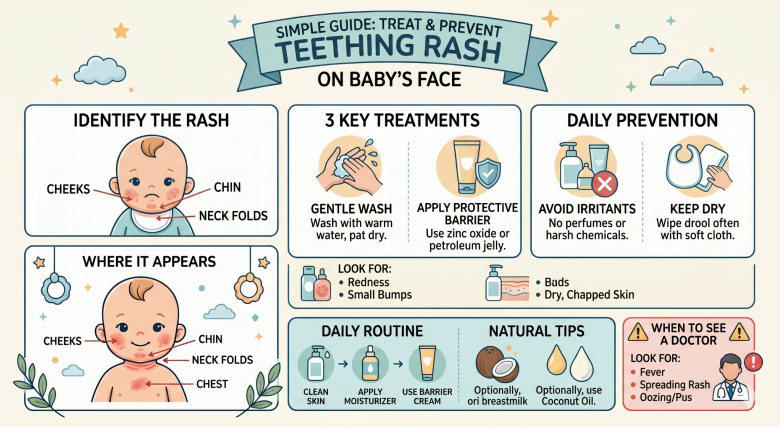
Common Symptoms of Teething Rash
You may notice:
- Red or pink patches around the mouth
- Small bumps
- Dry, flaky, or chapped skin
- Irritation in folds of the neck
- Mild swelling or sensitivity
Causes of Teething Rash
Role of Excess Drooling
Drooling increases significantly during teething. Babies cannot control saliva flow, and constant moisture exposure leads to irritation.
Key points:
- Teething rash is caused by excessive drooling
- Saliva irritates baby skin
- Drooling increases during the teething phase
Skin Barrier Damage Explained
The outer layer of skin acts as a protective shield. When exposed to saliva repeatedly, this barrier weakens, leading to inflammation and dryness.
Where Does Teething Rash Appear?
Face and Cheeks
The cheeks often become red due to repeated wiping and contact with saliva.
Chin, Neck, and Chest
Drool collects in folds, causing irritation in several areas, including:
- Baby chin rash during teething
- Neck irritation
- Chest redness
Teething Rash vs Other Skin Conditions
| Condition | Key Signs | Location | Cause |
|---|---|---|---|
| Teething Rash | Redness, mild bumps | Mouth, chin | Drooling |
| Eczema | Dry, itchy patches | Arms, legs | Genetic or skin barrier issues |
| Allergic Reaction | Swelling, itching | Anywhere | Allergen exposure |
| Fungal Rash | Bright red, spreading | Skin folds | Candida infection |
Severity Stages of Teething Rash
Understanding severity helps guide treatment:
- Mild: Slight redness, no discomfort
- Moderate: Visible bumps and dryness
- Severe: Cracked skin with possible infection
Powerful Ways to Treat Teething Rash
Treating teething rash effectively requires consistency and gentle care.
Gentle Cleaning Routine
Clean with lukewarm water and pat dry.
Apply Barrier Creams
Use zinc oxide or petroleum jelly to create an occlusive barrier.
Keep Skin Dry
Regularly wipe drool using soft cloths.
Use Soft Bibs
Absorb drool and reduce skin contact.
Moisturize Frequently
Use a hypoallergenic moisturizer to restore hydration.
Avoid Friction
Limit excessive wiping or rubbing.
Let Skin Breathe
Allow airflow when possible.
Clean After Feeding
Food and saliva together can increase irritation.
Maintain Hygiene
Clean toys and hands to help prevent infection.
Natural Remedies for Teething Rash
Coconut Oil
Acts as a natural moisturizer with antimicrobial properties.
Breast Milk
Contains antibodies that may help reduce inflammation.
Best Products for Teething Rash
Look for:
- Zinc oxide creams
- Petroleum jelly
- Lanolin-based ointments
- Fragrance-free baby moisturizers
These help support the skin barrier and reduce inflammation.
What to Avoid
Harsh Chemicals
Avoid products with alcohol, fragrance, or dyes.
Overwashing
Too much cleaning can increase dryness and irritation.
How to Prevent Teething Rash
Daily Routine
- Clean skin twice daily
- Apply moisturizer
- Use barrier cream
Nighttime Care
Drooling often increases at night. You can use:
- Absorbent bibs
- Protective creams before sleep
Climate and Environmental Impact
Hot and humid climates can worsen teething rash due to sweating and increased moisture. Cold weather can dry the skin, making it more sensitive.
When to See a Doctor
Warning Signs
- Severe redness
- Crusting or pus
- Fever
- Rash spreading beyond drool areas
These may indicate infection or other conditions such as a fungal rash.
Frequently Asked Questions
1. What is the fastest way to heal a teething rash?
Keeping the skin dry and using barrier creams usually works fastest.
2. Can drool rash turn into an infection?
Yes, if left untreated, bacteria or fungi may infect the skin.
3. What cream is best for a drool rash baby?
Zinc oxide and petroleum jelly are commonly effective options.
4. How do I stop the drooling rash on my baby?
Frequent gentle wiping and protective creams can help manage it.
5. Is a teething rash itchy?
It may cause mild discomfort, but it is not usually very itchy.
6. When does a teething rash start?
It typically begins around 4 to 7 months during early teething.
Conclusion
Teething rash is a normal part of your baby’s development, but with the right care, it can be managed easily. By understanding the causes, maintaining a consistent skincare routine, and protecting the skin barrier, you can help prevent irritation and keep your baby comfortable.
Simple habits like managing drool, using gentle products, and monitoring skin changes can make a real difference. If symptoms worsen, seeking medical advice can help ensure your baby stays safe and healthy.
With proper care, teething rash is usually a manageable and temporary phase in your baby’s journey.