
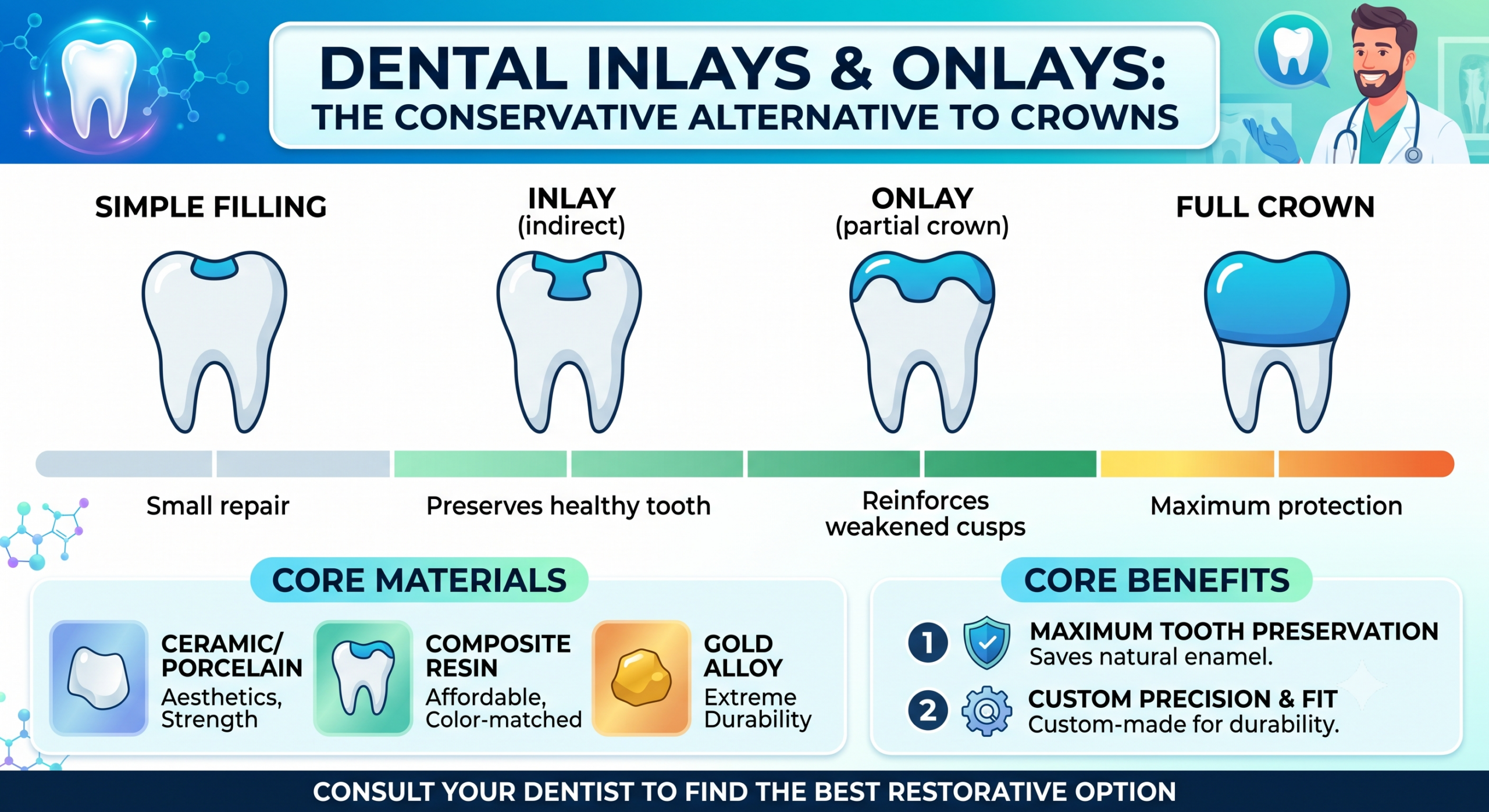
Inlays and onlays offer a conservative alternative to dental crowns, preserving healthy tooth structure while restoring strength, function, and a natural smile.
Losing part of a tooth to decay or fracture doesn’t automatically mean you need a full crown. For many patients, inlays and onlays offer a conservative alternative to dental crowns that restores strength and function while preserving as much of your natural tooth as possible. If you’re weighing your restorative options, understanding how these treatments work can help you make a confident, informed decision with your dentist.
What Are Dental Inlays and Onlays?
Inlays and onlays belong to a category of restorative dentistry known as indirect restorations. Unlike a direct restoration, which is shaped by hand inside the mouth, an indirect restoration is custom-fabricated outside the mouth, either at a dental laboratory or with in-house CAD/CAM technology, and then bonded into place. This distinction matters because it affects everything from appointment scheduling to material strength.
Inlays and onlays sit between a filling and a crown in terms of how much tooth structure they cover, which is exactly why they’re often described as a “middle ground” restoration.
How Inlays Differ From Fillings
A filling is a direct restoration, molded and hardened right inside the tooth during a single appointment. An inlay, on the other hand, is crafted separately in a dental laboratory or chairside milling unit and fits within the grooves of the tooth, specifically the area between the cusps (the raised points on the chewing surface). Because inlays are custom-made, they tend to offer a more precise fit and greater durability than a traditional filling, especially for moderate-sized cavities that are too large for a filling but don’t require full coverage.
How Onlays Differ From Crowns
While a crown covers the entire visible portion of a tooth, an onlay extends over one or more of the cusps without covering the whole tooth. An onlay protects a weakened cusp from further fracture while leaving the rest of the healthy enamel and dentin untouched. This makes onlays a great fit for teeth that have sustained cusp fracture or a larger area of chewing surface damage, but still have enough sound tooth structure remaining that a full crown would be more invasive than necessary. Because onlays preserve more of the natural tooth, they’re sometimes referred to as a “partial crown.”
Why Dentists Recommend Inlays and Onlays
Preserving Natural Tooth Structure
One of the biggest advantages of inlays and onlays is how much healthy enamel and dentin they allow your dentist to save without disturbing the pulp, the nerve-rich core of the tooth. Traditional crowns typically require significant reshaping of the tooth to accommodate a cap that covers it entirely. Inlays and onlays, by contrast, only replace the damaged portion, which supports better long-term oral health and reduces stress on the surrounding gum tissue.
Long-Term Strength and Durability
Modern inlays and onlays, particularly those made from ceramic, zirconia, or gold, are remarkably strong. They distribute chewing forces evenly across the tooth, which can actually reinforce a weakened tooth rather than just patch it. An onlay can also reduce the need for root canal treatment down the line, since it stabilizes a cracked or fractured tooth before the damage reaches the pulp. Many patients find that a well-placed onlay lasts just as long as a crown, sometimes even longer, depending on the material chosen and how well it’s cared for.
Materials Used for Inlays and Onlays
Choosing the right material is a collaborative decision between you and your dentist, based on the location of the tooth, your bite pattern, your budget, and your aesthetic preferences.
Porcelain and Ceramic Options
Porcelain and ceramic are popular choices because they closely mimic the natural color and translucency of tooth enamel, making them a favorite in cosmetic dentistry. Lithium disilicate, sold under brand names like IPS e. Max is one of the most widely used ceramic materials today because it combines a tooth-colored appearance with high fracture resistance. Zirconia is another modern option prized for how well it resists wear and fracture, particularly on back teeth that absorb heavy chewing forces. Both materials resist staining better than composite resin over time.
Composite Resin Options
Composite resin inlays and onlays are tooth-colored and generally more affordable than porcelain or zirconia. They bond well to the tooth structure using dental adhesive, though they may be slightly less resistant to wear compared to ceramic or metal over many years of use.
Gold and Metal Alloys
Gold has been used in dentistry for centuries, and for good reason. It’s incredibly durable, biocompatible, and gentle on opposing natural teeth, and it rarely causes any allergic reaction. While gold restorations are noticeable, many patients, especially for back molars that aren’t visible when smiling, still choose this option for its unmatched longevity.
The Inlay and Onlay Procedure Explained
Getting an inlay or onlay typically takes two appointments, though same-day options exist in offices with in-house milling technology.
Step One: Diagnosis and Preparation
Your dentist starts with a clinical exam and dental X-rays, which reveal the extent of decay or fracture beneath the surface and help determine whether an inlay, onlay, or crown is the right call. Once decay or old filling material is removed, the tooth is shaped to receive the restoration. Unlike crown preparation, this step is minimally invasive since only the damaged area is addressed. Your dentist will typically administer local anesthesia beforehand, so you shouldn’t feel discomfort during the procedure.
Step Two: Digital or Traditional Impressions
Next, an impression of the prepared tooth is taken, either with a digital scanner or traditional putty. A rubber dam may be used to isolate the tooth and keep the area dry and clean during this stage. This impression becomes the blueprint your dental laboratory or CAD/CAM system uses to fabricate your custom restoration, with careful shade matching to blend seamlessly with your natural teeth. A temporary filling is usually placed to protect the tooth while the permanent piece is made.
Step Three: Fabrication and Bonding
Once the inlay or onlay is ready, typically within one to two weeks for lab-made restorations, you’ll return for a second visit. Many practices now use CAD/CAM systems, such as CEREC, to design and mill the restoration chairside in a single visit, eliminating the wait and the temporary filling altogether. Your dentist will check the fit, make any necessary occlusal adjustments to ensure your bite feels natural, and then bond the restoration permanently using dental cement or resin cement. A final polishing step smooths the surface and helps prevent marginal leakage, which can otherwise allow bacteria to seep beneath the restoration and cause secondary caries.
Inlays vs Onlays vs Crowns: A Side-by-Side Comparison
| Feature | Inlay | Onlay | Crown |
| Coverage Area | Between cusps only | One or more cusps | Entire tooth |
| Tooth Structure Removed | Minimal | Moderate | Significant |
| Typical Material | Porcelain, composite, gold, lithium disilicate | Porcelain, composite, gold, zirconia | Porcelain, ceramic, metal, zirconia |
| Best For | Moderate decay | Larger decay or cusp fracture | Severe damage or after root canal |
| Average Lifespan | 10 to 30 years | 10 to 30 years | 10 to 15 years |
| Invasiveness | Low | Moderate | Higher |
Who Is a Good Candidate for Inlays and Onlays?
Not every damaged tooth needs a crown, and that’s genuinely good news. Inlays and onlays work well for patients who have enough remaining healthy tooth structure to support a partial restoration but need more than a standard filling can offer. A general dentist typically diagnoses and places these restorations, though complex cases are sometimes referred to a prosthodontist, a specialist in dental restorations.
Signs You May Need an Inlay or Onlay
- A cavity that’s too large for a filling but doesn’t require full crown coverage
- A cracked or fractured cusp on a back tooth
- Failing or worn-out fillings, including older dental amalgam restorations that need replacement
- Tooth sensitivity or thermal sensitivity linked to structural weakness rather than decay alone
- A desire to avoid the more invasive shaping required for a crown
If any of these sound familiar, it’s worth bringing up inlays and onlays during your next dental visit, and a set of dental X-rays can help confirm which option fits your situation best.
Benefits of Choosing Inlays and Onlays
- Conservative treatment: More natural tooth structure, including enamel and dentin, stays intact
- Custom fit: Lab-fabricated or CAD/CAM restorations fit precisely, reducing the risk of marginal leakage or gaps
- Durability: With proper care, they can last decades, often outperforming a direct restoration
- Aesthetic appeal: Tooth-colored materials like composite resin and lithium disilicate blend seamlessly with your smile
- Gum-friendly: Because they don’t extend below the gumline like some crowns, they’re often easier to keep clean
Potential Drawbacks to Consider
No treatment is entirely without trade-offs, and it’s worth going in with realistic expectations.
- Higher upfront cost than fillings: Since inlays and onlays require lab fabrication or CAD/CAM milling, they typically cost more than a direct restoration
- Two appointments needed: Unless your dentist has chairside milling technology like CEREC, you’ll need a temporary filling between visits
- Not suitable for extensive damage: Teeth with very little healthy structure remaining may still need a full crown or even extraction if decay has reached the pulp
- Risk of restoration failure: Bruxism, or chronic teeth grinding, can shorten the lifespan of any restoration, inlays and onlays included
Cost of Inlays and Onlays Compared to Crowns
Costs vary depending on your location, the material selected, and your dental insurance coverage. Generally speaking, inlays and onlays fall between fillings and crowns in price. Dental insurance plans often use CDT codes, the standardized billing codes for restorative procedures, to determine how much of the cost they’ll reimburse. Some insurers classify inlays and onlays similarly to fillings, while others treat them more like crowns, which affects your deductible and out-of-pocket cost. While they can cost more than a simple filling upfront, many patients find the investment worthwhile given their durability and the amount of natural tooth preserved. It’s always a good idea to check with your insurance provider before treatment, since coverage can differ significantly between plans.
Caring for Your Inlay or Onlay
Daily Oral Hygiene Tips
Caring for a tooth with an inlay or onlay isn’t much different from caring for your natural teeth. Brush twice daily with a fluoride toothpaste, floss gently around the restoration, and don’t skip your regular dental checkups. Your dentist will keep an eye on the restoration’s fit and watch for early signs of marginal leakage or secondary caries at each visit.
Foods and Habits to Avoid
To protect your investment, it’s smart to avoid chewing on ice, hard candy, or other overly hard foods that could chip or dislodge the restoration. If you grind your teeth at night, a common form of bruxism, ask your dentist about a nightguard, since untreated grinding can lead to restoration failure well before its expected lifespan is up.
How Long Do Inlays and Onlays Last?
With consistent oral hygiene and regular dental visits, inlays and onlays can last anywhere from 10 to 30 years, depending on the material used and how well they’re maintained. Gold and zirconia restorations tend to have the longest lifespan, while composite resin may need replacement sooner. Either way, these restorations represent a long-term solution rather than a quick fix, and routine checkups with dental X-rays help catch any early signs of wear before they become a bigger problem.
Frequently Asked Questions
1. Are inlays and onlays painful to get?
No, the procedure is typically performed under local anesthesia, so you shouldn’t feel pain during placement. Some mild sensitivity afterward is normal and usually fades within a few days.
2. Do inlays and onlays require special maintenance?
Not really. Regular brushing, flossing, and dental checkups are all that’s needed to keep them in good shape for years to come.
3. Can an inlay or onlay fall out?
It’s uncommon, but it can happen if the resin cement bond weakens over time or if the tooth experiences significant trauma. If this occurs, contact your dentist promptly to have it re-bonded or replaced.
4. Is a same-day inlay or onlay possible?
Yes, many dental offices now use CAD/CAM technology, such as CEREC, to design and mill restorations in a single visit, eliminating the need for a temporary filling and a second appointment.
5. Will my insurance cover inlays and onlays?
Coverage varies by plan. Some insurers treat them similarly to fillings using standard CDT codes, while others classify them closer to crowns. It’s best to check directly with your provider before treatment to understand your deductible and out-of-pocket cost.
6. How do I know if I need an inlay, an onlay, or a crown?
Your dentist will evaluate the extent of the damage using dental X-rays, assess the remaining healthy tooth structure, and consider your bite and occlusion before recommending the most conservative option that still restores full function.
7. Can inlays and onlays be used on front teeth?
They’re most commonly used on molars and premolars, where chewing forces are greatest. Front teeth typically require different cosmetic dentistry solutions, like veneers or dental bonding.
Conclusion
Inlays and onlays give patients a middle path between a simple filling and a full crown, preserving healthy tooth structure while still delivering lasting strength and a natural appearance. If you’ve been told you need a crown, it’s worth asking your dentist whether a more conservative restoration like an inlay or onlay, made from durable materials like zirconia, lithium disilicate, or gold, could achieve the same result. With proper care and routine checkups, these restorations can protect your smile for decades to come.