
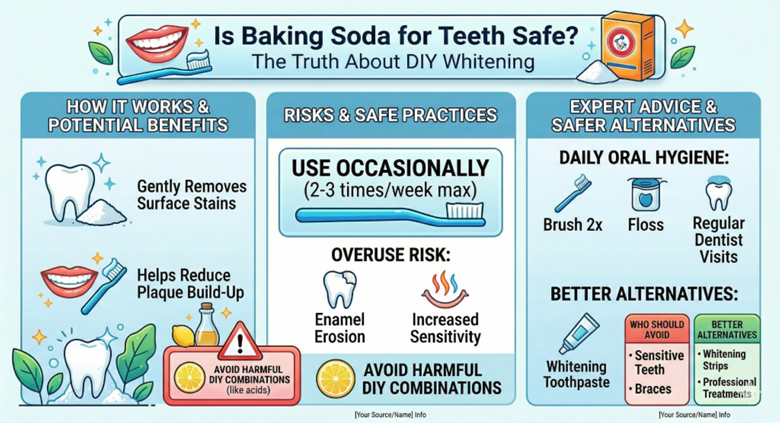
Is Baking Soda for Teeth Safe? The Truth About DIY Whitening
Introduction
Baking soda for teeth has become a widely discussed home remedy for whitening and oral care. From viral DIY hacks to traditional practices, many people use this simple kitchen ingredient to brighten their smiles. But is baking soda for teeth actually safe and effective?
While baking soda can help remove surface stains and reduce plaque, it also has limitations, especially when compared to fluoride toothpaste. Understanding both its benefits and risks is essential before adding it to your routine.
This guide explains everything you need to know, using both practical advice and scientifically grounded insights.
What Is Baking Soda and How Does It Work on Teeth?
Baking soda, also known as sodium bicarbonate, is a fine white powder with mild abrasive and alkaline properties. These qualities make it useful for cleaning and oral care.
When used on teeth, baking soda works in two main ways.
First, it acts as a gentle abrasive. The fine particles help remove surface stains caused by coffee, tea, and smoking. This improves the appearance of your teeth without using harsh chemicals.
Second, baking soda helps disrupt dental biofilm. Dental biofilm is a layer of bacteria that sticks to the surface of teeth and contributes to plaque, gingivitis, and tooth decay. By breaking up this layer, baking soda helps reduce harmful bacteria in the mouth.
Another important benefit is its effect on oral pH. Baking soda raises the pH level in your mouth, making it less acidic. Since many harmful bacteria thrive in acidic conditions, a higher pH makes it harder for these bacteria to grow and multiply.
Benefits of Baking Soda for Teeth
Helps Reduce Plaque and Gingivitis
Baking soda can help reduce plaque by physically disrupting bacterial buildup on the teeth. Lower levels of bacteria can help prevent gum inflammation and early-stage gum disease.
Natural Whitening Effect
Baking soda is effective at removing surface stains from teeth. This can make your smile appear brighter over time. However, it only works on external stains and does not change the internal color of teeth.
Affordable and Accessible
One of the biggest advantages of baking soda is its low cost. It is widely available and much cheaper than professional whitening treatments or specialized toothpaste.
Fluoride-Free Option
Some people prefer fluoride-free products due to concerns about overexposure. Excessive ingestion of fluoride, known as fluoride toxicity, can cause health issues, although this is rare and usually linked to very high intake.
That said, fluoride plays an essential role in strengthening enamel and preventing cavities. So avoiding it entirely may increase the risk of tooth decay.
Is Baking Soda for Teeth Safe?
Baking soda for teeth is generally safe when used occasionally and correctly. However, frequent or aggressive use can lead to problems.
The main concern is enamel erosion. Because baking soda is abrasive, overuse can gradually wear down the protective enamel layer of your teeth. Once enamel is lost, it does not regenerate.
This can lead to increased tooth sensitivity and a higher risk of cavities.
Dental professionals, including organizations like the American Dental Association, recommend using fluoride toothpaste for daily oral care. Baking soda should only be used as a supplement, not a replacement.
Risks and Side Effects of Using Baking Soda
Tooth Sensitivity
As enamel wears down, teeth can become more sensitive to hot, cold, or sweet foods.
Gum Irritation
Using baking soda too aggressively or too often can irritate the gums and soft tissues in your mouth.
Lack of Complete Protection
Baking soda does not contain fluoride, which means it does not provide the same level of protection against cavities as regular toothpaste.
Harmful DIY Combinations
Some DIY whitening methods suggest mixing baking soda with acidic ingredients like lemon juice or vinegar. This is not safe.
Acidic substances can weaken and damage enamel. When combined with an abrasive like baking soda, the risk of enamel erosion increases significantly. This can make teeth more vulnerable to decay and sensitivity.
How to Use Baking Soda for Teeth Safely
If you choose to use baking soda, follow these steps:
- Mix equal parts baking soda and water to form a paste
- Dip a soft-bristled toothbrush into the mixture
- Brush gently using circular motions
- Limit brushing to 1-2 minutes
- Rinse thoroughly
Avoid scrubbing too hard, as this increases the risk of enamel damage.
Recommended Frequency
Use baking soda no more than two to three times per week. Daily use is not recommended.
Improving Taste
If you dislike the salty taste, you can add a drop of peppermint oil to make it more pleasant. Avoid adding acidic ingredients.
Baking Soda vs Regular Toothpaste
| Feature | Baking Soda | Fluoride Toothpaste |
|---|---|---|
| Whitening | Removes surface stains | More advanced whitening |
| Fluoride | No | Yes |
| Protection | Limited | Comprehensive |
| Daily Use | Not recommended | Recommended |
Fluoride toothpaste helps strengthen enamel and prevent cavities, making it essential for daily use.
Scientific Evidence and Whitening Mechanisms
Baking soda whitens teeth through abrasion, meaning it removes stains from the surface.
In contrast, chemical whitening products use compounds like hydrogen peroxide. These work by breaking down deeper stains through oxidation, which makes them more effective for noticeable whitening.
Common Myths About Baking Soda for Teeth
It Whitens Teeth Instantly
Results take time and are limited to surface stains.
It Is Safe for Daily Use
Daily use can damage enamel over time.
It Can Replace Toothpaste
It does not provide complete oral protection.
Who Should Avoid Baking Soda?
Baking soda may not be suitable for everyone. Avoid or consult a dentist if you have the following:
- Sensitive teeth
- Enamel erosion
- Gum disease
- Braces, crowns, or veneers
Better Alternatives for Teeth Whitening
Safer and more effective options include:
- Fluoride whitening toothpaste
- Dentist-approved whitening strips
- Professional dental treatments
- Oil pulling (used cautiously)
Each option works differently, so choose based on your needs and dental health.
Expert Tips for Healthy Teeth
- Brush twice daily with fluoride toothpaste
- Floss regularly
- Limit acidic foods and drinks
- Visit your dentist regularly
- Use DIY remedies in moderation
FAQs
1. Can baking soda damage enamel?
Yes, overuse can wear down enamel and cause sensitivity.
2. How often should I use baking soda?
Two to three times per week is considered safe.
3. Does baking soda kill bacteria?
It helps reduce bacteria by making the mouth less acidic.
4. Can it replace toothpaste?
No, it lacks fluoride and full protection.
5. Is it better than whitening toothpaste?
Not for daily use. Whitening toothpaste is safer long-term.
6. Can I mix it with lemon juice?
No, acidic mixtures can damage enamel.
Conclusion
Baking soda for teeth can be a helpful addition to your oral care routine when used properly. It removes surface stains, helps reduce plaque, and creates a less acidic environment in your mouth.
However, it is not a complete solution. The absence of fluoride and the risk of enamel damage make it unsuitable as a replacement for regular toothpaste.
For the best results, use baking soda occasionally while maintaining a daily routine with fluoride toothpaste. This balanced approach ensures a brighter smile without compromising your dental health.