
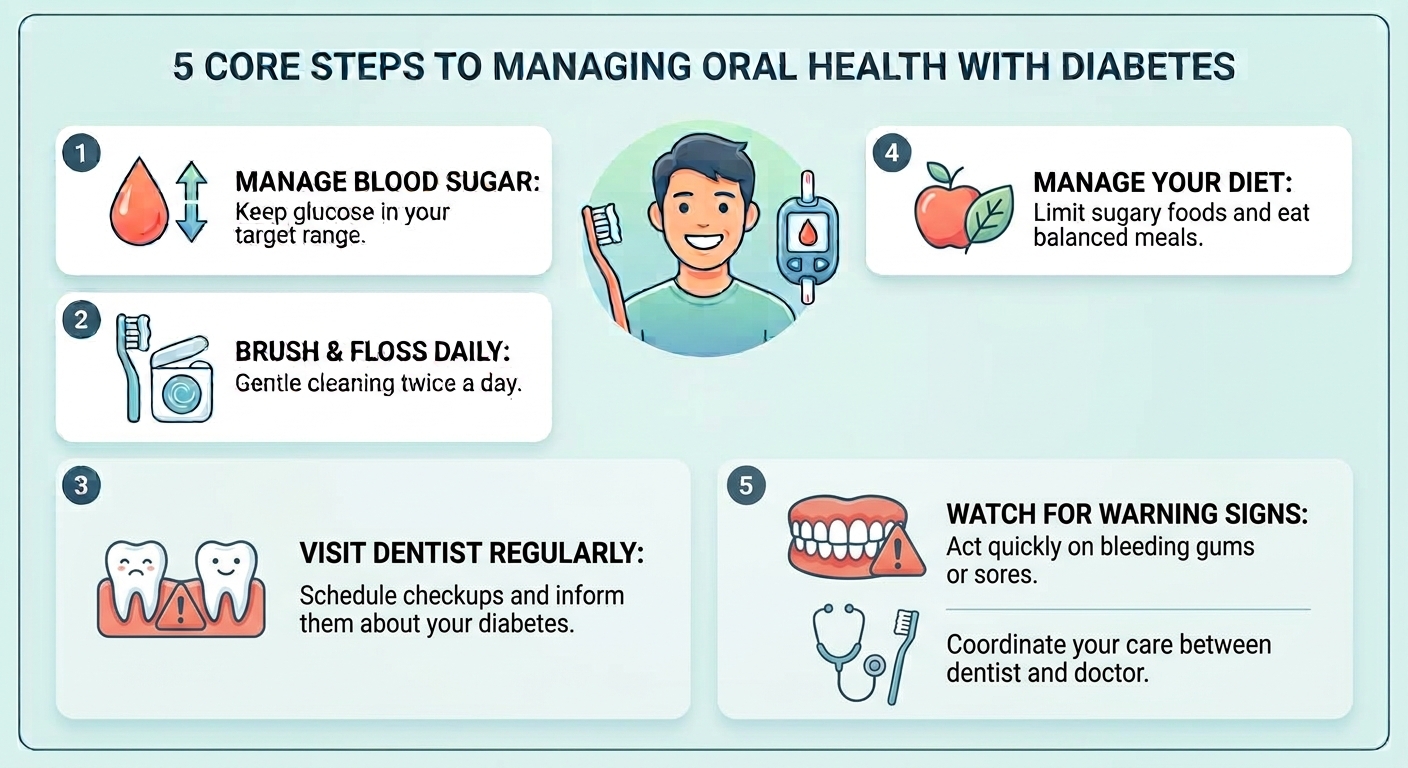
Diabetes and dental health are closely linked. Discover 7 essential strategies for managing oral complications and protecting your smile with diabetes.
Understanding the Diabetes and Dental Health Connection
Diabetes and dental health go hand in hand more than most people realize. When blood sugar levels run high for extended periods, the entire body feels the effects, and the mouth is no exception. In fact, oral health complications are among the most common issues faced by people living with diabetes, yet they’re often overlooked until they become painful or serious.
The link between diabetes and dental health isn’t just anecdotal. Research consistently shows that people with diabetes are at a higher risk of developing gum disease, and this relationship runs in both directions. Poorly controlled blood sugar makes gum disease more likely, and untreated gum disease can make blood sugar harder to control. It’s a cycle that’s worth understanding, especially if you or someone you love is managing this condition.
How Blood Sugar Affects Your Mouth
High glucose levels don’t just affect your energy or your kidneys; they change the chemistry of your saliva too. Elevated sugar in saliva creates an environment where harmful bacteria thrive. These bacteria feed on sugar, produce acid, and gradually break down the protective enamel on your teeth. Over time, this raises the risk of cavities, gum inflammation, and infection.
Diabetes also affects blood vessels throughout the body, including the tiny vessels that supply the gums. When circulation is compromised, the gums receive less oxygen and fewer nutrients, which weakens their ability to fight off bacteria and heal from everyday wear and tear. That’s a big part of why diabetes and dental health issues so often appear together.
Why Dentists Often Spot Diabetes First
It might surprise you to learn that dentists sometimes notice the warning signs of diabetes before a person’s primary doctor does. Persistent gum inflammation, unusual dryness, or slow-healing sores in the mouth can all be early indicators of unmanaged blood sugar. Many dental practices now ask about family history of diabetes during routine exams simply because the mouth tends to reflect what’s happening elsewhere in the body.
If your dentist raises concerns about your gums that don’t seem to match your at-home care routine, it’s worth mentioning to your physician. That conversation between diabetes and dental health providers can lead to an earlier diagnosis and a much smoother path forward.
This is one reason why dental checkups shouldn’t be viewed as optional or separate from your broader health care. A thorough oral exam can reveal patterns, like recurring inflammation or slow-healing tissue, that point toward metabolic issues well before a person experiences classic diabetes symptoms such as excessive thirst or fatigue. Thinking of your dentist as part of your wider care team, rather than a once-a-year formality, can genuinely pay off.
Common Oral Health Complications Linked to Diabetes
People managing diabetes face a handful of oral health challenges more frequently than the general population. Recognizing these complications early makes them far easier to treat.
Gum Disease and Periodontitis
Gum disease is, without question, the most well-documented complication tied to diabetes and dental health. It typically starts as gingivitis, showing up as red, swollen, or bleeding gums. Left untreated, it can progress to periodontitis, a more serious infection that damages the soft tissue and bone supporting your teeth. In advanced cases, periodontitis can even lead to tooth loss.
People with diabetes are statistically more likely to develop periodontitis, and the disease tends to progress faster and more severely when blood sugar isn’t well controlled. The good news? Consistent oral hygiene and stable glucose levels can significantly slow or even reverse early-stage gum disease.
Dry Mouth (Xerostomia)
Dry mouth is another frequent complaint among diabetic patients. It happens when saliva production drops, often as a side effect of high blood sugar or certain diabetes medications. Saliva plays a surprisingly important role in oral health, washing away food particles, neutralizing acids, and keeping bacteria in check. Without enough of it, the mouth becomes more vulnerable to decay, bad breath, and infection.
Slow Healing After Dental Procedures
Whether it’s a simple filling or a tooth extraction, healing tends to take longer for people with diabetes. This is largely due to reduced blood flow and a weakened immune response, both common effects of elevated glucose. Dentists often recommend extra follow-up visits after procedures to make sure healing is progressing as expected.
Thrush and Oral Infections
Diabetes can also raise the risk of oral thrush, a fungal infection caused by an overgrowth of Candida yeast. High sugar levels in saliva create ideal conditions for this fungus to multiply, especially in people who wear dentures or have dry mouth. Thrush typically appears as white or red patches inside the cheeks or on the tongue and can cause soreness or a cottony feeling.
Burning Mouth Syndrome
Less common but still worth mentioning, burning mouth syndrome causes a persistent burning sensation on the tongue, lips, or roof of the mouth. It’s thought to be connected to nerve changes caused by long-term high blood sugar, and it can be uncomfortable enough to interfere with eating and speaking.
Strategy 1: Keep Blood Sugar Levels Stable
If there’s one strategy that influences every other aspect of diabetes and dental health, it’s keeping blood glucose within a healthy target range. Stable blood sugar reduces the amount of glucose present in saliva, which limits the fuel available to harmful bacteria. It also supports better circulation and a stronger immune response, both of which help your gums resist infection and heal more efficiently.
Work closely with your healthcare provider to find a management plan that fits your lifestyle, whether that involves medication, insulin, diet adjustments, or a combination of approaches. Even modest improvements in average blood sugar can translate into noticeably healthier gums within a few months.
Strategy 2: Build a Consistent Oral Hygiene Routine
A solid daily routine is your first line of defense. Brushing and flossing aren’t just good habits, they’re essential tools for anyone managing diabetes and dental health together.
Brushing Techniques That Work
Brush at least twice a day using a soft-bristled toothbrush and fluoride toothpaste. Hold the brush at a 45-degree angle to your gum line and use gentle, circular motions rather than aggressive back-and-forth scrubbing, which can irritate already-sensitive gums. Don’t forget to brush your tongue too, since bacteria can accumulate there and contribute to bad breath and infection.
The Role of Flossing and Interdental Cleaning
Flossing once daily removes plaque and food particles from between the teeth where a toothbrush simply can’t reach. If traditional floss feels awkward, interdental brushes or water flossers are excellent alternatives that many diabetic patients find easier to use consistently. The goal isn’t perfection; it’s consistency.
Strategy 3: Schedule Regular Dental Checkups
Routine visits to the dentist matter more for people with diabetes than for the general population. Most dentists recommend checkups every three to six months for diabetic patients, rather than the standard twice-yearly schedule, so that any early signs of gum disease or infection can be caught and addressed quickly.
During these visits, be sure to mention your current blood sugar control, any recent changes in medication, and any symptoms you’ve noticed, such as bleeding gums or persistent dryness. This information helps your dentist tailor their approach and catch subtle changes before they become bigger problems.
Strategy 4: Manage Dry Mouth Proactively
Since dry mouth is such a common issue, it deserves a dedicated strategy of its own. Staying well hydrated throughout the day is a simple but effective starting point. Sipping water regularly, especially during and after meals, helps keep saliva flowing and rinses away food debris.
Sugar-free gum or lozenges can stimulate saliva production, and there are also specially formulated dry mouth rinses and sprays available at most pharmacies. If dry mouth is severe or persistent, it’s worth discussing with your doctor, since it may be linked to a medication you’re taking that could potentially be adjusted.
Strategy 5: Watch for Early Warning Signs
Knowing what to look for can make a real difference in catching complications early. Keep an eye out for gums that bleed easily during brushing or flossing, persistent bad breath, gums that appear red or swollen, loose teeth, or any sores that take longer than usual to heal. White patches inside the mouth, a burning sensation, or an unusual metallic taste are also worth mentioning to your dentist.
Catching these signs early and addressing them promptly is often the difference between a minor treatment and a much more involved one. Don’t wait for pain before reaching out, many oral health complications develop silently in their early stages.
Strategy 6: Coordinate Care Between Your Dentist and Doctor
Diabetes and dental health are so closely connected that your medical team and dental team really should be working from the same playbook. Consider sharing your recent HbA1c results with your dentist, and let your physician know about any dental treatments or ongoing oral health issues you’re managing.
This kind of coordinated care helps both providers make more informed decisions. For example, your dentist might time a non-urgent procedure around a period when your blood sugar is better controlled, reducing the risk of complications or slow healing.
Strategy 7: Adjust Your Diet to Support Oral Health
What you eat affects both your blood sugar and your teeth, so a thoughtful diet does double duty. Limiting sugary snacks and beverages reduces the fuel available to harmful oral bacteria while also supporting more stable glucose levels. Crunchy vegetables like carrots and celery can help naturally clean teeth and stimulate saliva production.
Foods rich in calcium and vitamin D, such as dairy products or fortified alternatives, support strong teeth and bones. Staying mindful of portion sizes and meal timing, as recommended by your dietitian, also helps prevent the blood sugar spikes that tend to worsen oral health complications over time.
Fiber-rich foods, like whole grains, legumes, and leafy greens, are another smart addition. They digest more slowly, which helps avoid sharp glucose spikes, and they encourage saliva production during chewing. Pairing carbohydrates with a source of protein or healthy fat, rather than eating them alone, can also help smooth out blood sugar swings that might otherwise leave your mouth more vulnerable to bacterial buildup. Small, consistent changes to your eating pattern often add up to noticeably better outcomes for both your glucose readings and your gum health.
The Two-Way Relationship Between Gum Disease and Blood Sugar
It’s worth circling back to something mentioned earlier: the relationship between diabetes and dental health isn’t a one-way street. Gum disease itself can make blood sugar harder to control. Chronic inflammation from periodontitis releases inflammatory compounds into the bloodstream, which can interfere with the body’s ability to use insulin effectively.
Breaking this cycle starts with consistent care on both fronts, managing blood sugar and maintaining oral hygiene, so that neither condition has room to worsen the other.
Frequently Asked Questions
1. Can diabetes cause tooth loss?
Yes, if left untreated, gum disease related to diabetes can progress to periodontitis, which damages the bone and tissue supporting your teeth. This can eventually lead to tooth loss if not managed with proper dental care.
2. How often should diabetics visit the dentist?
Most dental professionals recommend checkups every three to six months for people with diabetes, rather than the standard twice-yearly schedule, since more frequent monitoring helps catch complications early.
- Does high blood sugar affect healing after dental work?
Yes, elevated blood sugar reduces circulation and weakens the immune response, which can slow healing after fillings, extractions, or other dental procedures. Keeping glucose levels stable before and after treatment supports faster recovery.
4. What does diabetic gum disease look like?
Early signs include red, swollen, or bleeding gums, along with persistent bad breath. As it progresses, gums may recede, teeth can loosen, and pockets of infection may form between the teeth and gums.
5. Can treating gum disease improve blood sugar control?
Some research suggests that treating moderate to severe gum disease can lead to modest improvements in blood sugar levels, likely because reducing inflammation improves the body’s response to insulin.
Conclusion
The connection between diabetes and dental health is one that deserves ongoing attention, not just an occasional thought during a dental visit. From gum disease and dry mouth to slower healing and a higher risk of infection, the oral complications tied to diabetes are real, but they’re also largely manageable with the right approach.
By keeping blood sugar stable, maintaining a consistent hygiene routine, scheduling regular checkups, and staying alert to early warning signs, you can protect both your smile and your overall health. Diabetes and dental health truly go together, and taking care of one genuinely supports the other. With a proactive mindset and the right care team behind you, a healthy, confident smile is absolutely within reach.