
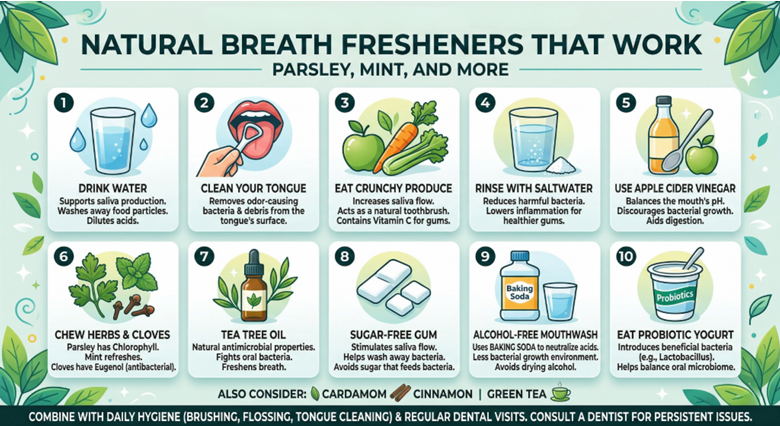
Parsley, Mint, and More: Natural Breath Fresheners That Work
Two of the most challenging dental issues to face are crooked, misaligned teeth and bad breath. Both problems can affect confidence and often cause people to withdraw from social interactions. The good news is that both can be treated effectively with the help of a dental professional.
In this article, we’ll focus on bad breath, also known as halitosis, and explore how natural breath fresheners like parsley, mint, and other remedies can help. More importantly, we’ll explain why these solutions work using science-backed insights into oral health.
Understanding Bad Breath (Halitosis)
Bad breath doesn’t occur randomly. It is the result of biological processes taking place inside your mouth and body.
In most cases, oral bacteria break down food particles and release volatile sulphur compounds. These compounds are responsible for the unpleasant odour associated with halitosis. When bacteria feed on sulphur-containing amino acids, they produce gases that create bad breath.
About 90% of bad breath originates in the mouth, especially on the tongue and between teeth. The tongue’s surface often holds a coating where bacteria thrive in low-oxygen environments, producing odour.
Other contributing factors include dry mouth, also known as xerostomia, which reduces saliva flow. Saliva plays a crucial role in controlling bacteria. When saliva production drops, bacterial growth increases, leading to stronger odours. Poor oral hygiene can also lead to plaque build-up, which further contributes to bad breath.
Certain foods such as garlic and onions can worsen the problem. As they are digested, sulphur compounds enter the bloodstream and travel to the lungs, where they are released through breathing.
10 Effective Natural Remedies for Bad Breath
Natural breath fresheners do more than mask odour. They help restore balance in your mouth by reducing bacteria, improving saliva flow, and stabilising pH levels.
1. Drink Water
Water is one of the simplest and most effective natural breath fresheners.
Drinking water helps wash away food particles and dilute acids in the mouth. It also supports saliva production, which naturally cleans the mouth and controls bacteria. A well-hydrated mouth is less likely to develop bad breath.
Aim to drink six to eight glasses of water daily to maintain a healthy oral environment.
2. Clean Your Tongue
The tongue is one of the main sources of bad breath because it can hold bacteria and debris.
Cleaning your tongue regularly removes this build-up and significantly reduces odour. You can use a toothbrush or a tongue scraper as part of your daily routine.
3. Eat Plenty of Fruits and Vegetables
Crunchy fruits and vegetables act like natural toothbrushes.
Foods like apples, carrots, and celery help remove debris from teeth through mechanical action. They also increase saliva production, which reduces bacterial growth. Citrus fruits such as oranges and lemons provide vitamin C, which supports gum health and reduces the risk of infection.
4. Rinse With Warm Salt Water
Salt water creates a healthier environment in your mouth.
It helps reduce bacterial growth and inflammation, supporting gum health. A simple rinse made with warm water and salt can lower the risk of bad breath, sore throat, and gum issues.
Mix eight ounces of warm water with a small amount of salt, swish for 30 seconds, and spit it out.
5. Use Apple Cider Vinegar
Apple cider vinegar helps balance the oral environment.
Its acidity can lower the pH in the mouth, making it harder for bacteria to grow. It may also support digestion, which can reduce bad breath caused by digestive issues.
Dilute a tablespoon in water and drink it before meals or use it as a mouth rinse.
6. Chew on Cloves and Fresh Herbs
Herbs are powerful natural breath fresheners because of their active compounds.
Cloves contain eugenol, which has antibacterial properties. Parsley contains chlorophyll, which helps neutralise odours. Mint provides menthol, offering a cooling and refreshing effect. Other herbs like basil and rosemary also help control bacteria.
Chewing these herbs releases their natural oils, instantly freshening breath.
7. Brush or Rinse With Tea Tree Oil
Tea tree oil is known for its antimicrobial properties.
Using it as a rinse or in toothpaste can help reduce bacteria in the mouth. This leads to fresher breath and improved oral hygiene. Always dilute it properly before use.
8. Chew Sugar-Free Gum
Chewing gum can help when brushing isn’t possible.
It stimulates saliva production, which helps wash away bacteria and food particles. Sugar-free gum is important because sugar feeds harmful bacteria.
9. Make Your Own Alcohol-Free Mouthwash
Many commercial mouthwashes contain alcohol, which can dry out the mouth and worsen bad breath.
A better alternative is baking soda. It helps neutralise acids and creates an environment where bacteria struggle to grow.
To make a simple mouthwash, mix two teaspoons of baking soda with a cup of warm water. Swish for 30 seconds and spit it out.
10. Eat Yoghurt
Yoghurt contains beneficial bacteria known as probiotics, including lactobacillus.
These good bacteria help balance the oral microbiome and reduce odour-causing bacteria. Eating plain yoghurt regularly can improve breath over time.
Additional Natural Breath Fresheners Worth Considering
Beyond the top remedies, there are other helpful options.
Cardamom has a pleasant aroma and supports digestion. Cinnamon contains compounds that reduce bacteria in saliva. Green tea provides antioxidants and polyphenols that help control bacterial growth.
Daily Oral Hygiene Still Matters
Natural remedies work best when combined with proper oral care.
Brushing removes plaque and food particles. Flossing cleans between teeth where bacteria often hide. Cleaning the tongue reduces bacterial build-up, and staying hydrated supports saliva production.
Recommended Routine
- Brush after every meal
- Floss at least twice daily
- Clean your tongue daily
- Drink plenty of water
Dental Visits Are Still Key to Fighting Bad Breath
Even with natural remedies, professional dental care is essential.
Dentists can identify underlying issues such as gum disease or infections. Professional cleanings remove plaque and tartar that cannot be eliminated at home. Regular check-ups help maintain long-term oral health.
Dental appliances such as retainers or dentures should also be cleaned daily to prevent bacterial build-up.
When Bad Breath Signals a Bigger Problem
Sometimes bad breath is a sign of a more serious issue.
Persistent odour may indicate gum disease, digestive problems, or chronic dry mouth. If bad breath continues despite good hygiene and natural remedies, it is important to consult a dental professional.
Conclusion
Natural breath fresheners like parsley, mint, and other remedies provide a safe and effective way to combat bad breath. By understanding how bacteria produce odour and how saliva and natural ingredients help control it, you can take a more informed approach to oral care.
When combined with consistent hygiene and regular dental visits, these remedies do more than mask bad breath; they address its root causes. The result is long-lasting freshness, improved oral health, and greater confidence in everyday interactions.
FAQs
1. Do natural breath fresheners really work?
Yes, natural breath fresheners can be very effective. They help reduce odour by controlling bacteria, improving saliva flow, and balancing the pH in the mouth rather than simply masking bad smells.
2. What is the main cause of bad breath?
The primary cause of bad breath is the build-up of bacteria in the mouth. These bacteria break down food particles and release sulphur compounds, which produce unpleasant odours.
3. Which natural ingredient works fastest for fresh breath?
Mint and parsley are among the fastest-acting natural breath fresheners. Mint provides a cooling effect, while parsley helps neutralise odours due to its natural compounds.
4. Can drinking water improve bad breath?
Yes, drinking water is one of the simplest ways to improve bad breath. It helps wash away food particles, reduces dryness, and supports saliva production, which naturally keeps the mouth clean.
5. Is yoghurt good for bad breath?
Yes, yoghurt contains probiotics that help balance the bacteria in your mouth. Regular consumption of plain yoghurt can reduce odour-causing bacteria over time.
6. How often should I use natural breath fresheners?
You can use most natural remedies daily. Drinking water, eating fruits and vegetables, and maintaining oral hygiene should be part of your routine, while remedies like salt-water rinses can be used as needed.
7. Can bad breath be a sign of a health problem?
Yes, persistent bad breath may indicate underlying issues such as gum disease, dry mouth, or digestive problems. If it doesn’t improve with proper care, consult a dentist.
8. Are homemade mouthwashes better than store-bought ones?
Homemade mouthwashes can be a better option because they are free from alcohol and harsh chemicals. Ingredients like baking soda help neutralise acids and control bacteria without drying out the mouth.
9. Do certain foods make bad breath worse?
Yes, foods like garlic, onions, sugary snacks, and coffee can contribute to bad breath. These either leave strong odours or promote bacterial growth in the mouth.
10. What is the best daily routine to prevent bad breath naturally?
A good routine includes brushing twice a day, flossing regularly, cleaning your tongue, staying hydrated, and eating a balanced diet rich in fruits and vegetables.