
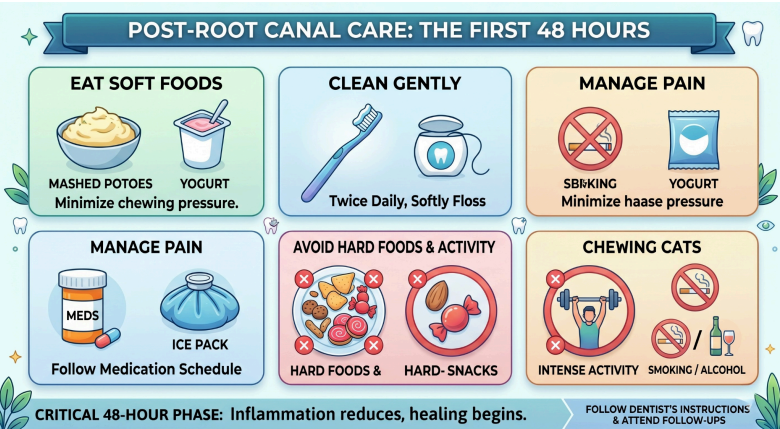
Post-Root Canal Care: Essential Recovery Steps for the First 48 Hours
Post-root canal care is essential for healing. Learn expert recovery steps, pain management tips, and what to avoid during the first 48 hours.
Understanding Post Root Canal Care
Why the First 48 Hours Matter
Post root canal care begins the moment your procedure ends. During the first 48 hours, your body activates its natural healing process.
The surrounding periapical tissue, the area around the root, may experience mild inflammation, which can cause tenderness or pressure sensitivity.
A root canal, also known as root canal therapy, removes infected dental pulp, the soft tissue inside your tooth that contains nerves and blood vessels.
Once this infected pulp is removed, the dentist disinfects the canal using antibacterial irrigation solutions and seals it to prevent reinfection.
Proper post-root canal care helps:
- Prevent infection
- Reduce inflammation
- Support immune system response
- Promote faster tissue healing
Skipping proper care can increase the risk of complications such as oral infection or even a dental abscess.
What Happens After Root Canal Therapy
After treatment, your tooth is filled with a material called gutta-percha and temporarily sealed.
This temporary filling protects the tooth until a permanent restoration, usually a dental crown, is placed.
Because the tooth nerve has been removed, the tooth no longer feels temperature, but the surrounding tissues can still detect pressure.
That is why you may feel discomfort when biting.
It is completely normal to experience the following:
- Mild jaw soreness from keeping your mouth open
- Slight swelling due to inflammation
- Sensitivity caused by healing tissues
Immediate Post-Procedure Guidelines
Managing Numbness Safely
Local anesthesia used during the procedure may last for several hours.
During this time:
- Avoid chewing to prevent accidental biting
- Stay away from hot drinks to avoid burns
- Be cautious with tongue and cheek movements
This simple step in post-root canal care prevents unnecessary injury.
Eating After a Root Canal
Eating smart is essential. Soft foods reduce pressure on the treated tooth and protect the temporary filling.
Recommended foods:
- Scrambled eggs
- Yogurt
- Oatmeal
- Mashed vegetables
- Smooth soups
Avoid chewing on the treated side to prevent damage.
Oral Hygiene Practices
Maintaining a proper oral hygiene routine is critical for recovery.
Best practices:
- Brush gently twice daily
- Floss carefully around the treated tooth
- Use warm saltwater rinses to reduce bacteria
Saltwater helps lower bacterial levels and supports healing by reducing inflammation.
Pain Management and Comfort Tips
Normal Pain vs Warning Signs
After root canal therapy, mild discomfort is expected. This happens because inflammation in the surrounding tissues triggers pressure sensitivity.
| Symptom | Normal | Concerning |
|---|---|---|
| Mild soreness | ✔ | |
| Sensitivity when biting | ✔ | |
| Severe throbbing pain | ✔ | |
| Fever | ✔ | |
| Swelling that worsens | ✔ |
Medications and Home Remedies
Dentists may recommend anti-inflammatory drugs such as ibuprofen to reduce pain and swelling.
Helpful remedies include:
- Cold compress to minimize swelling
- Adequate hydration to support healing
- Rest to allow immune function to work efficiently
Avoid exceeding recommended medication doses.
Foods to Eat and Avoid
Best Foods for Healing
Nutrition plays a key role in post-root canal care. Your body needs energy and nutrients to repair tissue.
Healing foods:
- Bananas (easy to chew)
- Cottage cheese (rich in protein)
- Soups (lukewarm)
- Smoothies (without seeds)
These foods minimize stress on the treated tooth.
Foods to Avoid
Certain foods can disrupt healing or damage the temporary seal.
Avoid:
- Hard foods like nuts and chips
- Sticky foods like caramel
- Sugary snacks that promote bacterial growth
- Extremely hot or cold foods
Hard or sticky foods can dislodge the temporary filling, exposing the tooth to bacteria.
Activities to Avoid During Recovery
Physical Activities
Strenuous activity can increase blood flow and worsen inflammation.
Avoid:
- Heavy lifting
- Intense workouts
- Bending frequently
Habits That Delay Healing
Certain habits interfere with the healing process.
Avoid:
- Smoking (reduces oxygen supply to tissues)
- Alcohol (slows recovery)
- Chewing ice
- Nail biting
Smoking, in particular, delays healing and increases infection risk.
Healing Timeline After a Root Canal
First 24 Hours
- Numbness fades
- Mild discomfort begins
- Avoid chewing on treated side
First 48 Hours
This is the most critical phase of post-root canal care.
- Inflammation begins to decrease
- Pain becomes manageable
- Tissue healing progresses
First Week and Beyond
- Sensitivity reduces significantly
- A follow-up appointment may be scheduled
- Permanent crown placement is planned
Signs of Complications
Infection Symptoms
Although rare, complications can occur.
Watch for:
- Persistent or severe pain
- Swelling that spreads
- Bad taste in mouth (possible infection)
- Fever or fatigue
These may indicate an oral infection or dental abscess.
When to Contact Your Dentist
Contact your dentist or endodontist if you notice:
- Pain lasting more than a few days
- Difficulty chewing
- Visible swelling
Long-Term Care and Tooth Protection
Temporary Filling vs Dental Crown
After root canal therapy, a temporary filling is placed to seal the tooth. However, this is not a permanent solution.
A dental crown is essential because:
- It protects the weakened tooth structure
- Restores full chewing function
- Prevents fractures
Delaying crown placement increases the risk of tooth damage.
Maintaining Oral Health
To ensure long-term success:
- Maintain daily brushing and flossing
- Prevent plaque buildup
- Attend regular dental checkups
Good oral hygiene prevents future issues like cavities or gum disease.
Common Myths About Root Canal Recovery
Myth: Root canals are painful
Reality: Modern techniques make the procedure comfortable
Myth: No care is needed afterward
Reality: Post-root canal care is essential for recovery
Myth: The tooth is “dead” and useless
Reality: The tooth still functions and needs protection
FAQs
1. How long does recovery take after a root canal?
Most patients recover within a few days, but full healing may take up to two weeks.
2. Is it normal to feel pressure when biting?
Yes, pressure sensitivity is common due to inflammation in surrounding tissues.
3. Can I brush my teeth after the procedure?
Yes, maintain oral hygiene but brush gently around the treated area.
4. Do I need antibiotics after a root canal?
Not always. Antibiotics are prescribed only if there is a spreading infection.
5. What happens if I delay getting a crown?
The tooth may crack or fracture, leading to further dental treatment.
6. Can I eat normally after 48 hours?
Yes, but continue to avoid hard or sticky foods until a permanent crown is placed.
Conclusion
Post-root canal care plays a vital role in ensuring successful recovery and long-term tooth health.
The first 48 hours are especially important, as your body begins healing and inflammation reduces.
By following proper care steps, maintaining oral hygiene, choosing the right foods, avoiding harmful habits, and attending follow-up appointments, you can protect your treated tooth and avoid complications.
With the right approach, your restored tooth can function normally for years to come.