
Acid reflux teeth damage is more common than most people realize. Learn how GERD erodes enamel and discover 7 proven ways to protect your smile.
If you’ve ever felt that familiar burn creep up your chest after a big meal, you already know acid reflux isn’t fun. What you might not know is that the very same acid causing that discomfort can also be quietly wearing away at your teeth. Acid reflux teeth damage is a real and growing concern, and it often goes unnoticed until a dentist spots the telltale signs during a routine checkup.
Gastroesophageal reflux disease, or GERD, doesn’t just affect your esophagus and stomach. When stomach acid travels up into the mouth, it comes into direct contact with your enamel, the hard outer layer that protects every tooth. Over time, repeated exposure softens and erodes that enamel, leaving teeth more vulnerable to sensitivity, decay, and cosmetic damage.
The good news? With the right habits and a bit of awareness, you can protect your smile even while managing a chronic condition like GERD. Let’s break down exactly how acid reflux affects your teeth and what you can do about it.
What Is Acid Reflux, and How Does It Affect Your Teeth?
Acid reflux happens when stomach acid flows backward into the esophagus instead of staying put to digest food. It’s caused by a weakened lower esophageal sphincter, the ring of muscle that’s supposed to keep stomach contents where they belong. When that muscle doesn’t close properly, acid escapes upward, sometimes reaching all the way to the mouth.
That’s where the dental trouble begins. Stomach acid is remarkably strong, with a pH low enough to dissolve minerals in tooth enamel. Every time reflux reaches the mouth, even silently and without the classic burning sensation, it chips away at your enamel’s protective structure. This process is known as dental erosion, and it’s a well-documented consequence of long-term GERD.
Understanding GERD
What Causes GERD
GERD develops for a variety of reasons, and it isn’t always about what you eat. Common contributors include:
- A hiatal hernia, which can interfere with the esophageal sphincter
- Obesity, which puts extra pressure on the stomach
- Smoking, which weakens the sphincter over time
- Pregnancy, due to hormonal changes and pressure on the abdomen
- Certain medications, including some blood pressure drugs and antihistamines
- Eating large meals or lying down soon after eating
For some people, GERD is an occasional nuisance. For others, it’s a daily struggle that requires ongoing medical management.
Common Symptoms of GERD
Not everyone with GERD experiences the same symptoms. Some of the most frequently reported include:
- Heartburn, especially after eating or at night
- A sour or bitter taste in the mouth
- Regurgitation of food or liquid
- Difficulty swallowing
- A chronic cough or hoarseness
- Chest discomfort that isn’t related to the heart
Interestingly, some people have what’s called “silent reflux,” where acid reaches the mouth without any noticeable burning sensation at all. In these cases, a dentist may actually be the first person to notice something is wrong, simply because of visible enamel wear.
How Stomach Acid Damages Tooth Enamel
The Role of pH Levels
Tooth enamel begins to soften and demineralize when exposed to a pH below 5.5. Stomach acid, by comparison, has a pH that typically falls between 1 and 3, which is significantly more acidic. When this acid reaches the mouth, it overwhelms the natural buffering effect of saliva, and the enamel starts to break down at a chemical level.
Saliva plays a huge role here. Under normal conditions, it helps neutralize acids and remineralize weakened enamel. But with frequent reflux, saliva simply can’t keep up, and the balance tips firmly in favor of erosion.
Which Teeth Take the Worst Hit
Acid reflux tends to affect the back teeth and the inner (tongue-facing) surfaces of the upper front teeth first. Because of how acid flows and pools in the mouth, the palatal surfaces of the upper incisors and the biting surfaces of the molars are usually hit hardest. Research on the link between GERD and dental erosion has found the condition primarily affects the palatal surfaces of the back teeth, with a reported prevalence of up to 42 percent among patients with chronic reflux.
Signs of Acid-Related Tooth Damage
Enamel Erosion
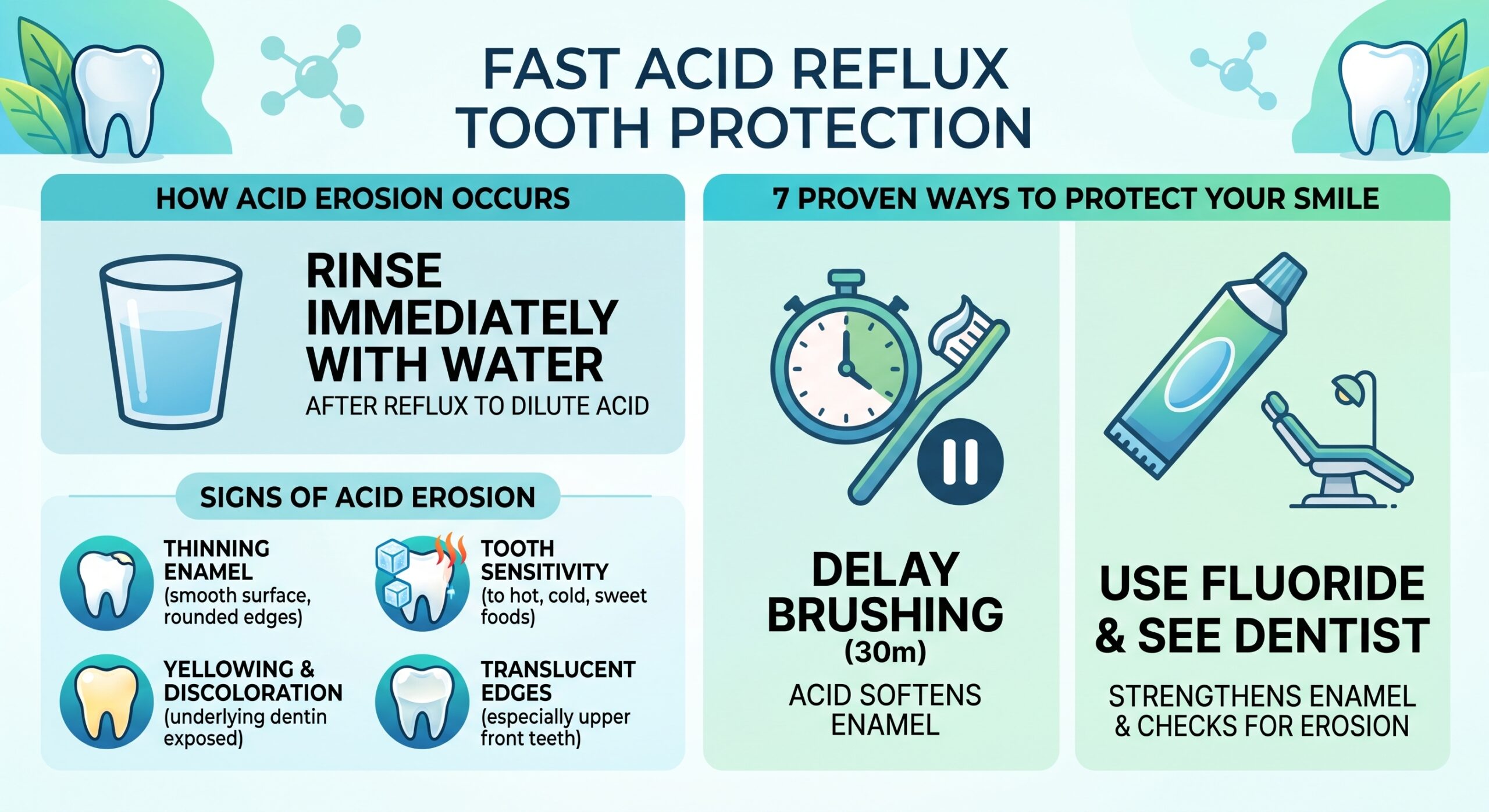
The most direct sign is thinning enamel, which often shows up as a smooth, glassy appearance on the tooth surface. Teeth may also start to look shorter or rounded at the edges as the protective layer wears thin.
Tooth Sensitivity
As enamel erodes, the underlying dentin becomes exposed. Dentin contains tiny tubules that connect to the tooth’s nerve, so it’s no surprise that sensitivity to hot, cold, sweet, or acidic foods often follows.
Discoloration and Thinning Edges
Eroded teeth frequently take on a yellowish tint because the dentin beneath the enamel is naturally darker. You might also notice a translucent, almost see-through quality near the biting edges of the front teeth, a classic indicator of acid wear.
Acid Reflux Erosion vs. Other Causes of Enamel Wear
It’s worth noting that acid reflux isn’t the only culprit behind enamel erosion. Soft drinks, citrus fruits, wine, and even certain vitamins can wear down enamel from the outside in, a process dentists call extrinsic erosion. Acid reflux, on the other hand, causes intrinsic erosion, meaning the damage comes from within the body.
The erosion patterns can look different too. Extrinsic erosion tends to affect the front, outer surfaces of teeth, while acid reflux damage usually targets the back teeth and the inner surfaces of the upper front teeth. A dentist trained to spot these patterns can often tell the difference just by examining your smile, which is one reason regular dental visits matter so much.
Long-Term Risks If You Leave It Untreated
Ignoring acid reflux and teeth damage doesn’t make it go away. Left untreated, ongoing erosion can lead to:
- Deep tooth sensitivity that interferes with eating and drinking
- Increased risk of cavities, since thin enamel offers less protection against decay
- Chipped or fractured teeth, as weakened enamel becomes more brittle
- Changes in bite alignment as tooth shape and height change over time
- A need for more extensive and costly dental work down the road
The earlier you catch the problem, the simpler and more affordable the fix tends to be.
Proven Ways to Protect Your Teeth from GERD
The relationship between acid reflux and teeth doesn’t have to end in serious damage. Here are seven practical, dentist-recommended strategies that can make a real difference.
1. Rinse with water or a baking soda solution.
After a reflux episode, swish plain water around your mouth to dilute the acid. A pinch of baking soda mixed into water can help neutralize it even further, giving your enamel a fighting chance to recover.
2. Wait Before You Brush
It’s tempting to brush right after a reflux episode, but this can actually do more harm than good. Freshly softened enamel is more vulnerable to abrasion, so it’s best to wait at least 30 minutes before brushing.
3. Switch to a Fluoride Toothpaste
Fluoride strengthens enamel and helps it resist acid attacks. Look for a toothpaste with a higher fluoride concentration, and ask your dentist whether a prescription-strength option makes sense for your situation.
4. Chew Sugar-Free Gum
Chewing gum stimulates saliva production, which naturally helps buffer acid and wash it away from tooth surfaces. Sugar-free gum with xylitol is a particularly good choice, since xylitol may also help reduce harmful bacteria in the mouth.
5. Manage Your GERD Medically
Treating the root cause matters just as much as protecting your teeth directly. Talk to your doctor about lifestyle changes, over-the-counter antacids, or prescription medications that reduce acid production. Getting GERD under control is often the single most effective way to stop enamel erosion in its tracks.
6. Adjust Your Diet
Certain foods and drinks tend to trigger reflux, including spicy dishes, caffeine, alcohol, chocolate, and fatty or fried foods. Eating smaller meals, avoiding late-night eating, and staying upright for a few hours after meals can all help reduce how often acid reaches your mouth.
7. Keep Up with Regular Dental Visits
Routine checkups allow your dentist to catch early signs of erosion before they turn into bigger problems. Your dentist can also recommend protective treatments and track changes in your enamel over time, which is especially important if you have chronic GERD.
Dental Treatments That Repair Acid Reflux Damage
Fluoride Treatments
For mild to moderate erosion, in-office fluoride treatments can help remineralize weakened enamel and reduce sensitivity. These treatments are quick, painless, and often recommended as a first line of defense.
Dental Bonding
When erosion has caused visible chips or shape changes, dental bonding can restore a tooth’s appearance using a tooth-colored resin. It’s a relatively affordable, conservative option for minor to moderate damage.
Crowns and Veneers
For more significant erosion, crowns or veneers may be necessary to protect the remaining tooth structure and restore both function and appearance. A well-placed crown can last well over a decade with proper care, giving your smile lasting protection.
When to See a Dentist or Doctor
If you notice increased tooth sensitivity, visible enamel thinning, or a sour taste that lingers in your mouth, it’s time to schedule an appointment. Likewise, if you experience heartburn more than twice a week for several weeks, it’s worth discussing GERD management with your physician. Because dental erosion may be the only noticeable symptom of GERD in some patients, even when classic heartburn isn’t present, your dentist could end up being the one who first flags a reflux problem worth investigating.
Frequently Asked Questions
1. Can acid reflux really damage my teeth?
Yes. Stomach acid is highly corrosive, and when it reaches the mouth through reflux, it softens and erodes tooth enamel over time.
2. What does acid reflux tooth damage look like?
It often appears as thinning, glassy-looking enamel, rounded or shortened tooth edges, yellowing, and increased sensitivity to hot, cold, or sweet foods.
3. Is acid reflux tooth damage reversible?
Enamel itself doesn’t regenerate once it’s gone, but early-stage demineralization can sometimes be strengthened with fluoride treatments. More advanced erosion usually requires restorative dental work.
4. Should I brush my teeth right after a reflux episode?
No. It’s better to rinse with water and wait about 30 minutes before brushing, since brushing too soon can wear away enamel that’s already softened by acid.
5. Can treating my GERD stop further tooth damage?
Absolutely. Managing GERD through diet, lifestyle changes, or medication reduces how often acid reaches your mouth, which directly slows or stops further erosion.
6. How often should I see a dentist if I have GERD?
Most dentists recommend checkups every six months, though your dentist may suggest more frequent visits if you’re experiencing active erosion or other reflux-related symptoms.
7. Are children at risk of acid reflux and teeth damage too?
Yes. Children with GERD or frequent vomiting can also experience enamel erosion, so pediatric dentists often watch for similar warning signs during routine visits.
Conclusion
Acid reflux teeth damage is a real consequence of living with GERD, but it doesn’t have to define your dental health. By understanding how stomach acid affects enamel, recognizing the early warning signs, and putting protective habits into practice, you can keep your smile strong. for years to come. Pair good oral hygiene with consistent GERD management, and don’t skip those regular dental checkups. Your teeth will thank you for it.