
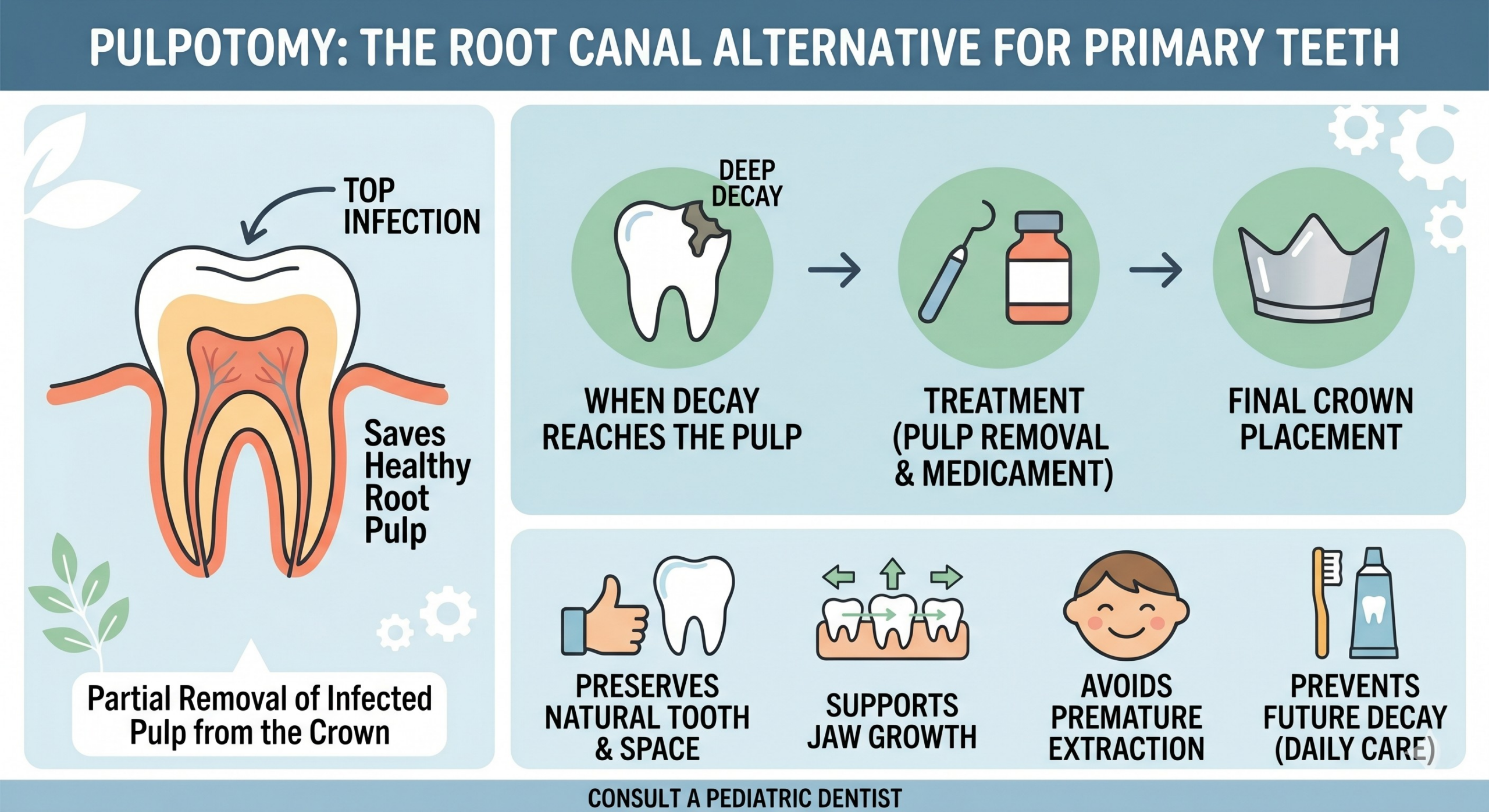
A pulpotomy is a form of vital pulp therapy used in pediatric dentistry to preserve a primary tooth affected by deep dental caries or trauma. The procedure removes infected coronal pulp tissue from the pulp chamber while maintaining healthy pulp tissue within the root canals.
The goal of a pulpotomy is to preserve tooth vitality, prevent premature tooth loss, and support normal dental arch development. By maintaining the remaining healthy pulp, the procedure allows the baby tooth to continue functioning until its natural exfoliation.
A pulpotomy differs from other pulp therapy treatments such as indirect pulp treatment, direct pulp capping, and pulpectomy. Pediatric dentists determine the most appropriate treatment based on the extent of pulp inflammation, the presence of carious pulp exposure, and radiographic findings.
Understanding Dental Pulp
The dental pulp is the soft tissue located inside the tooth beneath the enamel and dentin. It contains nerves, blood vessels, connective tissue, and specialized cells responsible for dentin formation.
When bacteria from untreated dental caries penetrate the dentin and reach the pulp chamber, inflammation known as reversible pulpitis may occur. If left untreated, this condition can progress to irreversible pulpitis, pulp necrosis, dental abscess formation, and eventually tooth loss.
When Does a Child Need a Pulpotomy?
A pediatric dentist may recommend a pulpotomy when infection or inflammation is confined to the coronal pulp and the root pulp remains healthy.
Common conditions that may require treatment include:
- Deep cavity in a baby tooth
- Extensive dental caries
- Carious pulp exposure
- Dental trauma
- Chipped baby tooth
- Cracked baby tooth
- Early pulp inflammation
- Emergency pediatric dental injuries
Signs and Symptoms
Parents should schedule an evaluation if a child experiences:
- Persistent toothache
- Pain while chewing
- Sensitivity to hot or cold foods
- Swollen gums around a tooth
- Tooth discoloration
- Visible deep cavities
- Food frequently becoming trapped in a cavity
A comprehensive clinical examination, mobility assessment, percussion testing, and dental radiographs help determine whether a pulpotomy is appropriate.
Diagnostic Evaluation
Pediatric dentists may use:
- Bitewing radiographs
- Periapical radiographs
- Clinical examination
- Pulp vitality assessment
- Evaluation of root resorption
- Assessment of surrounding alveolar bone
Dental X-rays help detect hidden decay, periapical infection, pathological root resorption, and other factors affecting treatment prognosis.
How a Pulpotomy Differs from a Root Canal
Many parents refer to pulpotomy as a “baby tooth root canal.” While the treatments share similarities, important differences exist.
Pulpotomy vs. Pulpectomy
A pulpotomy removes infected pulp tissue only from the crown portion of the tooth while maintaining healthy root pulp.
A pulpectomy removes all pulp tissue from both the pulp chamber and root canals and is generally recommended when infection extends deeper into the roots.
Pulpotomy vs. Adult Root Canal Therapy
An adult root canal completely removes the pulp and permanently fills the root canals.
In contrast, a pulpotomy:
- Preserves root vitality
- Maintains normal tooth eruption patterns
- Supports physiologic root resorption
- Helps retain the tooth until natural exfoliation
Because primary teeth serve as guides for permanent successor teeth, preserving them whenever possible is a priority in pediatric dental care.
Step-by-Step Pulpotomy Procedure
Examination and Treatment Planning
Before treatment, the pediatric dentist evaluates:
- Tooth vitality
- Extent of pulp inflammation
- Presence of infection
- Child’s overall oral health
- Risk of future decay
For children with dental anxiety, behavior management techniques or nitrous oxide sedation may be considered to improve comfort during treatment.
Treatment Process
The procedure typically involves:
- Administration of local anesthesia.
- Isolation of the tooth.
- Removal of dental caries.
- Access to the pulp chamber.
- Removal of infected coronal pulp tissue.
- Hemostasis to control pulpal bleeding.
- Placement of a medicated material.
- Restoration of the tooth.
Materials commonly used during pulpotomy include:
- Mineral Trioxide Aggregate (MTA)
- Biodentine
- Ferric sulfate
- Calcium hydroxide
- Zinc oxide eugenol
Modern bioactive materials promote pulp healing, encourage dentin formation, and improve long-term treatment success.
Dental Crown Placement
Following pulp therapy, most pediatric dentists recommend a stainless steel crown.
A stainless steel crown:
- Protects the remaining tooth structure
- Prevents bacterial leakage
- Reduces fracture risk
- Improves treatment longevity
In some situations, composite resin restorations or glass ionomer cement restorations may be used, depending on the amount of remaining tooth structure.
Benefits of Pulpotomy for Baby Teeth
A pulpotomy provides several important benefits for growing children.
Preservation of Natural Tooth Structure
Pulpotomy preserves the primary tooth and prevents premature extraction.
Maintenance of Arch Space
Primary teeth maintain proper spacing for permanent successor teeth. Early tooth loss may result in drifting teeth and future orthodontic concerns.
Support for Child Development
Healthy primary teeth contribute to:
- Proper speech development
- Effective chewing function
- Nutritional health
- Balanced jaw growth
- Normal occlusion
Prevention of Orthodontic Problems
Premature tooth loss increases the likelihood of:
- Crowding
- Malocclusion
- Space loss
- Complex orthodontic treatment
Relief from Infection and Pain
Removing inflamed pulp tissue reduces discomfort and prevents progression to dental abscesses and periapical infection.
Pulpotomy vs. Extraction: Which Is Better for a Baby Tooth?
Parents often wonder whether saving a baby tooth is worth the effort.
In most cases, preserving a primary tooth through pulpotomy is preferable to extraction because baby teeth guide permanent tooth eruption and maintain dental arch integrity.
Extraction may become necessary when:
- The tooth is non-restorable
- Severe pulp necrosis is present
- Extensive root resorption exists
- Significant infection affects surrounding structures
When a baby tooth is removed prematurely, a space maintainer may be required to prevent shifting of adjacent teeth.
Saving a primary tooth whenever possible helps reduce the risk of future orthodontic complications and supports healthy oral development.
Preventing Future Tooth Decay
Although pulpotomy is highly successful, prevention remains the best approach.
Several risk factors increase the likelihood of severe childhood tooth decay:
- Frequent sugar consumption
- Poor oral hygiene
- Bottle feeding at bedtime
- Inadequate fluoride exposure
- High caries risk status
Preventive strategies include:
- Twice-daily brushing with fluoride toothpaste
- Daily flossing
- Fluoride varnish applications
- Dental sealants
- Routine dental checkups
- Oral hygiene education
- Professional fluoride treatments
Regular preventive dentistry appointments help identify early signs of decay before pulp therapy becomes necessary.
Success Rate and Long-Term Outlook
Modern pulpotomy procedures have excellent success rates when performed on appropriately selected teeth.
Treatment success depends on:
- Accurate diagnosis
- Proper case selection
- Effective infection control
- Quality restoration placement
- Follow-up dental visits
Research shows that materials such as MTA and Biodentine promote favorable healing outcomes by preserving pulp vitality and encouraging reparative dentin formation.
With proper care, a pulpotomy-treated tooth can remain functional until natural tooth exfoliation and eruption of the permanent successor.
Frequently Asked Questions
Is a pulpotomy the same as a baby tooth root canal?
Not exactly. A pulpotomy is a form of vital pulp therapy that removes infected pulp tissue only from the crown portion of the tooth while preserving healthy pulp inside the roots. A root canal removes all pulp tissue from the entire tooth.
How successful is a pulpotomy in primary teeth?
A pulpotomy has a high success rate when performed on appropriately selected teeth. Modern materials such as Mineral Trioxide Aggregate (MTA) and Biodentine have significantly improved long-term outcomes by promoting pulp healing and maintaining tooth vitality.
Will my child need a stainless steel crown after a pulpotomy?
In most cases, yes. A stainless steel crown protects the treated tooth, prevents bacterial leakage, restores chewing function, and increases the longevity of the restoration until the tooth naturally exfoliates.
What happens if a baby tooth needing a pulpotomy is not treated?
Untreated dental caries can progress from reversible pulpitis to irreversible pulpitis, pulp necrosis, dental abscess formation, and periapical infection. This may eventually lead to premature tooth loss and affect the eruption of permanent teeth.
Is a pulpotomy painful for children?
The procedure is generally comfortable because local anesthesia is used. Pediatric dentists may also use behavior management techniques or nitrous oxide sedation to help children feel relaxed during treatment.
How long does a pulpotomy procedure take?
Most pulpotomy procedures take between 30 and 60 minutes, depending on the extent of decay, the child’s cooperation, and whether a stainless steel crown is placed during the same appointment.
Conclusion
A pulpotomy is one of the most effective treatments for saving a damaged primary tooth affected by deep dental caries or trauma. As a proven form of vital pulp therapy, the procedure removes infected coronal pulp while preserving healthy root tissue, helping maintain tooth vitality and normal oral development.
By preventing premature tooth loss, pulpotomy supports proper speech development, chewing efficiency, dental arch growth, and the successful eruption of permanent teeth. Modern materials such as Mineral Trioxide Aggregate (MTA), Biodentine, ferric sulfate, and other bioactive agents have greatly improved treatment success rates and long-term outcomes.