
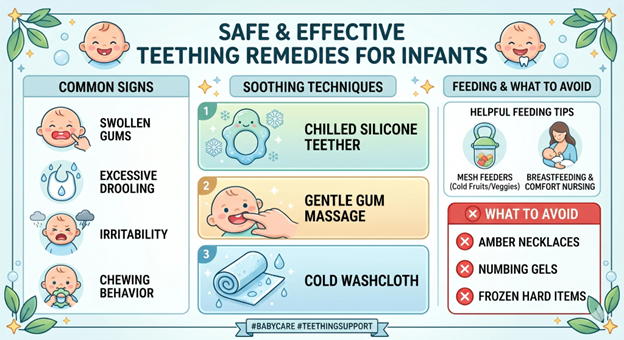
Discover safe and effective teething remedies for infants, including natural gum relief methods, soothing techniques, feeding tips, and pediatrician-approved solutions for teething discomfort.
Understanding Infant Teething
Teething is a natural developmental milestone that begins when primary teeth, also called deciduous teeth, start pushing through the gum tissue. Most babies begin teething between 4 and 7 months of age, although some infants may start earlier or later depending on their oral development and genetics.
During this stage, tooth eruption creates pressure beneath the gums, leading to inflammation, soreness, and increased sensitivity. Because swollen gums can make babies uncomfortable, parents often notice fussiness, excessive drooling, sleep disturbances, and constant chewing behavior.
Although teething can be stressful, understanding safe and effective teething remedies helps parents provide comfort while supporting healthy infant oral development.
Common Signs and Symptoms of Teething
Every baby experiences teething differently. Some infants develop mild symptoms, while others become more irritable during the dental eruption sequence.
Common teething symptoms include:
- Swollen or tender gums
- Excessive saliva production
- Red cheeks
- Drool rash around the mouth
- Infant irritability
- Increased chewing behavior
- Mild loss of appetite
- Ear tugging
- Night wakings
- Gum sensitivity
Teething discomfort may also affect feeding and sleeping routines. Since teething pain disrupts infant sleep, many babies become clingier and seek extra cuddling or comfort nursing during this stage.
However, severe fever, vomiting, or diarrhea are not considered normal teething symptoms. Parents should contact a pediatrician if those symptoms occur.
Why Teething Causes Discomfort in Infants
When baby teeth move upward through the gums, they create pressure and oral inflammation. This pressure irritates delicate gum tissue and causes soreness.
Teething discomfort can also influence:
- Infant emotional regulation
- Sleep quality
- Feeding habits
- Chewing coordination
- Oral motor skills
Because chewing behavior helps relieve gum pressure, babies naturally place fingers, toys, or teething products into their mouths. Cooling gum relief methods are especially effective because cold temperatures reduce gum inflammation and temporarily numb sore areas.
In addition, increased saliva production during teething can lead to drool rash on the cheeks, chin, and neck if moisture stays on the skin too long.
Best Teething Remedies for Infants
Parents often search for safe infant pain relief methods that genuinely soothe sore gums without harmful ingredients. Fortunately, several pediatric dentist-approved remedies can help reduce discomfort naturally.
Chilled Silicone Teethers
A BPA-free teether made from food-grade silicone is one of the safest options for infant gum relief. Silicone teethers are soft, flexible, and gentle on sensitive gums.
Benefits of chilled silicone teethers include:
- Reduced oral inflammation
- Soothing oral pressure
- Safe chewing stimulation
- Support for sensory development
- Relief from swollen gums
For best results, refrigerate the teether instead of freezing it. Extremely hard frozen objects may damage gum tissue or developing enamel.
Parents should also choose baby-safe oral products that meet infant product safety standards and contain non-toxic materials.
Gentle Gum Massage
A clean finger massage can significantly improve infant comfort during teething. Gentle pressure directly on the gums helps relieve soreness caused by tooth eruption.
To safely massage your baby’s gums:
- Wash your hands thoroughly.
- Use gentle circular motions.
- Massage swollen areas for 1-2 minutes.
- Stop if the baby becomes uncomfortable.
Gum massage works especially well before naps, bedtime, or feeding sessions.
Since healthy gums protect developing teeth, gentle massage also supports pediatric oral health by stimulating circulation in the gum tissue.
Cold Washcloth Technique
A cold, damp washcloth is another effective natural infant pain relief method. The cool texture helps soothe inflamed gums while satisfying the baby’s urge to chew.
Many parents prefer this method because it is
- Affordable
- Chemical-free
- Easy to prepare
- Safe for supervised chewing
You can chill the washcloth in the refrigerator and tie it into a knot for easier gripping.
Breastfeeding and Comfort Nursing During Teething
Breastfeeding provides both nutrition and emotional comfort during teething. Since breastfeeding offers emotional reassurance, many infants nurse more frequently when their gums hurt.
Some babies may temporarily refuse feeding because gum sensitivity makes sucking uncomfortable. Others may bite during nursing due to oral irritation.
Helpful feeding strategies include:
- Offering chilled teethers before feeding
- Using soft baby foods
- Feeding in calm environments
- Providing extra cuddling
- Keeping infants hydrated
Breast milk comfort and parent-infant bonding often help reduce fussiness naturally.
Mesh Feeders and Cold Foods
For babies already eating solids, mesh feeders can provide safe cooling gum relief. Chilled fruits and soft foods help numb sore gums while supporting hydration and nutrition.
Good options include:
| Food | Benefit |
| Cold banana | Gentle on gums |
| Chilled cucumber sticks | Cooling relief |
| Yogurt | Soothes inflamed gums |
| Applesauce | Easy to swallow |
| Soft pear slices | Nutrient-rich |
| Avocado puree | Healthy fats and soft texture |
Cold purees and soft baby foods reduce chewing discomfort while supporting healthy feeding habits.
Always supervise infants while using mesh feeders to reduce choking hazards.
Natural Teething Remedies Parents Trust
Many families prefer organic teething remedies and non-medicated approaches before considering medication.
Comforting Techniques That Reduce Fussiness
Emotional comfort lowers fussiness during teething. Babies often feel overwhelmed by gum pain and seek reassurance from caregivers.
Helpful soothing methods include:
- Skin-to-skin contact
- Rocking
- White noise
- Singing softly
- Gentle swaddling
- Calm bedtime routines
Cuddling reduces infant stress and supports emotional regulation during difficult teething stages.
Safe Sleep Support During Teething
Teething discomfort increases night waking because pressure in the gums may feel stronger when babies lie down.
Parents can support better sleep by:
- Keeping the room cool
- Using soft pajamas
- Offering a refrigerated teether before bedtime
- Maintaining a quiet sleep environment
- Following a predictable bedtime routine
Bedtime routines improve infant sleep by creating a sense of security and relaxation.
Hydration and Oral Health Support
Hydration supports oral health and helps babies remain comfortable during teething. Increased saliva production can sometimes contribute to dehydration if infants refuse feeding.
To support healthy tooth eruption:
- Offer breast milk or formula regularly
- Provide water if age-appropriate
- Use soft feeding spoons
- Avoid sugary drinks
- Clean the mouth after feeding
Proper hydration and oral care work together to support infant dental health and gum health.
Teething Remedies Parents Should Avoid
While many teething products are marketed to parents, not all of them are safe.
Amber Teething Necklaces
Amber teething necklaces have become popular online, but pediatric dental recommendations strongly discourage their use.
These necklaces may increase:
- Choking hazards
- Strangulation risks
- Sleep safety concerns
Safe sleep recommendations advise removing all necklaces and jewelry from infants.
Unsafe Teething Gels
Some numbing gels contain ingredients like benzocaine or lidocaine that may create serious health risks for babies.
Instead of medicated gels, parents should focus on:
- Cooling gum relief
- Safe infant chewing products
- Silicone pacifiers
- Refrigerated teethers
- Gum massage
FDA teething warnings also caution parents against certain over-the-counter teething medications for infants.
Frozen Hard Objects
Frozen spoons, ice cubes, and hard frozen toys may bruise gum tissue or damage developing teeth.
Cool temperatures reduce gum inflammation safely, but excessive cold may worsen discomfort.
Choose refrigerated not frozen teething products whenever possible.
Baby Molar Teething Symptoms
Many parents find molar teething more difficult than early tooth eruption. Baby molars are larger, which means they often create greater pressure beneath the gums.
Common baby molar teething symptoms include:
- Increased irritability
- Sleep disturbances
- Strong chewing behavior
- Swollen back gums
- Feeding refusal
- Crying episodes
Safe teething remedies for molars include cold washcloths, silicone teethers, gum massage, and extra emotional comfort.
Because molars appear later in infancy, babies may also experience separation anxiety during teething phases.
Drool Rash Prevention and Skin Care
Excessive drooling causes facial rash when saliva stays on sensitive skin for long periods.
To prevent drool rash:
- Gently pat skin dry
- Use soft bibs
- Change wet clothing frequently
- Apply baby-safe barrier creams
- Avoid harsh soaps
Healthy skin care routines help reduce irritation while supporting infant comfort.
Oral Hygiene During Teething
Good oral hygiene should begin as soon as the first tooth appears.
Cleaning Emerging Teeth
Infant toothbrushes clean emerging teeth while helping babies become comfortable with oral care routines.
Choose toothbrushes with:
- Extra-soft bristles
- Small brush heads
- BPA-free handles
- Non-slip grips
Oral hygiene prevents tooth decay and supports healthy enamel protection.
Parents should gently clean teeth twice daily using a damp cloth or baby toothbrush.
Importance of Pediatric Dental Visits
Pediatric dental visits support oral health and help identify early dental concerns before they become serious.
According to pediatric dentists, children should visit a dental professional by their first birthday.
Early dental care supports:
- Healthy tooth eruption
- Jaw development
- Speech development
- Oral bacteria management
- Long-term dental health
Teething vs Illness Symptoms
Parents sometimes confuse teething symptoms with illness symptoms. While mild discomfort is normal, some signs may indicate infection or other health problems.
Typical Teething Symptoms
- Mild gum swelling
- Drooling
- Chewing behavior
- Slight fussiness
- Temporary sleep disruption
Symptoms That Need Medical Attention
- High fever
- Vomiting
- Severe diarrhea
- Dehydration
- Persistent refusal to eat
- Trouble breathing
If symptoms seem severe or unusual, parents should contact a pediatrician immediately.
Frequently Asked Questions
1. What are the safest teething remedies for infants?
The safest teething remedies include chilled silicone teethers, gum massage, cold washcloths, and comforting techniques like cuddling and rocking.
2. Can teething cause sleep regression?
Yes. Teething discomfort often disrupts sleep and increases night wakings because swollen gums become more painful during rest.
3. Are natural teething remedies effective?
Natural infant teething solutions like cold foods, refrigerated teethers, and gum massage can safely reduce gum irritation and oral inflammation.
4. How can I prevent drool rash during teething?
Keep the skin dry, use soft bibs, and apply baby-safe barrier creams to reduce irritation caused by excessive saliva production.
5. Are teething necklaces safe?
No. Amber teething necklaces may increase choking and strangulation risks and are not recommended by pediatric health experts.
6. What foods help soothe teething babies?
Soft baby foods such as yogurt, applesauce, avocado puree, and chilled fruit can ease gum discomfort and support hydration.
7. When should I start brushing my baby’s teeth?
Parents should begin cleaning emerging teeth as soon as the first tooth appears using a soft infant toothbrush or damp cloth.
8. Can teething affect feeding habits?
Yes. Gum sensitivity and swollen gums may cause temporary feeding refusal or discomfort while eating.
Conclusion
Teething is an important infant developmental stage that can bring discomfort, sleep disturbances, feeding challenges, and gum sensitivity. Thankfully, safe and effective teething remedies help reduce pain while supporting healthy oral development.
Simple methods like chilled silicone teethers, gum massage, soft foods, emotional comfort, and proper oral hygiene can significantly improve infant comfort during tooth eruption. Parents should focus on safe infant chewing products, hydration, and gentle soothing techniques while avoiding harmful products like unsafe teething gels and amber necklaces.
With patience, consistency, and pediatrician-approved care, families can help babies navigate teething more comfortably while promoting healthy tooth eruption and long-term oral health.