
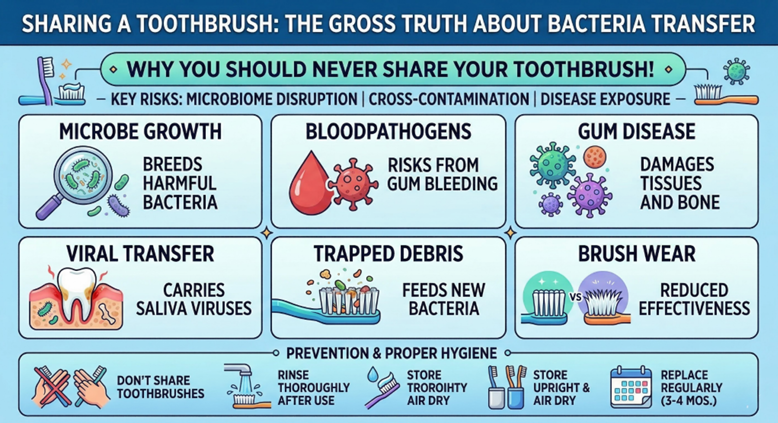
Sharing a Toothbrush: The Hidden Risks You Should Know
Sharing a toothbrush may seem harmless, but it can expose your mouth to harmful bacteria,
viruses, and contaminants. This simple habit can disrupt your oral health and increase the
risk of infections, gum disease, and other serious health concerns.
Why You Should Never Share a Toothbrush
Your mouth contains a delicate balance of beneficial and harmful bacteria, known as the
oral microbiome. Sharing a toothbrush introduces foreign microbes, leading to
cross-contamination and increasing the risk of oral and systemic health issues.
Key Risks of Toothbrush Sharing
- Transfer of harmful bacteria, viruses, and fungi
- Increased risk of tooth decay and gum disease
- Spread of infections such as herpes simplex virus (HSV-1)
- Potential transmission of bloodborne pathogens like hepatitis B and C
- Disruption of the natural oral microbiome (dysbiosis)
Bacterial Growth on Toothbrushes
Toothbrushes provide an ideal environment for microbial growth due to retained moisture,
food particles, and saliva. Over time, bacteria form a protective layer called biofilm,
making them harder to remove and easier to transfer between users.
- Streptococcus mutans – associated with tooth decay
- Lactobacillus species – linked to cavities
- Porphyromonas gingivalis – contributes to gum disease
Bloodborne and Gum Health Risks
Minor gum bleeding during brushing can leave traces of blood on toothbrush bristles.
Sharing a toothbrush in such cases may allow harmful pathogens to enter the bloodstream,
increasing the risk of infections and bacteremia.
Long-Term Oral Health Impact
- Gum inflammation and periodontal disease
- Bad breath and gum recession
- Tooth mobility and potential tooth loss
- Increased bacterial load over time
Additional Contamination Risks
Even clean-looking toothbrushes can contain trapped food particles and biofilm buildup.
Sharing them also means exposure to another person’s diet residue and oral bacteria,
further increasing contamination risk.
Reduced Cleaning Effectiveness
Toothbrushes are designed for individual use. Sharing causes faster wear and tear,
reducing cleaning efficiency and potentially irritating gum tissue.
Who Is Most at Risk
- Individuals with weakened immune systems
- People with existing oral health conditions
- Children and older adults
Best Practices for Toothbrush Hygiene
- Never share your toothbrush
- Rinse thoroughly after each use
- Store upright and allow it to air dry
- Keep it separate from others
- Avoid closed, moist containers
When to Replace Your Toothbrush
- Every 3–4 months
- After recovering from illness
- When bristles become frayed
What If You Accidentally Share a Toothbrush?
- Rinse your mouth with water or antibacterial mouthwash
- Monitor for irritation or unusual symptoms
- Avoid repeating the habit
- Seek medical advice if symptoms develop
Conclusion
A toothbrush is a personal hygiene tool and should never be shared. Protect your oral
health by maintaining proper hygiene practices and using only your own toothbrush.
This small habit plays a crucial role in preventing infections and maintaining overall well-being.
Frequently Asked Questions
Is it ever safe to share a toothbrush?
No, sharing a toothbrush is never safe due to the transfer of bacteria, viruses, and biofilm.
What should I do if I accidentally used someone else’s toothbrush?
Rinse your mouth thoroughly and monitor for any symptoms. Seek medical advice if needed.
Can toothbrush sharing spread serious diseases?
Yes, it can spread infections such as HSV-1, hepatitis B, and oral fungal infections.
Does rinsing make a toothbrush safe to share?
No, rinsing does not remove all microorganisms or biofilm.
How often should I replace my toothbrush?
Every 3–4 months or sooner if worn or after illness.