
Stainless Steel vs Zirconia Crowns for Primary Teeth
Paediatric dental crowns help restore damaged baby teeth and protect them from further decay. Two of the most common options are stainless steel crowns and zirconia crowns. Each material has its own benefits, limitations, cost considerations, and best-use cases for children’s dental care.
What Are Paediatric Dental Crowns?
Paediatric dental crowns are protective caps placed over damaged, weakened, or heavily decayed baby teeth. Dentists often recommend them when a cavity is too large for a filling or when a tooth has received pulpotomy treatment.
Primary teeth play an important role in speech development, chewing, jaw growth, and maintaining space for permanent teeth. When severe decay causes significant tooth structure loss, full-coverage restorations can help preserve normal oral function.
One of the most common reasons children need crowns is early childhood caries. This aggressive form of tooth decay can spread quickly across primary molars and incisors. If left untreated, it may lead to pain, infection, chewing difficulties, and premature tooth loss.
Paediatric Dental Crowns Can Help To:
- Protect weakened teeth
- Prevent further tooth decay
- Restore chewing function
- Maintain dental arch integrity
- Improve child comfort and confidence
According to the American Academy of Paediatric Dentistry, early restoration of primary teeth can help reduce future dental complications and support long-term oral health.
Stainless Steel Crowns for Primary Teeth
Stainless steel crowns have been used in paediatric restorative dentistry for decades. These silver-coloured crowns are widely considered a reliable option for restoring severely decayed primary molars.
They are especially common after pulpotomy or pulpectomy procedures because they provide excellent crown retention, strength, and durability.
Benefits of Stainless Steel Crowns
Strong Durability
Stainless steel crowns can withstand heavy bite forces and occlusal wear. They are often suitable for children with bruxism, enamel hypomineralisation, or a high risk of cavities.
Cost-Effective Treatment
Compared with zirconia crowns, stainless steel crowns are usually more affordable and may be covered by dental insurance, depending on the policy.
Faster Placement
Paediatric dentists can usually place stainless steel crowns quickly, which can be helpful for younger children or patients who feel anxious during dental treatment.
Reliable Clinical Success
Stainless steel crowns have a long history of successful use in paediatric oral rehabilitation.
Limitations of Stainless Steel Crowns
- Metallic appearance
- Less natural-looking smile
- May be visible when speaking or laughing
Despite their cosmetic limitations, stainless steel crowns remain one of the most dependable solutions for restoring primary molars.
Zirconia Crowns for Primary Teeth
Zirconia crowns are tooth-coloured ceramic crowns designed to look more like natural teeth. They have become increasingly popular in aesthetic dentistry for children.
Made from zirconium dioxide, zirconia crowns are known for their smooth surface, stain resistance, strength, and biocompatibility.
Benefits of Zirconia Crowns
Natural Appearance
Zirconia crowns blend well with surrounding teeth and are often preferred for children who need a more natural-looking smile.
Better Gum Health
The smooth ceramic surface of zirconia crowns can reduce plaque accumulation and support healthier gum tissue around the crown.
Excellent Biocompatibility
Zirconia is a biocompatible material, which means it is generally well tolerated by oral tissues and may reduce irritation around crown margins.
Durable Material
Although zirconia is ceramic, it is remarkably strong and resistant to fracture under normal chewing pressure.
Limitations of Zirconia Crowns
- Higher treatment cost
- More tooth preparation may be required
- Placement can be more technique-sensitive
Many parents choose zirconia crowns for primary incisors because of their highly aesthetic appearance.
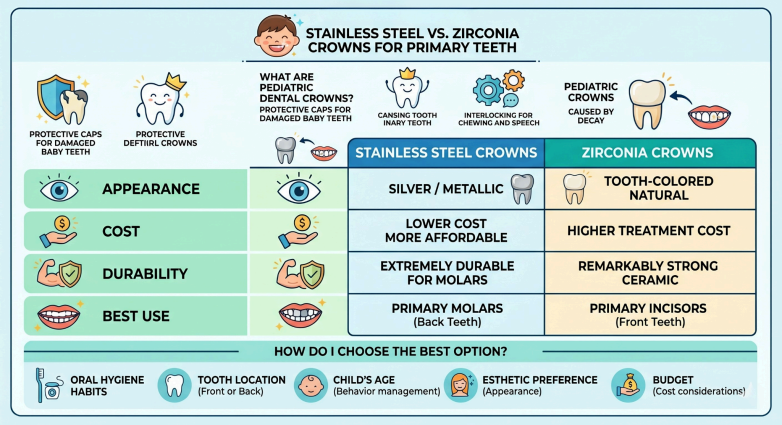
Stainless Steel vs Zirconia Crowns: Key Differences
| Feature | Stainless Steel Crowns | Zirconia Crowns |
|---|---|---|
| Appearance | Silver metallic | Tooth-coloured |
| Durability | Excellent | Excellent |
| Cost | Lower | Higher |
| Aesthetic Appeal | Moderate | High |
| Tooth Reduction | Minimal | More extensive |
| Best Use | Primary molars | Front and visible teeth |
| Placement | Faster | More technique-sensitive |
Both crown types can protect weakened primary teeth effectively. The best option depends on several factors, including tooth location, the child’s age, oral hygiene habits, caries risk, aesthetic preferences, and budget.
For example, stainless steel crowns are often ideal for restoring chewing function in back teeth, while zirconia crowns are commonly chosen for visible areas where appearance is more important.
Crown Procedure for Children
The crown placement process is usually completed in one dental appointment.
Step 1: Examination
The paediatric dentist examines the tooth and may take X-rays to assess the extent of decay and check the surrounding structures.
Step 2: Local Anaesthesia
The area is numbed to help reduce discomfort during treatment.
Step 3: Tooth Preparation
Decay is removed, and the tooth is shaped so the crown can fit securely and comfortably.
Step 4: Crown Cementation
The crown is secured using dental cement, such as glass ionomer cement or resin-modified glass ionomer cement.
Step 5: Bite Adjustment
The dentist checks the child’s bite and makes sure the crown feels comfortable when chewing.
For anxious children, nitrous oxide sedation or other behaviour management techniques may help create a calmer dental experience.
Cost and Maintenance Considerations
Stainless steel crowns are generally more affordable than zirconia crowns. However, both options can last until the baby tooth naturally falls out if they are maintained properly.
To Help Prolong the Lifespan of a Dental Crown, Children Should:
- Brush twice daily
- Floss regularly
- Limit sugary snacks and drinks
- Avoid chewing hard objects
- Attend regular dental check-ups
Preventive dentistry remains important even after crowns are placed. Fluoride varnish, dental sealants, and routine cleanings can help reduce the risk of future cavities.
Frequently Asked Questions
Are stainless steel crowns safe for children?
Yes. Stainless steel crowns have been used safely in paediatric dentistry for many years.
Which crown looks more natural?
Zirconia crowns provide the most natural appearance because they are tooth-coloured and blend with surrounding teeth.
Do paediatric crowns affect permanent teeth?
No. Crowns protect primary teeth and help maintain proper spacing for permanent teeth.
Can children eat normally after crown placement?
Yes. Most children can return to normal eating habits shortly after treatment, although the dentist may give specific aftercare advice.
Are zirconia crowns worth the extra cost?
Many parents feel the cosmetic benefits justify the higher cost, especially for front teeth or visible areas of the mouth.
How long do paediatric dental crowns last?
Most paediatric crowns last until the baby tooth naturally falls out, provided the child maintains good oral hygiene and attends regular dental visits.
Conclusion
Paediatric dental crowns are an effective solution for restoring damaged primary teeth and preventing further complications. Stainless steel crowns remain a durable and cost-effective choice for primary molars, especially after pulpotomy treatment. Zirconia crowns provide a highly aesthetic option for families seeking natural-looking restorations.
Both materials offer strong clinical performance when placed correctly by an experienced paediatric dentist. The ideal choice depends on the child’s dental needs, oral hygiene habits, tooth location, and cosmetic preferences.
Early treatment and preventive dental care can help children maintain healthier smiles and avoid more complex dental problems later in life.