
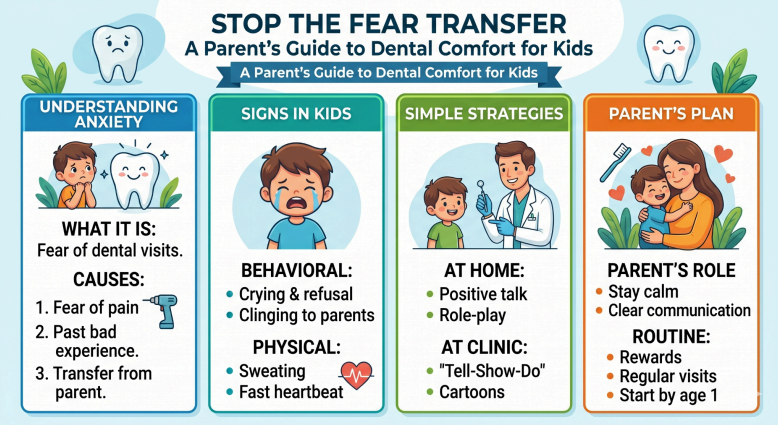
Stop the Fear Transfer: Managing Dental Anxiety in Kids
Dental anxiety in kids is a common challenge that can affect oral health, behavior, and long-term attitudes toward dental care. Understanding the causes and using proven strategies can help children feel safer and more confident during dental visits.
Understanding Dental Anxiety in Kids
What Is Dental Anxiety in Kids?
Dental anxiety in kids refers to fear, stress, or nervousness related to visiting the dentist. It can range from mild uneasiness to severe cases like dental phobia, where children completely avoid dental care.
In simple terms, dental anxiety develops when a child begins to associate dental visits with discomfort, uncertainty, or fear. This fear can begin even before entering a clinic, especially if a child has heard negative stories or experienced something unpleasant.
Why It Matters More Than You Think
Dental anxiety in kids is not just about fear. It directly impacts behavior and long-term oral health. When fear leads to avoidance of dental visits, it often results in untreated oral problems.
Avoidance can contribute to:
- Tooth decay
- Dental infections
- More complex treatments later
Addressing dental anxiety early is essential to prevent long-term complications.
Common Causes of Dental Anxiety in Kids
Fear of Pain
One of the biggest triggers of dental anxiety in kids is the fear of pain. Even without prior discomfort, the idea of drills or injections can activate a child’s fight-or-flight response.
Negative Past Experiences
A single negative dental visit can create lasting emotional memories. Even minor discomfort can lead to strong fear associations in children.
Parental Influence and Fear Transfer
Children learn by observing adults. If parents express fear or anxiety, children often mirror that behavior. This is known as fear transfer, where parental anxiety influences child dental anxiety levels.
Signs and Symptoms of Dental Anxiety
Behavioral Signs
Recognizing early signs of anxiety can help prevent escalation:
- Crying or tantrums before appointments
- Refusing to enter the dental clinic
- Clinging tightly to parents
- Trying to delay visits
Emotional and Physical Reactions
Children may also show physical symptoms such as:
- Sweating or rapid heartbeat
- Complaints of stomach pain
- Trouble sleeping the night before
These symptoms show that dental anxiety is more than simple nervousness. It is a real emotional response.
The Science Behind Fear in Children
Brain Response to Fear
The amygdala processes fear and triggers survival responses. When a child perceives danger, the body activates the fight-or-flight response, even if the situation is not actually harmful.
How Memories Shape Anxiety
Children’s brains store emotional memories quickly. If a dental visit feels scary, that memory may become a reference point for future visits.
Over time, repeated fear responses can strengthen anxiety patterns.
Long-Term Effects of Untreated Dental Anxiety
Avoidance Behavior
Dental anxiety can lead to avoidance of dental visits. This creates a cycle where fear leads to avoidance, and avoidance worsens dental problems.
Oral Health Consequences
Skipping preventive dental care increases the risk of:
- Cavities
- Gum disease
- Infections
Preventive care reduces the need for invasive treatments later.
Proven Strategies to Manage Dental Anxiety in Kids
Preparation Techniques
Helping children prepare mentally can reduce fear.
- Talk positively about dental visits
- Use child-friendly books and videos
- Role-play a dental checkup at home
- Avoid scary words like “pain”
- Schedule morning appointments when children are fresh
In-Clinic Approaches
Pediatric dentists often use proven behavior strategies:
- Choose a child-focused dental clinic
- Use the tell-show-do method
- Allow comfort toys
- Practice deep breathing
- Use distractions like cartoons or music
Post-Visit Reinforcement
After the appointment, reinforce positivity:
- Praise your child’s bravery
- Offer small rewards
- Talk positively about the visit
- Maintain regular appointments
- Build a consistent routine
Role of Parents in Managing Dental Anxiety
Modeling Calm Behavior
Children mirror adult emotions. If you stay calm, your child is more likely to feel safe.
Communication Techniques
Use honest but simple language. Instead of saying “It won’t hurt,” try saying “The dentist helps keep your teeth strong.”
Role of Pediatric Dentists
Behavior Management Techniques
Pediatric dentists are trained to manage anxiety using techniques such as:
- Positive reinforcement
- Voice modulation
- Gradual desensitization
Child-Friendly Environments
Bright colors, toys, and friendly staff help create a welcoming space that reduces fear and encourages cooperation.
Tools and Technologies That Help
Sedation Dentistry
For severe dental anxiety in kids, sedation options may help:
- Nitrous oxide (laughing gas)
- Oral sedation
- Conscious sedation
These options help children relax safely under professional supervision.
Distraction Techniques
Modern clinics may use:
- Cartoons and screens
- Music
- Virtual reality
These tools help shift attention away from the procedure.
Creating a Positive Dental Routine
Early Dental Visits
Early dental visits can reduce fear of dentists. Experts recommend the first visit by age one or when the first tooth appears.
Consistency Matters
When visits become routine, children stop viewing them as threatening. Consistency builds comfort and healthy habits.
Frequently Asked Questions
1. Is dental anxiety normal in kids?
Yes, dental anxiety in kids is very common, especially during early visits.
2. How can I stop my child from crying at the dentist?
Use preparation techniques, stay calm, and choose a pediatric dentist experienced in managing anxious children.
3. What is the best age for a first dental visit?
The first visit should happen by age one or when the first tooth appears.
4. Can therapy help with dental anxiety?
Yes, approaches like cognitive behavioral therapy can help children manage fear effectively.
5. Are sedation options safe for kids?
Yes, when performed by trained professionals, sedation dentistry is considered safe.
6. What happens if dental anxiety is ignored?
Ignoring dental anxiety can lead to avoidance of dental visits and serious oral health problems over time.
Conclusion
Dental anxiety in kids is real, but it is highly manageable. By understanding the causes, recognizing early signs, and using proven strategies, parents can help transform fear into confidence.
From preparation at home to supportive care in the clinic, every step matters. When parents, dentists, and children work together, dental visits become less intimidating and more routine.
Addressing dental anxiety early helps prevent oral health problems, reduces stress, and builds a lifetime of healthy habits.