
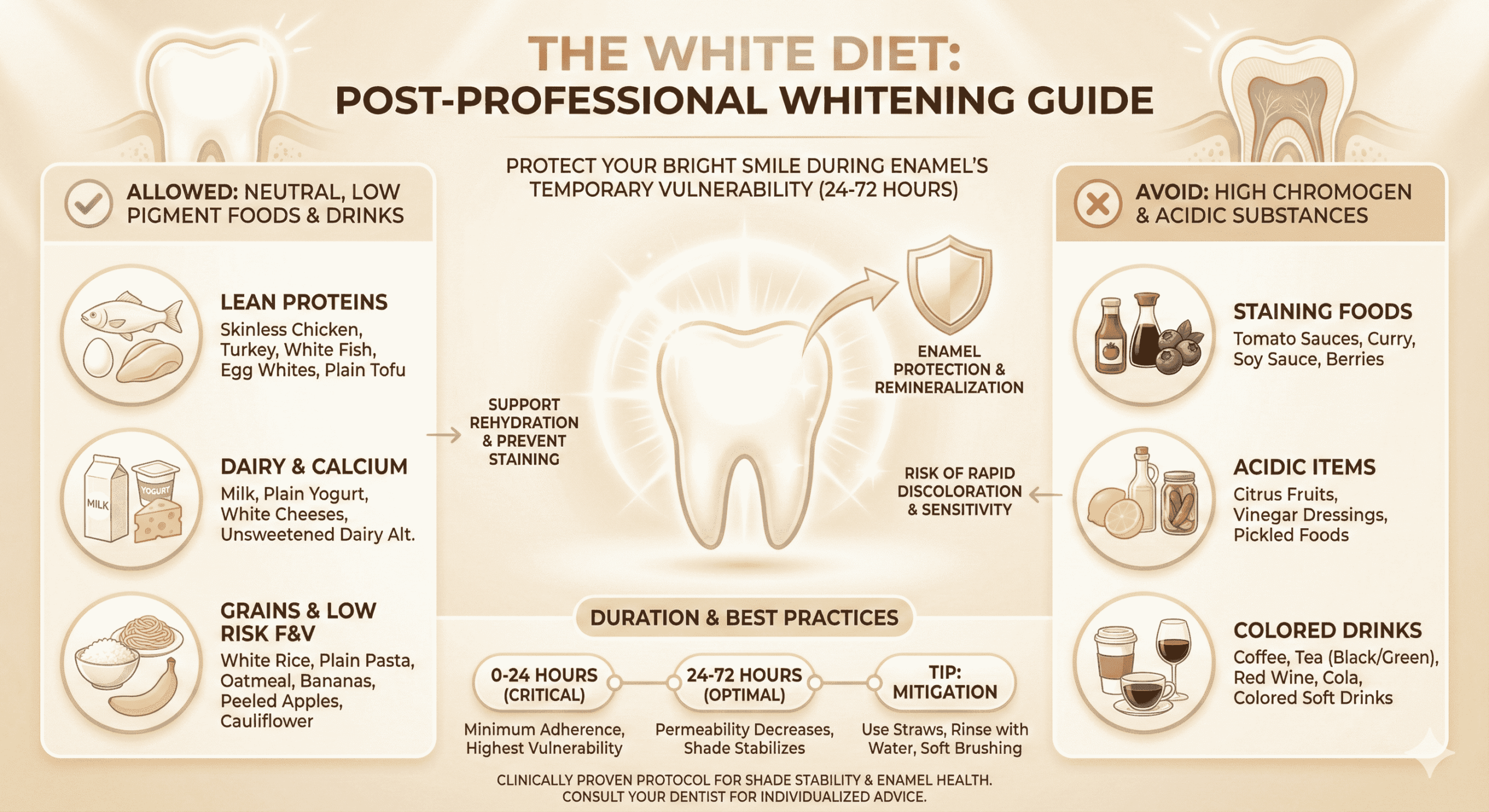
Professional teeth whitening alters the permeability of enamel to remove intrinsic or extrinsic discoloration. In the post-whitening period, enamel shows increased porosity, reduced resistance to acidic exposure and dehydration-related sensitivity. The diet during this time period has a direct impact on shade stability, the longevity of whitening, and enamel remineralization.
The white diet is an individualized post-whitening protocol that has been clinically proven to minimize exposure to staining compounds, acids and erosive substances. At the same time, the enamel rehydrates to its baseline permeability. This is not a lifestyle modification, but a short-term strategy to maintain whitening results and minimize post-treatment complications.
The White Diet and its Clinical Purpose
The white diet is composed of foods and drinks with a neutral pH and low chromogenic potential. It also minimizes the risk of enamel interaction. It excludes substances that are known to contain tannins, polyphenols or acids, which facilitate the pigment bonding to enamel.
The primary objectives of the project are:
- Prevent rapid post-whitening discoloration
- Reduce uneven shade regression
- Support the rehydration of enamel and its remineralisation
- Reduce sensitivity caused by dietary acid
Dentists recommend the white diet because the enamel staining that occurs during the post-whitening period penetrates deeper into the enamel than surface staining and is more resistant to cleaning.
Why Enamel is Vulnerable after Professional Whitening
The oxidation of stain molecules in enamel is achieved by using whiteners based on carbamide peroxide, hydrogen peroxide, or a combination thereof. This oxidation increases the permeability of enamel and reduces the surface moisture. The teeth can absorb pigments more easily as they rehydrate in the next 24-72 hours.
This vulnerability is temporary but essential. This exposure can result in an accelerated staining process that could partially reverse the whitening outcome.
The role of chromogens, acids, and tannins
Chromogens can be found in foods and beverages that are darkly colored. Tannins increase chromogen adhesion to enamel surfaces by increasing the binding affinity. Acids don’t stain enamel directly, but they lower its resistance by softening and thinning the enamel surface. This increases susceptibility to pigmentation.
The white diet addresses all three factors at once, both directly and indirectly contributing to discoloration after whitening.
Core Criteria for White Diet Compliance
The following foods and drinks are permitted on the white diet:
- Low pigment concentration
- Neutral or nearly neutral pH
- Low tannin content
- Minimum staining residue
Items excluded usually combine acidity with prolonged enamel contact or high pigment density.
Foods allowed during the White Diet
Protein Sources
Proteins that are light-colored and lean provide nutrition without the risk of chromogenic reaction. Included are:
- Skinless chicken breast
- Turkey
- White fish
- Egg whites
- Tofu plain
These proteins have a low acidity and don’t release any staining compounds when masticated.
Dairy and Calcium-Rich Foods
Calcium and phosphate in dairy products help to remineralize enamel. Choose from:
- Milk
- Plain yogurt
- White cheeses
- Unsweetened dairy alternative
Avoid flavored or colored dairy products due to the added pigments.
Grains
Low-pigment carbohydrate foods are compatible with a white diet.
- White rice
- Plain pasta
- Oatmeal
- White bread
When consumed without any pigmented sauces, these foods do not discolor enamel.
Low Risk Fruits and Vegetables
Acceptable products include items with low acidity and pigmentation.
- Bananas
- Peeled apples
- Cauliflower
- Potatoes
- Mushrooms
Delay the use of high-fiber or acidic products until enamel has stabilized.
Beverages allowed during the White Diet
The water is preferred due to its neutral pH and ability to dilute acid residues. Other acceptable options include:
- Milk
- Clear broths
- Unsweetened Coconut Water
- Herbal infusions that are not pigmented
Carbonation is not harmful, but additives that are acidic or pigmented may be.
Avoiding Foods After Whitening
High-Chromogen Foods
Items containing concentrated colors discolor enamel quickly during the post-whitening stage:
- Tomato-based sauces
- Curry
- Soy sauce
- Berries
These foods contain both chromogens (chromogens) and acids (acids, which increases the risk of staining.
Acidic Foods
Even without visible pigmentation, acids can compromise enamel resistance.
- Citrus fruits
- Dressings based on vinegar
- Pickled foods
These items are more susceptible to staining.
Drinks that Significantly Reduce Whitening Duration
The following beverages are strongly linked to post-whitening discoloration
- Coffee
- Teas in colors: black, green and herbal.
- Red Wine
- Cola and colored soft drink
The combination of acidity and pigment density in these liquids allows for prolonged exposure to enamel due to their sipping behavior.
Alcohol also reduces salivary production, reducing natural enamel protection.
Duration of the White Diet
The first 24 hours after bleaching are the most dangerous. Over 48 to 72 hours, the permeability of enamel gradually returns to normal.
Clinical guidance usually recommends:
- Minimum Adherence: 24 Hours
- Maximum adherence: 48-72 hours
The shade will remain stable for longer, but the benefits diminish after three days.
Why “Just one sip” causes disproportional damage
The pigment is rapidly absorbed during the rehydration of enamel after whitening. A brief exposure to chromogenic fluids can cause deep enamel staining because of increased permeability.
This effect is cumulative. Even when you maintain good oral hygiene, repeated minor exposures can cause shade regression.
Overbrushing after Whitening
Excessive brushing pressure is often the result of post-whitening sensitivity. Using excessive pressure during this phase can accelerate enamel wear and increase long-term staining susceptibility.
The following are examples of best practice:
- Soft-bristle brush
- Non-abrasive toothpaste
- Brushing frequency
The whitening process can be harmed by mechanical abrasion.
Risk Mitigation and Controlled Rule Deviations
Mitigation strategies are available if consumption of restricted products is inevitable.
- Contact time minimization
- Straws are used to drink liquids
- Rinse immediately with water
- Delay brushing to prevent acid abrasion
These measures can reduce but not eliminate the staining risks.
Long-term results from the White Diet
The longevity of whitening depends more on the management of cumulative exposure than strict avoidance. Preventive strategies include
- Professional cleaning is recommended regularly
- Consumption of foods that stain should be controlled
- Hydration is essential
- Remineralizing toothpaste
To avoid enamel fatigue, whitening touch-ups must be indicated clinically rather than being routine.
Conclusion
The white diet is an intervention that protects enamel during a period of temporary vulnerability. Its effectiveness is in reducing chromogen contact, controlling acid and supporting enamel regeneration. The critical window after treatment is when you should adhere to the instructions. This will improve your whitening, shade consistency and overall treatment results.
FAQs
When can coffee be introduced back into the diet after professional bleaching?
It is best to wait at least 48 hours. Waiting 72 hours provides greater shade stability.
Can eggs be consumed during the white diet?
It is recommended to limit the consumption of egg yolks. During the first recovery period, it is best to limit your consumption of egg yolks.
Does the white diet need to be followed if there is no sensitivity?
Yes. The staining risk is independent of the perceived sensitivity.
Do acidic foods stain teeth directly?
No. These products increase the permeability of enamel, increasing the staining risks.
Is it possible to reverse the results of whitening with a single error?
A single exposure is unlikely to reverse the effects, but repeated exposures can reduce lifespan.