
Do you feel embarassed in front of your collegues due to missing tooth? Or friends make fun of you beacuse you accidently fell and lost your one or two teeth?
Whether you have one missing tooth or more, it’s not a problem anymore. You can get healthy replacement of natural teeth as dentist implants. Dental implants are artificial teeth that are surgically inserted into your jawbone.
In this article, you will get a complete guide of dental implant surgery, its types and procedures as well as the benefits and risks involved during the traetment.
What are dental implants?
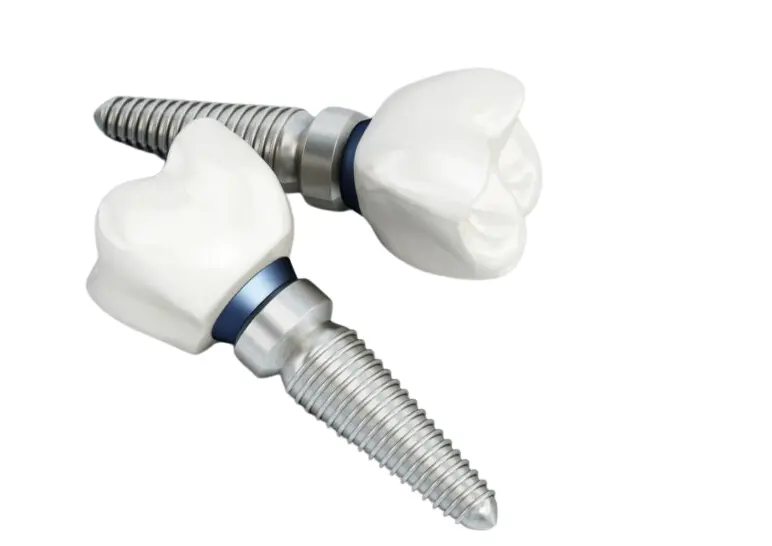
Dental implants are ceramic or titanium posts surgically inserted into the jawbone to hold artificial teeth. This treatment revives the chewing ability of patients with missing teeth.
Dentist implants have become popular and played a significant role in revolutionizing the dentist industry. They are a great option for those who prefer permanent tooth replacement and last a lifetime if properly cared for.
Types of Dental Implants
There are two common types of dental implants: endosteal and subperiosteal. Let’s quickly examine the difference between both of these procedures.
- Endosteal
- Subperiosteal
Endosteal
Endosteal implants are entirely injected into the jawbone. They are done with patients with good jaw density.
Subperiosteal
Subperiosteal implants are metallic structures embedded in the jawbone below the gums. They are used when the holding capacity of the patient’s jawbone is completely deteriorated.
Dental implant parts
A dental implant has three main parts:
- Post: The lowermost part of the implant, often called the body or fixture.
- Abutment: The more minor part attached to the post
- Restoration: The artificial teeth-like structure above the abutment, such as crowns, bridges, or dentures.
What conditions are treated with dental implants
Dental implants are used in cases of severe tooth loss. This may happen due to several reasons, such as cavities, a shrinking jawbone, bad oral hygiene, or the tooth decaying process with age.
Safety/Dental Implant Benefits
Dental implant are highly beneficial when successfully done. It helps one to
- Restore chewing ability
- Keep the jawbone from shrinking due to tooth loss.
- Safe the surroundings of teeth
- Keep the roots intact.
- Ability to talk properly
- Boost confidence
Procedures for getting a dental implant
- Single tooth Dental Implant (for one missing teeth)
- Multiple tooth Dental Implant (for multiple missing teeth)
- Full mouth Dental Implant (if all teeth are missing)
- Sinus Augmentation (a surgery that lifts the sinus to place the dentist implants)
- Ridge Modification (minor modification in the jaw to increase the success rate of implants)
Dental implant surgery
During dental implant surgery, your surgeon will:
- Administer anesthesia to you during the dental implant procedure. This medicine will cause your gums to numb. Your healthcare practitioner will also administer those drugs to you if you opt for sedation.
- Your surgeon will make a cut or incision in your gums. This allows your surgeon to insert the implant by exposing the bone below.
- Surgeons will use specialized tools to make a tiny hole in your jawbone. The aperture will be widened until it is precisely the proper size for your new dental implant.
- Your surgeon will gently insert the dental implant into your jaw.
- Seal the cuts. Lastly, your surgeon will sew the incision shut and realign your gums.
Dental Implant Recovery
Dental implants take longer to recover. The average recovery time after surgery is 8 to 10 months. Remember that every individual has unique oral hygiene, so the time varies from person to person.
Although the patient recovers faster by following the doctor’s recommendation and avoiding eating hard stuff, regular follow-ups are essential after surgery.
Dental implants vs. dentures
Dental implants and dentures have the same purpose. Dentures are structures that have a metallic or plastic base with artificial teeth. You have to wear it while eating or speaking. Implants are permanent placement of teeth inside the jawbone. It’s a surgery and takes more time to recover.
You must consult your doctor about your best option before any treatment.
How Successful Are Dental Implants?
The success rate of dental implant varies with the age, habits, and overall health condition of the patient. It is 90-95% in patients under 40 and 85% in patients over 40.
Potential complications of implant surgery
Risks of dental implants are always there, as with any other surgery. They may include the following points:
- Infection at the spot of surgery
- Injury in the surroundings of an actual site
- Sensations of numbness
- Nor able to use teeth properly while chewing
- Feeling like teeth are loosening
- Intense pain due to sinus problems during surgery
Does Insurance Cover the Cost of Dental Implants?
Dental implant surgery costs are usually high; not everyone can afford it. Medical or dentist insurance can cover your complete or partial expenses for dental implant. Make sure your insurance policy covers the medical costs.
Dental Implant FAQs
Is there a downside to dental implants?
Dental implants have some risks, such as infection, injury to the jawbone, or sinus problems.
What are the three stages of dental implants?
The following are the three main stages of dental implants:
- Preparation, information gathering, and assessment for the surgery
- Surgery, when a minor is made, and a post is inserted
- Restoration, a crown is placed above the abutment
What is the best age for dental implants?
Age directly doesn’t matter in the case of implants, as they are available for candidates of all ages.
How long does it take to recover after dental implants?
The average recovery time for dental implants is 8-10 months. However, remember that recovery speed varies from person to person.
How long do dental implants last?
If proper care is done, implants can last throughout your lifespan. Remember to visit your doctor for follow-up checkups.
When should I call my dentist?
Implants take 10-12 days to integrate with your body. You should immediately visit your doctor if you accidentally bite or break your teeth.
At what age should you not consider dental implants?
Age is not a limiting factor for implant surgery. Anyone with good oral health and enough jawbone can have the treatment.
Reporting Dental Implant System Problems to the FDA
File a voluntary report to the FDA by Medwatch, an adverse event reporting program, or the FDA safety information in case of dental implant failure.
How Painful Are Dental Implants?
People usually don’t feel discomfort during dental implant procedures due to anesthesia. Once the treatment is over, it’s natural to feel pain.