
What Causes Morning Breath, and How Can You Prevent It?
Morning breath is an embarrassing but normal part of human life. You’ve experienced it: lying in bed, your mouth fills with a foul odour. You close your mouth and make a quick dash to the toilet before anyone else notices.
What’s the deal? Why does morning taste this way? You already have the answer in your mouth: bacteria.
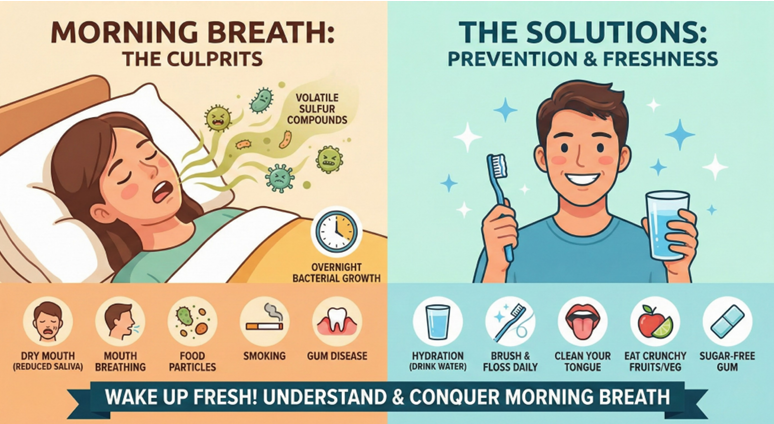
Oral bacteria are able to complete their life cycle while you sleep. They live, feed, reproduce, and die. They release volatile sulphur compounds (VSCs) as they break down food debris, saliva, and shed cells. Morning breath is primarily caused by microbial fermentation.
Normal saliva is used to flush out bacteria and particles that cause bad breath. Reduced saliva flow during the night can cause these gases to accumulate, explaining why the smell is worse in the morning.
Why Do We Get Morning Breath?
The main reason why morning breath is so bad in the mornings is because your saliva production drops while you sleep. It leads to a dry mouth, which is the perfect environment for bacteria growth. Saliva usually removes odour-causing substances, so you end up with a bacterial build-up.
Morning breath is significantly worsened by dry mouth (also known as xerostomia). Mouth breathing increases moisture loss overnight, which exacerbates dry mouth. Dehydration, certain medications, and sleep disorders may also reduce saliva production. Dentists may prescribe artificial saliva to restore moisture balance and alleviate dry mouth at night in more severe cases.
The problem will get worse if you sleep with your lips open. The risk of bad breath in the morning increases when you breathe through your mouth.
Other Causes of Morning Breath
It is important to note that morning breath is not only caused by a dry mouth. Bad dental hygiene invites bacteria that cause bad breath to flourish. This includes food particles that are left overnight, plaque on the teeth and gums, and dentures that have not been thoroughly cleaned.
The number one modifiable factor in periodontal diseases, such as gingivitis or periodontitis, is smoking. Periodontal disease causes deep pockets of gum tissue that harbour bacteria responsible for bad odours. As the inflammation increases, so does the bacterial load, which directly intensifies morning breath.
Some causes can be difficult to treat, even if you have a good oral hygiene routine. Garlic and onions, which are aromatic foods, do not just linger in your mouth. The sulphur compounds in these foods travel from the stomach into the bloodstream, then on to the lungs, where they are exhaled. The metabolic transport of odours explains why brushing may not be enough to eliminate morning breath caused by food.
Postnasal dripping also plays a part. This allows bacteria to enter the mouth, particularly during sleep. While the majority of bad-breath cases are due to oral factors, 5–10% can be attributed to non-oral conditions such as ENT disorders and gastrointestinal problems.
How to Stop Morning Breath
Clinically, morning breath (also known as morning malodour) is classified as mild transient malodour or non-pathological halitosis. It is not harmful, but it can be unpleasant.
Brushing, flossing, and mouthwashing will typically freshen up your breath. The treatment of persistent cases can include medicated mouthwashes or probiotic therapy.
Denture wearers must clean their appliances thoroughly. If they do not, dentures can harbour bacteria that cause bad breath.
How to Prevent Morning Breath
How to prevent morning breath is the real secret. These tips will help keep your mouth healthy and support moisture balance throughout the day.
Cleaning Your Tongue
The back of your tongue, in particular, is home to a large number of bacteria that cause bad odours. A tongue scraper is more effective than brushing your tongue.
Stay Hydrated
Water is good for you. Drink plenty of water. Only water counts, not coffee, tea, or alcohol.
Breakfast and Eating Throughout the Day
Eating stimulates saliva flow. Regular food consumption and chewing stimulate saliva production. This helps to neutralise mouth bacteria and reduce microbial ferment. Apples and carrots, which are crunchy fruits and vegetables, increase saliva by mastication.
Use Saliva-Stimulating Habits
Sugar-free sweets or sugar-free chewing gum stimulate saliva production. This helps to rebalance the oral microbiome and flush out bacteria.
Probiotics, such as Lactobacilli, may help reduce the severity of halitosis by crowding out bacteria that cause bad breath. The balance of your oral microbiome is key to controlling morning breath.
Consult an Expert
If in doubt, see your dentist or hygienist. They can also recommend other treatments, such as probiotic therapy or artificial saliva, along with a professional cleaning.
Final Thoughts
Morning breath is caused by bacteria releasing volatile sulphur compounds as saliva flow decreases overnight. Smoking, dry mouth, mouth breathing, gum disease, and even ENT or gastrointestinal problems can contribute.
What’s the good news? Morning breath can be managed. You can feel more confident and fresher by improving your oral hygiene and supporting saliva production.
Morning breath can be avoided by adopting the right habits.
FAQs
1. Is morning breath normal or not?
Morning breath is a common problem that affects many people. This happens when saliva production drops overnight, which allows bacteria to multiply. They then release volatile sulphur compounds that cause the unpleasant smell.
2. What causes morning breath?
Reduced salivation while sleeping is the primary cause. When saliva flow slows, bacteria can build up, causing malodorous gas.
3. Is morning breath made worse by mouth breathing?
Yes. Mouth breathing causes the mouth to become drier, creating the perfect environment for bacteria that cause bad breath. It can lead to stronger morning breath.
4. What foods can cause morning breath to be worse?
Absolutely. Sulphur compounds found in foods like garlic and onions travel from the stomach into the bloodstream and then through the lungs to be exhaled. Brushing may not be enough to remove the smell.
5. What is the effect of smoking on morning breath?
Smoking increases the risk of gum disease and dry mouth. These conditions encourage bacteria to grow, which can increase the severity of morning breath.
6. Can probiotics help reduce morning mouth?
Yes. Lactobacilli, for example, may be able to balance the microbiome of your mouth by reducing halitosis.
7. Who should use artificial saliva?
Artificial saliva is designed to relieve the symptoms of dry mouth. People with chronic dryness of the mouth due to medications, mouth breathing, or medical conditions that worsen morning breath may benefit from artificial saliva.
8. Can sinus problems cause morning breath?
Yes. Postnasal dripping can cause bad breath by transferring bacteria from the nasal passages to the mouth.
9. How often should I clean my tongue to avoid morning breath?
It is recommended that you clean your tongue every day, ideally in the evening. A tongue scraper works better than a brush to remove bacteria that cause bad breath.
10. When should I visit a dentist for morning breath?
Consult your dentist if morning breath persists despite changes in lifestyle, oral hygiene, and hydration. Halitosis can be a sign of gum disease, dry mouth, or other health problems.