
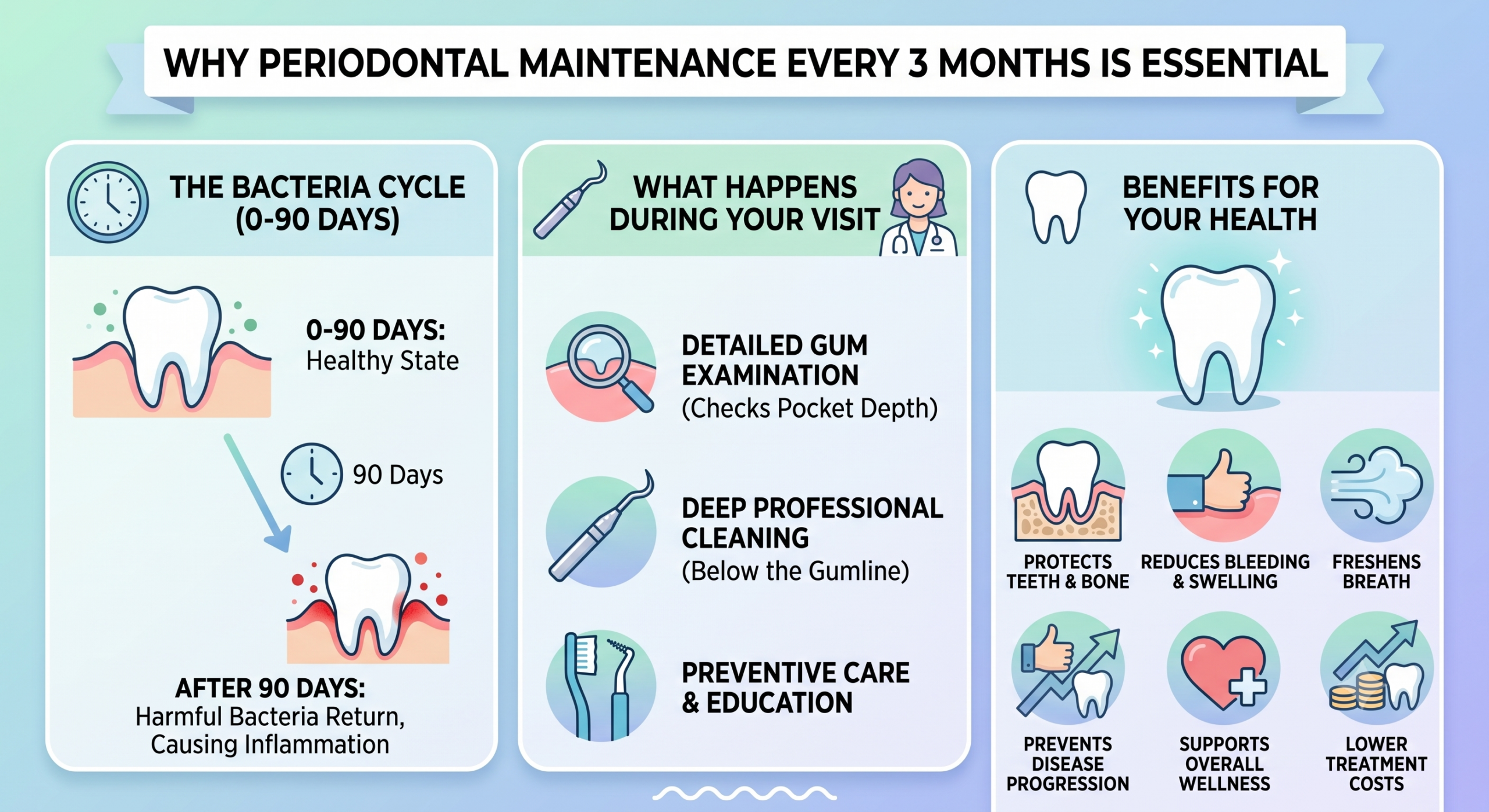
Periodontal maintenance cleanings every Six months help prevent gum disease from returning, protect your teeth, reduce harmful bacteria, and support long-term oral health. Learn why this schedule matters.
Why the Six-Month Schedule Matters
One of the most common questions patients ask is why periodontal maintenance is recommended every six months instead of every six months. The answer lies in how bacteria behave and how periodontal disease progresses.
Research has shown that harmful bacteria responsible for gum disease begin to repopulate below the gumline within approximately 90 days after professional cleaning. While daily brushing and flossing remove plaque from visible tooth surfaces, they cannot completely eliminate bacteria hidden deep inside periodontal pockets.
Patients who have experienced periodontitis remain at a higher risk of future infections because the supporting tissues have already been damaged. Even after successful treatment, these areas require continuous monitoring to prevent inflammation from returning.
Bacterial Recolonization Timeline
The bacterial biofilm inside periodontal pockets follows a predictable cycle:
| Time After Cleaning | What Happens |
| First Few Weeks | Healthy bacteria dominate as healing begins. |
| 6-8 Weeks | Harmful bacteria slowly increase. |
| Around 90 Days | Disease-causing bacteria can return to levels that trigger inflammation. |
| Beyond 3 Months | Risk of infection, bone loss, and gum deterioration increases significantly. |
This is why dentists and periodontists often recommend maintenance visits every six months. The schedule interrupts bacterial growth before it causes irreversible damage.
Preventing Disease Recurrence
Unlike cavities, periodontal disease is a chronic condition. It can be managed successfully, but it cannot simply be “cured” and forgotten.
Regular periodontal maintenance helps by:
- Removing hardened tartar beneath the gums
- Reducing bacterial colonies
- Monitoring gum pocket depth
- Detecting bleeding or inflammation early
- Preventing additional bone loss
- Preserving natural teeth
These routine visits act as preventive care, helping patients avoid more invasive treatments in the future.
What Happens During a Periodontal Maintenance Appointment
A periodontal maintenance appointment is much more comprehensive than a routine dental cleaning. The focus is on protecting previously treated gums and preventing disease recurrence.
Depending on your oral health, your appointment may last between 45 and 90 minutes.
Examination and Monitoring
Before cleaning begins, the dental professional carefully evaluates your gums.
The examination may include:
- Measuring periodontal pocket depths
- Checking for bleeding
- Looking for swollen or receding gums
- Evaluating tooth mobility
- Examining previous treatment areas
- Taking dental X-rays when necessary
Comparing today’s findings with previous records allows your dental team to detect subtle changes before they become serious.
Deep Cleaning Around Gum Pockets
Unlike regular prophylaxis cleanings, periodontal maintenance includes cleaning below the gumline where harmful bacteria collect.
The hygienist may use:
- Ultrasonic scalers
- Hand instruments
- Specialized periodontal curettes
- Antimicrobial rinses
- Irrigation systems
These tools remove:
- Plaque
- Calculus (tartar)
- Bacterial toxins
- Biofilm attached to root surfaces
Cleaning below the gumline helps reduce inflammation and encourages healthy tissue attachment.
Polishing and Preventive Care
Once plaque and calculus are removed, teeth are polished to eliminate surface stains and make it harder for plaque to stick.
Your appointment may also include:
- Fluoride treatment
- Oral hygiene coaching
- Toothbrushing demonstrations
- Flossing recommendations
- Interdental brush guidance
- Recommendations for antimicrobial mouth rinses
Every visit is personalized according to your current periodontal health.
Benefits of Regular Periodontal Maintenance
Keeping up with scheduled appointments provides benefits that extend beyond your smile.
Some of the biggest advantages include the following:
Protects Your Natural Teeth
Healthy gums provide the support teeth need to remain stable. Preventing bone loss reduces the chance of tooth loss.
Stops Gum Disease Progression
Removing bacteria every Six months interrupts the disease cycle before major damage occurs.
Reduces Bleeding and Swelling
Patients often notice healthier gums, less tenderness, and reduced bleeding during brushing.
Freshens Breath
Many cases of chronic bad breath originate from bacteria trapped below the gumline.
Lowers Treatment Costs
Preventive maintenance is generally less expensive than advanced periodontal surgery or tooth replacement.
Supports Overall Health
Research suggests that periodontal disease may be associated with systemic conditions such as diabetes and cardiovascular disease. Keeping inflammation under control contributes to better overall wellness.
Improves Comfort
Patients who attend regular maintenance appointments usually require less extensive treatment over time because disease is managed before it becomes severe.
Frequently Asked Questions
1. What is periodontal maintenance, and how is it different from a regular dental cleaning?
Periodontal maintenance is a specialized cleaning performed every six to four months for patients who have been treated for gum disease. Unlike a routine dental cleaning, it focuses on removing plaque, tartar, and bacteria from below the gumline while monitoring gum pockets and preventing the recurrence of periodontitis.
2. Why is periodontal maintenance recommended every six months?
The Six-month schedule is based on how quickly harmful bacteria can recolonize below the gumline. Regular periodontal maintenance every 90 days helps interrupt bacterial growth before it causes inflammation, bone loss, or the return of periodontal disease.
3. Is periodontal maintenance necessary for life?
For many patients with a history of periodontitis, periodontal maintenance is considered a long-term part of oral healthcare. The exact frequency may change depending on your gum health, but ongoing maintenance is often the best way to keep periodontal disease under control and preserve your natural teeth.
4. Does periodontal maintenance hurt?
Most patients experience little to no discomfort during periodontal maintenance. If your gums are sensitive or inflamed, your dentist or dental hygienist may use a local anesthetic or numbing gel to make the procedure more comfortable.
5. What happens if I skip my periodontal maintenance appointments?
Skipping periodontal maintenance appointments allows plaque, tartar, and harmful bacteria to build up beneath the gums. This can lead to recurring gum infections, deeper periodontal pockets, bone loss, loose teeth, and eventually tooth loss. Missing maintenance visits may also result in the need for more extensive and costly periodontal treatment.
6. Who needs periodontal maintenance cleanings?
Patients who have been diagnosed with periodontitis and completed treatments such as scaling and root planing, periodontal surgery, or other gum disease therapies typically require periodontal maintenance. Your dentist or periodontist will determine the appropriate schedule based on your individual risk factors and oral health.
Conclusion
Periodontal disease doesn’t simply disappear after treatment; it requires ongoing care to keep it under control. That’s why periodontal maintenance is such an important part of long-term oral health. These specialized cleanings do far more than remove plaque and tartar; they help prevent harmful bacteria from rebuilding, monitor gum health closely, and stop gum disease from progressing before serious damage occurs.
The Six-month schedule is not arbitrary. It is based on the known timeline of bacterial recolonization and the increased risk that patients with a history of periodontitis face. By attending regular maintenance appointments, you can reduce inflammation, protect the bone that supports your teeth, lower the risk of tooth loss, and avoid more extensive periodontal treatments in the future.